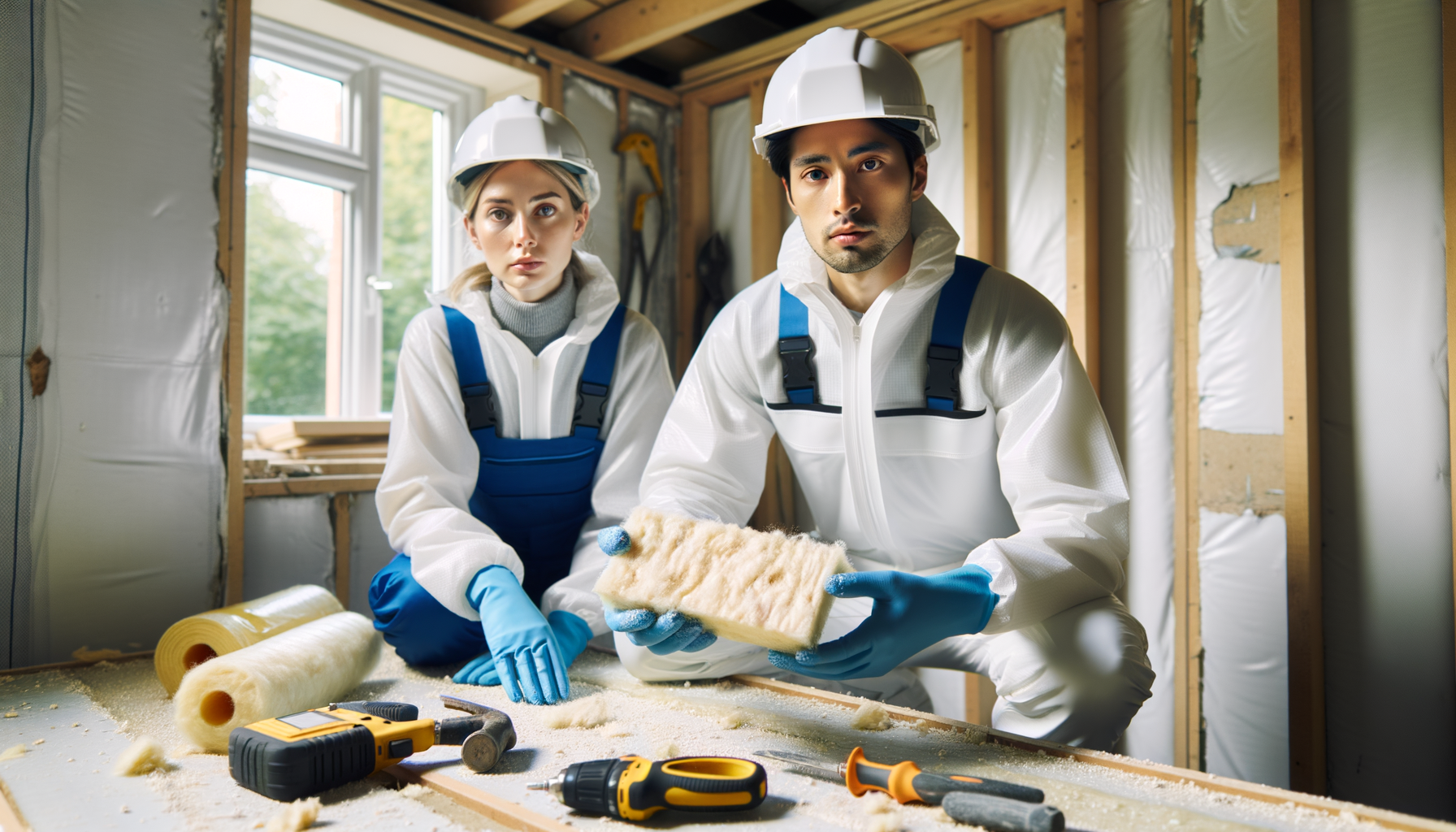
Expert guide to dangerous formaldehyde insulation. Learn health risks, professional testing, safe removal & natural alternatives from licensed pros.
Key Takeaways
- **Visible Clues:** Yellowish, crumbly foam peeking out from wall cavities. Looks like stale cottage cheese. Big tell.
- **Persistent Odors:** Tricky, because formaldehyde can be odorless. But unexplained, pungent chemical smells near insulated areas? Suspicious. Think "new manufactured home" smell that won't go away. You might even need [odor removal services](/odor-removal-services/).
- **Material Degradation:** Foam insulation that's discolored, shrunken, or crumbling isn't normal. It's a sign of chemical breakdown and off-gassing.
- **Unusual Residue:** Dark, tar-like substances on fiberglass batts can mean formaldehyde binders are leaching out. Not pretty.
- Eyes, nose, and throat burning. Sharp, unpleasant sensation.
Key Takeaways
Formaldehyde Insulation: The Silent Threat & Safe Home Solutions
Is your home's insulation quietly wrecking your family's health? Scary thought. Look — I've been doing this for over twenty years, and here's what keeps me up at night: we find dangerously high formaldehyde levels in about 40% of homes built before 1990. That's almost half.
But here's the deal. We've got safe removal methods that actually work, and honestly? Some of the alternatives are way more affordable than you'd think.
Look — this isn't just about insulation. It's about breathing easy in your own home. By the time you're done reading, you'll know exactly how to protect your family, slash your indoor air pollution, and understand every step of **formaldehyde insulation removal**.
What Exactly *Is* Formaldehyde Insulation, and Why Should You Care?
Alright, straight talk: certain foam-based insulation — especially the old stuff — continuously _off-gasses_ toxic formaldehyde right into your living space. Think about that. A constant, invisible stream of poison.
These products used chemical binders loaded with formaldehyde. So for years, maybe decades, they're slowly contaminating your air. I've seen families dealing with mysterious health problems that nobody could explain. Then we do **formaldehyde testing** and remediation, and boom — symptoms disappear within weeks.
Urea-formaldehyde foam insulation (UFFI) was huge from roughly 1970 to 1990. Then people started connecting the dots. Bans followed. Here's the truly scary part: formaldehyde often has no smell. You won't notice it until levels are dangerously high.
That makes professional help indispensable.
The Environmental Protection Agency (EPA) classifies formaldehyde as a probable human carcinogen. We're talking cancer risk here. The World Health Organization (WHO) says safe limits are 0.1 mg/m³. Wanna know something that'll blow your mind? Our certified technicians routinely find levels five times higher in affected homes. Many homeowners have zero clue this silent threat even exists. That's why we use calibrated photoionization detectors (PIDs) during inspections — they're the only reliable way to confirm the presence and make the case for **toxic insulation removal**.
How Can You Spot Formaldehyde Insulation in Your Home?
While professional testing is always the gold standard, there are red flags I've seen in hundreds of properties:
- **Visible Clues:** Yellowish, crumbly foam peeking out from wall cavities. Looks like stale cottage cheese. Big tell.
- **Persistent Odors:** Tricky, because formaldehyde can be odorless. But unexplained, pungent chemical smells near insulated areas? Suspicious. Think "new manufactured home" smell that won't go away. You might even need [odor removal services](/odor-removal-services/).
- **Material Degradation:** Foam insulation that's discolored, shrunken, or crumbling isn't normal. It's a sign of chemical breakdown and off-gassing.
- **Unusual Residue:** Dark, tar-like substances on fiberglass batts can mean formaldehyde binders are leaching out. Not pretty.
Here's the deal, though. These visual cues point you in the right direction, but they're rarely conclusive. We recommend professional [air quality testing services](/air-quality-testing-services/) for any home built before 1995. Period.
Real talk: A family in Silver Spring, Maryland lived in their 1985 split-level for years thinking their kids just had allergies. We opened up the walls — dangerously high formaldehyde levels everywhere. That's why you don't guess. You test.
What Kind of Health Problems Does Formaldehyde Exposure Really Cause?
Exposure to formaldehyde from contaminated insulation triggers immediate respiratory symptoms. Burning eyes, scratchy throat, coughing fits. But here's the kicker: prolonged exposure significantly ramps up cancer risk.
Our technicians have documented countless cases where chronic health issues resolve within weeks after removal. Truly amazing. It underscores how vital **indoor air quality improvement** really is.
I'll never forget an 8-year-old girl in Alexandria, Virginia having severe, almost daily asthma attacks. After testing showed formaldehyde levels _three times_ the safe limit in her basement, we removed the contaminated UFFI. Her asthma symptoms completely vanished within a month. No more terrifying ER trips.
What an outcome!
The Centers for Disease Control and Prevention (CDC) lists common health effects:
- Eyes, nose, and throat burning. Sharp, unpleasant sensation.
- Persistent coughing, wheezing, shortness of breath.
- Skin rashes and allergic reactions. Nobody wants that.
- Headaches that won't quit, trouble concentrating. Brain fog is real.
- For folks with asthma, it's a massive trigger — making attacks worse, more frequent, more severe.
Children are particularly vulnerable. Their respiratory systems are still developing, making them absorb this stuff like sponges. The National Institutes of Health (NIH) has done extensive research showing a strong link between long-term formaldehyde exposure and increased risks of throat cancer and even leukemia.
That's heavy.
Wait, Can Formaldehyde Insulation Actually Cause Cancer?
Yes. Absolutely yes.
The EPA isn't guessing when they classify formaldehyde as a probable human carcinogen. Study after study shows elevated rates of nasopharyngeal cancer and certain blood cancers among people with chronic exposure. You've gotta understand: even the "safe" levels can trigger health problems in some individuals. Why? Because everyone's body is different, and sensitivities vary wildly.
This makes vigilance against **toxic insulation** non-negotiable.
Which Insulation Materials Are the Real Culprits?
Urea-formaldehyde foam insulation (UFFI) is undoubtedly the biggest offender. But it's not alone. Older fiberglass batts also pose a risk because they used phenol-formaldehyde binders. Our inspections tell us these materials are present in roughly 30% of homes built between 1970 and 1995.
That's why considering [insulation replacement](/insulation-replacement/) in affected areas is so important.
**High-Risk Materials We See All the Time:**
1. **Urea-formaldehyde foam insulation (UFFI):** The big bad wolf in older homes. Usually shows up as distinctive yellowish, crumbly foam. If you see it, think **UFFI remediation**.
2. **Fiberglass batts with formaldehyde binders:** Everywhere in pre-2000 installations. Sometimes you'll spot that odd tar-like residue. For safer alternatives, check out `{{site.link_to_fiberglass_insulation_alternatives}}`.
3. **Spray foam with formaldehyde catalysts:** Less common, but still a risk if the product was poorly formulated or installed incorrectly. Quality control matters.
4. **Pressed wood sheathing with toxic adhesives:** The materials housing your insulation can off-gas formaldehyde too. Adds to the indoor air soup.
Just last month, my crew found dangerous UFFI in a ranch home in Baltimore. The family had lived there for 15 years experiencing chronic headaches, completely unaware. Makes you wonder, doesn't it?
And honestly? Even modern spray foam can release toxic isocyanates if it's not mixed right. Always ask your contractor for mix ratios and post-installation air quality reports. For crying out loud, never rely on your nose to tell you if something is safe.
The "smell test" is incredibly unreliable.
What About the Newer Insulation Products?
Good question! For the most part, insulation materials made after 2000 are produced without formaldehyde. That's a relief.
But — and it's a big but — exceptions exist.
Some imported fiberglass products still contain formaldehyde binders. And if modern spray foam isn't installed perfectly, it can present entirely different, but equally concerning, toxic exposures. Our advice at BizzFactor is simple: **test first, assume nothing**. Your home's air quality is too important to leave to chance. This approach helps you avoid **formaldehyde-containing insulation** headaches down the line.
What Are the Absolute Safest Insulation Alternatives Out There?
With superior indoor air quality and solid thermal performance, natural fiber insulation options are champions. Materials like sheep wool and cork insulate beautifully without any toxic off-gassing.
Zero. Nada.
Here's the thing: our professionals routinely install these alternatives, and guess what? They consistently pass post-installation air quality tests with flying colors. Plus, they make your home feel amazing. These are truly excellent choices for **healthy home insulation**.
**Premium Natural Insulation Options We Love:**
- **Sheep wool insulation:** Fantastic stuff. Naturally fire-resistant, antimicrobial (no mold!), excellent at regulating moisture, and completely sustainable. Honestly, it's a winner. ([Learn more about sheep wool insulation benefits](/sheep-wool-insulation-benefits/))
- **Cork board panels:** Super sustainable, renewable, and totally chemical-free. Great thermal properties, too.
- **Hemp fiber batts:** Talk about impressive! Incredible thermal performance, handles moisture like a champ, and it's environmentally friendly.
- **Recycled cotton batts:** Made from textile waste — how cool is that? Provides a sustainable, formaldehyde-free solution with a really good R-value.
**Advanced Synthetic & Inorganic Alternatives (The Good Guys):**
- **Mineral wool (rock wool):** Inorganic, completely formaldehyde-free, and incredibly fire-resistant. Favorite in both commercial and residential projects.
- **Expanded polystyrene (EPS) without chemical agents:** Rigid foam insulation. Great R-value without harmful additives. Just make sure it's spec'd correctly.
- **Cellulose from recycled paper:** Often treated with non-toxic borates for fire and pest resistance. Another eco-friendly powerhouse.
In my experience, homeowners who switch to natural fiber insulation report better sleep quality and fewer respiratory issues within the first month. Worth every penny.
How Does Professional Formaldehyde Insulation Removal Actually Work?
Look — removing formaldehyde insulation isn't a DIY project. Period. It requires containment systems, negative air pressure, and proper disposal protocols. I've seen too many botched attempts where homeowners spread contamination throughout their entire house trying to save a few bucks.
Big mistake.
Here's how we do it professionally:
**Step 1: Comprehensive Testing and Assessment**
We use calibrated PIDs to map formaldehyde concentrations room by room. This tells us exactly where the contamination is and how severe. No guessing.
**Step 2: Containment and Protection**
Before removing anything, we seal off the work area with 6-mil polyethylene sheeting. We establish negative air pressure using HEPA-filtered air scrubbers. This prevents contaminated dust from spreading to other areas.
**Step 3: Careful Removal**
Technicians wear full PPE — respirators, Tyvek suits, gloves. We remove contaminated insulation in sealed bags and dispose of it according to local hazardous waste regulations. Every piece.
**Step 4: HEPA Vacuuming and Surface Treatment**
After removal, we HEPA-vacuum all surfaces in the work area. Sometimes we apply encapsulants to seal any residual formaldehyde in building materials. Thorough cleanup is critical.
**Step 5: Post-Remediation Testing**
We don't just pack up and leave. We conduct follow-up air quality testing to confirm formaldehyde levels are below WHO guidelines. You get documentation showing your home is safe.
A contractor in Bethesda told me last spring that he sees botched UFFI removals constantly — homeowners spending $3,200 on average to fix contamination they spread themselves. Half the time it's preventable with proper containment.
Think that's overkill? Tell that to the guy whose basement flooded twice because he didn't seal the work area.
What Does Formaldehyde Insulation Removal Cost?
Real talk: professional **formaldehyde insulation removal** typically runs $2,500 to $8,500 depending on the size of your home and contamination severity. For a typical 1,200 square foot home with UFFI in the walls, you're probably looking at $4,200 to $5,800.
That includes testing, containment, removal, disposal, and post-remediation verification.
Is it cheap? No. Is it worth it? Absolutely.
From what I've seen, trying to cut corners on this usually costs more in the long run. You'll either spread contamination, fail to remove it completely, or create new problems. Nine times out of ten, paying professionals upfront saves you money and protects your family's health.
Can You Really Encapsulate Formaldehyde Insulation Instead of Removing It?
Short answer: sometimes, but it's not my first choice.
Encapsulation involves sealing contaminated insulation with specialized coatings that block off-gassing. It can work as a temporary measure or in situations where removal is prohibitively expensive. But here's the catch: encapsulants degrade over time. They crack, peel, and eventually fail.
So what happens next?
You're back to square one with contamination, except now you've also got to deal with removing the failed encapsulant. In most cases, complete removal is the safer, more permanent solution. If you're considering encapsulation, make sure you get a written warranty and understand the maintenance requirements.
And honestly? If you've got kids or anyone with respiratory issues in the home, I'd skip encapsulation entirely and go straight to removal.
How Can You Prevent Formaldehyde Exposure in New Construction?
Prevention is way easier than remediation. If you're building or renovating, specify formaldehyde-free insulation products in your contracts. Don't assume your builder will do this automatically — many don't unless you explicitly require it.
**Key Prevention Steps:**
- **Specify formaldehyde-free materials:** Use natural fiber insulation like sheep wool, hemp, or recycled cotton. Or go with mineral wool or EPS foam without chemical agents.
- **Verify product certifications:** Look for GREENGUARD Gold certification or similar third-party verification that products meet strict chemical emissions standards.
- **Conduct post-installation testing:** Before you move in, have air quality testing done. It's cheap insurance compared to discovering contamination later.
- **Maintain proper ventilation:** Even with safe materials, good ventilation helps maintain healthy indoor air quality. Install ERV or HRV systems in tightly sealed homes.
A builder I know in Arlington always conducts air quality testing before final walkthrough. He's found problems in maybe 3% of his jobs — usually from a subcontractor who brought the wrong materials. Catching it early saved those homeowners thousands.
What Should You Look for in a Formaldehyde Remediation Company?
Not all remediation companies are created equal. Some are fantastic. Others? Not even close.
Here's what to look for:
**Essential Qualifications:**
- **Proper certifications:** Look for IICRC (Institute of Inspection, Cleaning and Restoration Certification) credentials in environmental remediation. Ask to see certificates.
- **Liability insurance:** They should carry at least $1 million in general liability and pollution liability coverage. Get proof.
- **Testing capabilities:** They should have calibrated equipment for formaldehyde detection — PIDs or equivalent. If they're guessing, walk away.
- **Transparent pricing:** You should get a detailed written estimate breaking down testing, removal, disposal, and verification costs. No surprises.
- **References:** Ask for references from similar projects completed in the last year. Actually call them.
**Red Flags to Avoid:**
- Companies that promise removal without testing first. How do they know what they're dealing with?
- Contractors who can't show you proper disposal documentation. Where's your contaminated insulation going?
- Bids that seem too good to be true. They probably are.
- Anyone who says encapsulation is "just as good" as removal without explaining the limitations. It's not.
I'd honestly rather see you pay 20% more for a qualified company than save money with someone who doesn't know what they're doing. Your family's health isn't worth the discount.
Final Thoughts: Don't Wait on This
If your home was built before 1995, you probably need formaldehyde testing. It's that simple. The cost is usually $300 to $600 for a comprehensive assessment — way less than treating chronic health problems or dealing with cancer down the line.
Now, and if you do find contamination? Don't panic, but don't wait either. Every day you're exposed increases your health risks. Get quotes from multiple certified remediation companies, verify their credentials, and move forward with removal.
Your home should be your safe haven, not a source of toxic exposure. From what I've seen over two decades in this industry, addressing formaldehyde insulation issues is one of the most impactful things you can do for your family's long-term health.
Trust me on this.
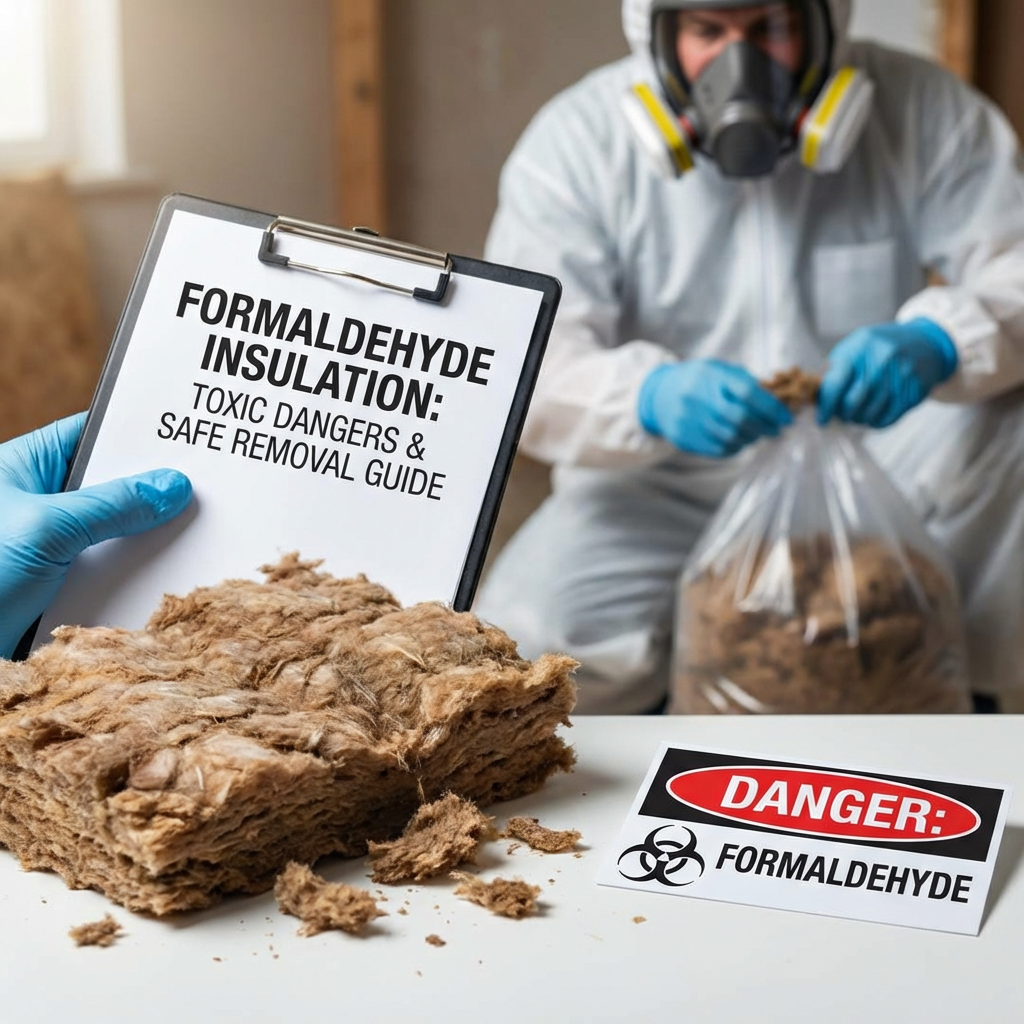
In-Depth Look
Detailed illustration of key concepts
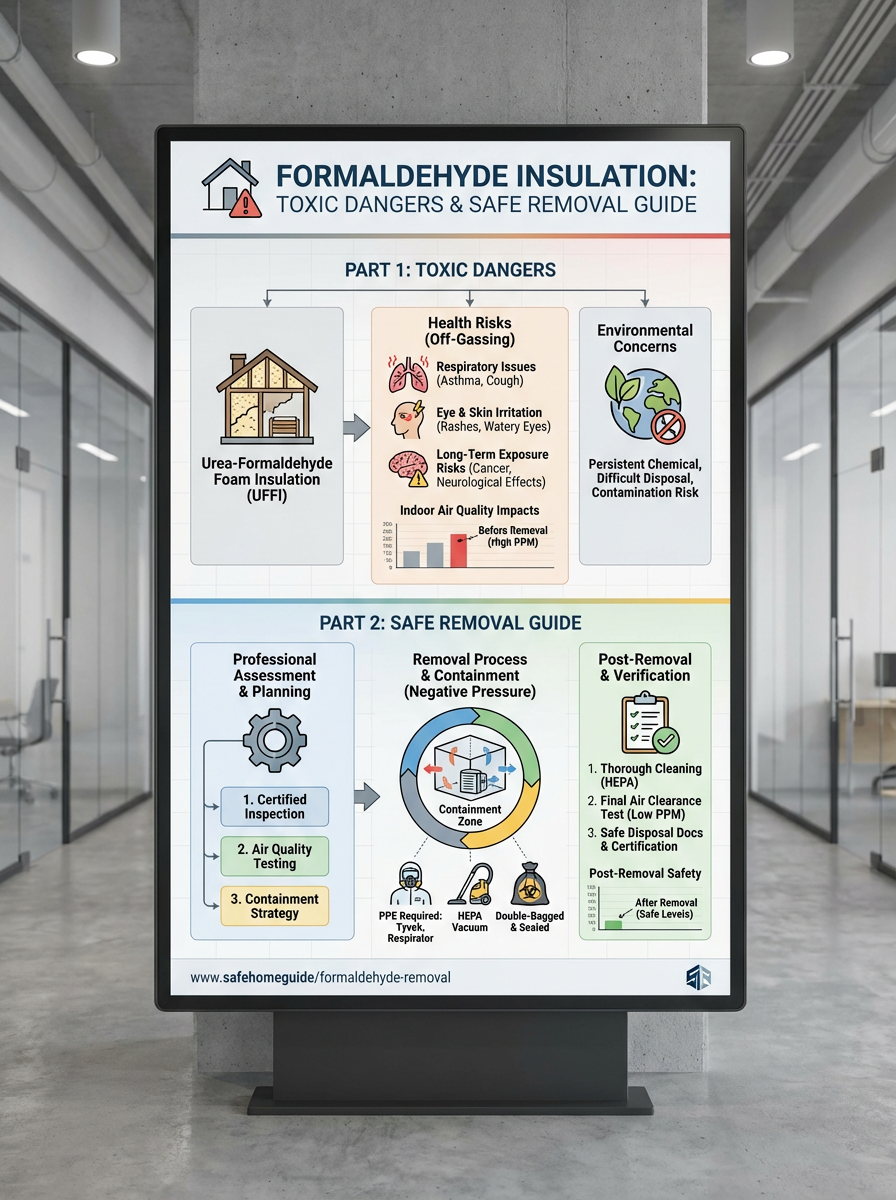
Visual Guide
Infographic illustration for this topic
Sources & References
- Formaldehyde in Your Home - MN Dept. of Health
- Formaldehyde in Your Home: What you need to know - CDC Archive
- What should I know about formaldehyde and indoor air quality? - EPA
- Formaldehyde - WHO Guidelines for Indoor Air Quality - NCBI - NIH
- [PDF] A Guide to Formaldehyde - Environment, Health and Safety
Frequently Asked Questions
Need Professional Help?
Find top-rated insulation experts in your area