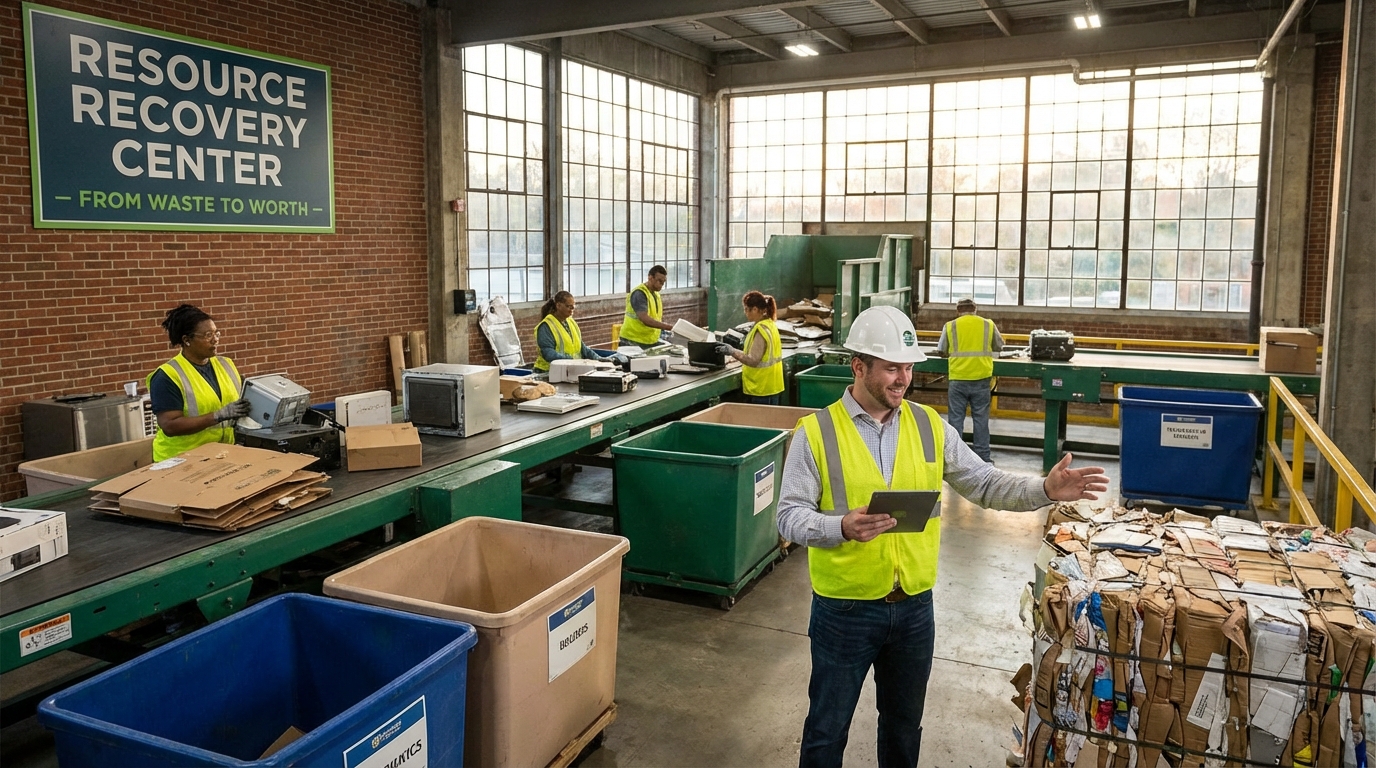
Discover where your junk really goes after pickup with BizzFactor's eco-friendly approach. Learn about our 5-tier on-site sorting, transparent recycling partners, and commitment to diverting 70% of waste from landfills. Get answers to common questions about sustainable junk removal.
Key Takeaways
- **Steel:** Re-melted into new construction materials, automotive parts, and appliances at advanced foundries.
- **Aluminum:** Infinitely recyclable and highly valuable due to its energy savings, efficiently returned to high-purity material streams for new cans, foils, and other products.
- **Copper:** Extracted from electrical wiring
Key Takeaways
The Sustainable Journey of Your Junk: Beyond the Pickup Truck – BizzFactor's Eco-Friendly Approach
For over 15 years, BizzFactor has observed a common curiosity among our clients: where do their items truly go once our junk removal truck pulls away? Look — we're pulling back the curtain here. This is about showing you the actual path your stuff takes, not some vague corporate promise about "being green." We're talking real partners, real facilities, actual percentages. Here's what actually happens: we track your stuff (really track it, with weights and routing codes and partner signatures), and we'll show you exactly where it ends up — whether that's a donation center in your neighborhood or a recycling facility three states over.
On-Site Sorting: Maximizing Waste Diversion from the Start – How Your Items Get a Second Life
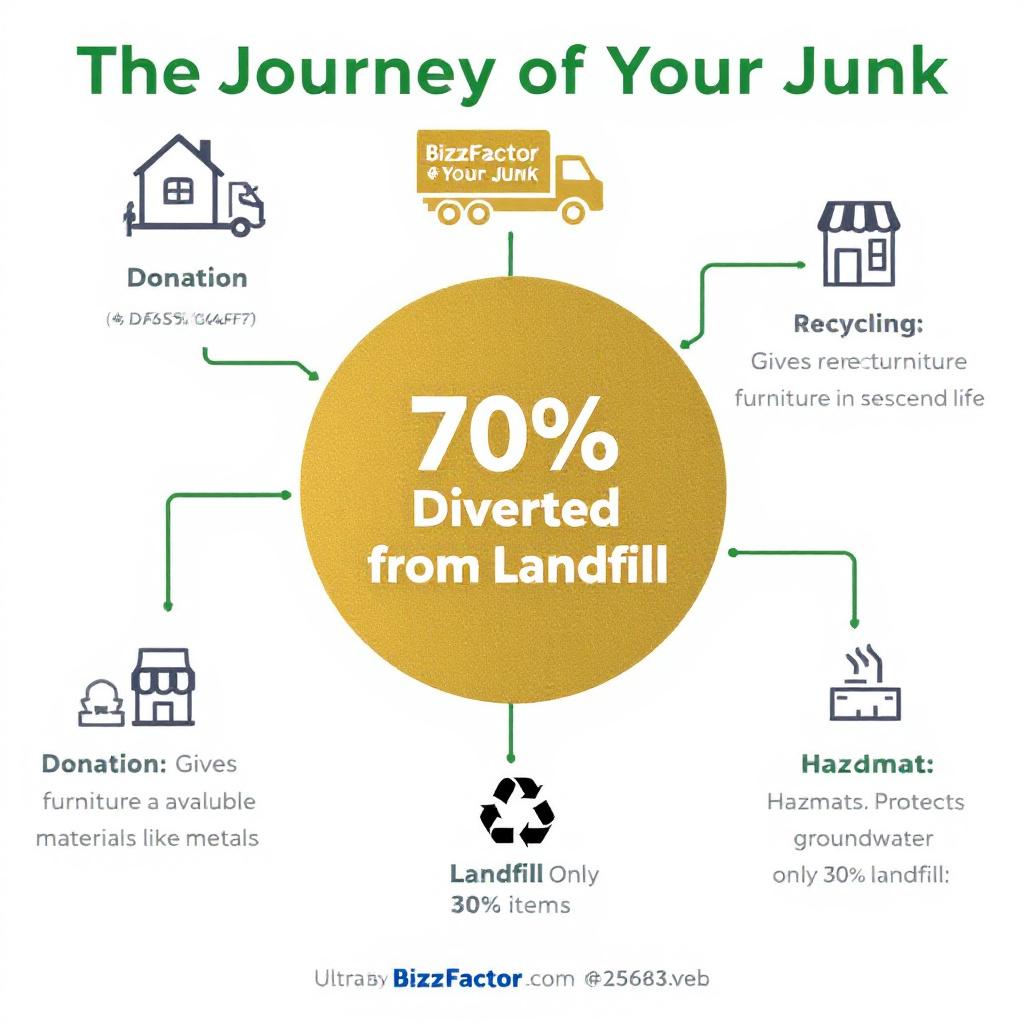
Look — look — unlike traditional waste disposal, our process begins the instant we load your items. About **70% of what we collect never sees a landfill** — that's huge when you consider the volume we handle weekly. Our teams use a **five-category sorting system right there in your driveway**, which means decisions happen fast and nothing gets lumped into the "general waste" category by default.
Here's how it works in practice: that dresser you think is toast? If the drawers still slide and the frame's solid, it's probably headed to <a href="/resource/goodwill-donations">Goodwill</a> before lunchtime. Your broken TV? That's going to a certified e-waste processor (we'll get to why that matters in a minute). We make these calls on-site because waiting until we're back at the warehouse means stuff gets mixed together, and once that happens, donation options basically disappear.
Last month in Buckhead, we picked up an antique desk the owner swore was garbage. Our guy Tony took one look and said, "Nah, this just needs a drawer pull and some wood glue."
Two days later, that same desk was sitting in the <a href="/resource/habitat-restore">Habitat ReStore</a> on Howell Mill with a $350 price tag. The owner nearly cried when we showed her the photo — she'd been ready to torch the thing. That's what happens when you've got crew members who actually know furniture instead of just seeing everything as "stuff to dump."
Our Five-Tier On-Site Sorting Process for Responsible Disposal:
We sort right there on your property. Five categories, every time:
1. **Metals:** Ferrous stuff (rusts) goes in one pile, non-ferrous (copper, aluminum, brass) in another. Industrial recyclers pay good money for clean metal loads, which helps keep our costs down. This includes waste streams from <a href="/services/scrap-metal-removal">scrap metal removal</a>.
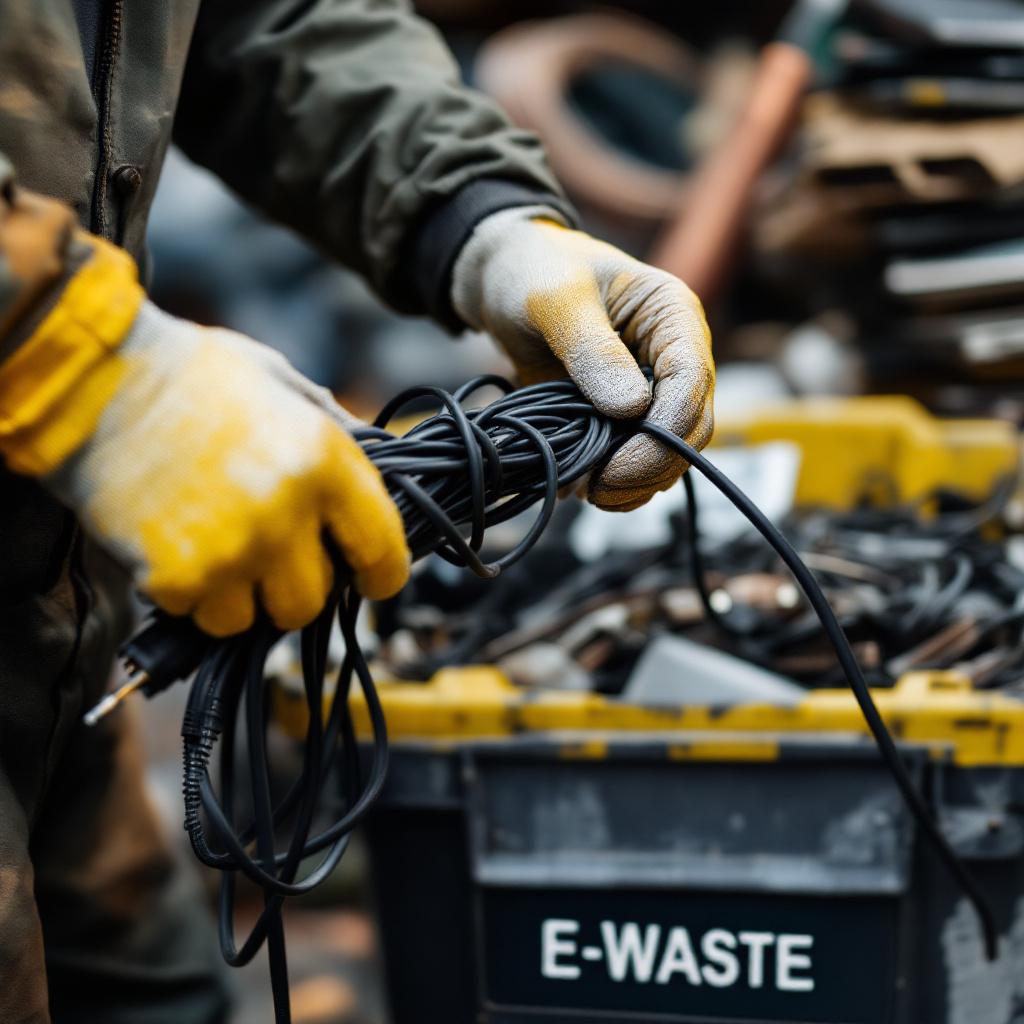
2. **Electronics (E-Waste):** Anything with a circuit board gets flagged — TVs, computers, phones, microwaves, you name it. These go to certified processors who extract the valuable metals and handle the toxic components properly. Learn more about our specialized <a href="/services/e-waste-removal">e-waste removal services</a>.
Here's the thing: 3. **Furniture & Home Goods:** Can someone actually use this, or is it legitimately trashed? We're looking at structural integrity, stains, functionality. If it passes the "would I give this to a friend?" test, it's donation-worthy. Perfect for <a href="/services/furniture-removal">furniture removal</a> needs.
4. **Hazardous Materials:** Paint cans, batteries, old chemicals, fluorescent bulbs — these get separated immediately. That's the real issue. There's no wiggle room here; EPA regulations are strict, and for good reason. This is crucial for <a href="/services/construction-debris-removal">construction debris removal</a> containing such items.
5. **General Waste:** The stuff that genuinely has nowhere else to go. This should be (and usually is) the smallest category. Last resort only.
<p class="tip-box">**Pro Tip for Donating:** Don't take that dresser apart before we show up. Seriously — **leave it intact**. Charities won't accept random drawer boxes and loose hardware, but they'll absolutely take a complete piece of furniture. We've seen this tank donation rates by more than half. You're trying to help by disassembling it, but you're actually killing its chances of finding a new home. Keep it together, and your <a href="/services/furniture-removal">furniture removal</a> stays eco-friendly.</p>
Identifying Reputable Junk Removal Services for Eco-Conscious Disposal
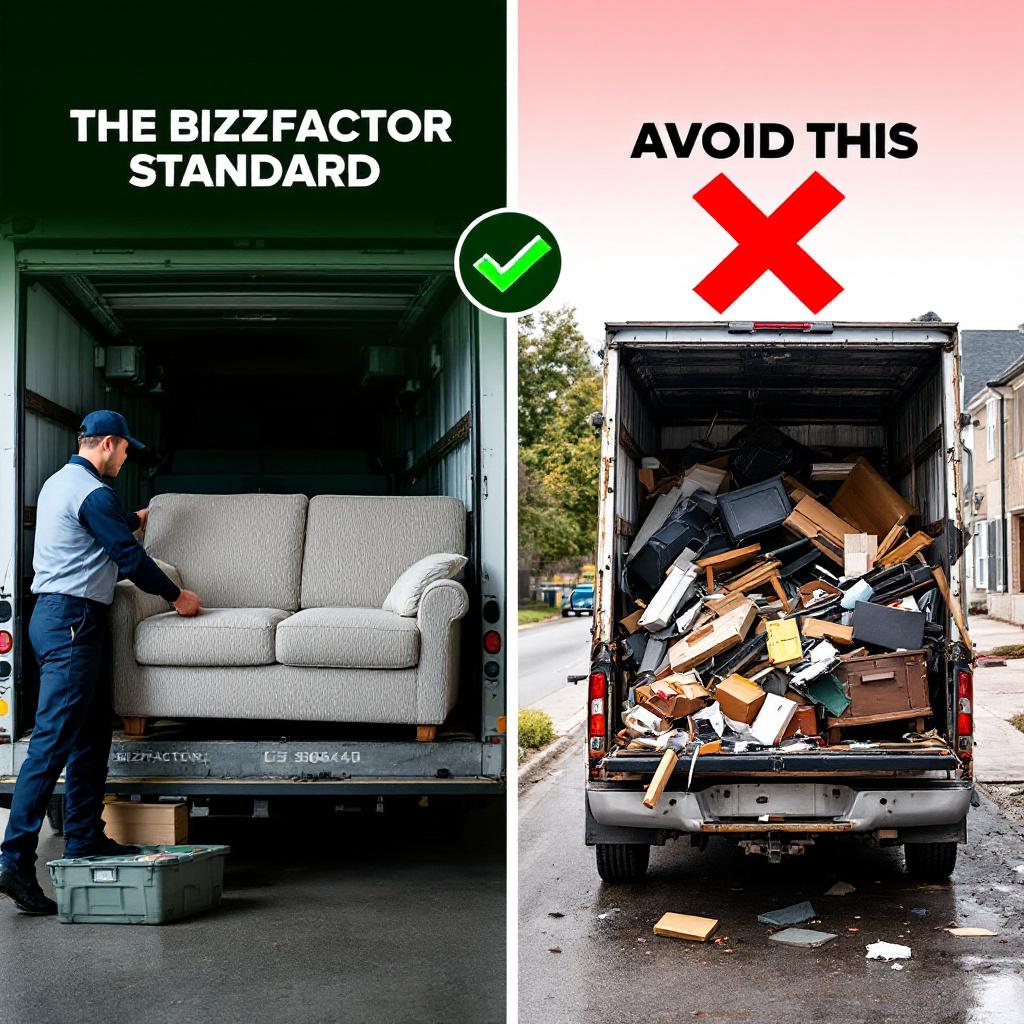
Anybody can paint "We Recycle!" on the side of a truck. What separates real commitment from marketing BS? Names and addresses. Actual facility names you can look up on Google Maps.
If a company brags about their "90% diversion rate" but gets squirrely when you ask which recycling center they use, run. We've been in this business long enough to know the difference between companies who actually sort stuff and companies who dump everything at the county transfer station and hope for the best.
We work with Metro Recycling (been using them for 12 years now), multiple <a href="/resource/habitat-restore">Habitat ReStore locations</a> across the metro area, and certified e-waste processors whose names are on our website. Your stuff doesn't disappear into some anonymous dumpster — it gets photographed, weighed, and logged at every single checkpoint. Want proof? Ask us for documentation. That's what real <a href="/company/our-environmental-commitment">environmental stewardship</a> looks like, not marketing fluff. For a full list of our services, visit our <a href="/services">junk removal services page</a>.
The Hub System: Streamlining Your Junk's Journey to Recovery and Reducing Costs
Once we've done the initial sort at your place, everything flows through our regional hub network instead of us driving every single load straight to its final destination. Sounds like logistics-speak, I know, but bear with me — this one operational change dropped our transport costs by around **40%** and sped up the whole system.
We've been running these hubs for over a decade. They're not just storage warehouses where stuff sits around — they're active sorting centers where we consolidate loads. Why does this matter to you? Because it means our neighborhood trucks stay small and quiet (your neighbors won't hate us), they burn way less fuel making pickups, and crews get back on the road faster for the next job. The heavy hauling to specialized facilities happens in full truckloads, which cuts redundant trips and emissions dramatically.
The math works because we're not sending half-empty 26-foot box trucks to the metal recycler three times a day. We fill the truck first. Route efficiently. Our clients get <a href="/services/same-day-junk-removal">same-day junk removal services</a> without premium pricing for all that wasted diesel and driver time. It's a key reason our model stays both efficient and genuinely eco-friendly for responsible <a href="/category/junk-removal">junk removal</a>.
Specialized Sorting Facilities: Where Advanced Material Recovery Happens
Your stuff arrives at the sorting facility. Now what?
It's part human judgment, part machinery doing the grunt work. We've spent 20+ years building partnerships with facilities that actually invest in this infrastructure — not just talking about sustainability in their mission statement, but dropping serious money on multi-million-dollar sorting lines with trained crews who can tell you the difference between #2 and #5 plastic on sight (yes, it matters for resale value).
There's this facility we use outside Marietta. They push about 25 tons of mixed material through there every single day. It's a serious operation — not some guy with a forklift and good intentions. They've got separate processing lines for electronics (circuit boards get hand-sorted first, then machines strip the copper), metal sorting that uses magnets and optical sensors I honestly don't fully understand, and an entire textile section where old clothes get shredded into housing insulation. I watched them process one of our truckloads once — took maybe 90 minutes from arrival to having everything categorized and staged for its next destination.
Now, last year, a family in Sandy Springs hired us to clear out a foreclosed rental property. Absolute disaster inside — looked like the tenants had just walked out mid-breakfast. We pulled maybe 8 tons of stuff out of there. I figured 90% of it was going straight to the landfill. But our Marietta facility crew? They recovered nearly 6 tons. Pulled out scrap copper from old fixtures ($180 worth), sorted mountains of cardboard for pulping, even found three working space heaters that went to a homeless shelter. That's $1,100 in avoided dump fees alone, which we passed back to the property owner. Not possible without facilities that actually know what they're doing.
Inside the Facility: Five Steps Your Stuff Goes Through
Walk into one of these sorting facilities with me. Here's what happens to your load:
**Manual Inspection comes first.** Real people (not robots) look at everything before it hits any conveyor belt. They're hunting for high-value items that shouldn't get automated — antique hardware, intact electronics worth refurbishing, furniture that's donation-quality. Nothing valuable gets accidentally crushed because someone wasn't paying attention.
**Size Separation happens next.** Big items get mechanically routed away from small ones. A couch doesn't run through the same processing line as broken dishes — totally different equipment, different end destinations. This initial pass groups materials by size so downstream sorting actually works.
**Material Sorting is where the expensive machinery shows up.** Conveyor belts, optical scanners, magnets pulling ferrous metals, eddy current separators grabbing aluminum. But even with all that tech, there's still human sorters stationed along every line pulling out contamination and making real-time judgment calls the machines miss.
**Quality Check determines everything's fate.** Items get graded: excellent (resale quality), good (donation-worthy), fair (recyclable components only), or scrap (genuinely end of the line). That grade decides what happens next — whether someone's buying it at ReStore or it's getting melted down for raw material.
**Routing to Final Destinations wraps it up.** Based on those quality grades, materials get directed to their actual next stop: donation centers for the good stuff, recycling plants for processable materials, waste-to-energy facilities for combustibles that can't be recycled, or (rarely) regulated landfills as the absolute last option.
So — we're not just moving trash around. We're running a material recovery operation with documentation you'd see in a serious warehouse — digital photos, exact weights, routing codes, chain-of-custody logs. It's tedious as hell, but it's the only way to prove where your stuff actually ends up instead of just promising we "do our best."
E-Waste: A Source of Valuable Resources and Environmental Risk
Your old laptop contains actual gold. Not kidding.
There's also silver, copper, palladium — precious metals that mining companies would kill for. But flip that circuit board over and you're also looking at lead solder, mercury switches, cadmium in the battery. The e-waste processors we use (all certified, audited every year by third parties) can pull around two grand worth of recoverable materials from half a ton of electronics. That's why they exist — there's real money in those components.
But the dangerous stuff? That's why certification matters. Mercury from old thermostats can contaminate groundwater for decades if it's not handled right. Lead from CRT monitors is serious poison. The facilities we work with have containment systems, protective equipment, specialized extraction processes — stuff that costs millions to install and maintain. That's what you're paying for with responsible <a href="/services/appliance-removal">appliance removal</a>, not just a guy throwing your microwave in a dumpster.
During a recent facility tour, we observed smartphones being meticulously disassembled, circuit boards routed for targeted metal recovery, plastic casings processed for new product manufacturing, and even glass screens earmarked for specialized recycling into new display technologies.
Dedicated Recycling Centers: Material-Specific Pathways for Sustainability
Single-stream recycling sounds convenient, but specialty facilities do a way better job. We route metals to scrap yards that only process metals, paper to pulping plants, plastics to reprocessing facilities. These aren't just names on a spreadsheet — we've physically toured every partner facility, watched the actual processing lines run, verified their certifications aren't expired. You'd be shocked how many "recyclers" just consolidate everything and ship containers overseas where it gets dumped illegally. We don't play that game.
Common Metal Recycling Destinations and Processes:
- **Steel:** Re-melted into new construction materials, automotive parts, and appliances at advanced foundries.
- **Aluminum:** Infinitely recyclable and highly valuable due to its energy savings, efficiently returned to high-purity material streams for new cans, foils, and other products.
- **Copper:** Extracted from electrical wiring
In-Depth Look
Detailed illustration of key concepts
Visual Guide
Infographic illustration for this topic
Side-by-Side Comparison
Visual comparison of options and alternatives
Sources & References
- Where Does Your Trash Go & What Happens To It | A Full Guide
- Best Practices for Recycling During Junk Removal
- Understanding the Process of Trash Pick-Up - SBC Waste Solutions
- Understanding Where Your Waste Goes After Pickup - Opdenaker
- The Trash Company Recycling and Disposal Guide
- Building Codes, Standards, and Regulations: Frequently Asked ...
- Building Codes and Standards - 101 Guide | ROCKWOOL Blog
- [PDF] Building Codes Toolkit for Homeowners and Occupants - FEMA
- ICC - International Code Council - ICC
- Amazon Best Sellers: Best Architectural Codes & Standards
Frequently Asked Questions
Need Professional Help?
Find top-rated junk removal experts in your area