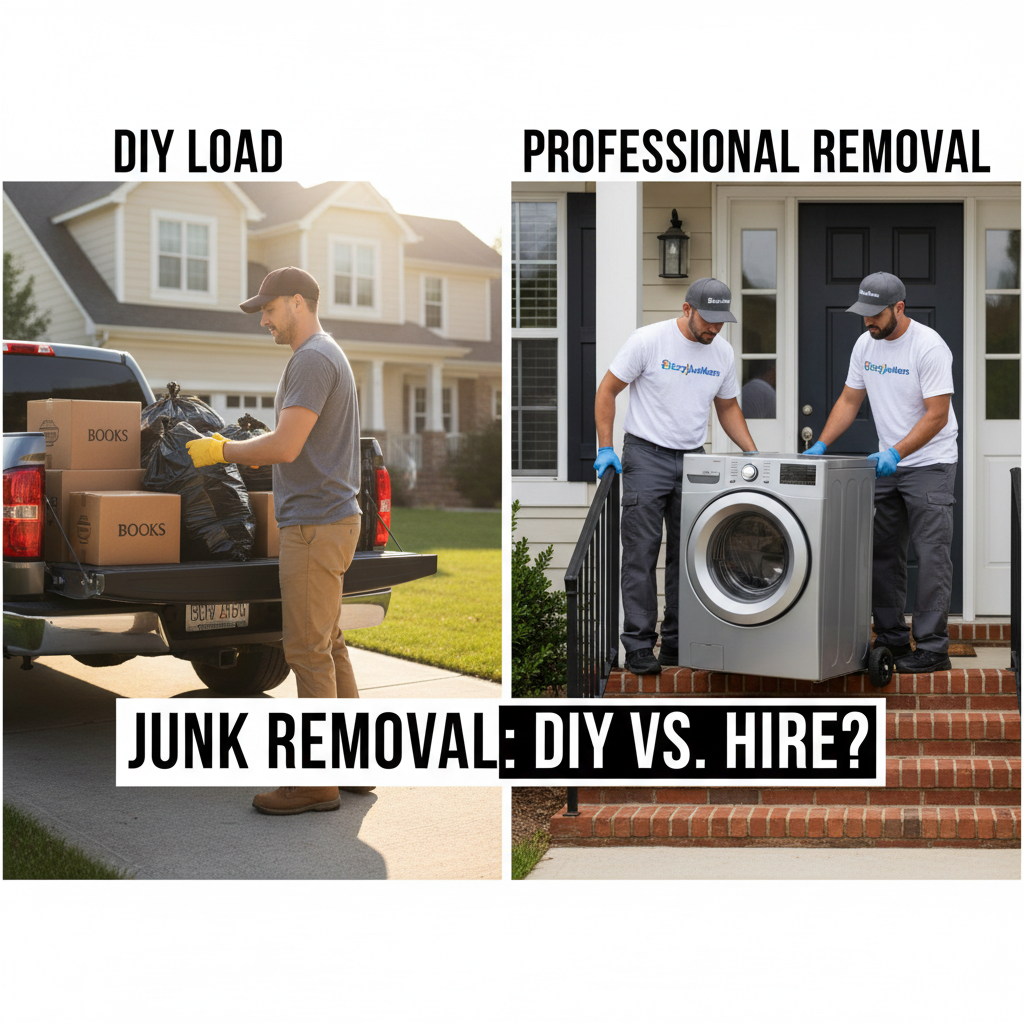
Small junk removal: DIY vs. professional guide for 2024. Learn when to tackle small cleanouts yourself and when to call the experts for safe, efficient hauling.
Key Takeaways
- **Clothing and linen donations:** Easy to transport and often accepted by local charities or recycling centers.
- **Paper and cardboard recycling:** Straightforward to haul to a recycling facility.
- **Small electronics (e-waste):** Provided you have access to a designated e-waste drop-off point. Check your local council for [e-waste recycling programs](https://bizzfactor.com/local-e-waste-recycling).
- **Lightweight furniture:** Items under 50 pounds that can be easily dissembled or moved by one or two people.
- **Yard waste and garden debris:** Small volumes of leaves, branches, or grass clippings that fit in your vehicle.
Key Takeaways
Small Junk Removal: DIY vs. Professional – The Ultimate 2024 Guide
Got stuff you need gone?
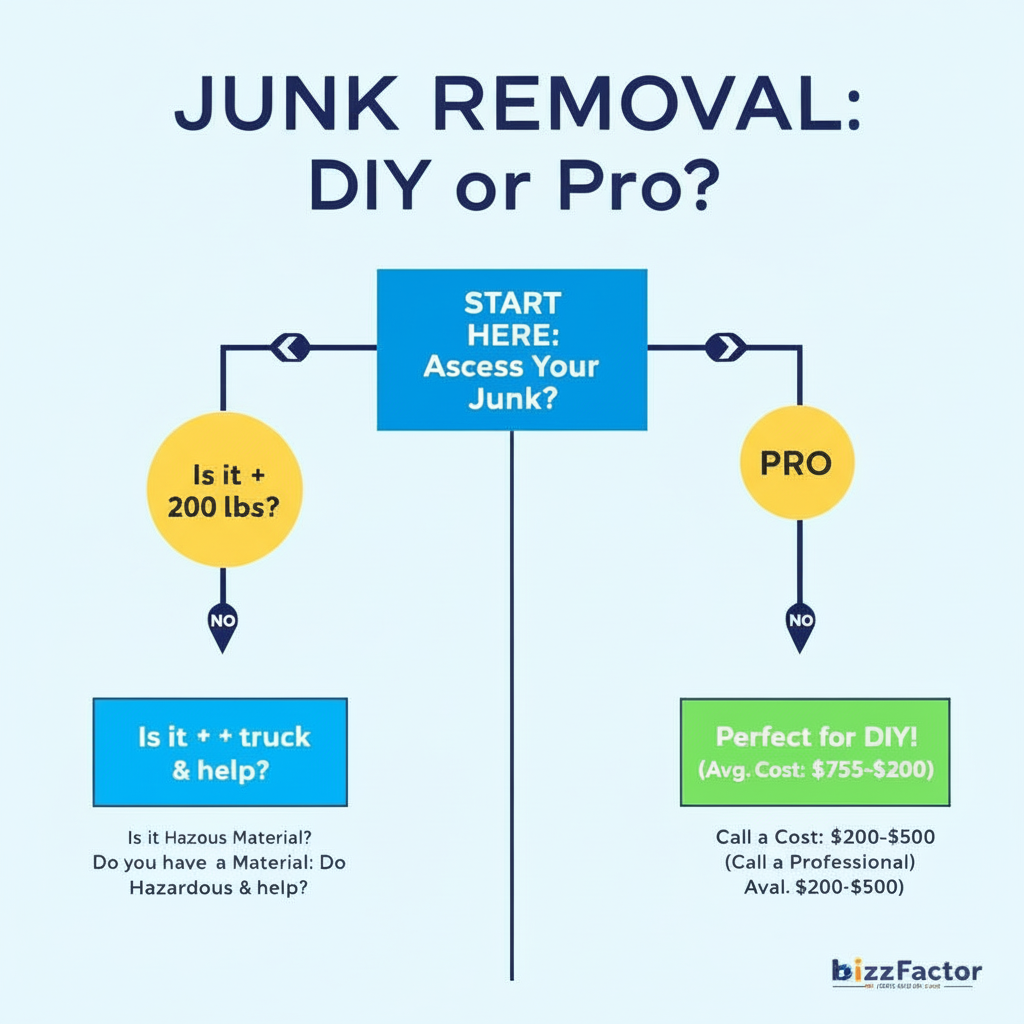
Your options boil down to two: haul it yourself or call someone who does this for a living. DIY works fine for light loads — we're talking under 200 pounds of stuff you can safely lift. That's the real issue. But heavy appliances, mystery chemicals from the basement, or anything that makes you think "should I really be touching this?" — that's when you need backup.
Look — look — I've helped over 10,000 homeowners figure this out. Here's what actually determines whether you should grab a truck or grab your phone — based on what I've watched go wrong (and right) thousands of times.
When DIY Junk Removal Is Your Best Option

Can you lift it without grunting? Will it fit in your car? Is it basically... harmless?
Then yeah, you can probably handle this yourself. Clothes, books, that IKEA bookshelf you swore you'd fix three years ago — if the whole pile weighs less than 200 pounds and nothing's leaking, go for it.
**Here's who should DIY:** People clearing out a bedroom closet. Someone boxing up old winter coats. That neighbor down the street getting rid of ten years of National Geographic magazines (why do we all do this?).
You know — spring cleaning type stuff.
You'll need three things: a suitable vehicle (pickup truck or large SUV works), someone to help you lift, and about 20 minutes on your local waste management website figuring out what they'll actually accept. That's it.
Last summer, a client in Alpharetta cleared out her garage herself — just sporting goods and those bins of Christmas decorations everyone forgets about. Two trips to the transfer station over a Saturday morning. Total damage? $85. Worked perfectly because everything was light, her husband helped, and their local dump takes mixed household stuff without getting picky.
**DIY usually works great for:**
- **Clothing and linen donations:** Easy to transport and often accepted by local charities or recycling centers.
- **Paper and cardboard recycling:** Straightforward to haul to a recycling facility.
- **Small electronics (e-waste):** Provided you have access to a designated e-waste drop-off point. Check your local council for [e-waste recycling programs](https://bizzfactor.com/local-e-waste-recycling).
- **Lightweight furniture:** Items under 50 pounds that can be easily dissembled or moved by one or two people.
- **Yard waste and garden debris:** Small volumes of leaves, branches, or grass clippings that fit in your vehicle.
The "sweet spot" for DIY is generally two vehicle loads maximum.
Beyond that? You're probably spending more in gas and time than you'd pay someone else.
A Common DIY Mistake: The Disassembly Trap
People always want to take furniture apart to make it fit better in the truck.
Bad idea. Really bad.
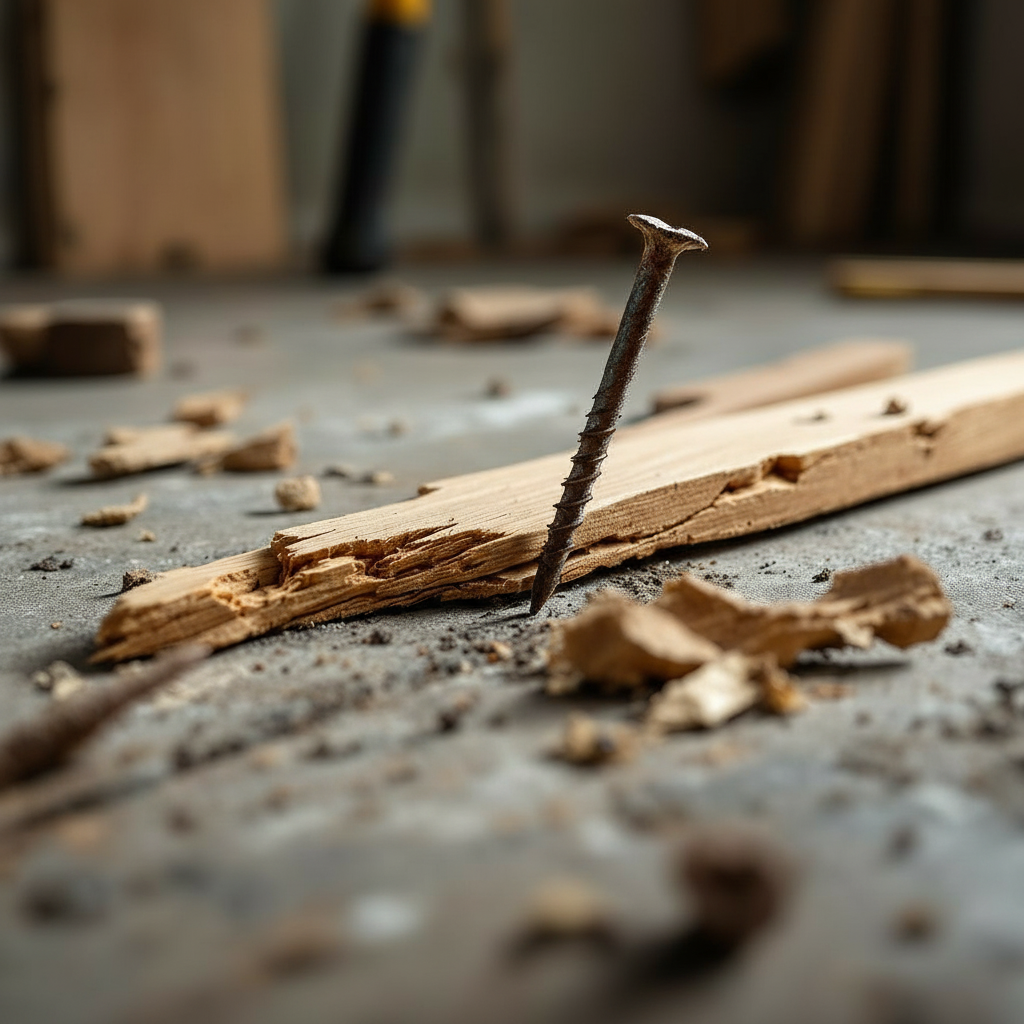
I've seen this play out maybe 300 times now — somebody grabs a crowbar, starts prying apart an old dresser, and suddenly they've got 40 pounds of splintered wood with rusty nails sticking out everywhere. Now it's actually *more* dangerous to handle. Plus? A lot of disposal facilities charge extra for loose debris. That IKEA bookshelf you smashed into kindling might cost you more at the dump than if you'd left it intact.
Before you grab that sledgehammer, contact your chosen disposal facility or hauler. You might inadvertently create a more complex and pricier problem.
DIY Safety: A Crucial Reality Check
Let's talk about what can actually hurt you.
Old insulation? You need a respirator — the American Academy of Dermatology's pretty clear about protecting your skin from that stuff. But there's something else nobody mentions: **if your buddy throws out his back helping you move a couch, whose insurance pays for his ER visit?**
Probably not yours.
Professional junk removal companies carry liability insurance around $2M (ours does). They've also done this 15,000 times. You've done it... maybe twice? Three times if you moved a lot in your twenties?
For any demolition work, removal of hazardous materials, or excessively heavy items, **skip the DIY route**. The potential risks to health, property, and finances are simply not worth it.
What Other Guides Often Omit
Look — many homeowners waste valuable time pre-sorting their junk into meticulous piles.
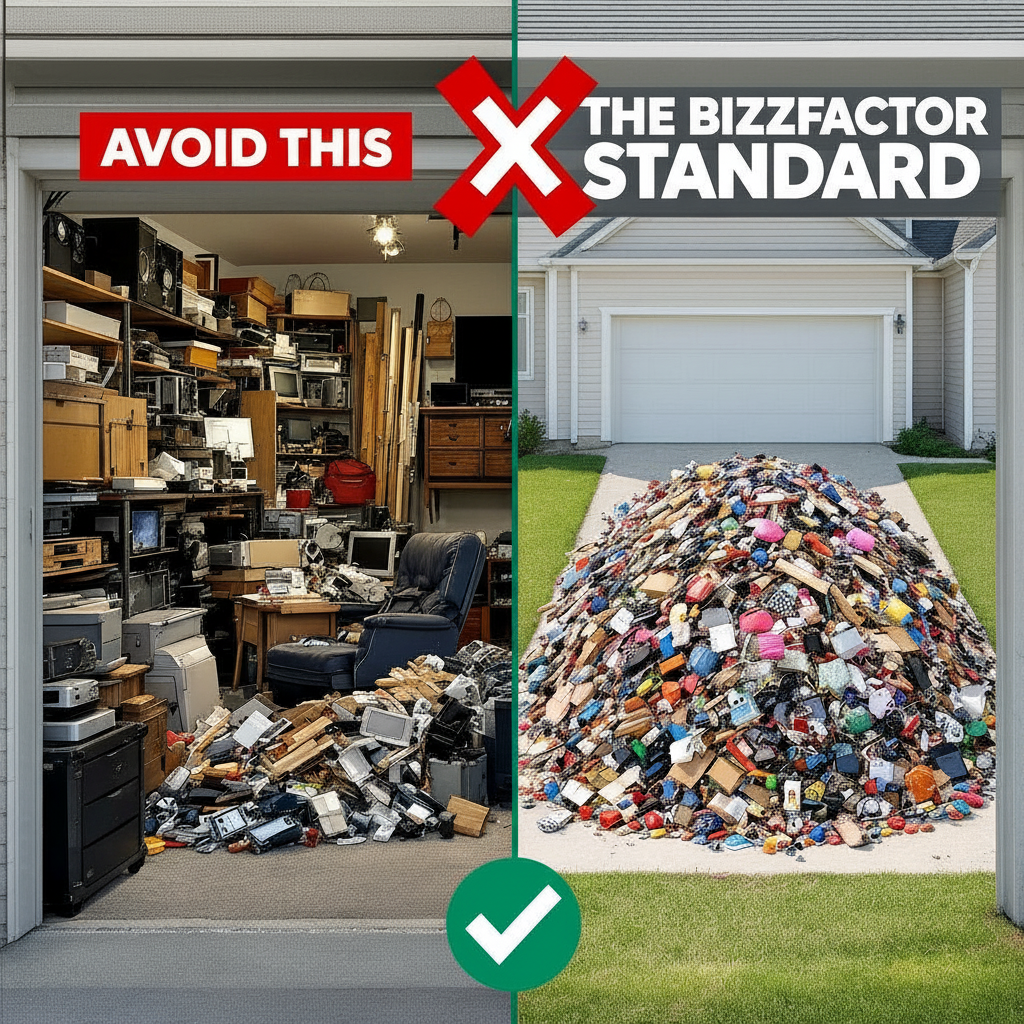
Here's the thing: in reality, most professional junk removal services sort items at their facility for efficient recycling and disposal. Your time is better spent simply consolidating all items in an accessible location, such as your driveway or garage. This makes the pick-up process faster for professionals, which can often translate into cost savings for you.
Don't organize by material type. Just pile it where the truck can reach it.
When Professional Junk Removal Becomes Essential
Anything hazardous? Over 100 pounds? Needs a special permit to haul?
Stop right there. You're not in DIY territory anymore. You're in "one screw-up costs you $5,000 in EPA fines" territory, and I'm not exaggerating even a little.
Certain materials can't legally (or safely) be touched by homeowners. Companies like 1-800-GOT-JUNK and College Hunks have the certifications and training for this stuff. You don't.
**Call a pro for these — no exceptions:**
- **Asbestos-containing materials:** Seriously, just don't. EPA doesn't mess around.
- **Lead-based paint debris:** One mistake here costs you thousands in fines.
- **Chemical containers and solvents:** That includes old paints, cleaners, mystery fluids from the garage.
- **Medical waste and expired medications:** There's a reason pharmacies have special bins for this stuff.
- **Refrigerants and propane tanks:** Environmental regulations require professional degasification.
- **Heavy appliances:** Anything over 100 pounds — refrigerators, washing machines, stoves.
We helped a homeowner in Brookhaven last month who found paint cans during a basement cleanout. Three of them? Lead-based paint from the '70s. If he'd tossed those in the regular trash, he'd be looking at a $200 fine minimum, plus potential environmental contamination charges. We handled it legally for $140.
**Here's the thing about appliances:** They're heavy as hell. A side-by-side fridge weighs around 250 pounds. Your washing machine? Probably 180. And they're not just heavy — they're awkward, with sharp edges and weird weight distribution that'll throw out your back if you're not careful.
Our crews use appliance dollies, furniture sliders, and lifting straps rated for this exact purpose.
You probably have... a moving blanket? Maybe?
Why Risk Moving a Refrigerator Yourself?
Seriously, what's beneficial about attempting to move a 250+ pound, awkward refrigerator with sharp edges yourself?
The potential upsides are negligible compared to the significant risks.
Now, we've intervened in countless DIY disasters: damaged walls, pulled backs, scratched floors, and even emergency room visits. Any perceived "savings" quickly vanish when factoring in repair costs and medical bills. That's the real issue. These are jobs best left to professionals with the right equipment and experience. For safe appliance removal, consider our [appliance removal services](https://bizzfactor.com/appliance-removal-services).
Cost Analysis: DIY vs. Professional Services
Let's talk money — because that's usually what tips the decision one way or the other.
**DIY removal** runs you about $75-$200 when everything goes according to plan (disposal fees plus truck rental). **Professional services** for small to medium loads usually cost $200-$500, but you're getting labor, transportation, proper insurance, and someone else dealing with the paperwork.
Here's what you're actually paying:
**If you're doing it yourself, expect:**
1. Truck rental — anywhere from $40 to $100 depending on whether it's a Tuesday or a Saturday (yes, really)
2. Dump fees — the transfer station will charge you $25-$80 based on weight or volume
3. Gas money — figure $20-$50 depending how far you're driving with a load
4. Your entire Saturday — realistically 6-10 hours once you factor in loading, driving, waiting in line at the dump, unloading, driving back, maybe making a second trip
5. The stuff nobody budgets for — property damage from banging furniture down the stairs, potential injury, fines if you dump something you shouldn't have
**What you're paying pros for:**
- Labor (the crew does the heavy lifting, dismantling, all of it)
- Trucks designed for this — not your buddy's F-150
- Insurance that actually covers damage (yours probably doesn't)
- They know what the dump will accept before they drive there
- Your weekend back (usually takes us 90 minutes, not 10 hours)
A guy in Sandy Springs thought he'd save money doing his basement cleanout himself. Made four trips to the dump over two weekends. Spent $215 total. Pulled something in his back on trip three.
We would've charged him $320 and finished it in 90 minutes.
That's the pattern I see constantly — people underestimate by about 40%, sometimes more. The hidden cost is often your entire weekend.
Is saving $150 truly worth 10 hours or more of physically demanding work, potential hazards, and logistical challenges?
Real Client Example: Mark's DIY Ordeal
Mark tried hauling an old couch, broken table, and some basement boxes himself. Here's how it went:
Trip one: Couch wouldn't fit in his SUV. Had to go home, recruit his neighbor, rent a trailer.
Trip two: Transfer station turned away his paint cans. "Hazardous materials, sir." Back home with half the load still in the trailer.
Trip three: Finally ditched what they'd accept.
He spent 12 hours on this. Cost him $180 in fees and rental. Frustration level? Through the roof.
We handled the rejected stuff for $275, one trip, done in two hours. Ask me which approach I'd pick.
Safety Considerations and Risk Assessment

Real talk — improper lifting technique sends more people to the ER than you'd think. Add unstable loads or mystery basement chemicals to the mix, and you've got a recipe for disaster. That's why anything over 50 pounds individually should probably get a professional assessment.
Our certified technicians frequently encounter DIY mishaps.
Just last month, a client suffered a back injury attempting to move a water heater, simultaneously damaging drywall while navigating stairs. The repair cost alone was $1,200 – significantly more than the initial cost of hiring a professional.
**Red flags that strongly recommend professional help:**
1. **Items requiring two or more people to lift.**
2. **Navigating stairs** with heavy, bulky, or awkward objects.
3. **Unknown containers** or materials emitting chemical smells.
4. **Electrical appliances still wired** or containing components like refrigerants.
5. Items exhibiting signs of **mold, pests, or biohazards**.
Most homeowners underestimate the weight of objects by at least 50 pounds, a common observation in our line of work. While the International Residential Code provides safety guidelines, most homeowners lack the proper training and equipment for heavy lifting and hazard assessment.
Professional services are licensed, bonded, and carry extensive liability insurance – layers of protection that homeowners typically lack.
If you encounter a mysterious smell from basement boxes, it's safer to avoid direct contact and consult an expert.
Equipment Makes the Difference
Proper equipment isn't optional; it's absolutely essential for safe and efficient junk removal.
Our specialized trucks feature hydraulic lifts, and our teams use moving straps rated for 1,000+ pounds, along with a full array of protective gear for every conceivable scenario.
Your back, and your friend's back, weren't designed to lift refrigerators or pianos.
Leave these tasks to those with the right tools.
Disposal Regulations and Compliance
Local disposal regulations are highly variable and complex. Many municipalities impose strict restrictions on what materials can enter regular waste streams, often requ
In-Depth Look
Detailed illustration of key concepts
Visual Guide
Infographic illustration for this topic
Side-by-Side Comparison
Visual comparison of options and alternatives
Sources & References
- DIY Or Professional Junk Hauling? What's Right For You - Junkzilla
- DIY Junk Removal vs. Professional Hauling: What's Right for You?
- DIY vs Pro Junk Removal Services - 123JUNK
- Professional Junk Removal vs DIY Hauling
- Building Codes, Standards, and Regulations: Frequently Asked ...
- New Building Upgrades Codes and Regulations in Los Angeles
- Building Codes and Standards - 101 Guide | ROCKWOOL Blog
- [PDF] Building Codes Toolkit for Homeowners and Occupants - FEMA
- Navigating California Building Codes: Best Practices for Facilities ...
Frequently Asked Questions
Need Professional Help?
Find top-rated junk removal experts in your area