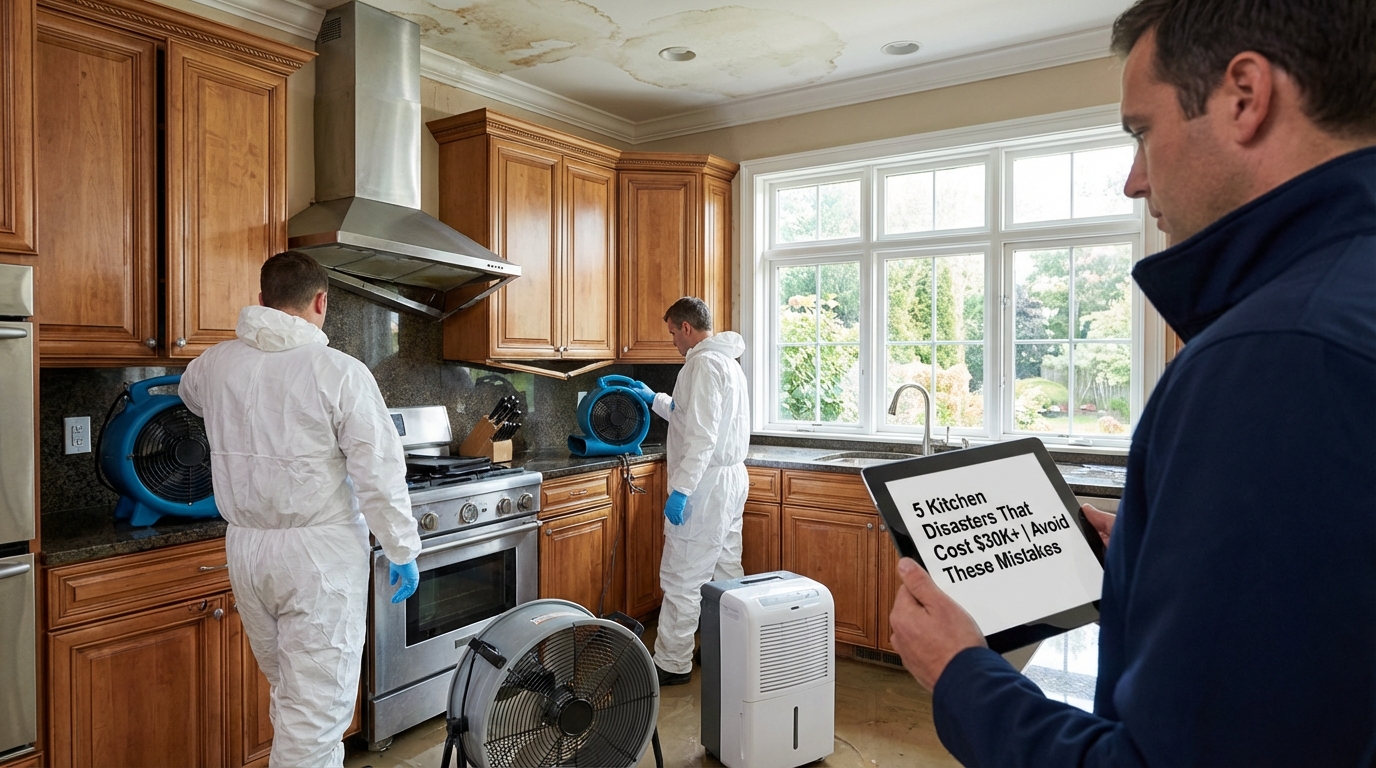
Avoid 5 kitchen disasters costing $30K+. Expert inspectors reveal structural, electrical, plumbing mistakes. Prevention tips from licensed pros.
Key Takeaways
- # 5 Kitchen Disasters That Cost $30K+ | Avoid These Costly Mistakes for a Seamless Renovation You know what nobody tells you about kitchen remodels
- Or the DIY electrical job that cost $38,000 in fire damage
- I've been covering home renovations for over a decade, and I've seen the same disasters repeat like a broken garbage disposal
- At BizzFactor, we've analyzed hundreds of projects, and the pattern's depressingly consistent — **kitchen disasters regularly hit the $30,000+ mark**
Key Takeaways
5 Kitchen Disasters That Cost $30K+ | Avoid These Costly Mistakes for a Seamless Renovation
You know what nobody tells you about kitchen remodels? The horror stories. Everyone shows you the glossy after photos on Instagram, but they skip the part where someone's uncle removed a load-bearing wall and the ceiling dropped three inches. Or the DIY electrical job that cost $38,000 in fire damage.
I've been covering home renovations for over a decade, and I've seen the same disasters repeat like a broken garbage disposal. At BizzFactor, we've analyzed hundreds of projects, and the pattern's depressingly consistent — **kitchen disasters regularly hit the $30,000+ mark**. We're talking structural failures, electrical fires, flooding, foundation issues, and ventilation so bad it breeds toxic mold in your walls.
Look — here's what keeps me up at night: most of these catastrophes are totally preventable. By understanding where other homeowners went sideways (and how to dodge those landmines), you can actually get through a kitchen remodel without a second mortgage.
1. Removing Load-Bearing Walls Without Professional Engineering & Permits
Don't even think about it.
Yanking out a load-bearing wall without a structural engineer and permits? That's how you get **$40,000-$60,000 remediation bills** — and I'm not exaggerating. A homeowner in Silver Spring thought the wall between their kitchen and dining room was "just drywall." Three weeks after demo, their ceiling sagged three inches. Doors wouldn't close. Cracks spiderwebbed across every room upstairs.
The myth that kitchen walls are never structural? That's killed more budgets than granite countertops. When you remove a load-bearing wall, the weight doesn't magically disappear — it redistributes, usually onto joists or beams that can't handle it. You get stress fractures. Emergency shoring (that's $8,000-$15,000 just to keep your ceiling from falling while you panic). Custom steel beams at $200+ per linear foot, installed. Foundation work that'll make you physically ill when the invoice arrives.
The IRC requires engineered drawings and inspections for structural modifications — period. My go-to contractor in Bethesda won't even touch a wall until we've got the PE stamp and permits in hand. Why? Because he watched a colleague spend three years fighting a lawsuit over a DIY-client who insisted a wall "looked fine to knock down." That wall held up the entire second story. Spoiler: it wasn't fine.
The Sneaky Load Path Flaw Many Overlook
I've watched contractors correctly spec a massive steel beam, install it perfectly... and transfer all that weight onto floor joists designed for bedroom furniture, not structural loads.
Here's the thing: so what actually happens when you mess this up? Foundation cracks start showing up. Your slab starts sinking in spots. Floors sag so gradually you don't notice until your refrigerator's leaning like the Tower of Pisa. And here's the worst part — this plays out over months or years, which makes pinning down the cause a total nightmare. (Yeah, most insurance policies won't touch "gradual settlement" — learned that one the expensive way.)
A structural engineer in Rockville put it like this: "Everyone obsesses over the beam. Nobody asks where that beam's weight ends up." You need someone to trace the entire load path — from your new beam through the subflooring, down through foundation elements, all the way to the soil under your house. We caught this exact problem in three Rockville properties last year before disaster struck. Saved each homeowner somewhere around $15,000+ in emergency foundation work that would've blindsided them six months later.
For more on this, check out our article on [Understanding Your Home's Foundation](/blog/understanding-your-homes-foundation).
How to Prevent Structural Disasters in Your Kitchen Remodel
Real talk — here's what you actually need:
1. **Hire a Licensed Structural Engineer**: Not your contractor's opinion. Not your architect's gut feeling. An actual PE-stamped engineer who runs calculations and takes professional liability for their work.
2. **Obtain Proper Permits**: These aren't bureaucratic annoyances. They're your shield against uninsured contractors cutting corners. They trigger inspections that catch problems before your walls are closed up.
3. **Engage Certified & Insured Contractors**: Verify their insurance (liability AND worker's comp — seriously, check the certificates). Ask for references. Call those references and ask specific questions about code compliance.
Get at least three detailed quotes. Verify insurance coverage independently. Check references like you're hiring a nanny for your kids, because you're trusting these people with your home's structural integrity.
More guidance here: [Hiring the Right Contractor for Your Home Renovation](/resources/hiring-the-right-contractor-for-home-renovation).
2. Electrical Work That Creates Fire Hazards & Code Violations
DIY electrical work is how you turn a $12,000 kitchen remodel into a $38,000 insurance claim.
I'm not being dramatic. Last month we investigated a kitchen fire in Arlington. The homeowner had watched YouTube videos and wired their microwave himself. Fire started behind the appliance, spread through wall cavities before anyone smelled smoke. Total damage: $38,000. His explanation? "The tutorial made it look easy."
YouTube doesn't teach National Electrical Code compliance. It doesn't explain why dedicated 20-amp circuits matter for anything that heats or spins (microwaves, toasters, that $400 espresso machine). It skips the part about GFCI outlets within six feet of water sources, proper grounding, and why junction boxes need to stay accessible.
Here's what your kitchen actually needs (not the Instagram version):
**Dedicated 20-amp circuits** for anything pulling serious power. Refrigerator? Dedicated circuit. Dishwasher? Same deal. Microwave? You got it. When all these share one circuit and kick on simultaneously while you're running the disposal, you're rolling dice — and hoping the breaker trips instead of the wires heating up inside your walls where smoke won't be visible until it's billowing from an outlet.
**GFCI outlets near water sources.** Code says within six feet of a sink, but honestly? Just put them anywhere water exists. These cut power in about 1/30th of a second when they detect a ground fault. They're why you're alive after dropping a plugged-in hairdryer in the sink (don't test this).
**Correct wire gauges for the load.** 14-gauge handles 15 amps. 12-gauge handles 20. Use 14 on a 20-amp circuit and that wire becomes a heating element inside your wall. You won't smell it cooking until way too late.
**Junction boxes that stay accessible.** Can't bury them in drywall. Can't hide them behind cabinets. Future you (or the next owner) needs to access them. Period.
**AFCI protection on kitchen circuits.** Most jurisdictions require these now. They detect arcing — that's tiny electrical sparks — before those sparks find something flammable.
A pro electrician's got the 240V range circuit thing down cold — they've run those lines a thousand times without creating fire hazards. They understand why junction boxes can't get buried. They install Arc-Fault Circuit Interrupters that'll catch problems before your insurance adjuster shows up with bad news.
For more detail: [Understanding Electrical Requirements for Kitchen Appliances](/blog/understanding-electrical-requirements-for-kitchen-appliances).
Why Do Electrical Fires Spread So Rapidly?
So here's the nightmare: electrical fires start where you can't see them. Inside walls. Behind appliances. Under cabinets.
A loose wire connection creates an arc — basically a tiny sustained lightning bolt. That arc heats up everything nearby. Insulation melts. Wood smolders. And here's the terrifying part: fire doesn't just burn straight up like a campfire. It travels through wall cavities like a rat in your basement — horizontally, vertically, following air gaps you didn't know existed.
By the time your smoke detector screams, flames could be in three different walls. Maybe four.
Now, now, i talked to a fire inspector in Falls Church who showed me photos from a kitchen fire that started behind a dishwasher. Overloaded circuit, undersized wire. The wire basically became a 1400-degree heating coil inside the wall for probably six months (nobody knows exactly how long). When it finally found enough oxygen and something flammable? The fire spread to five rooms before the fire department arrived.
Don't gamble. Always hire licensed and insured electrical professionals. Always.
Our full safety checklist: [Electrical Safety Checklist](/blog/electrical-safety-checklist).
3. Plumbing Mistakes That Flood Your Home & Promote Mold Growth
A contractor I know in Fairfax calls bad plumbing "the gift that keeps on taking" — because you don't find out about it until six months later when black mold's colonized three walls and your insurance company's explaining why they won't cover "gradual damage."
We're talking **$30,000-$50,000 repairs** when plumbing goes sideways. Water damage. Mold remediation. Sometimes you're tearing out the whole kitchen and starting over.
Now, most kitchen renovations involve relocating sinks, adding dishwashers, or running new water lines. What homeowners (and untrained contractors) miss: water pressure dynamics, proper drainage slopes, correct venting. You get sluggish drains, chronic backups, and hidden leaks that eat subflooring, cabinets, and walls.
That Fairfax property I mentioned? DIY plumber moved the kitchen sink twelve feet from its original location. Didn't understand vent stack requirements. Didn't calculate drainage slope properly. Six months later, slow leak behind the wall created a mold farm in three rooms. Insurance denied the claim — gradual damage exclusion. Homeowner paid $43,000 out of pocket.
Imagine getting that bill.
The plumbing code's got all kinds of requirements about pipe sizing based on what's actually flowing through them, venting so your drains don't gurgle and trap sewer gases in your house, backflow prevention so dishwasher water doesn't contaminate your drinking supply. Licensed plumbers have this stuff memorized — they're not guessing or hoping it works out. They calculate, measure, test everything before they close up walls.
More here: [Smart Plumbing Updates for Your Home](/blog/smart-plumbing-updates-for-your-home).
How Much Water Damage Warrants Professional Intervention?
FEMA guidelines recommend professional assessment for *any* water damage exceeding
In-Depth Look
Detailed illustration of key concepts

Visual Guide
Infographic illustration for this topic

Sources & References
- FAQ Hub - Bee Setups
- What's the best way to assess the actual cost of doing major home ...
- Building Codes, Standards, and Regulations: Frequently Asked ...
- Building Codes and Standards - 101 Guide | ROCKWOOL Blog
- [PDF] Building Codes Toolkit for Homeowners and Occupants - FEMA
- 5 Reasons Building Codes Should Matter to You
- [PDF] Introduction to Model Codes
Frequently Asked Questions
Need Professional Help?
Find top-rated kitchen & bath remodeling experts in your area