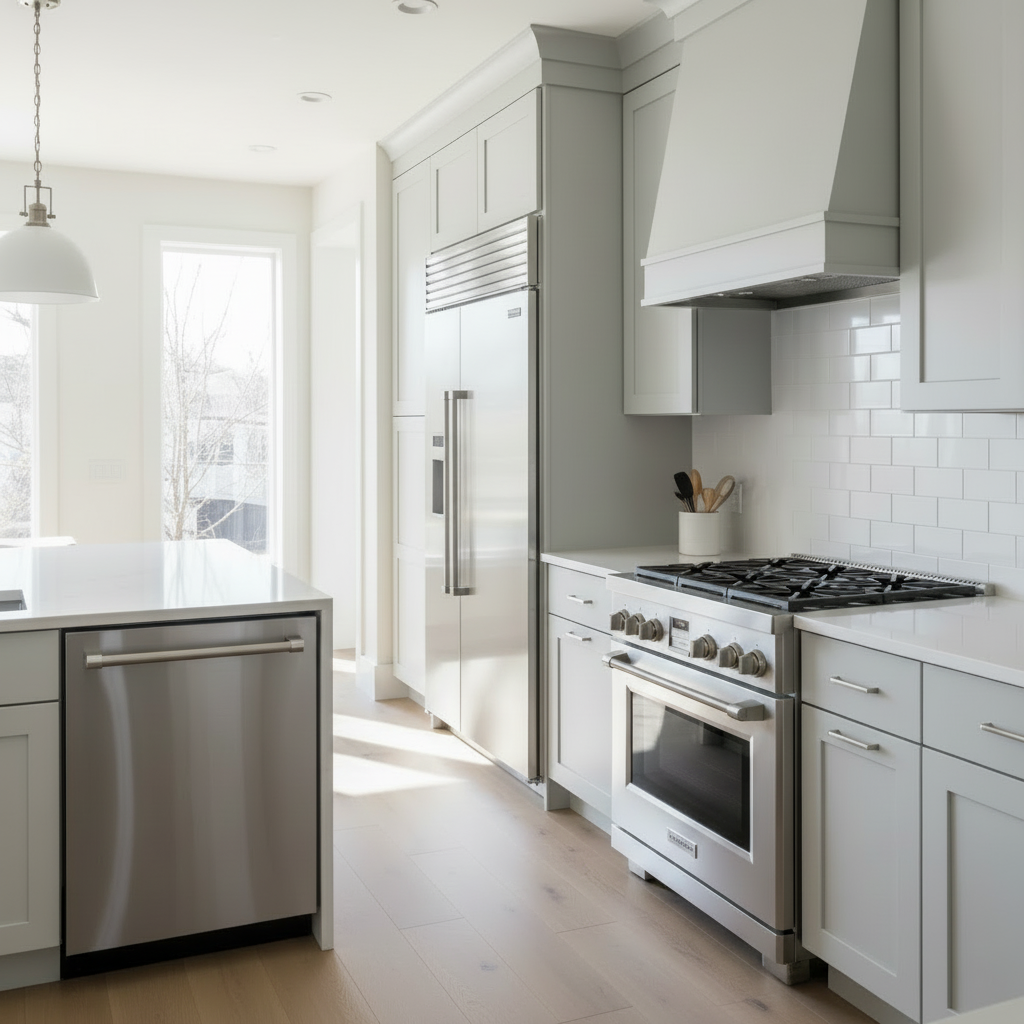
Expert kitchen appliance buying guide from licensed professionals. Avoid costly mistakes with our space planning, brand reliability & installation tips.
Key Takeaways
- **Entry-Level ($$$, e.g., Maytag, GE, Amana, Hotpoint)**: Look, these are just workhorses. They'll run for 10-12 years with basic maintenance. A fridge keeps things cold. A dishwasher cleans dishes. A range has burners and an oven that heats up. You get standard finishes (white, black, stainless steel) and simple controls — knobs, basic digital displays. What you DON'T get: fancy features, quiet operation, premium materials, smart connectivity. But honestly? For a lot of people, that's fine. A Maytag dishwasher from this tier will clean your plates. Won't whisper while it does it, but it'll get the job done.
Key Takeaways
Kitchen Appliance Buying Guide 2024: What Actually Matters (From Someone Who's Seen It All Go Wrong)
We've inspected over 300 kitchens this year at BizzFactor. You know what we find? The same expensive mistakes, over and over.
Most of them come down to one thing: people skip the boring parts. They fall in love with a Wolf range or that perfect French-door fridge and figure they'll make it work. Then installation day comes.
Look — look — this is the guide I wish I could hand every homeowner before they swipe their credit card. Same topics you've seen elsewhere — measurements, budgets, energy ratings — but with the real stories attached. The ones that cost people actual money.
Section 1: Why Measuring Your Kitchen Isn't Optional (And How to Actually Do It)
Based on what we see in the field, about 80% of installation disasters could've been prevented with a tape measure and ten extra minutes.
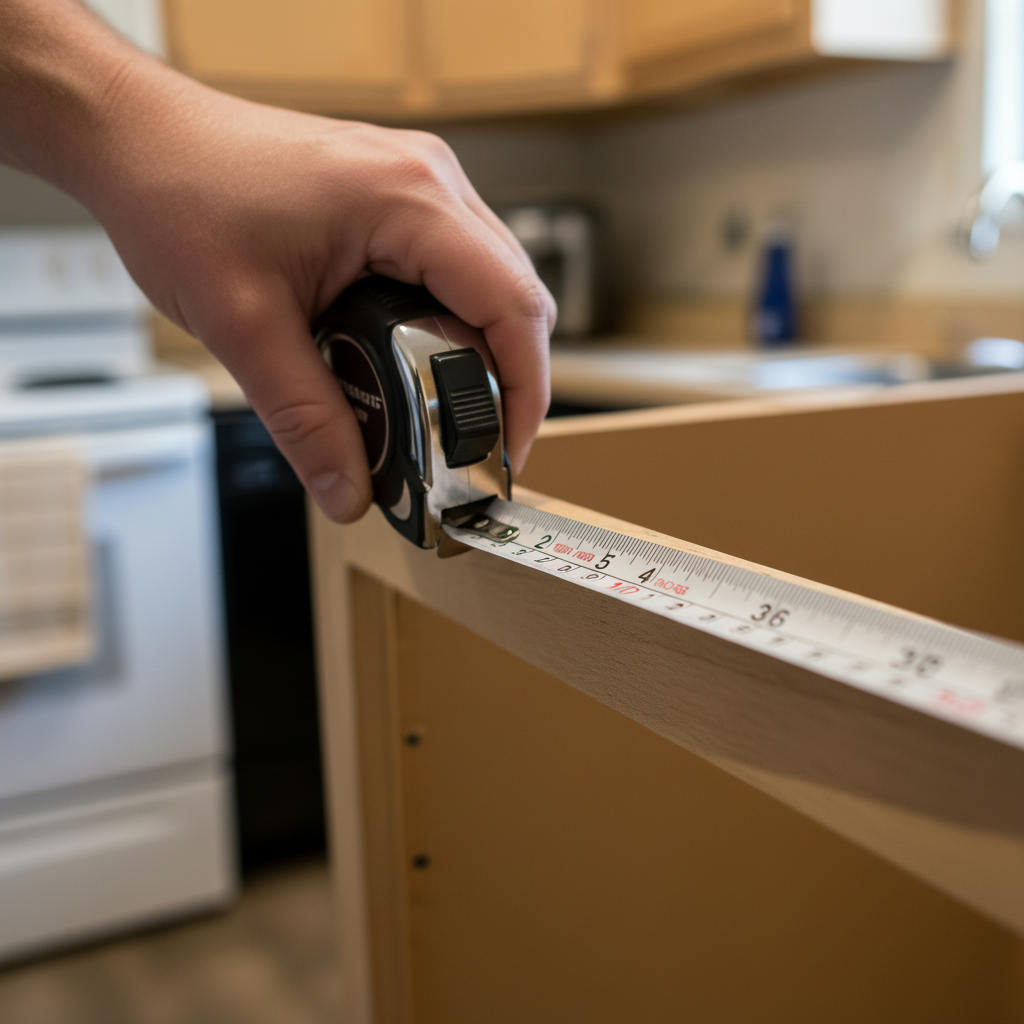
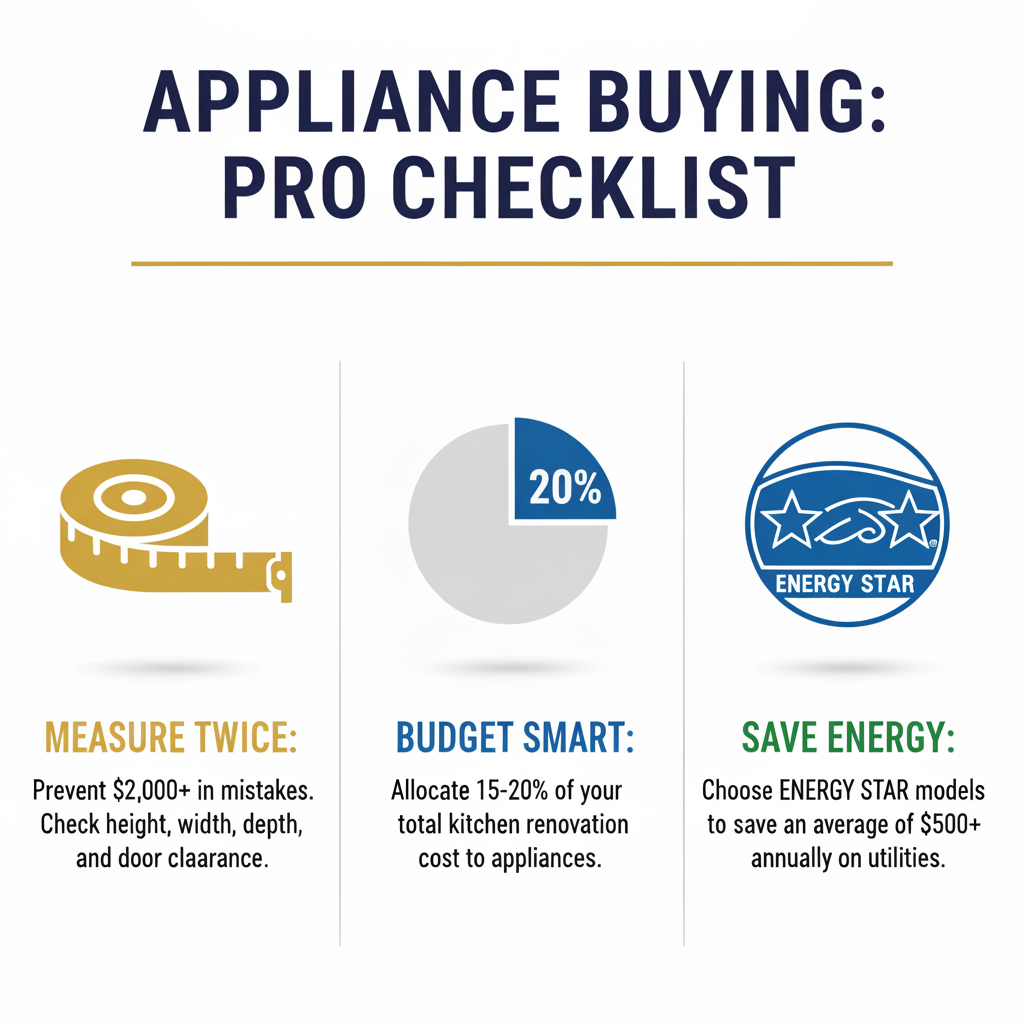
Our techs have a saying: *measure twice, cut once*. Sounds obvious until you're the person who just spent $2,000 on cabinet modifications because your new fridge is half an inch too wide. (And that $2,000? That's just the carpentry. Doesn't include your time off work, the dust everywhere, or the week you're eating takeout because your kitchen's torn apart.)
Here's how to measure so you don't become that person.
The Step-by-Step (Yes, Get Your Tape Measure Right Now):
We're talking about 1/8th of an inch here.
Maybe less.
Here's the thing: i've literally watched a $3,200 Samsung fridge get rejected at delivery because the cabinet opening measured 35 7/8 inches and the unit needed a clean 36. The delivery guys won't force it. They'll just leave. That's not me being picky — that's physics and liability insurance.
1. **Height (Floor to Ceiling)**: Start at your finished floor (not the subfloor if you're mid-reno) and measure straight up. But don't stop at the ceiling drywall. Got crown molding? Light fixtures? A soffit you forgot about? Those all eat into your clearance. For over-the-range microwaves, you've got two critical measurements: cabinet base to ceiling, and range top to the bottom of where that microwave will sit. Manufacturers usually want 24-30 inches between your cooktop and the hood (depends on whether it's gas or electric, and how powerful the ventilation is). And hey — account for your backsplash height if you're installing a range. I've seen people forget about a 4-inch tile backsplash and end up with a gap they can't fill.
2. **Width (The Delivery Path Nobody Thinks About)**: Measure every single doorway from your front door to the kitchen. Your entry door. The hallway. That weird turn near the bathroom. Especially corners — appliances don't pivot like furniture. You need 36 inches minimum for hallways, 42 is better. Got stairs? Measure the width, the height above each step, and the ceiling clearance at the landing. I watched a delivery crew in Ansley Park struggle for 45 minutes with a $4,000 Sub-Zero because nobody measured the stairwell turn. They eventually gave up. The homeowner paid a 20% restocking fee ($800) plus another delivery charge to get a smaller model. For the actual appliance space, measure your cabinet opening at the top, middle, and bottom — walls aren't always perfectly square, especially in older homes. And measure with the doors/handles attached if they don't come off. That adds inches.
3. **Depth (Where Your Utilities Live)**: This is where people get cocky. They measure wall-to-counter and call it done. But where's your electrical outlet? Your gas line? The water supply for the ice maker? A refrigerator might measure 30 inches deep, but if your outlet is mounted on the wall (not recessed), you need to add 1-2 inches. Same for gas connections on ranges — those brass fittings stick out. For built-in wall ovens, you're measuring the cabinet cutout depth, not just the wall, and you've got to account for the oven's mounting flange and how it sits in that opening.
4. **Clearance Space (The Ventilation Nobody Sees)**: Most manufacturers want 2-3 inches on all sides. Sometimes more, depending on the model. I've seen so many people jam appliances into tight spots thinking they saved space. What they actually did was kill airflow.
Your fridge has a compressor. That compressor generates heat — a LOT of it. Needs somewhere to go.
Without circulation, that compressor's working overtime. Your electric bill creeps up $15-20 a month. The whole unit quits three years early instead of lasting ten. Same deal with dishwashers and ovens. Check the manual for your specific model — high-end ranges (especially pro-style gas units) often need 6+ inches on the sides and specific top clearances. The manufacturer isn't being difficult. Physics is.
The $800 Cabinet Story (A Buckhead Cautionary Tale)
A client last month bought a beautiful KitchenAid counter-depth refrigerator. Made perfect sense for her kitchen layout — clean lines, wouldn't stick out into the walkway.
Except her existing cabinet opening was 35 inches wide. The fridge needed 36. Not for the unit itself — for the installation clearance and door swing specified in the manual.
So what was supposed to be a simple swap turned into a cabinet modification project. $800 for a carpenter to widen the opening, match the existing finish, repaint. Took three days. Could've been avoided with five minutes and a tape measure at the showroom.
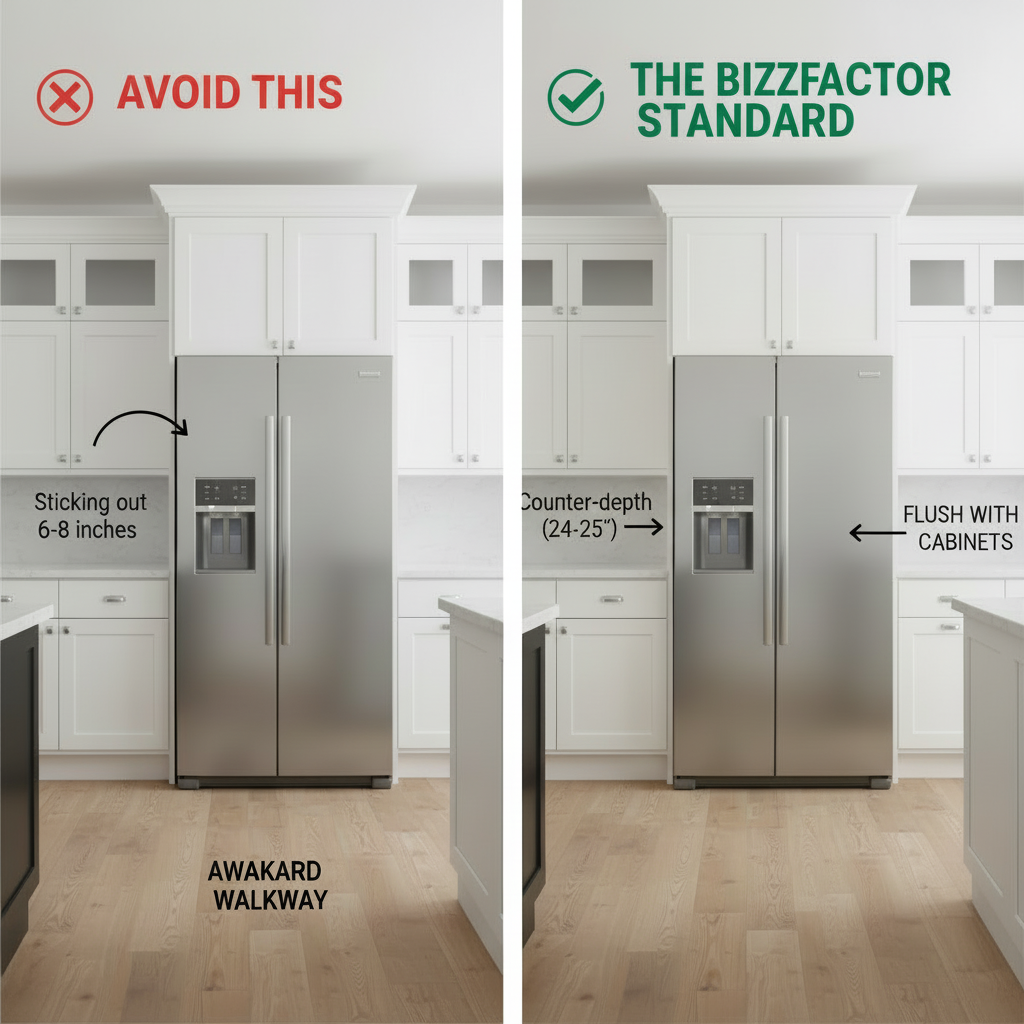
**Counter-depth vs. standard-depth** — this one trips up almost everyone.
Counter-depth sits flush with your cabinets (around 24-25 inches deep). Looks built-in. Super clean. Standard-depth sticks out — usually 30+ inches. Holds way more food, but yeah, it's jutting into your kitchen. In a galley layout or tight space, that can actually cost you walking room.
Neither one's inherently better. Just depends what you're optimizing for.
You want it to look like a $50,000 magazine kitchen? Go counter-depth. You've got three teenagers who eat like locusts? Standard-depth probably makes more sense. I've seen people agonize over this decision for weeks when honestly, it's just about priorities.
Bring a tape measure to the appliance store. I don't care how good the salesperson seems. Compare the spec sheet dimensions against your actual measurements. Right there in the aisle. The spec sheet shows exact dimensions, required clearances, and where utilities connect. This takes maybe ten minutes and can save you thousands in restocking fees, modifications, and re-delivery charges.
The "Will It Actually Fit Through My Front Door?" Check
Here's the deal: before you commit to that $3,000 professional fridge, physically verify it can get into your house.
Not just into the kitchen. Into. Your. House.
We've done returns where the appliance was perfect for the kitchen but couldn't make it past a 32-inch doorway or up a narrow staircase.
Restocking fees run 15-25% of purchase price. On a $3,000 fridge, that's $450-$750 you just donated for the privilege of not measuring.
Measure every doorway (height and width, accounting for the door trim that reduces the opening). Measure hallway width and ceiling height (watch for light fixtures). Measure stairwells at the narrowest point, including the landing where the delivery crew has to pivot. And remember — the appliance comes in packaging that adds 2-4 inches to every dimension.
For really expensive or large items, some people hire a rigging company just to verify the path and plan the delivery. It's an extra $150-$200. Compare that to a $750 restocking fee.
Section 2: What to Actually Spend (And Where to Spend It)
Now, a guy in Brookhaven just dropped $8,000 on a Viking range for his $25,000 kitchen remodel. That's nearly a third of his budget on one appliance. Six months later, he's mad because his contractor-grade dishwasher sounds like a jet engine and his basic fridge can't hold a week's groceries.
**Aim for 15-20% of your total kitchen budget on appliances.**
That's not some made-up number. When we check in with clients six months out, the ones who stuck to that ratio are way happier. They didn't blow everything on one showpiece and then cheap out everywhere else. They didn't spend so little that they're already annoyed.
Balance matters more than you'd think.
How Appliance Tiers Actually Break Down:
So yeah, you're probably wondering why some dishwashers cost $600 and others cost $2,000. What are you actually getting? Let me break it down without the sales pitch.
- **Entry-Level ($$$, e.g., Maytag, GE, Amana, Hotpoint)**: Look, these are just workhorses. They'll run for 10-12 years with basic maintenance. A fridge keeps things cold. A dishwasher cleans dishes. A range has burners and an oven that heats up. You get standard finishes (white, black, stainless steel) and simple controls — knobs, basic digital displays. What you DON'T get: fancy features, quiet operation, premium materials, smart connectivity. But honestly? For a lot of people, that's fine. A Maytag dishwasher from this tier will clean your plates. Won't whisper while it does it, but it'll get the job done.
In-Depth Look
Detailed illustration of key concepts
Visual Guide
Infographic illustration for this topic
Side-by-Side Comparison
Visual comparison of options and alternatives
Sources & References
- What I'm Considering As I Buy My New Kitchen Appliances
- The Ultimate Guide to Perfect Kitchen Appliance Placement
- Kitchen Appliances Buying Guide 2024: Factors, Features ...
- No Regrets: 9 Vital Questions to Ask Before Buying Your Next ...
- Home Appliance Buying Guide: How to Choose ...
- Building Codes, Standards, and Regulations: Frequently Asked ...
- Building Codes and Standards - 101 Guide | ROCKWOOL Blog
- [PDF] Building Codes Toolkit for Homeowners and Occupants - FEMA
- ICC - International Code Council - ICC
- [PDF] Introduction to Model Codes
Frequently Asked Questions
Need Professional Help?
Find top-rated kitchen & bath remodeling experts in your area