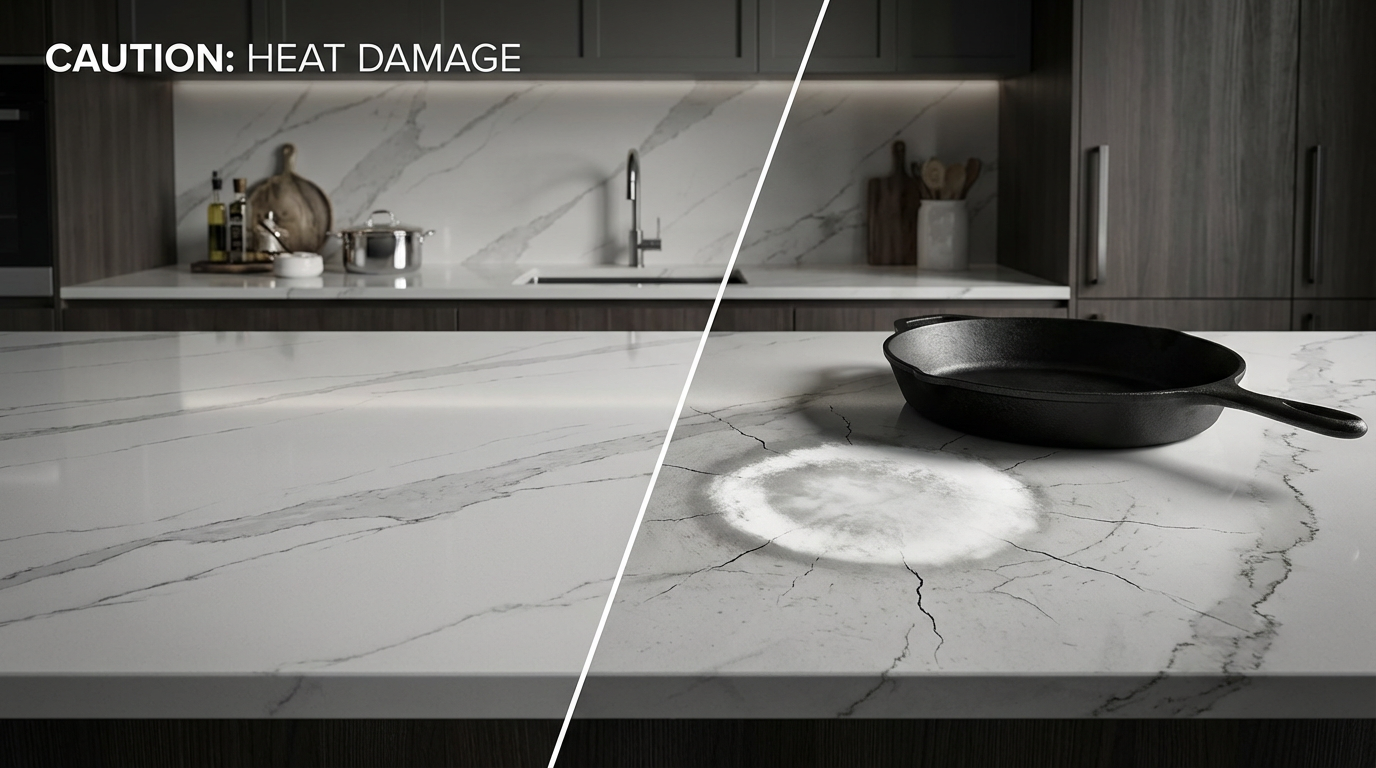
Protect your quartz countertops from damage! Learn why hot pans and appliances cause irreversible issues, void warranties, and cost thousands in repairs. Essential tips to save your quartz.
Key Takeaways
- **White or Lightened Burn Spots:** Milky haze or white 'blush' where the resins degraded and turned opaque.
- **Hairline Cracks:** Fine lines radiating out from the hot spot. Thermal stress cracks.
- **Raised or Warped Surfaces:** Extreme heat can make the countertop bubble or deform slightly.
- **Stubborn Stains/Discoloration:** Heat changes the resin chemistry, makes it more porous, more likely to stain permanently.
- **Loss of Sheen:** The affected area goes dull. Loses that polished gloss.
Key Takeaways
Hot Pans on Quartz? Our Pros Stop $3K Damage Daily – A Comprehensive Guide
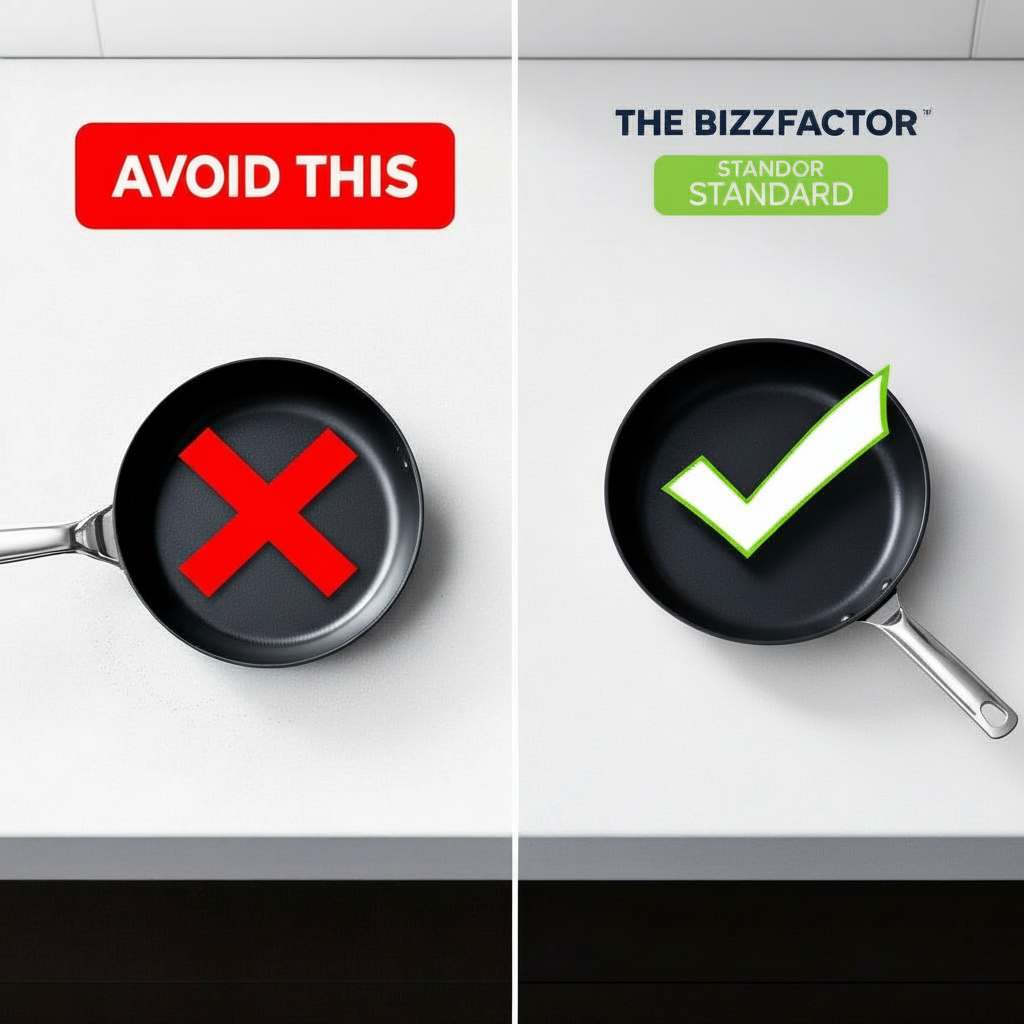
Never — and I mean *never* — place a hot pan directly on quartz.
You know how many calls we get about this? At least three a week. Usually from someone who just set down a skillet and heard that sickening crack. Or worse, they didn't hear anything but woke up the next day to a ghostly white ring burned into their brand-new island.
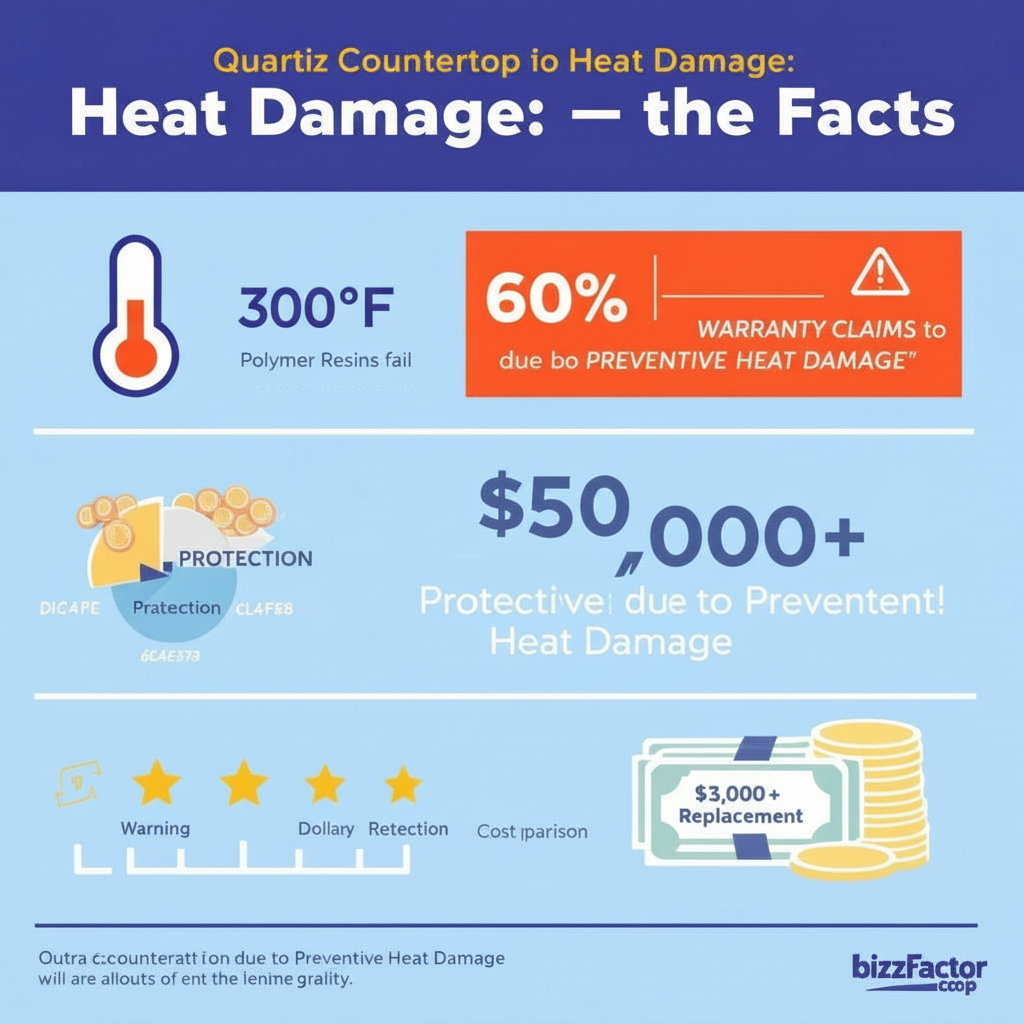
Quartz can't handle temps over 300°F. That's it. Hit that threshold and you're looking at permanent damage — the kind that voids your warranty before you can even call the manufacturer.
What Temperature Destroys Quartz Countertops Permanently?
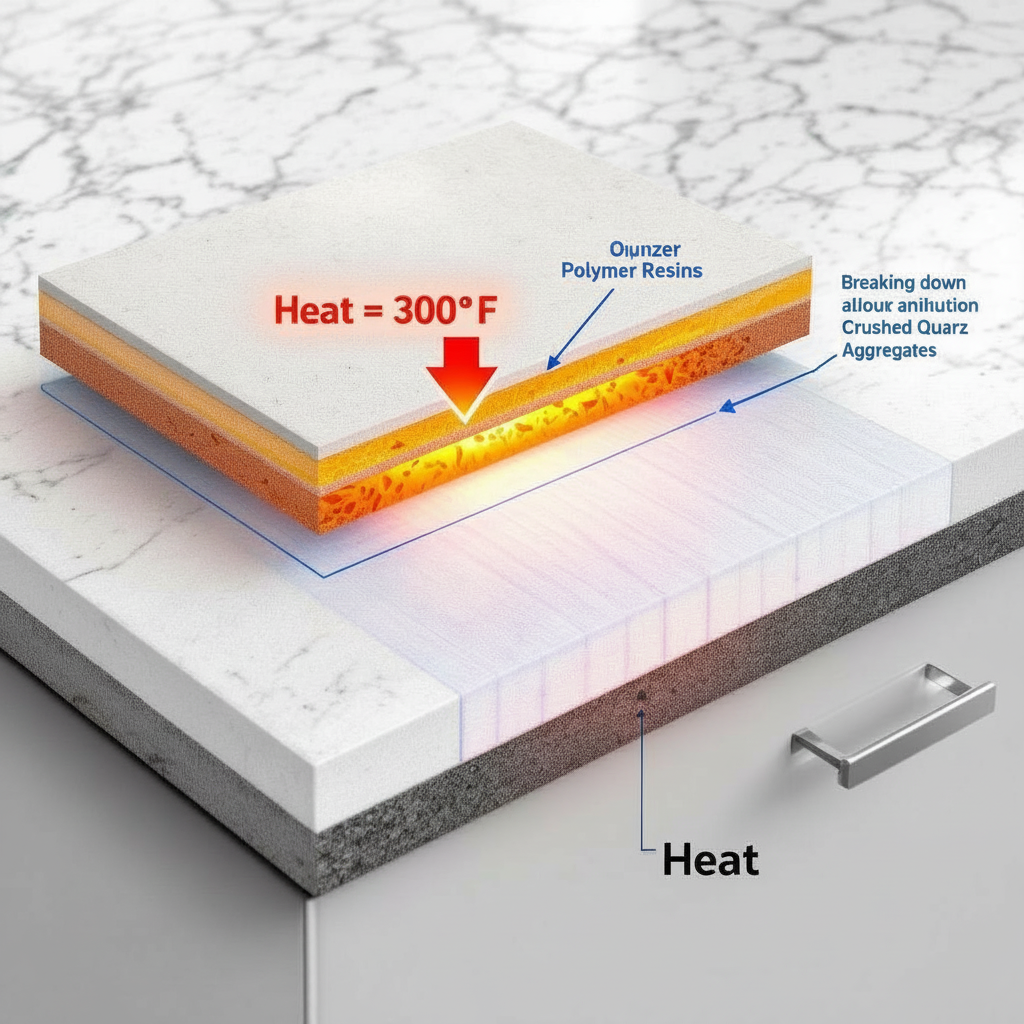
So right around 300°F (150°C), the whole thing starts falling apart. Not the quartz itself — that's basically indestructible. It's the glue. The polymer resins holding everything together. Those resins bind all the crushed quartz particles, and when they get too hot, they basically turn to mush. White marks appear. Discoloration. Hairline cracks that weren't there before.
None of it comes out.
Quartz isn't like granite. Granite's natural stone — cut straight from the earth. Quartz is manufactured. Usually about 90% ground quartz mixed with 10% polymer resins, pigments, and whatever else they need to bind it together. That resin is what makes quartz non-porous (which is why everyone loves it). But it's also the weak link. Can't take high heat. Doesn't matter if you bought Caesarstone, Silestone, Cambria — they all fail the same way because they're all held together with polymer.
I saw this happen in Buckhead last month. Homeowner set a 450°F cast iron skillet on their new Caesarstone island. Didn't even think about it. Instant 8-inch white burn mark, seared right into the surface.
Caesarstone's warranty? Useless. Heat damage is "misuse." She paid $2,800 to replace that section. Out of pocket.
**What goes wrong when quartz overheats:**
The polymer resin melts above 300°F and turns this milky white color. Permanent discoloration. You can't buff it out, can't polish it away.
Then there's thermal shock. You drop a hot pan on a cool surface and the sudden expansion causes white spots, crazing, sometimes actual cracks. The material expands and contracts too fast — the countertop can't handle it.
Even if you don't see damage right away, heat creates internal stress. Microscopic cracks form. They spread over time, weakening the bond structure. The whole countertop becomes more brittle than it was before.
The Quartz Manufacturers Association says **over 60% of warranty claims are heat damage**. Most of it preventable. That's the frustrating part.
The Sneaky Culprit: Overlooked Appliance Heat Damage
But here's what people miss — it's not always the obvious stuff.
Slow cookers. Air fryers. Toaster ovens. Coffee makers. You leave these running on your countertop every single day, and they're slowly cooking the quartz underneath. Not dramatic. Not instant. Just steady, cumulative heat buildup that yellows the surface, creates stress fractures, and breaks down the resin over months.
I inspected a kitchen in Sandy Springs where the homeowner used a Crock-Pot in the same spot every day for six months. By the time we got there, the quartz underneath had a milky haze and visible cracks radiating outward. She had no idea it was even happening until it was too late.
Those little rubber feet on the bottom of appliances? They don't do anything. Not enough insulation to protect a $4,000 countertop.
**What you should do:** Put a thick barrier under *every* heat-generating appliance. Not just pans. Everything. For more on this, check out our guide on [Quartz Countertop Care and Maintenance](https://www.bizzfactor.com/articles/quartz-countertop-care-maintenance).
How Do You Effectively Protect Quartz Countertops from Heat Damage?
Look — you need thermal barriers. That's it. Don't overthink this.
We've tested dozens of products over the years (sometimes in ways manufacturers probably didn't intend), and these are the ones that actually work for normal families who cook multiple meals a day:
What Actually Works for Heat Protection:
**High-temperature silicone trivets.** Get the ones rated for 500°F or higher. They're non-slip, easy to clean, and store flat in a drawer. Perfect for hot pots and pans you're constantly moving around.
**Wire cooling racks work better for larger items.** Or when you've got multiple hot dishes coming out at once. Air circulates underneath, heat dissipates before it ever touches the quartz. No direct contact.
**Thick bamboo or wood cutting boards** — and I mean *thick*, at least ¾-inch. They look good on the counter anyway, and they insulate really well. Thin ones don't cut it (pun intended) for things like slow cookers that sit in one spot for hours.
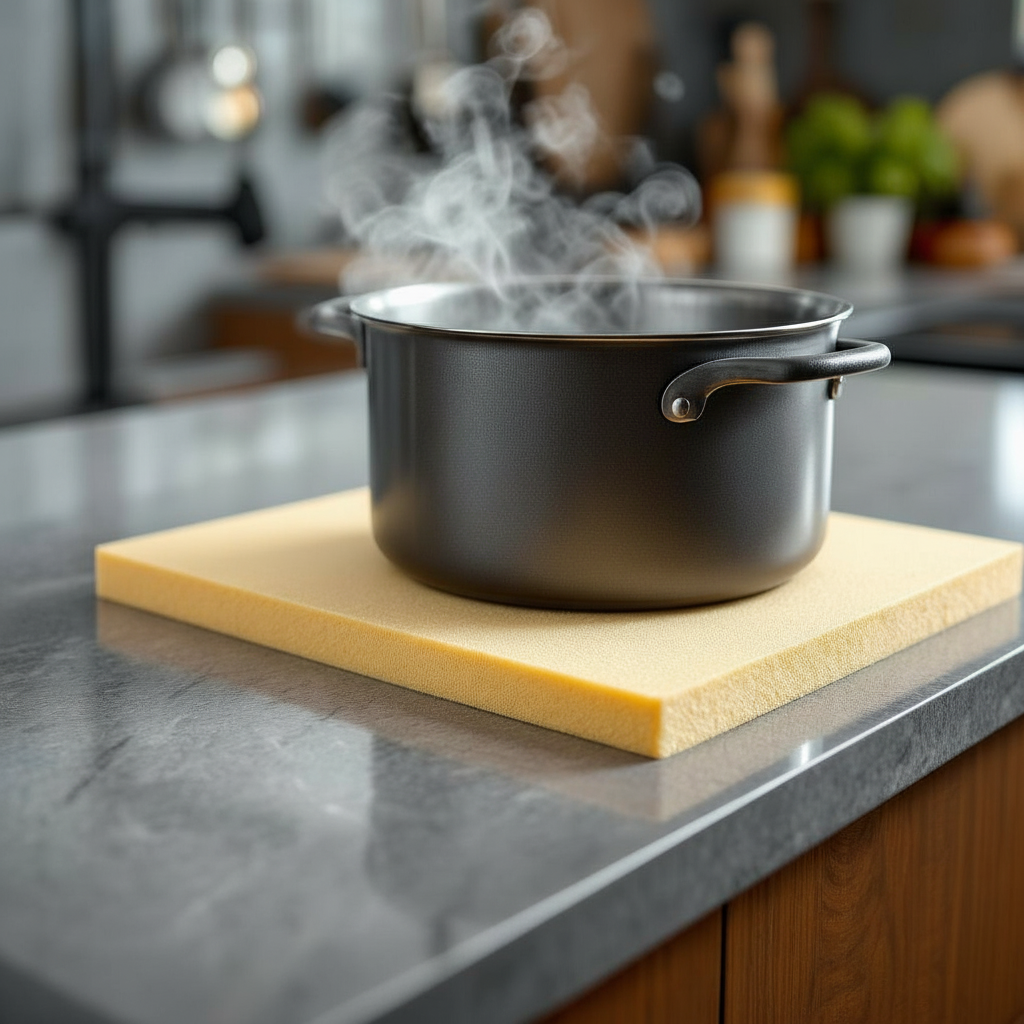
**Industrial-grade insulation.** This sounds extreme, but hear me out. You can get small samples of ROCKWOOL Comfortboard at building suppliers. It handles temps up to 2150°F and costs under $5 for a 12x12 inch piece. Bulletproof protection if you've got a spot where you always set down your Dutch oven.
Skip the flimsy stuff. Honestly? A thick, bone-dry cotton towel works better than most cheap silicone trivets because of the air trapped in the fibers. We've tested it. Not saying you should rely on towels forever, but in a pinch, they work.
Real talk — spend $50 now on quality heat protection or spend $3,000 later on repairs. Your call.
What Does Heat Damage Look Like on Quartz Surfaces?
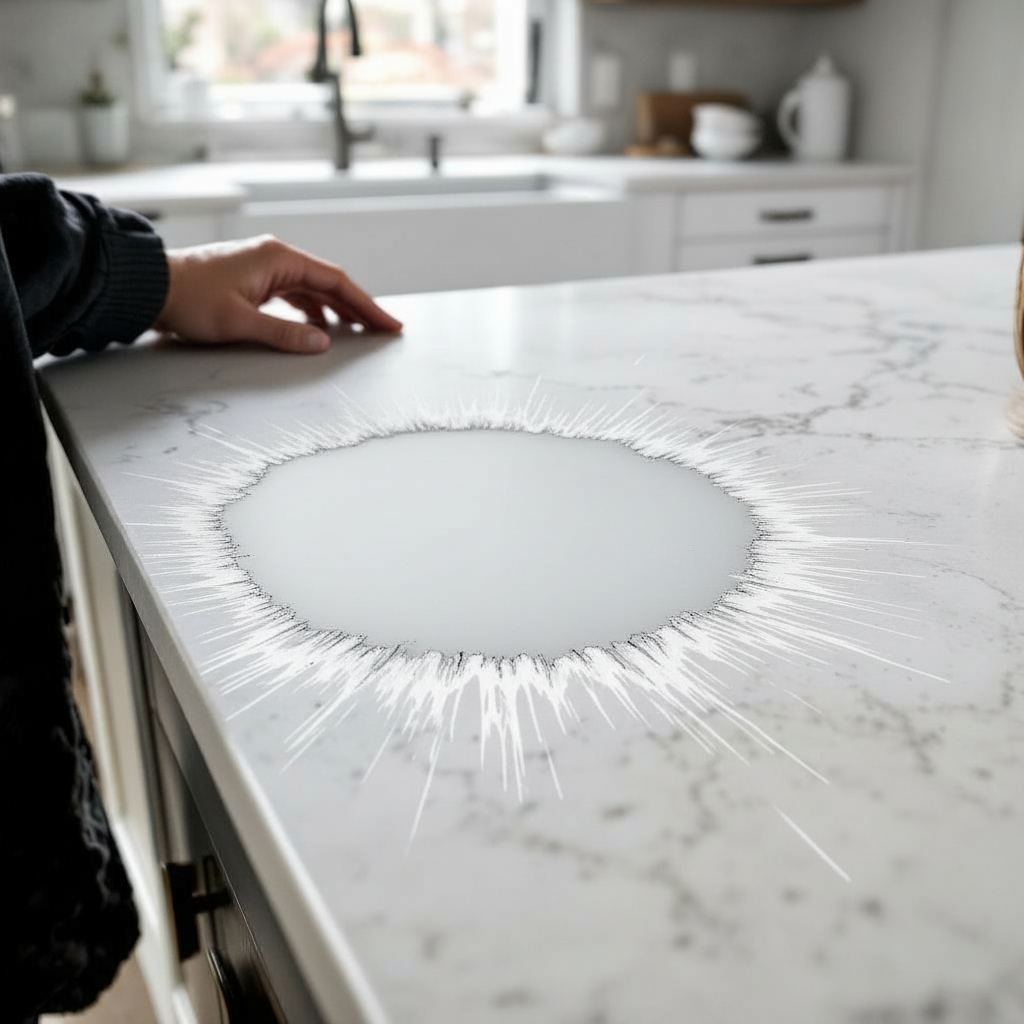
Sometimes it happens instantly. Sometimes it creeps up on you. After 20+ years of inspections, I can spot heat damage from across the room.
**What to look for:**
- **White or Lightened Burn Spots:** Milky haze or white 'blush' where the resins degraded and turned opaque.
- **Hairline Cracks:** Fine lines radiating out from the hot spot. Thermal stress cracks.
- **Raised or Warped Surfaces:** Extreme heat can make the countertop bubble or deform slightly.
- **Stubborn Stains/Discoloration:** Heat changes the resin chemistry, makes it more porous, more likely to stain permanently.
- **Loss of Sheen:** The affected area goes dull. Loses that polished gloss.
We inspected a home in Vinings where someone put hot pizza stones directly on their quartz. "Tiny" white spot appeared. Needed professional resurfacing. Cost them $1,200.
Take photos if you notice damage. Date them. Insurance and manufacturers both want proof of when it happened.
Emergency Steps If You Accidentally Place Something Hot on Quartz
If it happens (and it might), don't panic. Move fast, but don't make it worse:
1. **Remove the Hot Item:** Use oven mitts. Get it off immediately.
2. **Allow Natural Cooling:** Let it cool on its own. **don't use ice water or cold compresses** — that's thermal shock, and it'll crack the surface even more.
3. **Document Damage:** Photos from multiple angles. High-res. Note the date and time.
4. **Contact Your Fabricator/Installer:** Call within 24 hours for a professional assessment.
5. **Avoid Cleaning:** Don't polish, don't use harsh chemicals, don't try to "fix" it yourself. You'll make it worse.
Thermal shock is real. Rapid temperature changes make materials expand and contract too fast, creating internal fractures that don't heal.
Does Professional Installation Prevent Heat Damage?
No. Professional installation can't stop you from setting down a 400°F pan.
Look — but (and this is important) — proper installation makes your countertop way more resilient overall. Good substrate prep, adequate support, proper expansion gaps — all of that helps the countertop handle minor thermal stress without cracking. A poorly installed countertop is already stressed. Add heat? It fails faster.
Look — think of it this way: a solid foundation doesn't prevent damage, but it keeps small problems from becoming catastrophic ones. For more on this, see our article on [Choosing a Reputable Countertop Fabricator](https://www.bizzfactor.com/articles/choosing-reputable-countertop-fabricator).
Companies like Fox Granite give detailed care guides with every install. Their research shows educated customers have 40% fewer warranty claims related to heat damage. Knowledge is literally money.
**A good installation includes:** licensed, factory-trained techs who've been background-checked. They follow the manufacturer's specs to the letter. They prep the substrate properly — making sure it's level and solid. They build in engineered support structures, especially for overhangs. And they give you a written warranty with clear terms about what's covered and what's not.
The Natural Stone Institute found that professional installation reduces heat-related claims by almost half. That's not nothing.
Heat Protection vs. Replacement: A Real Cost Analysis
The math on this is absurd.
**Investment in Quality Heat Protection:**
- Basic trivet sets (3-5 pieces): $20 — $40
- Premium heat mats/pads (silicone or cork): $30 — $60
- Industrial-grade insulation/specialized gear: $50 — $100
- **Total Annual Investment: Less than $100**
**Reality of Quartz Replacement/Repair:**
- Small section repair (if even possible, often still visible): $800 — $1,500
- Full countertop replacement: $2,500 — $5,000+
- Kitchen downtime, stress, potential loss of home value: Priceless
And here's the kicker — most homeowner's insurance won't cover heat damage. They call it "preventable negligence." So that $3,000 repair? That's coming out of your pocket.
We help with insurance claims all the time. The outcome is almost always the same: denied. The financial burden lands entirely on you.
In-Depth Look
Detailed illustration of key concepts
Visual Guide
Infographic illustration for this topic
Side-by-Side Comparison
Visual comparison of options and alternatives
Sources & References
- Are Quartz Countertops Heat-Resistant? What You Need to Know
- Quartz Countertops & Hot Pans - Fox Granite
- Can you place a hot pan directly on your quartz countertop? | Q & A
- How to Protect Quartz Countertops from Heat
- BC Building Code
- Building Codes and Standards - 101 Guide
- Design Guidelines & Construction Standards
- Canada's construction system - The context for model codes
- Building Codes & Energy Standards: Key Resources
Frequently Asked Questions
Need Professional Help?
Find top-rated kitchen & bath remodeling experts in your area