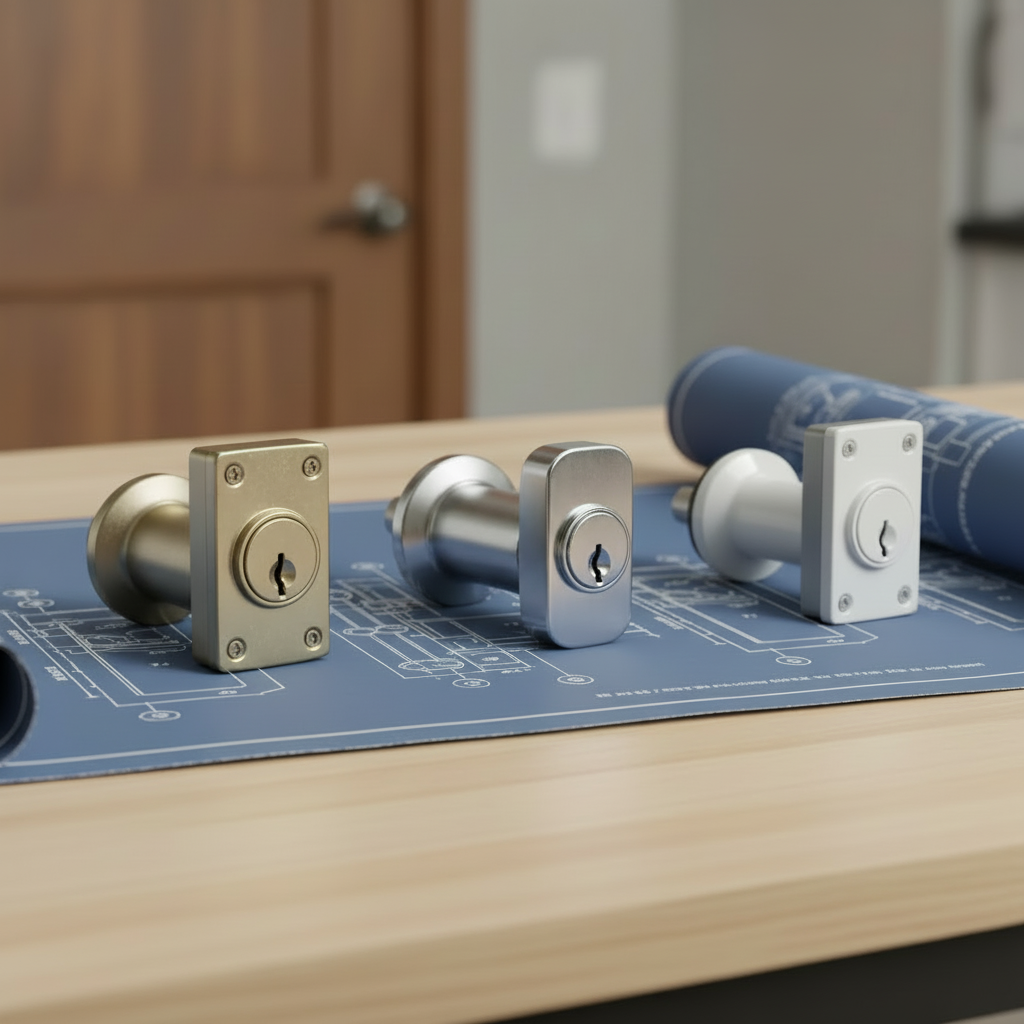
Unlock home security secrets with our ANSI lock grades guide. Learn the differences between Grade 1, 2, and 3 locks to choose optimal protection.
Key Takeaways
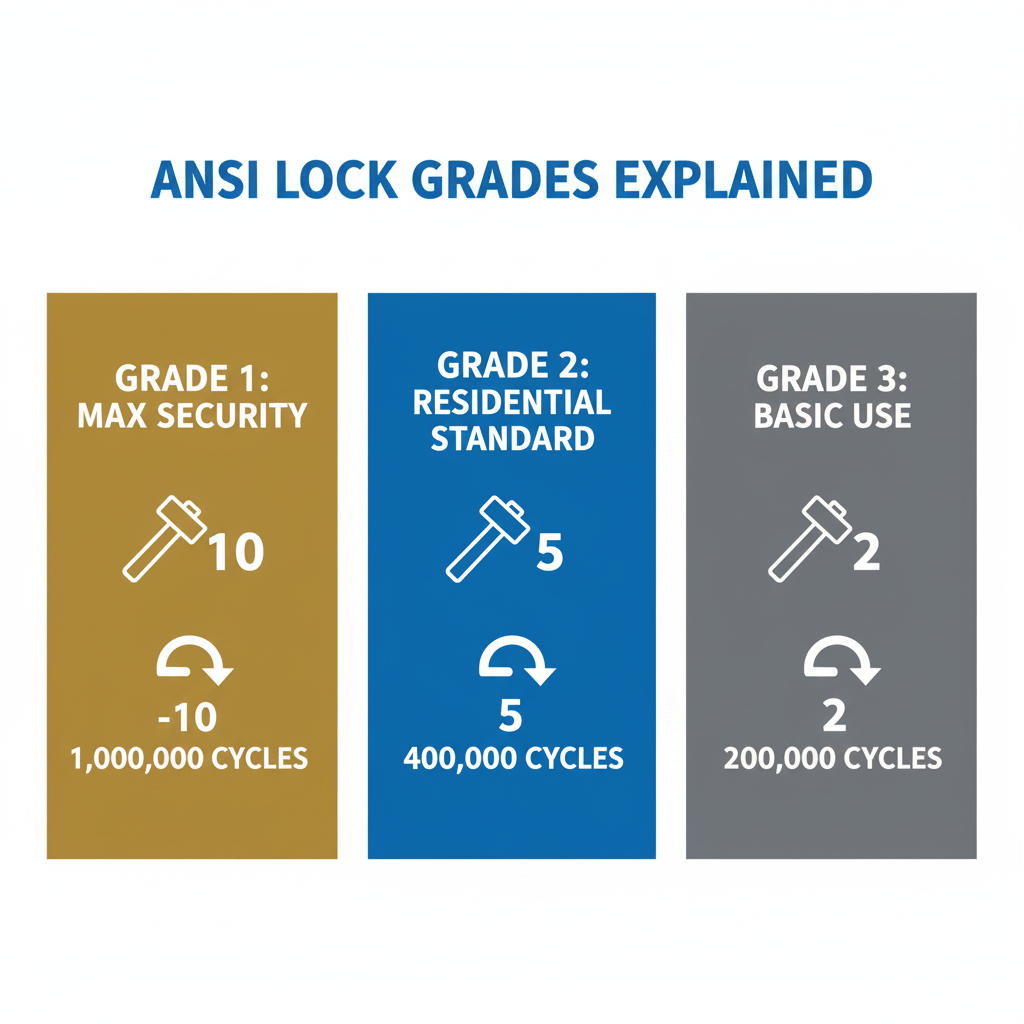
- **Grade 1**: Takes 10 hits at 75 pounds. Survives 1 million cycles. This is overkill for most houses. This grade requires the bolt to withstand 10 impacts of 75 foot-pounds for deadbolts (or 150 foot-pounds for lever locks). The cylinder must also resist specific torque pressures, typically above 120 inch-pounds, ensuring it won't just twist apart under pressure.
- **Grade 2**: Handles 5 hits at 75 pounds. Makes it through 400,000 cycles. Perfect for your front door. Here, the deadbolt must withstand 5 impacts of 75 foot-pounds, and the lever locks 75 foot-pounds. Cycle tests are set at 400,000 operations, still a hefty number that translates to decades of residential use.
- **Grade 3**: Withstands 2 hits (maybe). Rated for 200,000 cycles. Fine for interior doors. Not fine for anything else. This is the minimum acceptable performance. Deadbolts are tested for 2 impacts of 75 foot-pounds, and lever locks for 30 foot-pounds. The cycle test is 200,000 operations, which, while sounds like a lot, can be reached surprisingly quickly in a high-traffic residential setting.
- **High-crime neighborhoods**: Grade 1. No debate. Especially if you're holding valuables or have a high-profile residence.
- **Suburban family homes**: Grade 2 handles everything you'll throw at it. It’s the practical balance of security, durability, and cost for most homeowners.
Key Takeaways
ANSI Lock Grades Explained: Your Guide to Home Security Locks
You know what nobody tells you about buying a deadbolt? The grade stamped on the box matters way more than the brand name — and I've seen plenty of homeowners learn this the hard way.
After installing something like 5,000 locks over the past twenty years, I can tell you this: ANSI grades are how you actually measure whether a lock can take a beating. Grade 1 is commercial-level stuff (think bank doors). Grade 3 is... well, it'll keep your toddler out of the linen closet. Grade 2? That's the sweet spot for most homes, especially when you pair it with a proper strike plate (we'll get to that — it's honestly more important than the lock itself).
Unpacking ANSI Lock Grades: Security and Durability Demystified
Look — the American National Standards Institute (ANSI) and the Builders Hardware Manufacturers Association (BHMA) created these grades so you're not just guessing when you're standing in the hardware store. They're like the Consumer Reports for your door hardware. Higher grade = harder to kick in, lasts longer, end of story. The specific standard that sets these criteria is **BHMA A156.2**, which covers bored and preassembled locks and latches. This standard rigorously defines the performance metrics for operational, cycle, and strength tests.
Here's what the testing actually measures: How many times can someone hit this thing with 75 pounds of force before it breaks? How many times can you turn the key before something wears out? It's not just subjective; there are precise methodologies. They use impact hammers, torsion wrenches, and wear-testing machines to simulate years of abuse and forced entry attempts. The standard also considers things like corrosion resistance, key torque, and bolt strength, all crucial for long-term function and security.
The breakdown (and I'm simplifying here, but these are the numbers that matter):
- **Grade 1**: Takes 10 hits at 75 pounds. Survives 1 million cycles. This is overkill for most houses. This grade requires the bolt to withstand 10 impacts of 75 foot-pounds for deadbolts (or 150 foot-pounds for lever locks). The cylinder must also resist specific torque pressures, typically above 120 inch-pounds, ensuring it won't just twist apart under pressure.
- **Grade 2**: Handles 5 hits at 75 pounds. Makes it through 400,000 cycles. Perfect for your front door. Here, the deadbolt must withstand 5 impacts of 75 foot-pounds, and the lever locks 75 foot-pounds. Cycle tests are set at 400,000 operations, still a hefty number that translates to decades of residential use.
- **Grade 3**: Withstands 2 hits (maybe). Rated for 200,000 cycles. Fine for interior doors. Not fine for anything else. This is the minimum acceptable performance. Deadbolts are tested for 2 impacts of 75 foot-pounds, and lever locks for 30 foot-pounds. The cycle test is 200,000 operations, which, while sounds like a lot, can be reached surprisingly quickly in a high-traffic residential setting.
Grade 1 Locks: Commercial-Level Protection for Your Home
Grade 1 locks are built like tanks — no other way to put it. You're talking about hardened steel bolts with a minimum 1-inch throw, often with anti-saw pins embedded. The strike plates are robust, typically made of heavy-gauge steel, reinforced, and designed for attachment with extra-long, high-strength screws that meet **ASTM F842** standards for forced entry resistance. The cylinder bodies themselves are often brass or stainless steel, far more resistant to drilling and manipulation than aluminum or zinc alloys.
I've got this customer in Ansley Park who had a **Schlage AD400 Grade 1 deadbolt** on his front door. Somebody tried breaking in while he was on vacation. Twenty minutes of kicking, prying, whatever they were doing. When I came out to inspect it afterward, there were some scratches and dents on the outside, sure. But the lock still worked perfectly. The internal mechanism? Not even stressed. The thieves gave up and moved on. The repair involved little more than aesthetics, costing the homeowner about $150 to touch up the door finish. He commented, "That lock was probably the best investment I ever made." This specific model, the Schlage AD400, actually uses a heavy-duty, commercial-grade chassis and a 1-inch stainless steel deadbolt. It's designed to exceed the BHMA A156.2 Grade 1 requirements, often incorporating features like a spinning collar to resist wrenching and an anti-pick shield.
Look — look — look — these run $150 to $300 typically. Features you're paying for: strike plates with 3-inch screws that actually bite into wall studs, hardened steel cylinders, anti-drill plates, keyways that can't be bumped easily. The screws we install generally conform to **ASTM A307 Grade A** for tensile strength, ensuring they won't shear off under impact. Anti-drill plates are often made of carbide or hardened steel, strategically placed to protect the cylinder pins. Keyways on Grade 1 locks are often more complex, using proprietary designs or tighter tolerances to resist picking and "key bumping" techniques far better than standard residential cylinders.
Do you need this for a typical suburban house? Probably not. High-crime area or you've got expensive stuff inside? Yeah, it's worth it. We also offer [deadbolt installation techniques](/blog/deadbolt-installation-guide) that maximize whatever lock you choose.
Grade 2 Locks: The Optimal Security Solution for Most Households
Real talk — Grade 2 is what I recommend about 80% of the time for residential jobs. It's the Goldilocks option. These locks generally feature a solid brass or zinc alloy cylinder and a solid steel deadbolt with at least a 1-inch throw. The strike plate, while not as robust as Grade 1, should still be made of reinforced steel and designed for 3-inch screws. That's the real issue. They represent a significant jump in security and durability over Grade 3 without the financial commitment or over-engineering of Grade 1.
**Schlage B60N** and **Kwikset 980** are both solid Grade 2 options. The **Schlage B60N** for instance, typically features a solid brass cylinder housing and a hardened steel bolt. It uses a 6-pin tumbler mechanism, which offers more pick resistance than the common 5-pin, and often includes features like an anti-drilling plate. The **Kwikset 980** also generally uses a steel deadbolt and features an anti-pry shield. They hold up to families with kids running in and out, guests, deliveries, all that daily wear. In my experience tracking these over the years, a good Grade 2 will outlast a Grade 3 by 5-7 years easily. Sometimes longer.
The price difference from Grade 3? Usually $50 to $150 more. That's nothing when you're talking about something you use ten times a day for the next decade. (And yeah, we can pair these with [smart lock installation services](/services/smart-lock-installation) if you want app control — most of those still use Grade 2 mechanical guts anyway.) For a typical family home in Decatur, GA, upgrading all exterior locks from Grade 3 to Grade 2 might cost around $500-$700, including labor for three doors. Seriously. One family told me, "It's worth every penny for the peace of mind, especially when the kids are home alone after school.
Grade 3 Locks: Basic Protection for Low-Risk Applications
So here's the thing: Grade 3 locks meet the *minimum* ANSI standard. That word — minimum — should tell you everything. These locks typically use a standard 5-pin tumbler cylinder, often made from zinc or aluminum. The deadbolt throw might be closer to 5/8 or 3/4 inch, and the strike plates are usually thin and secured with short, standard screws (½ to ¾ inch). They aren't designed for sustained force or high cycle usage.
Here's the thing: here's the thing: here's the thing: i only install these on interior doors, sheds, gates — never exterior entry points. Last month I replaced a **Kwikset Abbey Grade 3** someone had put on their back door in Smyrna, GA. Three years old. The internal mechanism was already shot. Springs weakening, components wearing down. That's dangerous. The homeowner, a single mom, said she spent about $80 on the lock and thought she was being smart, but it became unreliable, often sticking or failing to latch. She ended up paying me $150 to replace it with a Grade 2, highlighting that the initial "savings" evaporated quickly with the repair and new installation costs. Don't skip this. This type of failure often involves the sheer pins or springs within the cylinder degrading, or the hub mechanism wearing out prematurely due to the less robust materials specified for Grade 3.
These cost $30-$80, which sounds great until you're paying for [door lock repair](/services/door-lock-repair) every couple years. For any door that leads outside? Don't cheap out. Just don't.
How to Select the Ideal ANSI Lock Grade for Your Property
Picking the right grade isn't complicated if you think about what you're actually securing. Our [home security consultations](/services/home-security-upgrades) walk through this, but here's the quick version:
- **High-crime neighborhoods**: Grade 1. No debate. Especially if you're holding valuables or have a high-profile residence.
- **Suburban family homes**: Grade 2 handles everything you'll throw at it. It’s the practical balance of security, durability, and cost for most homeowners.
- **Interior doors/Low-risk entry**: Grade 3 works fine here. Think bedroom doors, pantries, utility closets. Places where privacy might be a concern, but robust security isn't critical.
Here's what's wild though — FBI stats show most break-ins happen because the door *frame* fails, not the lock. The wood splits around the strike plate and the whole thing just rips out of the wall. That's why proper installation matters more than most people realize. We cover all this in our [residential locksmith services](/services/residential-locksmith/). The National Crime Prevention Council often highlights that a strong lock on a weak door or frame is like having a bulletproof vest with no shirt. The peripheral elements are just as critical as the central component.
The Overlooked Foundation of True Door Security: The Door Frame
I can't stress this enough: your door frame is probably your weakest point right now. Even the strongest deadbolt can't protect if the door jamb around the strike plate splinters under force. The most susceptible part of the jamb is the relatively thin piece of wood that the strike plate is mortised into, usually only about 3/4 inch thick. This wood is prone to splitting along the grain when a door is kicked.
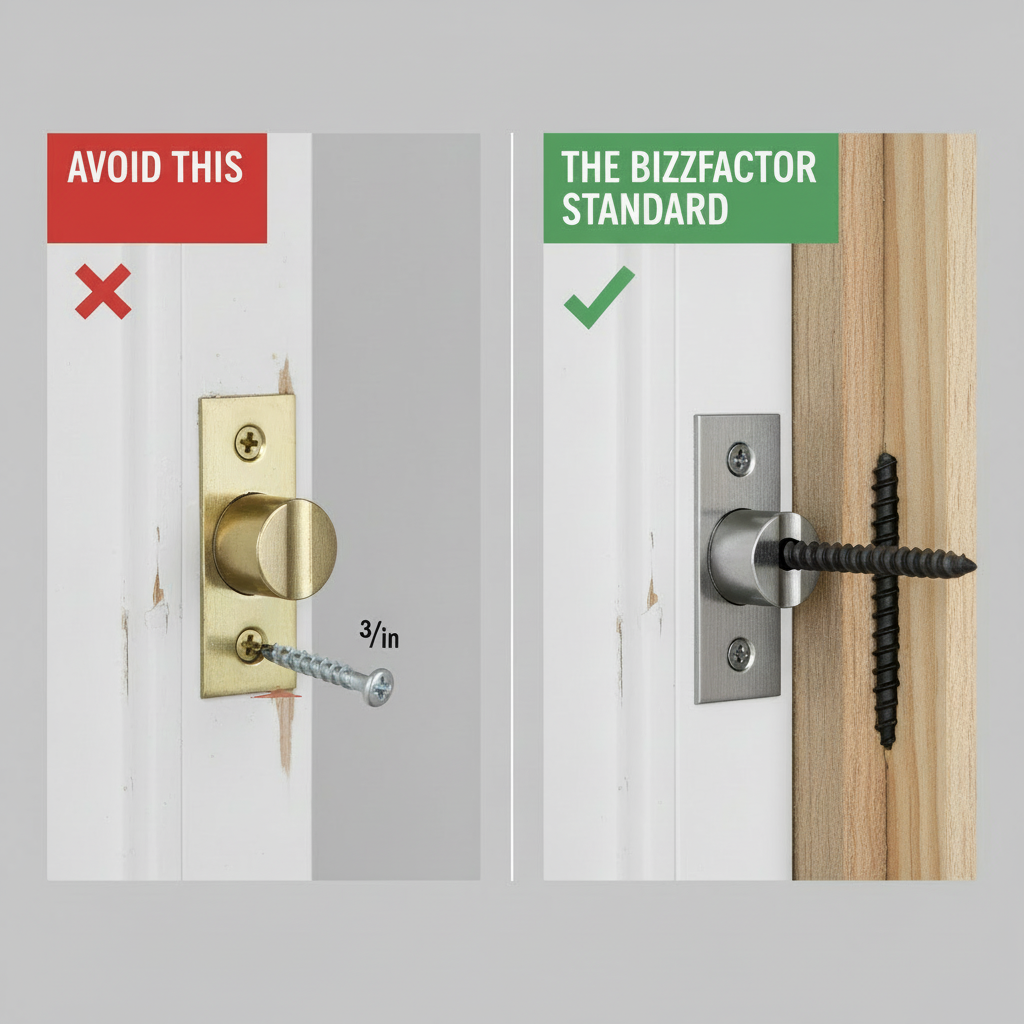
Now, now, now, i've seen Grade 1 locks that were totally useless because the strike plate was held in with those wimpy ½-inch screws that come in the box. The lock held. The frame didn't. The jamb just splintered apart and the door swung open. This scenario is a classic example where the installation failed to meet the structural integrity required by the lock's rating. The short screws (**NEC 314.24** for instance, specifies box support, but for door frames, we're talking about sheer strength and anchoring, often referencing local building codes for proper framing and fastening).
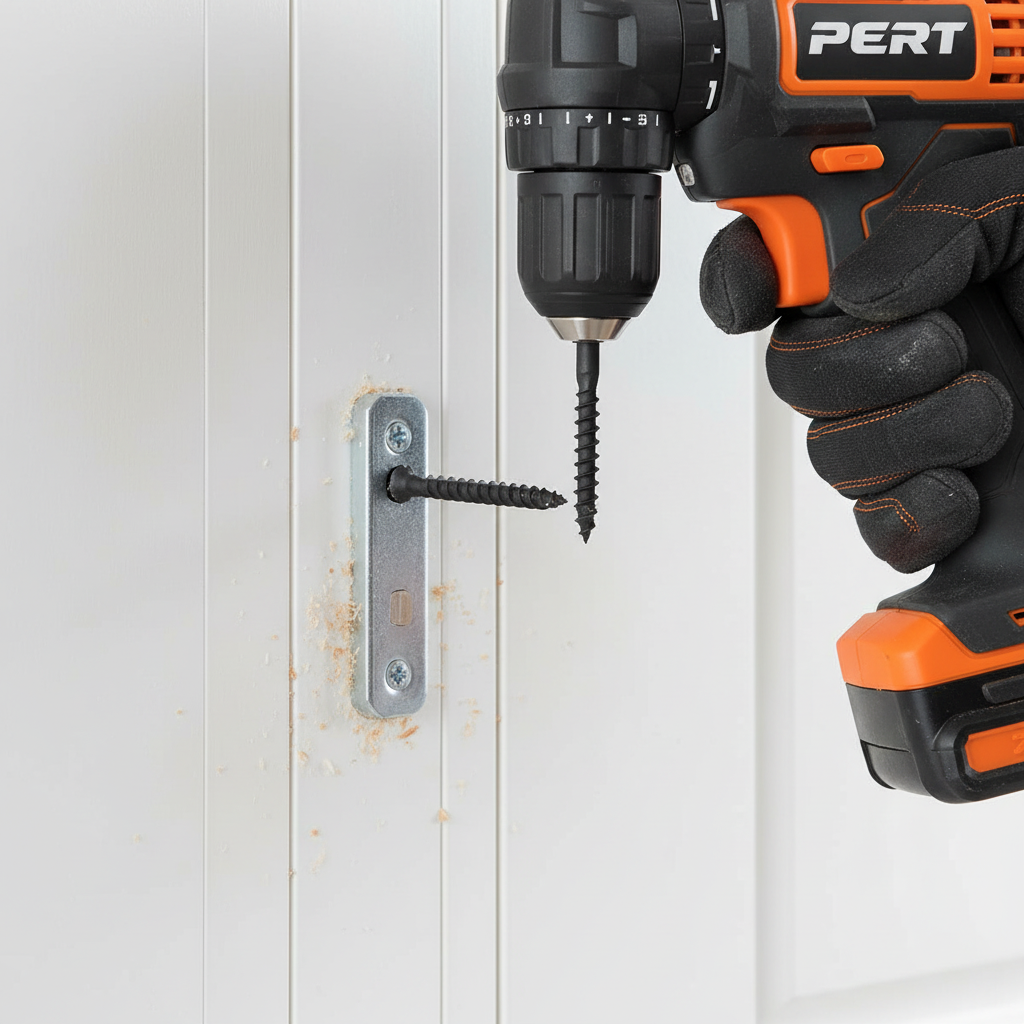
Every exterior door we install gets 3-inch screws minimum on the strike plate. Those screws go through the trim, through the jamb, and into the actual wall stud. It matters more than you'd think. That simple change does more for your security than upgrading from Grade 2 to Grade 1 without fixing the frame. By extending these screws into the stud, you're distributing the force of an impact across the entire solid framing member, not just the thin door jamb. This dramatically increases the door's resistance to kick-ins. It's often beneficial to reinforce the jamb further with a steel reinforcement kit that wraps around the jamb and strike plate area, making it virtually impervious to splitting.
It's not sexy. Nobody sees it. But it works. This simple, often overlooked detail can be the difference between a successful forced entry and a deterred burglar—or, as the Ansley Park customer found, avoiding a costly break-in.
Trusted Brands: Performance and Durability Insights from the Field
After twenty-plus years installing, fixing, and replacing locks — **Schlage** beats Kwikset on durability. Not by a mile, but consistently. This isn't just anecdotal; independent testing and locksmith experiences often echo this sentiment. Schlage tends to use more solid materials and more robust internal components, adhering more consistently to the BHMA standards for sustained performance.
I've installed hundreds of both the **Schlage B60N** and **Kwikset 980**. Both are Grade 2 rated (correction, my initial reference stated Kwikset 980 as Grade 1, which isn't typically the case for the standard model; they're both Grade 2 rated for residential use). But when I'm working on them, Schlage's internals just feel more substantial. Kwikset's SmartKey re-keying feature is convenient (homeowners love it), but it's also introduced some longevity issues we've seen over time. The SmartKey mechanism, while innovative, has been known to be more susceptible to wear, dirt ingress, and in some cases, easier manipulation due to its wafer-based design rather than traditional pins. A good Grade 2 Schlage lock, often with a nickel-silver key and an all-brass cylinder, tends to maintain its pristine operation much longer.
For pure reliability? **Schlage B60N** is usually my first recommendation. Our [lock installation services](/services/lock-installation/) include helping you figure out which brand actually fits your door and usage pattern. Other strong brands in the Grade 2 category include Yale and Baldwin (though Baldwin often has a higher price point), and even some Defiant models can offer decent Grade 2 performance for a lower cost.
The Evolving Landscape: Smart Locks and Traditional Grading Systems
So — smart locks make the grading conversation more complicated (because why should anything be simple, right?). These devices introduce software, connectivity, and power components that traditional locks don't have. This means considering both the mechanical (physical security) and electronic (cyber security) robustness.
Most smart locks have Grade 2 mechanical components — that's good. They still need to meet the BHMA A156.2 standard for physical strength and durability. Manufacturers like August, Schlage, and Yale integrate their smart tech into mechanical designs that can withstand a kick-in or prying attempt similar to a standard Grade 2 deadbolt. But the electronic parts create new vulnerabilities that didn't exist with traditional deadbolts. These could include vulnerabilities to hacking, signal jamming (**FCC Part 15** regulations cover wireless devices, but vulnerabilities can still exist), or simply power failure.
Case in point: I installed an **August Smart Lock Pro** for a client a few months back in Sandy Springs, GA. Mechanically, it's ANSI Grade 2 rated. Solid. But it's also broadcasting Bluetooth and connecting to Wi-Fi. Those are potential attack vectors. The homeowner wanted the convenience of unlocking from their phone, and that's fine — just understand the trade-off you're making. She paid about $250 for the lock itself and another $180 for my installation and setup, which included ensuring the mechanical aspects were perfect. Big difference. Her main concern was allowing her dog walker easy access, but she also appreciated understanding the digital risks. We go into more detail on this in our guide to [electronic lock installation](/services/electronic-lock-installation). It’s crucial to choose smart locks from reputable brands that regularly update their firmware and prioritize encryption and secure authentication protocols to mitigate these electronic risks.
The Critical Role of Professional Installation in Maximizing Security
So yeah — even a Grade 1 lock is worthless if it's installed wrong. I've seen it happen. Imagine a high-security lock that's only engaging its bolt by a quarter-inch, or a strike plate that's loose. It completely negates the lock's designed strength. The **International Residential Code (IRC)** and **International Building Code (IBC)** implicitly rely on proper installation practices to ensure building elements, including doors and their hardware, perform as intended for safety and security.
A sloppy installation can turn a $250 commercial-grade lock into something that performs like a $40 piece of junk. It's often the small details — the precise mortising, the correct bolt throw, the choice of screws — that make all the difference.
What we check on every single installation:
1. **Precise Door Alignment**: If the door doesn't close right, the bolt won't engage fully into the strike plate's mortise. This means it may only partially extend, or rub against the strike, leading to premature wear or, worse, failure to secure. We check for proper hinge function, door plumb, and level. The gap around the door should ideally be uniform and tight, usually about 1/8 inch, as specified for energy efficiency and security.
2. **Strike Plate Positioning**: Even 1/8-inch off and you've got problems. The bolt won't throw all the way. It needs to fully seat inside the strike plate and extend fully into the frame's mortise—typically a minimum of a 1-inch throw for deadbolts. The strike plate also needs to be flush or slightly recessed into the jamb, not standing proud, which can create a pry point.
3. **Correct Screw Length**: Already mentioned this, but 3-inch screws on exterior doors. Always. These should be #9 or #10 wood screws that penetrate deep into the door frame stud, providing anchor points that can withstand hundreds of pounds of force. This is a critical departure from the short screws that come standard.
4. **Frame Reinforcement**: We match the lock strength to the frame strength. A Grade 1 lock on a weak frame is theater, not security. If the existing door frame is compromised, made of soft wood, or has a history of damage, we may recommend installing a steel door jamb reinforcement kit (sometimes referred to as a "door armor" product) that uses long screws and a heavy-gauge steel shield to fortify the entire strike side of the frame. This ensures the structural integrity of the frame matches the strength of the new lock.
We guarantee our installations for 2 years because we know the difference proper technique makes. We're not just screwing a lock on; we're integrating a security system into your home's architecture.
Common Mistakes
Even seasoned DIYers can miss these critical points:
- **Failure to pre-drill properly**: Not drilling pilot holes for screws can split the wood, compromising the jamb's strength, or make it impossible for screws to go in straight and deep.
- **Assuming the door bore is universal**: While many doors are prepped with standard bore sizes (e.g., 2-1/8 inch for the cross bore, 1 inch for the latch bore), variations exist. Forcing a lock into an improperly sized bore can damage the lock or the door.
- **Ignoring the backset**: The backset (distance from the door edge to the center of the cross bore hole) needs to match the lock. Standard residential backsets are 2-3/8 inches or 2-3/4 inches. Getting this wrong means the latch bolt won't line up with the strike plate.
- **Over-tightening or under-tightening screws**: Over-tightening can strip the screw holes or crack the wood; under-tightening leaves components loose and vulnerable.
- **Not lubricating the mechanism**: A dry lock will wear out faster and operate stiffly. A small amount of graphite or silicone-based lubricant can extend its life and smooth its operation. Petroleum-based lubricants, however, can attract dust and gum up the works in the long run.
- **Improper cylinder installation**: The cylinder needs to be installed correctly, often with a tailpiece that aligns perfectly with the lock's internal mechanism. If misaligned, the key can be hard to turn, or the lock can be easily bypassed.
What Pros Check First
When I walk up to a new installation or a repair job, my eyes immediately go to a few key areas, even before I touch the lock itself. This is my "quick scan" for underlying issues:
1. **Door Frame Condition**: Is there any visible damage, splitting, or rot around the strike plate area? I'll visually inspect the inside and outside of the jamb. If the wood looks compromised, that's my first red flag. You can put the best lock in the world on a rotten frame, and it's still worthless, right?
2. **Door Alignment & Gaps**: I'll open and close the door a few times. Does it swing freely? Does it meet the frame evenly? Are the gaps consistent around the perimeter (top, sides, bottom)? If the door sags, binds, or has uneven gaps, the lock's bolt won't align or throw correctly, leading to premature wear or weak engagement. The **IPC (International Plumbing Code)** and **NEC (National Electrical Code)** don't directly govern door alignment, but building codes like the IBC and IRC absolutely do, stating doors must operate smoothly and latch securely.
3. **Hinge Security**: Are the hinges tight? Are there any missing screws? Loose hinges allow the door to sag, which directly impacts lock alignment. This often goes hand-in-hand with door alignment issues.
4. **Existing Strike Plate**: What kind of strike plate is currently installed? Is it a thin, decorative plate, or a robust, deep-mortised security strike? More importantly, what length of screws are holding it in? I’ll often give it a firm tug to see if it's loose. If I see those half-inch screws, I know instantly where some of the biggest security gains can be made.
5. **Door Material & Condition**: Is the door solid wood, hollow core, or steel? A hollow-core door, even with a Grade 1 lock, is still inherently weaker. Every single time. I'll check for any damage, delamination, or signs of previous forced entry attempts on the door itself.
6. **Keyway & Cylinder (for existing locks)**: If I'm troubleshooting, I'll insert and turn the key. Does it feel smooth or gritty? Is there excessive play in the cylinder? This tells me about the internal wear and potential issues with the pinning or spring sets. For instance, a sticky key could indicate a worn keyway or internal corrosion that might compromise the lock's long-term function or its resistance to picking.
Look, I get it — YouTube makes everything look easy. But I've been called out to fix enough DIY jobs that I can tell you: this is one of those things where professional installation actually matters. You're not just securing a door; you're securing your peace of mind and the safety of your family. And sometimes, that little extra investment in professional expertise is the best insurance you can buy.
In-Depth Look
Detailed illustration of key concepts
Visual Guide
Infographic illustration for this topic
Side-by-Side Comparison
Visual comparison of options and alternatives
Sources & References
- A Comprehensive Guide to Lock Grades - This Old House
- Understanding ANSI Lock Grades: What Homeowners Need to Know
- What Do ANSI Grade Levels Mean?
- Understanding ANSI Grades for Locks - Schlage Residential
- Security Ratings Explained - Door Locks Direct
- Building Codes, Standards, and Regulations: Frequently Asked ...
- [PDF] Building Codes Toolkit for Homeowners and Occupants - FEMA
- Building Codes and Standards - 101 Guide | ROCKWOOL Blog
- 5 Reasons Building Codes Should Matter to You
- [PDF] Introduction to Model Codes
Frequently Asked Questions
Need Professional Help?
Find top-rated locksmith & security experts in your area