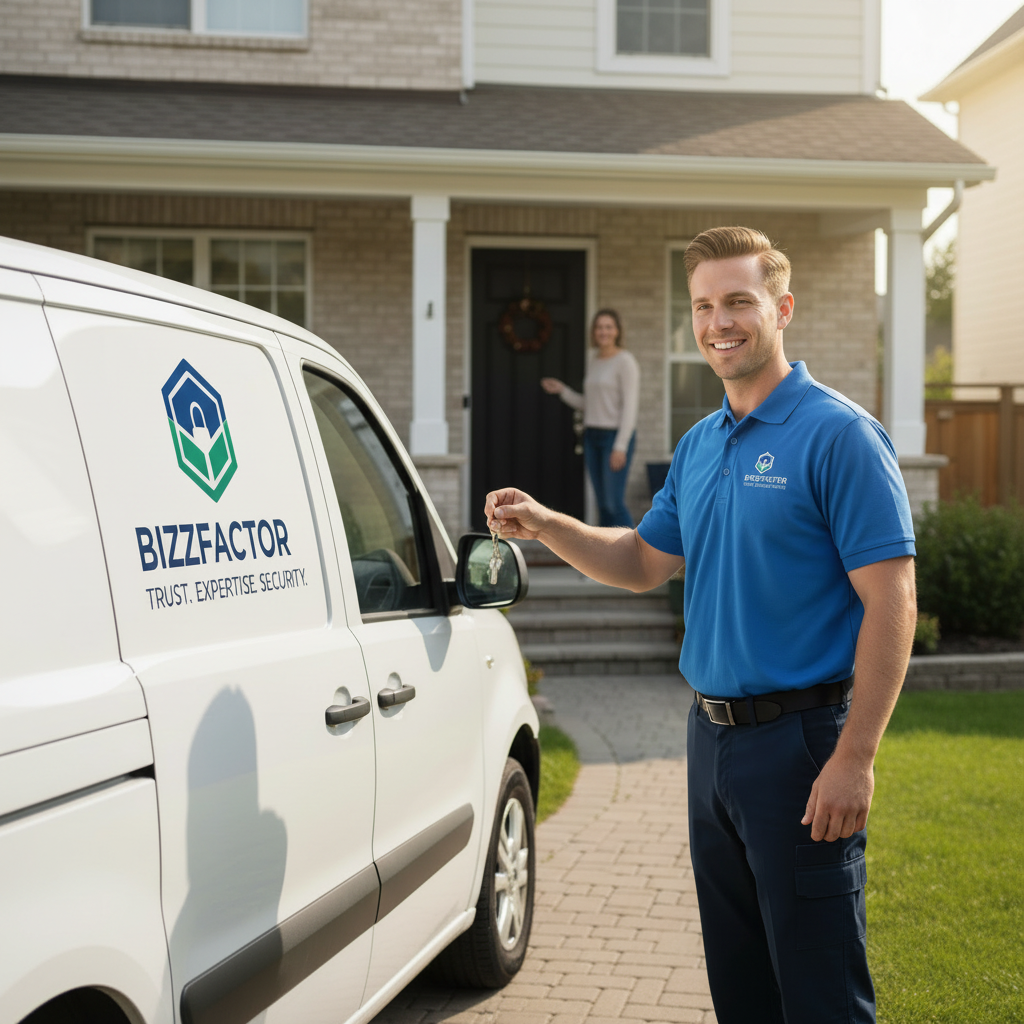
Expert guide to professional key duplication. Learn security best practices, costs, and how to choose licensed locksmiths for safe, accurate copies.
Key Takeaways
- **High-security residential keys:** Examples include Medeco, Schlage Primus, Mul-T-Lock, and ASSA. These often feature complex bitting patterns, side milling, or magnetic elements.
- **Automotive transponder keys:** Keys for most cars manufactured after 1995 require coding to start the engine.
- **Electronic smart keys/fobs:** These keyless entry devices and push-button start systems contain sophisticated electronics.
- **Restricted keyway systems:** Often used in commercial or institutional settings, these blanks are patented and tightly controlled.
- **Commercial deadbolt and master keys:** These are part of complex keying systems that require precise cuts and often authorization records.
Key Takeaways
Key Duplication Guide: Expert Security Tips That Really Work
Getting a spare key made? That's one thing. Getting one that actually protects your home — and won't trash your lock in six months — that's something else entirely. Professional key duplication means someone checks you actually own the place before cutting metal, uses blanks that match your lock's specs down to the thousandth of an inch, and knows the difference between a Schlage SC1 and a Medeco Biaxial. (If your guy doesn't, walk away.)
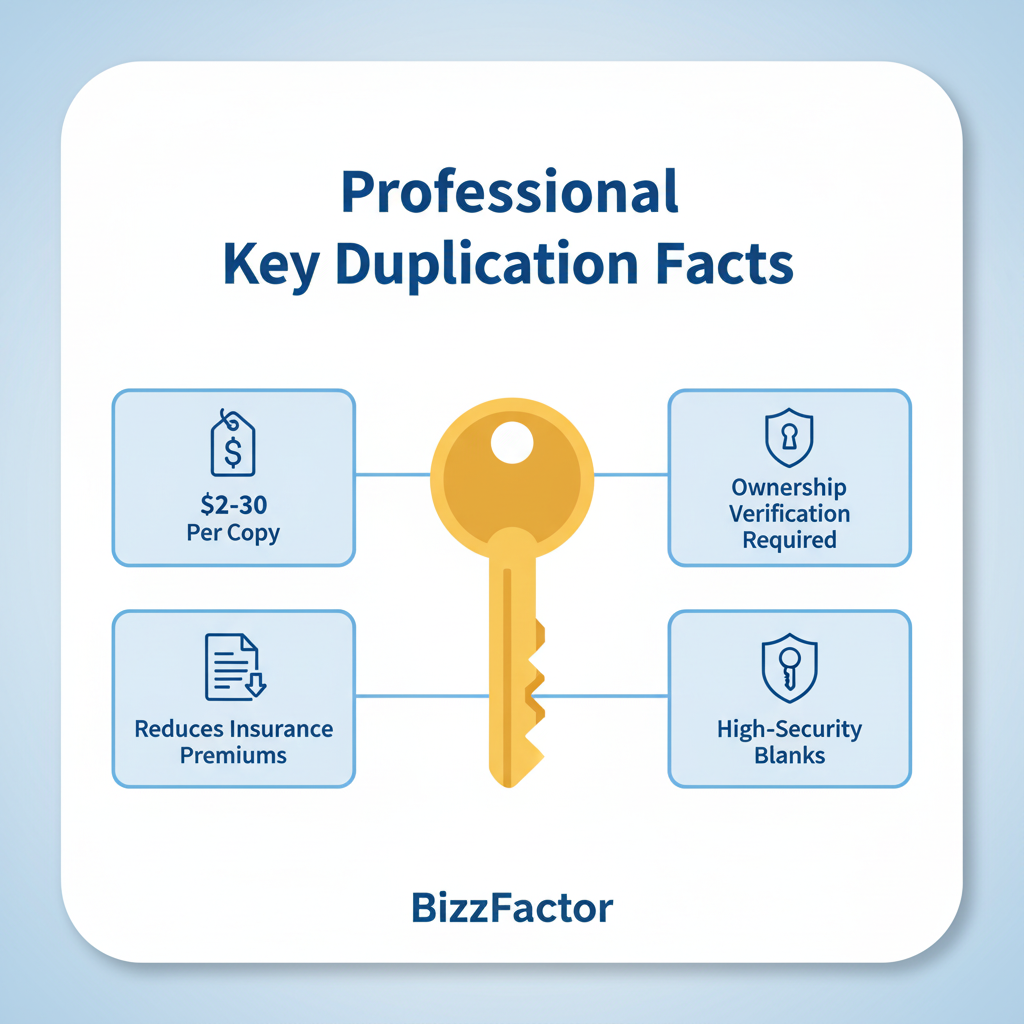
Look, I've seen too many shady operators who'll cut keys for anyone with ten bucks. That's not how we roll. Our team verifies ownership — we're talking multiple IDs, utility bills, maybe a mortgage statement if it's a new client we don't recognize. We keep detailed records of every key we cut, because the last thing anyone needs is some random person walking into your house with a "spare" you never authorized. It's not about being difficult. It's about keeping your stuff safe. For more insights on comprehensive home protection, explore our resources on [home security systems](https://bizzfactor.com/home-security-systems-guide).
Understanding Professional Key Duplication Services: A Deep Dive
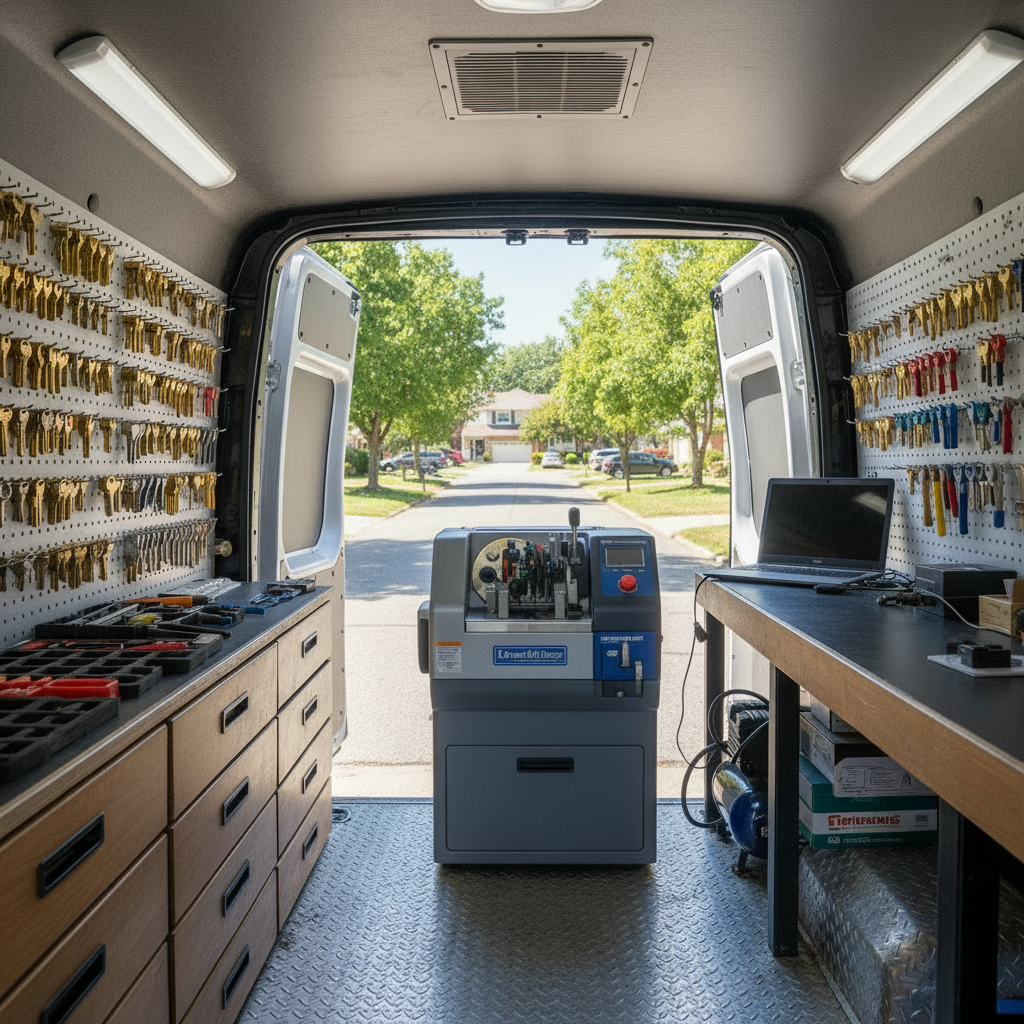
So here's the deal: there's a massive difference between the hardware store experience and what actual locksmiths do.
We're talking commercial-grade equipment (CNC machines that cut to ±0.0005 inches, if you want to get technical), not some beat-up contraption in the corner that's been grinding out crooked keys since 1987. And yeah, there's the whole security verification thing — we actually check that you're supposed to have this key before we make you another one.
Here's what people don't get: you're not just paying for someone to trace metal onto metal. A locksmith who knows their trade understands how brass composition affects durability, how depth variations of 0.003 inches will make your key stick, and why certain blanks will grind down your pins in six months while others last a decade. That hardware store machine? It's maybe calibrated twice a year. A professional key cutter gets checked weekly, sometimes daily for high-security work.
The difference in cutting technique? It's massive. You need actual commercial-grade machinery — the kind that handles everything from your basic SC1 and KW1 residential keys to the complicated stuff like Medeco Biaxial or Primus XP with laser-cut side milling. A real locksmith isn't just gonna cut you a key. They'll verify you actually live there (multiple IDs, proof of residency, sometimes a mortgage statement), and they use blank keys that match your original specs down to the metal composition.
Don't skip this step.
What's the Real Problem Most People Miss? And Why It Matters, Big Time.
So yeah, here's what nobody tells you: the condition of your *original* key matters way more than the duplication process.
People bring in a key that's been on their ring for 15 years, rounded off and barely functional. And they expect a perfect copy.
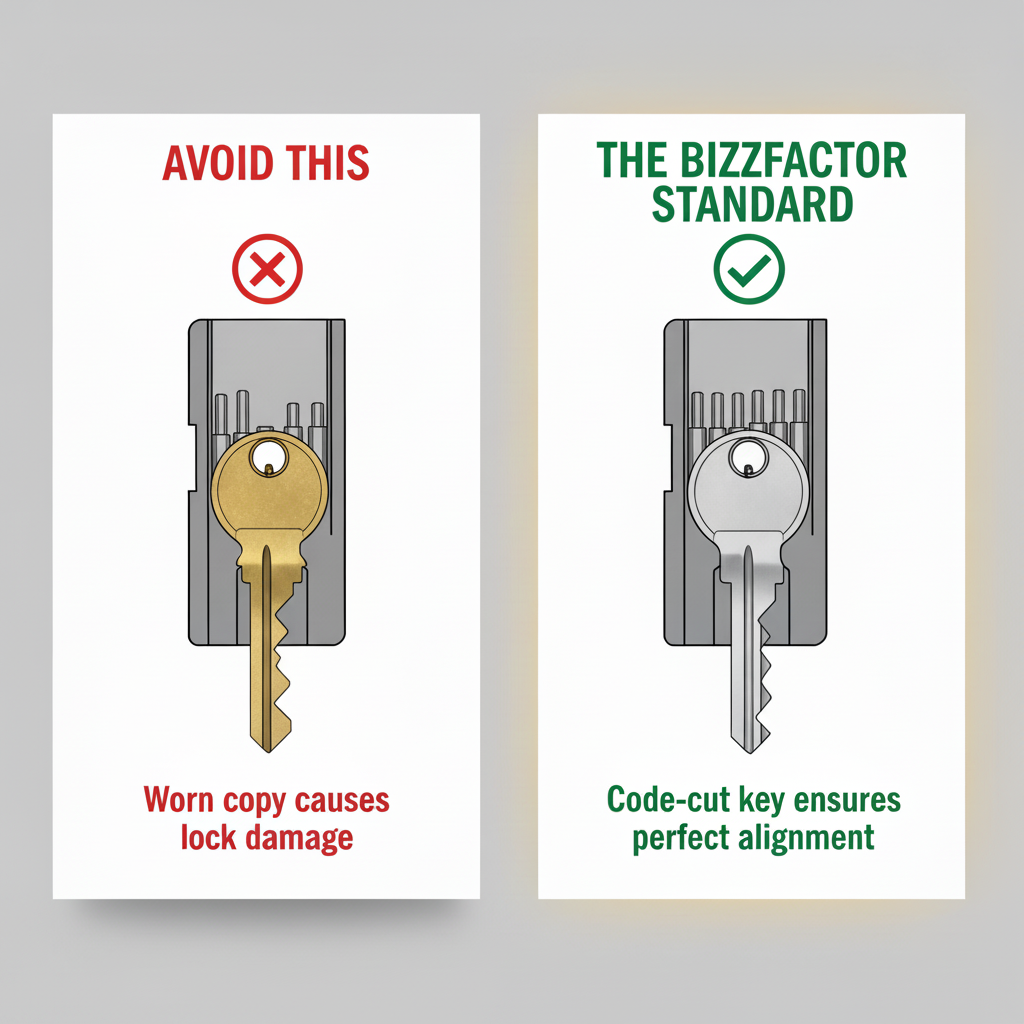
Here's what actually happens with a worn-out original. Even with perfect equipment, we're just making an exact copy of those worn edges and rounded-off cuts. Then you stick that flawed copy into your lock, and it starts grinding against the pins inside — specifically the top and bottom pins that ride along the key's cuts. A couple months of this? Your lock's gonna feel sticky. Six months? You might not be able to turn it at all.
I watched a homeowner in Buckhead spend $2,400 replacing four locks on his house. Not because the locks were bad — they were Schlage Deadbolts, maybe three years old. But he'd been using janky duplicate keys from one of those automated kiosks at Kroger, and they'd basically filed down the internal pins to nothing. What a waste.
Always insist on cutting from the manufacturer's code if you can get it. Those codes — usually stamped somewhere on your original key or tucked into the paperwork that came with your lock — tell you the exact factory specs. The bitting depths, the spacing, everything. When you cut from the code instead of tracing a beat-up original, you get a key that matches what the lock was designed for. Your lock'll last years longer, and you won't be fighting with sticky tumblers every time you come home with groceries.
Our Team's Professional Recommendation: Finding the Right Fit
I've worked in this industry for over 20 years. Seen every type of operation — the mom-and-pop shops where the owner's been cutting keys since Carter was president, the national chains with their fancy computers and zero personality, the mobile guys working out of vans. And yeah, there's definitely a hierarchy.
Companies like NLS Security? They're the specialists. These are the folks you call for commercial master key systems or when you've got a Medeco Biaxial that needs duplicating. They deal with restricted keyways and patented designs all day long. But real talk — for most homeowners, that's overkill. You don't need a neurosurgeon to treat a headache.
For standard house keys, we usually send people to [Pop-A-Lock](https://bizzfactor.com/pop-a-lock-review). They do background checks on their techs, their people show up in uniform (which matters more than you'd think), and they'll come to you — no dragging yourself to some strip mall. Price-wise, they're reasonable. They're not gonna gouge you like the high-security specialists, but they're not cutting corners either. Good balance for most folks who just need a reliable spare for their front door or car. That's the real issue. And they're fast, which matters when you're locked out at 11 PM.
The Truth About "Perfect" Key Copies: It's Not Always What You Think
Look — okay, so this is where people get confused. You bring in your old key, we cut you a fresh one from the factory code, and you go home and... it feels stiff in the lock. Doesn't turn as smooth as your old one did.
You think we screwed up, right?
Wrong. That "perfect" worn-in feeling from your old key? That's actually your lock wearing out to match the key's rounded edges. A factory-fresh key cut to exact specs is gonna feel different because it's re-establishing the correct pin depths — the way the lock was designed to work. Think of it like new brake pads on a car. They're gonna feel grabby at first until everything seats properly.
The stiffness? That's the lock learning the correct pin heights again. Your old key had been gradually training the pins to sit at the wrong depths — compensating for worn-down cuts by letting the pins settle where they shouldn't. Now you've introduced a key with crisp, accurate bitting, and those pins need to remember what "factory spec" feels like. Give it maybe 15-20 insertions (spread over a few days, not all at once like you're trying to break in), and you'll notice everything smooths out. The lock'll thank you with another decade of reliable service instead of that jiggle-and-pray routine.
Types of Keys That Absolutely Demand Professional Duplication
Some keys you just can't get made at Ace Hardware. Period.
High-security keys, transponder keys for vehicles, electronic smart keys — these require specialized equipment, proprietary software, and expertise that goes way beyond a standard key duplicator. Basic key shops don't have the technology. They don't have the training. And they definitely don't have the authorization to handle these correctly.
Look — look — high-security blanks? They're restricted. Medeco won't sell them to just anyone — you need a dealer agreement, proof of locksmith licensing, sometimes a credit check and background screening. ASSA ABLOY and Mul-T-Lock are the same way. I know a guy who tried ordering Medeco blanks online from some sketchy supplier in Eastern Europe. The blanks arrived, looked legit, but the brass composition was wrong. Keys would work for maybe three weeks, then the cuts would deform. He ended up replacing 14 locks for clients. Lost maybe $8,000 in goodwill and rework.
Automotive transponder keys (basically anything made after '95) contain microchips that talk to your car's immobilizer. You can cut the physical key perfectly, but without programming that chip, your car won't start. Period. Programming requires manufacturer-specific software — like Tech2 for GM vehicles or VCX NANO for Ford/Mazda — that costs thousands and needs annual licensing updates.
A lot of newer security systems use keys with weird cutting patterns — like those dimple keys with the dots instead of regular teeth — or proprietary designs that generic machines can't handle. You try forcing it through the wrong equipment, you'll trash the blank. Might even wreck the cutting machine (which is why hardware stores won't touch 'em). Seriously. Specialists like NLS Security have the right equipment and the manufacturer authorization to duplicate these without destroying anything. They're not just eyeballing it — they've got the exact specs and blanks the manufacturer intended. Deadbolts especially need this treatment, because the tolerances are tighter and the pins are less forgiving. For more information on securing specific entry points, check our guide on [deadbolt installation and repair](https://bizzfactor.com/deadbolt-installation-repair-guide).
Here are some keys that demand professional duplication:
- **High-security residential keys:** Examples include Medeco, Schlage Primus, Mul-T-Lock, and ASSA. These often feature complex bitting patterns, side milling, or magnetic elements.
- **Automotive transponder keys:** Keys for most cars manufactured after 1995 require coding to start the engine.
- **Electronic smart keys/fobs:** These keyless entry devices and push-button start systems contain sophisticated electronics.
- **Restricted keyway systems:** Often used in commercial or institutional settings, these blanks are patented and tightly controlled.
- **Commercial deadbolt and master keys:** These are part of complex keying systems that require precise cuts and often authorization records.
- **Dimple keys:** Keys with small indentations rather than traditional serrated cuts; common in European locks.
Security Considerations for Key Duplication: Your Property's First Line of Defense
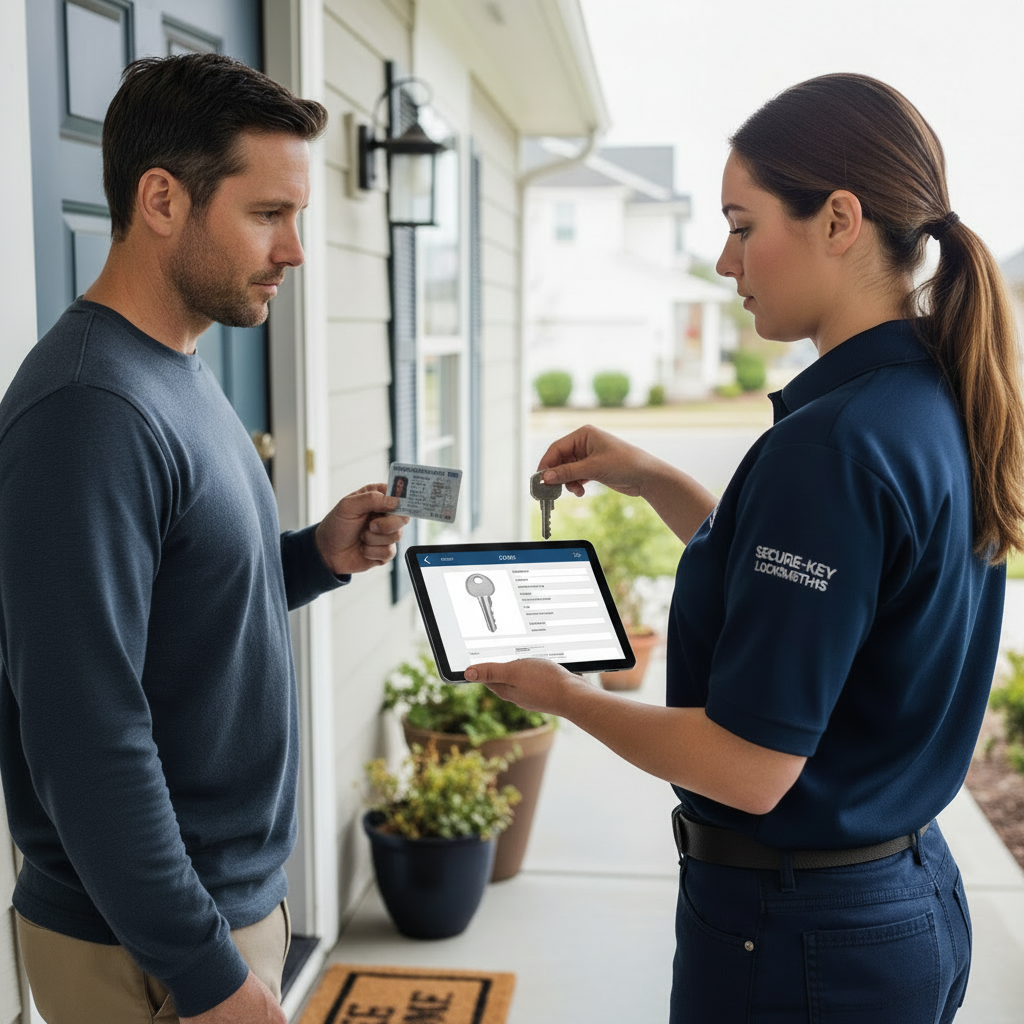
Real talk — choosing the right key duplication service is basically choosing who you trust with access to everything you own.
A legitimate locksmith isn't cutting you a key without proof. You'll need ID. Government-issued, not some laminated gym membership card. Then they'll want something tying you to that address — utility bill works, mortgage statement, lease agreement if you're renting. Some places take photos of your documents and keep them on file for seven years (legal requirement in some states, best practice everywhere else).
Why the paranoia? Because it works. This verification process is literally the only thing standing between your stuff and that guy who's mad you got his parking spot last Tuesday.
I remember a client in Vinings who had a break-in. Cops figured out pretty quick it wasn't forced entry — someone had a key. Turns out her ex-boyfriend had gotten copies made at one of those 24-hour kiosks outside Walmart, and the machine never asked for proof of anything. Just took his money and spit out keys. She ended up rekeying her entire house (around $380 for three exterior doors) and now only uses licensed locksmiths. Smart move.
Licensed services keep records of everything they cut. Who requested it, what date, what documentation they provided. It's partly for auditing (insurance requirements, mostly), partly for accountability if something goes wrong. And they'll usually walk you through basic key control — like how many spares you should actually have floating around, whether you should stamp "don't Duplicate" on certain keys (spoiler: it's not legally enforceable, but it helps), stuff like that.
How Do You Maintain Proper Key Security? Our Certified Professionals Weigh In
Here's what actually works for keeping control of your keys:
In-Depth Look
Detailed illustration of key concepts
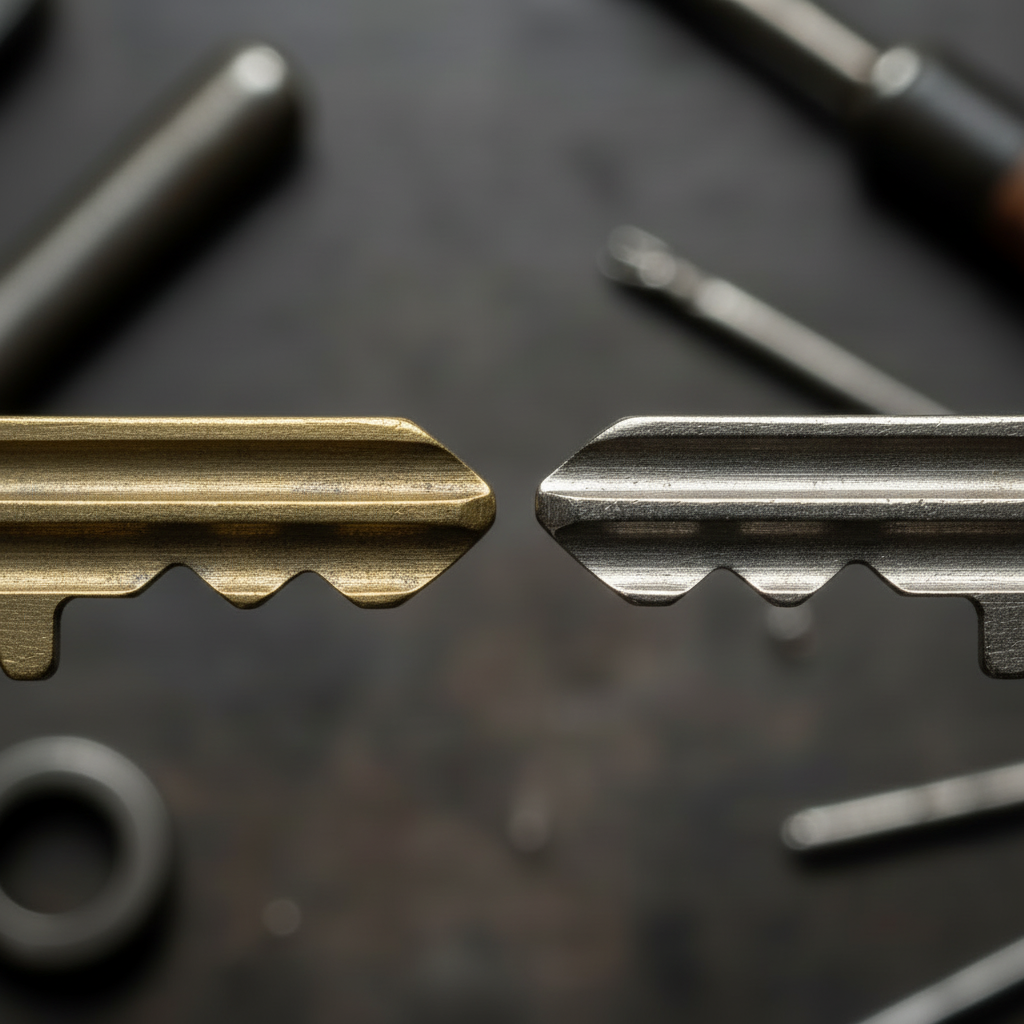
Visual Guide
Infographic illustration for this topic
Side-by-Side Comparison
Visual comparison of options and alternatives
Sources & References
- Your Guide to Fast and Accurate House Key Duplication
- Guide to a Key Duplication Service: Everything You Need to Know
- How to Make a Copy of a Key: Simple Duplicating Methods - wikiHow
- Key Duplication: What You Need to Know to Stay Safe
- Key Duplication: What You Need to Know to Stay Safe - Pop-A-Lock
- Building Codes, Standards, and Regulations: Frequently Asked ...
- Building Codes and Standards - 101 Guide | ROCKWOOL Blog
- [PDF] Building Codes Toolkit for Homeowners and Occupants - FEMA
- Texas Residential and Commercial Building Code Update - YouTube
- ICC - International Code Council - ICC
Frequently Asked Questions
Need Professional Help?
Find top-rated locksmith & security experts in your area