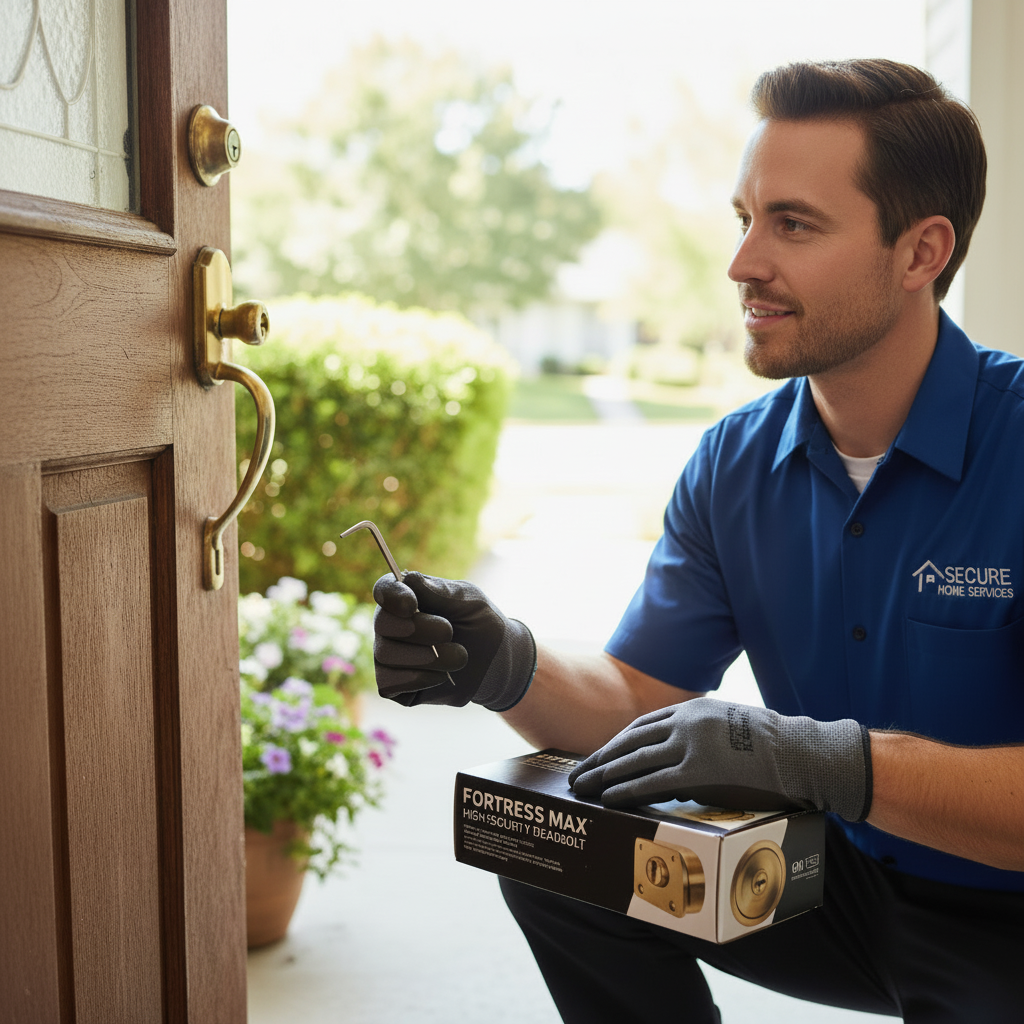
Expert guide on lock repair vs replacement costs. Learn when to fix locks (40-70% savings) vs replace. Professional assessment tips from certified technicians.
Key Takeaways
- # When Your Lock Breaks: Fix It or Trash It
- Had a guy in Buckhead call me last Tuesday
- His deadbolt was grinding so bad his wife thought someone was breaking in every time he came home from work
- "Just tell me how much for a new one," he said before I'd even looked at it
Key Takeaways
When Your Lock Breaks: Fix It or Trash It?
Had a guy in Buckhead call me last Tuesday. His deadbolt was grinding so bad his wife thought someone was breaking in every time he came home from work. "Just tell me how much for a new one," he said before I'd even looked at it.
Cleaned out six years of construction dust and dog hair. Forty-five bucks. He almost spent $340.
Here's the thing nobody tells you about locks: most of them don't need to die. But some of them? Yeah, they're already dead. You're just dragging around a corpse that looks like security.
When Fixing Makes Sense (Which Is Most of the Time)
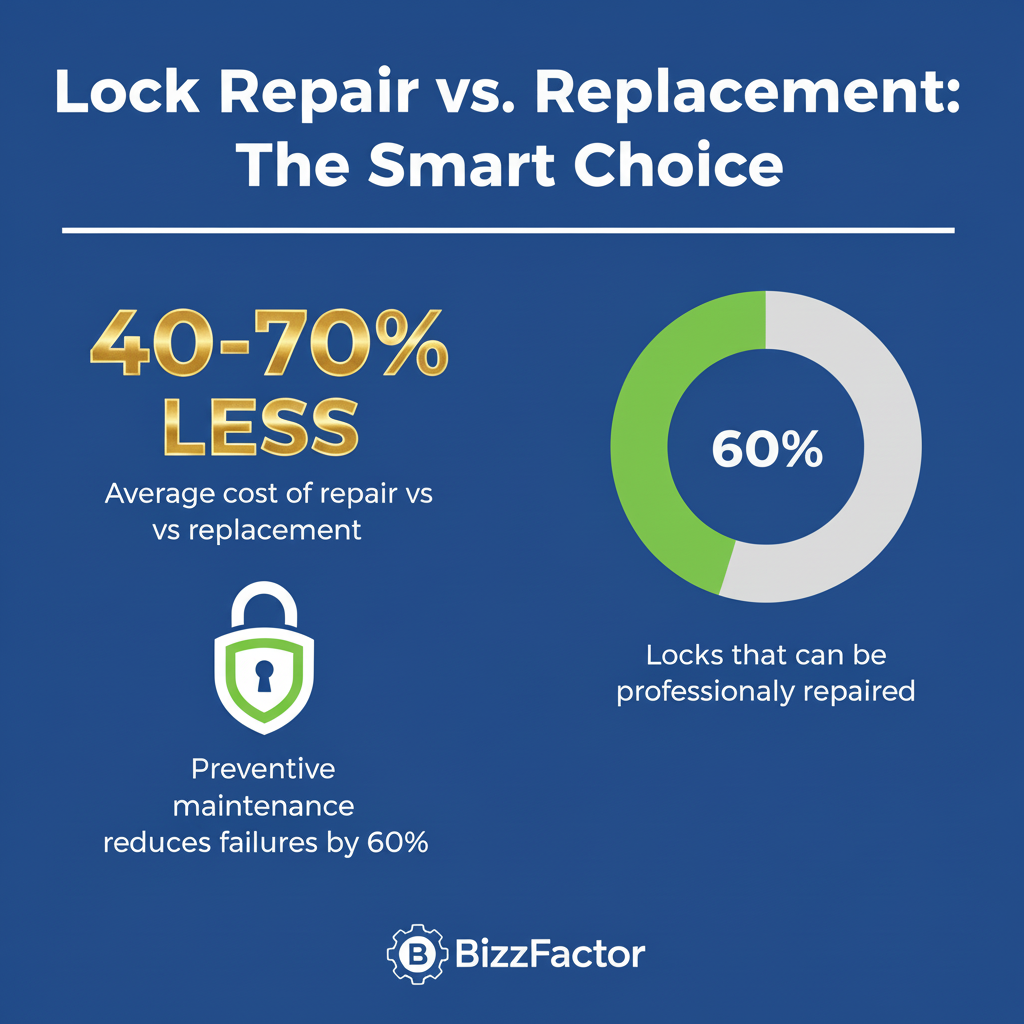
Look — I'm gonna be straight with you. Most locks I see? Totally fixable. Probably 85-90% of my service calls end in repair, not replacement. And it's not because I'm some saint trying to save you money (though I am). It's because a decent lock — your Medeco, high-end Schlage, even mid-tier Kwikset — is designed to survive *hundreds of thousands* of key turns. Throwing that engineering out because it's sticky? That's like junking a car over a flat tire.
The stuff we actually fix every single day:
**Sticky tumblers.** Deep clean with PTFE-based lube (never WD-40, I'll get to that). Can reduce internal friction by 80%. Your key should turn like butter, not like you're cranking a rusty gate.
**Worn keys.** Rekey the cylinder instead of replacing the whole assembly. Costs maybe $75 versus $300 for new hardware. Same security, fresh keys, nobody's using the old ones. (Check out our breakdown on [rekeying vs. lock replacement](https://www.bizzfactor.com/rekeying-vs-replacement) — it's a bigger deal than people think.)
**Loose strike plates.** Takes literally eight minutes with a screwdriver. But a loose strike plate is basically an engraved invitation to anyone who knows how leverage works.
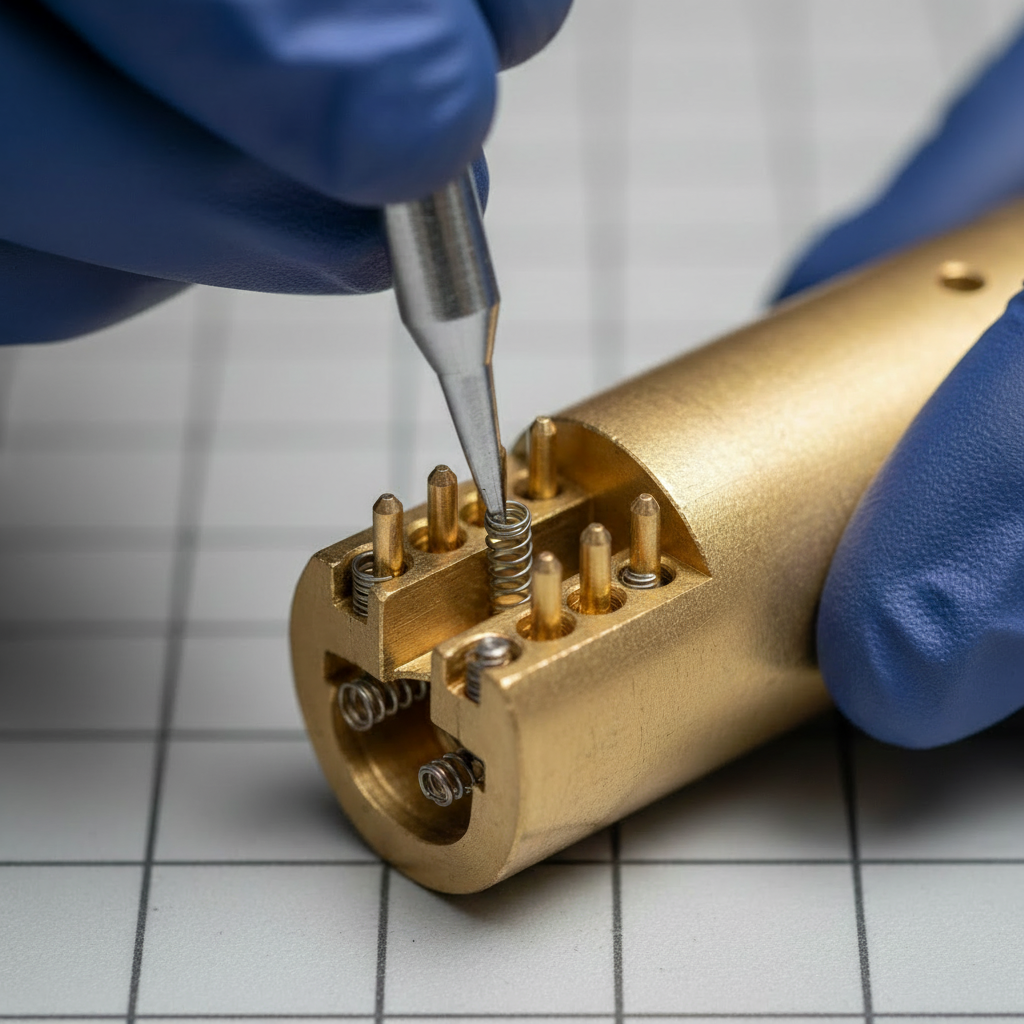
**Broken springs or pins.** Individual parts run under $100. The housing's fine. The bolt's fine. One tiny spring failed. You don't amputate an arm over a splinter.
**Handle mechanisms that don't engage.** We adjust internal gears and spindles so your latch actually catches. Older lever handles do this constantly.
A woman in Maplewood was about to drop fifteen hundred dollars replacing every lock in her house. Keys kept sticking. Grinding. She figured they were done.
Pet hair and dust. That's it. Professional cleaning and dry lube. Hundred and twenty dollars total. Worked perfectly.
Sometimes the simplest answer is the right one.
What This Actually Costs
Repairs run $75-$150 per lock, usually. Service call, labor, maybe a replacement spring.
Replacements? Standard deadbolt starts around $200-$400. High-security Medecos or smart locks can blow past $800 once you're drilling into a steel door frame or retrofitting a mortise lock into something that was never designed for it.
But here's what kills me: one in four people I visit has a valid warranty they completely forgot about. Yale. Schlage. Kwikset. They all cover manufacturing defects for a few years.
Look — look — last month, guy in Decatur had a Kwikset Smart Code die after eighteen months. Called me expecting a $400 bill. Covered under warranty. Didn't pay a dime except the service call — which Kwikset reimbursed.
Check your paperwork before you spend anything. Seriously.
Smart Locks Are a Different Animal
So yeah, regular deadbolts versus smart locks? Totally different worlds With maintenance.
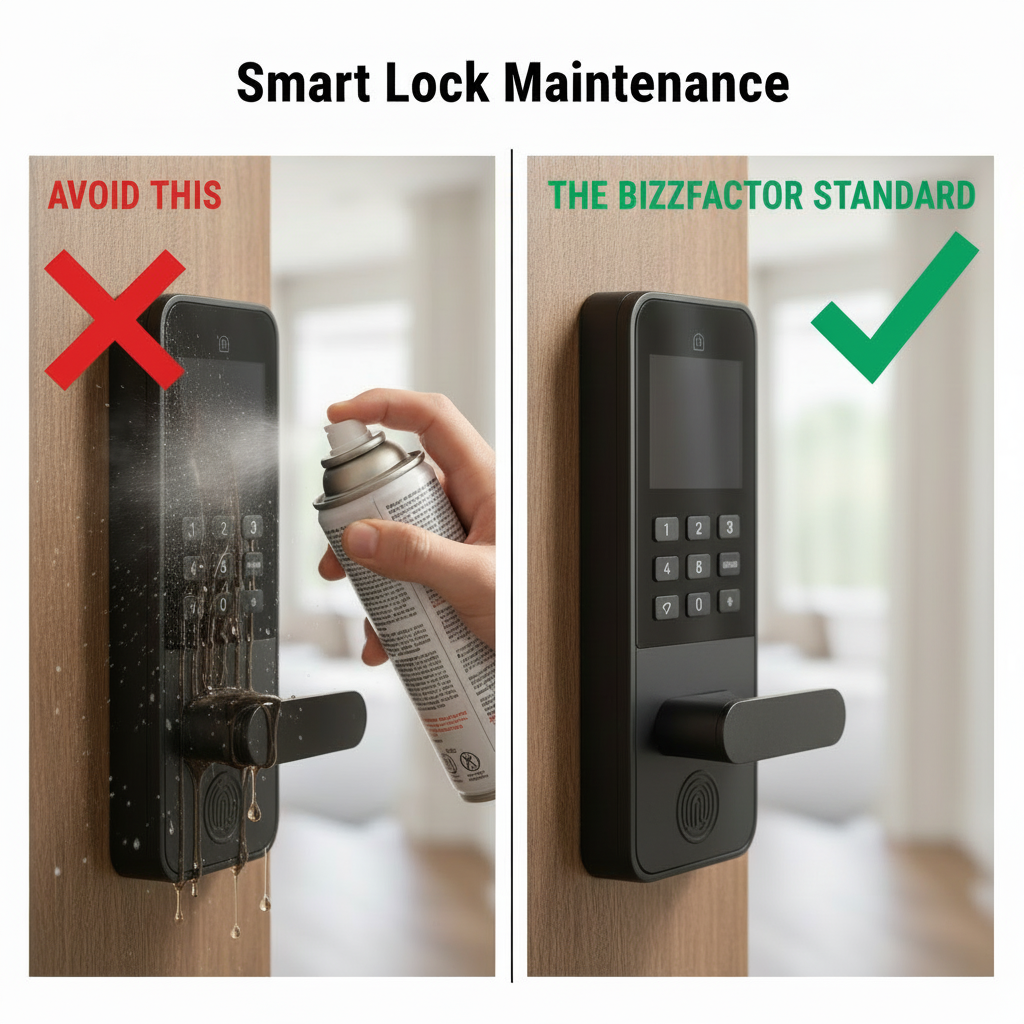
First thing: don't spray oil into a smart lock. I don't care what your uncle told you about WD-40 fixing everything. Smart locks have sealed electronics — microprocessors, tiny servo motors, capacitive sensors. Oil gets in there, attracts dust, gums everything up. You'll kill a $300 lock trying to "fix" it for three bucks.
Ask me how I know.
ESA (Electronic Security Association) says somewhere around 40% of smart lock failures in the first two years come from people doing maintenance they shouldn't be doing. I pulled apart an August lock last month where someone had basically drowned it in lubricant. The motor gears were cemented together with this gross, dusty paste.
What actually works? Microfiber cloth. That's it. Wipe the keypad down. Maybe a tiny bit of rubbing alcohol if you've got sticky fingerprints all over it.
Here's the thing: don't mess with the internals unless you know exactly which components can't have oil within six inches of them. (For more on getting these things installed right in the first place, check our guide on [residential smart lock installation](https://www.bizzfactor.com/residential-smart-lock-installation).)
How We Actually Assess Locks
Been doing this since 2003. You develop a sixth sense for what's salvageable and what's toast.
Here's what I'm looking at when I show up:
**Internal wear** — I pull the lock apart (if you'll let me) and look for hairline cracks. Pins that don't stack right anymore. Springs that feel weak when you compress them. Sometimes you hear grinding that tells you something's scraping where it shouldn't.
**Electronics on smart locks** — Battery health, obviously. But also: Is the Z-Wave signal actually reaching your hub? Does Bluetooth drop every third connection attempt? Auto-lock working consistently or just when it feels like it? If your app's laggy when you're standing two feet from the door, that's a bad sign. These aren't little annoyances — they're symptoms.
**Security stuff** — Your anti-pick pins still doing their job? Drill-resistant plate intact or starting to crack? You paid extra for those features. If they're compromised, someone with a halfway decent pick set is getting through your door in under a minute.
**Real cost-benefit** — This is where I'm probably different from some locksmiths. I'll tell you straight up: "This repair is $95, but a new lock with way better security features is $220. Your call." Or, "Your lock cost you $500 new. This fix is $110. Makes sense to repair it."
My buddy who runs a shop over in Brookhaven? Charges $340 for every smart lock replacement, even when a $60 battery module would solve it.
That's not how I do business.
You get written documentation from me. What I found. What I recommend. Why I recommend it.
Then you decide.
When You Actually Need to Replace
Some locks are dead. They just are. And trying to save them is throwing good money after bad — or worse, leaving your house vulnerable because you're attached to a piece of hardware that can't protect you anymore.
Here's when replacement isn't negotiable:
**Heavy corrosion.** If rust is eating through internal mechanisms or the lock body, structural integrity's shot. Your lock is dissolving. It won't resist forced entry.
**Key fragments stuck permanently.** Broken key pieces wedged in the cylinder interfere with the pin stack. Don't try to fish them out yourself — you'll cause more damage. Usually requires cylinder replacement.
**Physical damage to the body or mounting.** Cracked housing. Bent shank. Stripped screws. Damaged door frame. Weakens the entire system's ability to resist forced entry. Non-negotiable.
**Locks from before 2010.** Older models lack modern security features like mushroom pins or T-pins. Vulnerable to bump keys and advanced picking. Upgrading matters for overall [home security system upgrades](https://www.bizzfactor.com/home-security-system-upgrades).
**Break-in damage.** A lock that's been hammered during an attempted forced entry has internal stress fractures and weakened components even if it looks okay from the outside. It's compromised. (More on securing entry points: [choosing the right front door locks](https://www.bizzfactor.com/choosing-front-door-locks).)
**Dead electronics in smart locks.** Fried circuit boards. Dead motors. If replacement parts cost nearly as much as a new unit, just replace it.
Replace immediately. These aren't "maybe" situations.
In-Depth Look
Detailed illustration of key concepts
Visual Guide
Infographic illustration for this topic
Side-by-Side Comparison
Visual comparison of options and alternatives
Sources & References
- Repair or Replace a Lock? A Guide for Homes & Businesses
- When Is It Time To Replace Home Locks — Repairing Or Upgrading ...
- Rekeying Locks vs Replacing Locks: Key Things to Consider
- When Should You Consider Changing The Locks After Buying A ...
- Building Codes, Standards, Regulations: FAQs
- [PDF] Building Codes Toolkit for Homeowners and Occupants - FEMA
- Building Codes and Standards - 101 Guide | ROCKWOOL Blog
- 5 Reasons Building Codes Should Matter to You
- [PDF] Introduction to Model Codes
Frequently Asked Questions
Need Professional Help?
Find top-rated locksmith & security experts in your area