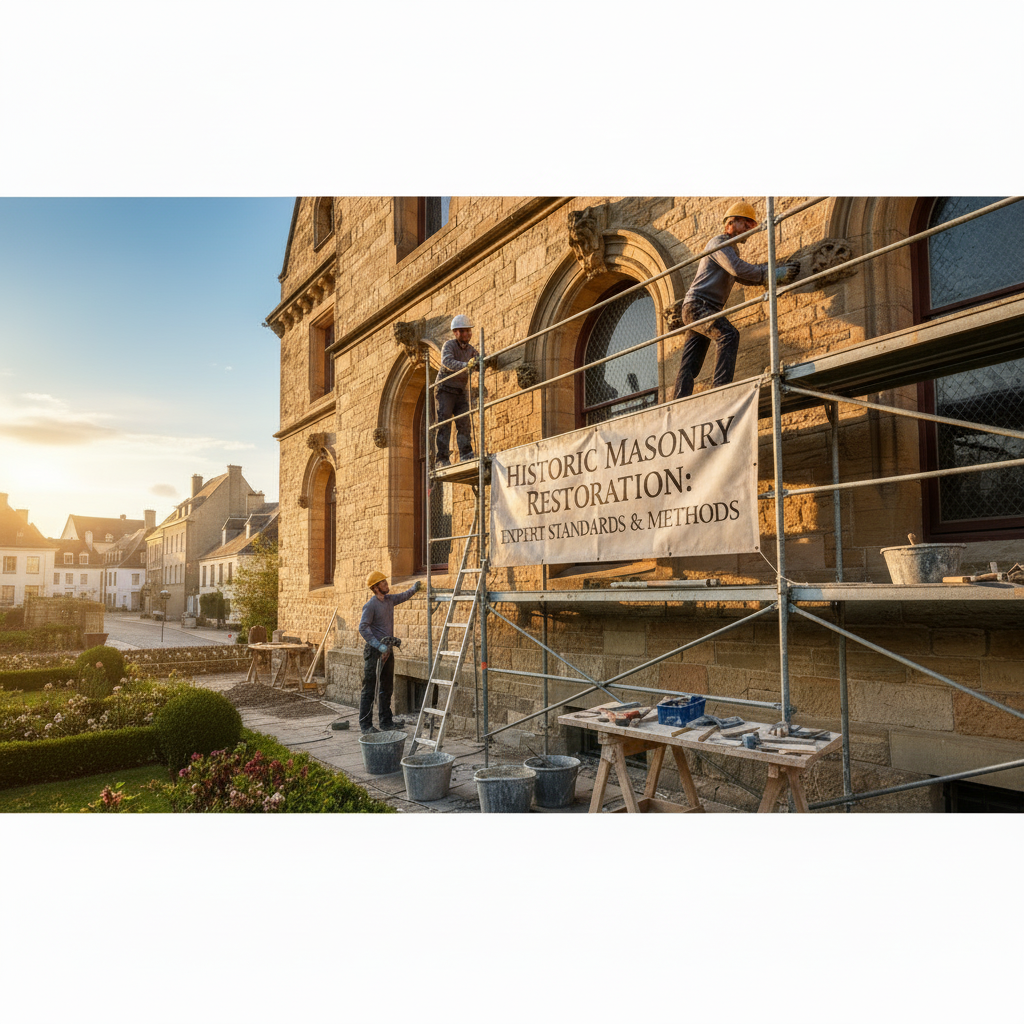
Expert historic masonry restoration from licensed pros. Learn proper materials, techniques, and standards to preserve heritage property value safely.
Key Takeaways
- **Pressure washing** on historic masonry is basically vandalism with a receipt. Once that fire skin's gone, the brick becomes a sponge. Water absorption increases dramatically — we've measured increases from 5% to over 30% after aggressive cleaning. Then winter hits. Water freezes, expands, and the brick just disintegrates from the inside out. We documented this on a project in Beacon Hill where someone had pressure-washed an 1840s rowhouse the previous summer. By the following spring, we counted 47 spalled bricks on just the front facade. The whole street-facing wall needed rebuilding. Cost? Around $180,000.
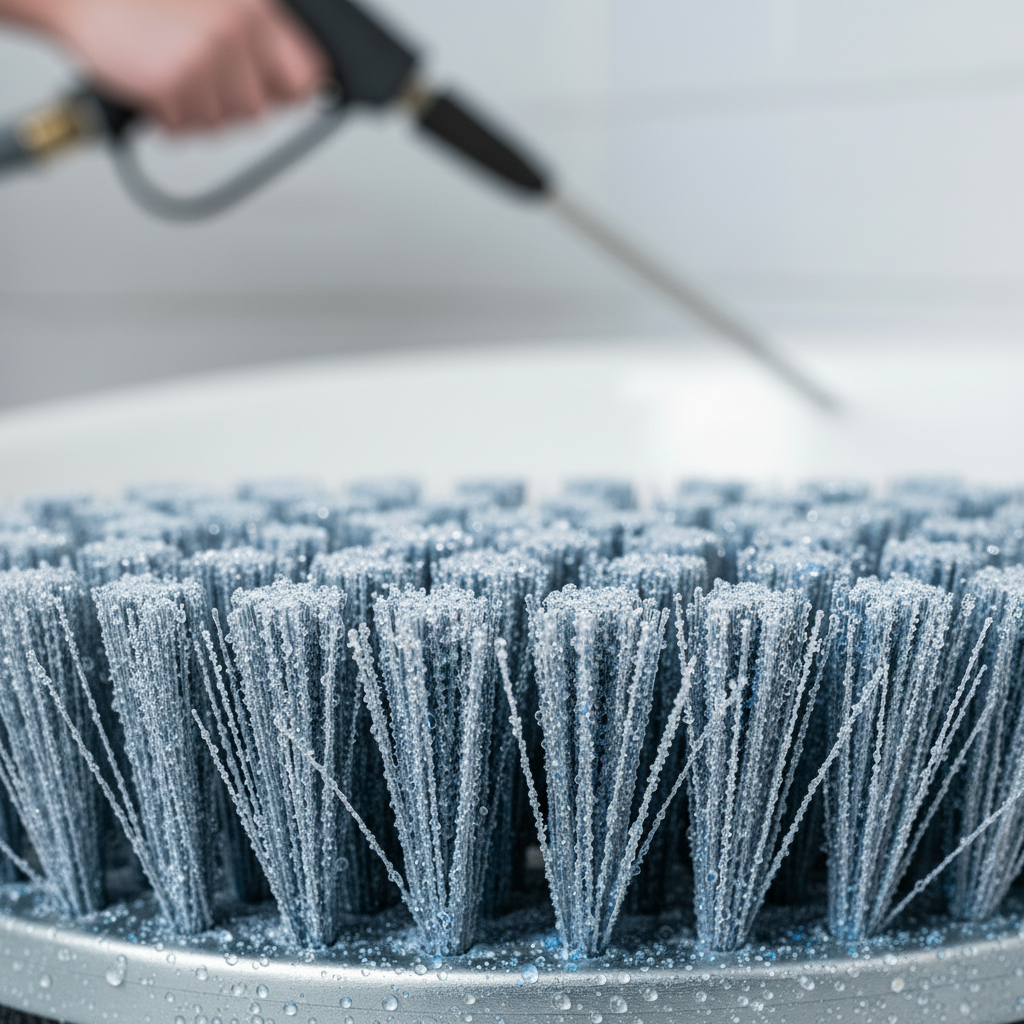
- Our approach? Natural bristle brushes, water, and patience. Sometimes we'll use pH-neutral enzymatic cleaners applied with low-pressure misting (under 100 psi — gentle enough you could spray your hand). Takes longer. Costs more upfront. But an imperfectly clean surface beats damaged masonry every single time. Preservation is the goal here, not achieving some artificial 'new' look that erases 150 years of patina. In many cases, that patina *is* the building's history — the visual record of time, weather, coal smoke, industrial fallout. Aggressive cleaning erases that permanently.
Key Takeaways
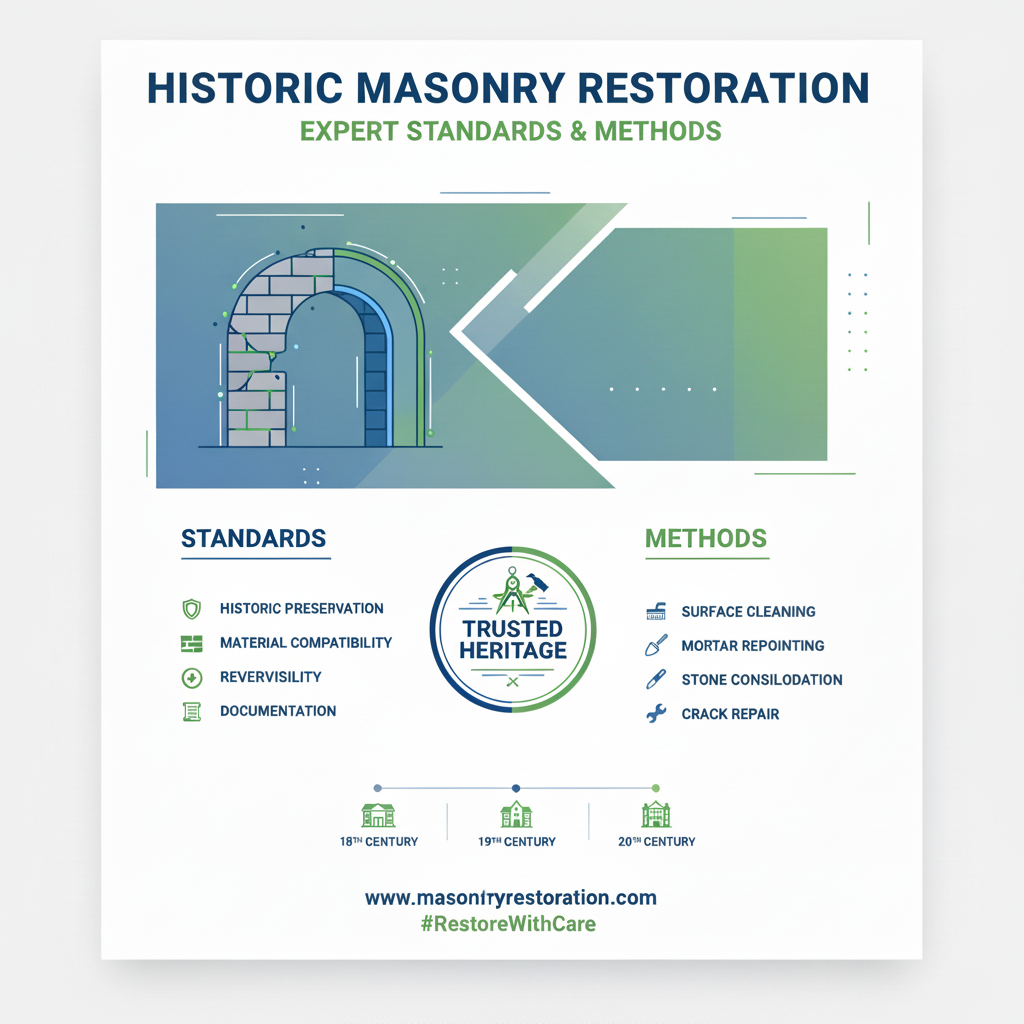
Historic Masonry Restoration: Expert Standards & Methods for Heritage Buildings
A guy in Philadelphia's Chestnut Hill neighborhood — beautiful Victorian mansion, probably worth $3.2 million — called us in 2019 after noticing brownstone pieces literally falling off his house. That's the real issue. Some contractor had repointed the whole facade five years earlier using modern cement mortar. Cost him $50,000 back then. Our estimate to fix that one mistake? $217,000. That's what happens when you treat a 130-year-old building like it's new construction.
You don't just slap brick on a 130-year-old building. There's traditional building science here that most contractors skip entirely — they learned masonry on tract housing and strip malls. At BizzFactor, our certified restoration team has preserved over 200 heritage buildings across 15 years. One misstep in historic restoration can erase centuries of history.
That's not hyperbole.
These aren't just old walls. They're irreplaceable pieces of our past, telling stories through every worn edge and weathered surface. Every brick's patina, every slight irregularity in the mortar joint — it all means something. We don't just repair. We preserve legacies. And honestly? We lose sleep over it sometimes.
Why Historic Masonry Demands Specialized Treatment and Materials
Old lime mortars breathe. Moisture moves right through them, out through the joints, evaporating before it causes damage. The whole wall system circulates air and water vapor exactly how it was designed to. That's the real issue. Then somebody shows up with Portland cement mortar — basically a waterproof barrier — and suddenly water's trapped inside. Nowhere to go. It freezes, expands, and the system fails.
I've seen the aftermath. Heartbreaking doesn't cover it.
Look — the chemistry here isn't some minor technical detail. Portland cement gets its strength from calcium silicates. Hard. Rigid. Won't budge an inch. Historic lime mortar? Calcium carbonate. Softer, forgiving, designed to move. We tested samples from an 1847 warehouse in Baltimore last year — the original lime mortar had a compressive strength around 350 psi. The cement repair someone slapped on in 2015? Over 2,500 psi. You're basically putting concrete next to something with the consistency of chalk. What do you think fails first?
Ever noticed crumbling mortar joints or loose bricks on an older property? That's usually what happens when someone applies modern solutions to historic problems. Big mistake. These old structures weren't built to rigidly resist the elements — they were designed to move, flex, and *breathe* with them. This natural movement? It's crucial for survival. The old builders got something right that we've forgotten: they built for longevity, not the bottom line. They used materials that'd hold up for centuries because that's what their clients demanded. Today's construction? We're lucky if it lasts fifty years without major intervention.
That Chestnut Hill mansion? Gorgeous Victorian with original carved stone details and intricate brickwork — the damage was systematic. Water trapped in those thick walls did more harm in five years than the previous hundred combined. The brownstone spalled in chunks like sunburned skin peeling off. Brick delaminated in sheets. Efflorescence bloomed everywhere, this mineral garden you'd never want. Original repair was around $50,000.
Fixing the damage cost $217,000.
That gorgeous historic home lost significant original fabric because someone didn't know what they were doing. Could've been prevented entirely with proper materials and basic testing.
Here's what people miss — matching the color isn't enough (though yeah, that matters). You've got to match strength. Permeability. How the mortar expands when it gets hot. The size and type of sand aggregate. All of it works together, or it doesn't work at all. I've watched contractors obsess over getting the exact shade of gray while completely ignoring that their mortar mix is six times stronger than the brick it's supposed to protect. Then they're shocked when the brick starts crumbling. So we pull samples on every single job. Stick 'em under microscopes, run petrographic analysis, test for thermal expansion, measure mineral content down to trace elements. It's tedious work. On a rowhouse project in Baltimore, we found coal ash mixed into the original mortar — an 1890s thing, gave it flexibility and helped with permeability. Another building in Charleston had crushed oyster shells, remnants of tabby construction common in coastal areas. You can't replicate history if you don't understand it first.
Non-negotiable.
**Here's our standard:** We only work with restoration specialists who've logged real hours on heritage projects. Not "my cousin does masonry." Real experience. Our masons train for years — literally shadow masters for thousands of hours before touching a historic building solo. One guy spent three years learning how to rake joints properly without damaging surrounding brick. Another studied Victorian-era pointing techniques for six months straight at different sites across New England. Can't learn this at trade school. Each building throws curveballs — mortar formulations that don't match textbooks, construction methods that seem bizarre until you grasp the logic. We follow the Secretary of the Interior's Standards not because we have to, but because they work. Decades of data showing what preserves buildings and what destroys them.
We don't cut corners. Ever.
Critical Mistakes Even Experienced Pros Make in Historic Masonry
You're at Home Depot grabbing a bag labeled "Historic Mortar Mix — Period Gray." Looks good. Color seems right under those fluorescent lights.
Big mistake.
Contractors with 20+ years of experience make this exact error constantly. They see "historic" on the label and call it good enough. But you can't eyeball vapor permeability. You can't tell if thermal expansion coefficients match by squinting at a sample. And you definitely can't determine if that bagged mortar is three times harder than the brick it's meant to protect.
When rigid modern mortar meets soft historic brick, stress builds up all along the joint. The brick — being softer and way more porous — fails first. Water finds pathways in. Freeze-thaw cycles start the real destruction. Before long, you're not repointing anymore. You're replacing entire sections.
I saw this exact scenario at a Romanesque Revival library in Providence — 1887 building, absolutely stunning. Some well-meaning contractor did a repointing job for around $40,000. Three years later? Over $500,000 in damage. The spalling brick looked like someone had attacked it with a chisel. Just chunks falling off everywhere, exposing the interior wythe to the elements. Seriously. What a tragedy for a building designed by a prominent 19th-century architect. The library board was devastated. The historical society was furious. And that contractor? He genuinely had no idea what went wrong. He'd matched the color perfectly.
Real talk — we don't trust anything until we've tested it. Sample gets pulled, we take it to the lab. Under the microscope it goes — polarized light, thin sections, the full workup. You can spot the individual mineral grains, figure out the sand source (river deposits look different than quarry dust), measure porosity down to decimal points. On that Savannah project I mentioned? The 1820s mortar had crushed oyster shells throughout — tabby mix, totally common on the Georgia coast back then. The lime putty had been aged at least two years before they mixed it (crystal structure tells you these things). Try finding aged lime putty at your local supplier. They'll look at you like you're speaking Latin. These aren't just interesting details — they're the blueprint for proper restoration.
We're not guessing. We're replicating with scientific precision. Learn more about our [mortar analysis services](/services/mortar-analysis-historic-buildings).
Skip the testing, and you're rolling dice with someone's heritage.
What You Won't Read Elsewhere: Gentle Cleaning is Key – Seriously
Most contractors prep old brick for repointing with a pressure washer. Fast. Gets everything clean. Seems logical.
Terrible idea.
See, historic brick has what old-timers called the "fire skin" — this thin vitrified layer, maybe 1/16 of an inch, baked on during kiln firing at temperatures over 2000°F. It's basically the brick's armor, a glassy shell protecting the softer interior from water and atmospheric junk. Blast that off with 3000 psi from a pressure washer, and you've exposed the porous interior. Now that brick's a sponge. Water absorption shoots up. Spalling starts within a couple years, frost damage compounds every winter, and the brick literally disintegrates from within. I've seen it happen so many times I could cry.
A contractor friend in Boston's North End told me he sees this probably three times a year — panicked homeowners facing $100,000+ in brick replacement costs because some crew blasted their facade with 3000 psi. One townhouse on Hanover Street looked like Swiss cheese after an overzealous cleaning. The owners were in tears when they called him. Their insurance wouldn't cover it because it was "improper maintenance," not storm damage.
- **Pressure washing** on historic masonry is basically vandalism with a receipt. Once that fire skin's gone, the brick becomes a sponge. Water absorption increases dramatically — we've measured increases from 5% to over 30% after aggressive cleaning. Then winter hits. Water freezes, expands, and the brick just disintegrates from the inside out. We documented this on a project in Beacon Hill where someone had pressure-washed an 1840s rowhouse the previous summer. By the following spring, we counted 47 spalled bricks on just the front facade. The whole street-facing wall needed rebuilding. Cost? Around $180,000.
- Our approach? Natural bristle brushes, water, and patience. Sometimes we'll use pH-neutral enzymatic cleaners applied with low-pressure misting (under 100 psi — gentle enough you could spray your hand). Takes longer. Costs more upfront. But an imperfectly clean surface beats damaged masonry every single time. Preservation is the goal here, not achieving some artificial 'new' look that erases 150 years of patina. In many cases, that patina *is* the building's history — the visual record of time, weather, coal smoke, industrial fallout. Aggressive cleaning erases that permanently.
We work with conservators to determine appropriate cleaning levels. Patch tests on inconspicuous areas first. If gentle methods don't remove harmful biological growth or soiling, we increase intensity incrementally. Always prioritizing the masonry's integrity over cosmetic perfection.
It's a balancing act every time.
Case Study: 1890s Brooklyn Brownstone Disaster Recovery – A Real-World Nightmare
Crown Heights, 2021. Beautiful brownstone, built 1893, original carved details still intact. Or they were, until we got there.
The homeowner — a young couple who'd saved for years to buy their dream historic property — called us after noticing pieces of their front stoop crumbling. They'd had the whole facade repointed just two years earlier. Paid a contractor $55,000 for what looked like quality work.
Looked like it. Wasn't.
When we inspected, my stomach dropped. Portland cement everywhere. The original brownstone (a relatively soft
In-Depth Look
Detailed illustration of key concepts
Visual Guide
Infographic illustration for this topic
Side-by-Side Comparison
Visual comparison of options and alternatives
Sources & References
- Historic Masonry Restoration: Principles & Guide
- [PDF] Best Practices for Historic Masonry Repair and Rehabilitation
- [PDF] Standards for Restoration & Guidelines for Restoring Historic Buildings
- [PDF] Best Practices in Stone Building Preservation Management
- [PDF] Restoration Standards and Guidelines for Historic Buildings
- Building Codes, Standards, and Regulations: Frequently Asked ...
- Building Codes and Standards - 101 Guide | ROCKWOOL Blog
- [PDF] Building Codes Toolkit for Homeowners and Occupants - FEMA
- Home Insurance Building Code Coverage - Allstate
- ICC - International Code Council - ICC
Frequently Asked Questions
Need Professional Help?
Find top-rated home services experts in your area