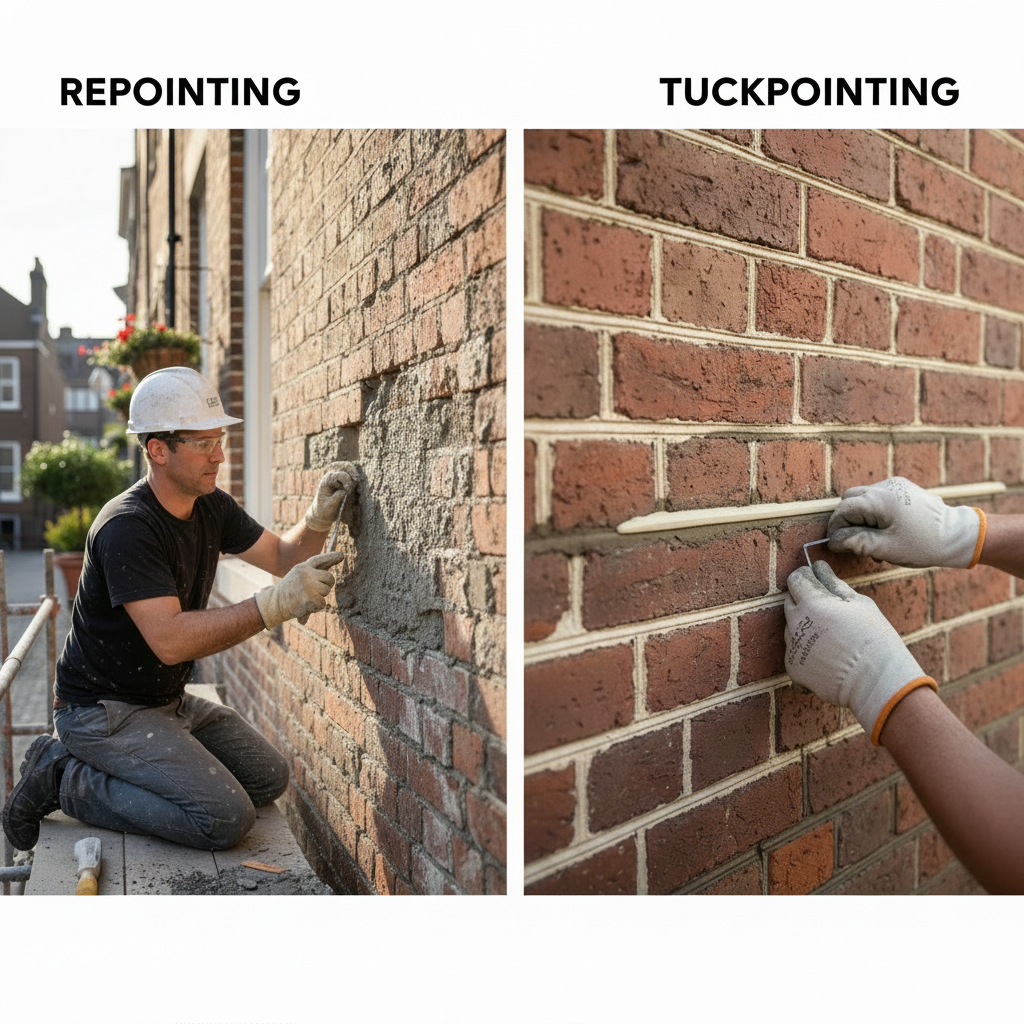
Learn key differences between tuckpointing vs repointing for masonry repair. Expert guide covers techniques, costs, and when to use each method effectively.
Key Takeaways
- Mortar powder falling from joints
- Visible gaps allowing water penetration
- Loose or shifting bricks
- White efflorescence staining on surfaces
- Interior moisture problems near masonry walls
Key Takeaways
Tuckpointing vs Repointing: Masonry Repair Guide
Tuckpointing creates decorative contrasting mortar lines for visual appeal. Repointing removes and replaces deteriorated mortar joints for structural integrity. Both techniques restore masonry but serve different purposes for your home's brick or stone surfaces.
What's the Real Difference Between Tuckpointing and Repointing?
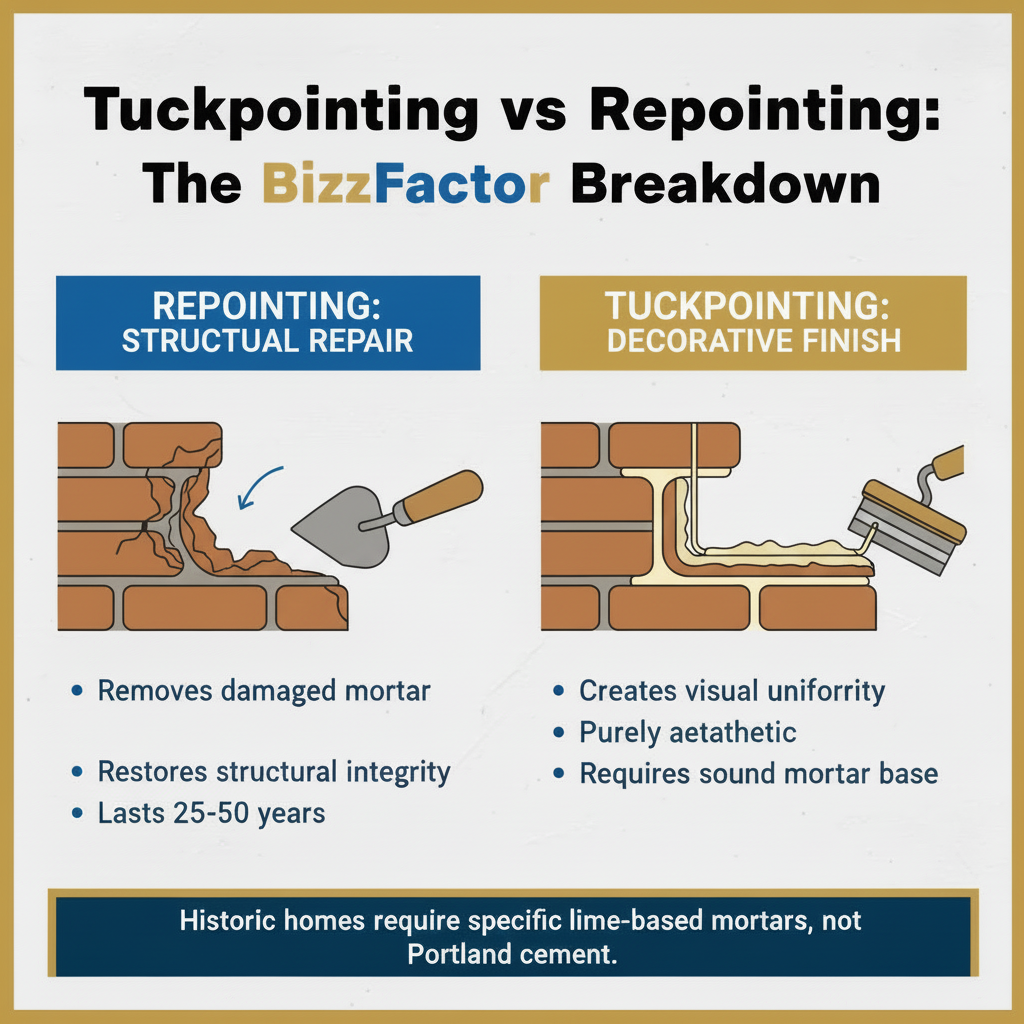
Repointing is structural restoration – we remove damaged mortar and install fresh material that matches the original color and composition. In our experience, homeowners mix these up daily, leading to disappointing results.
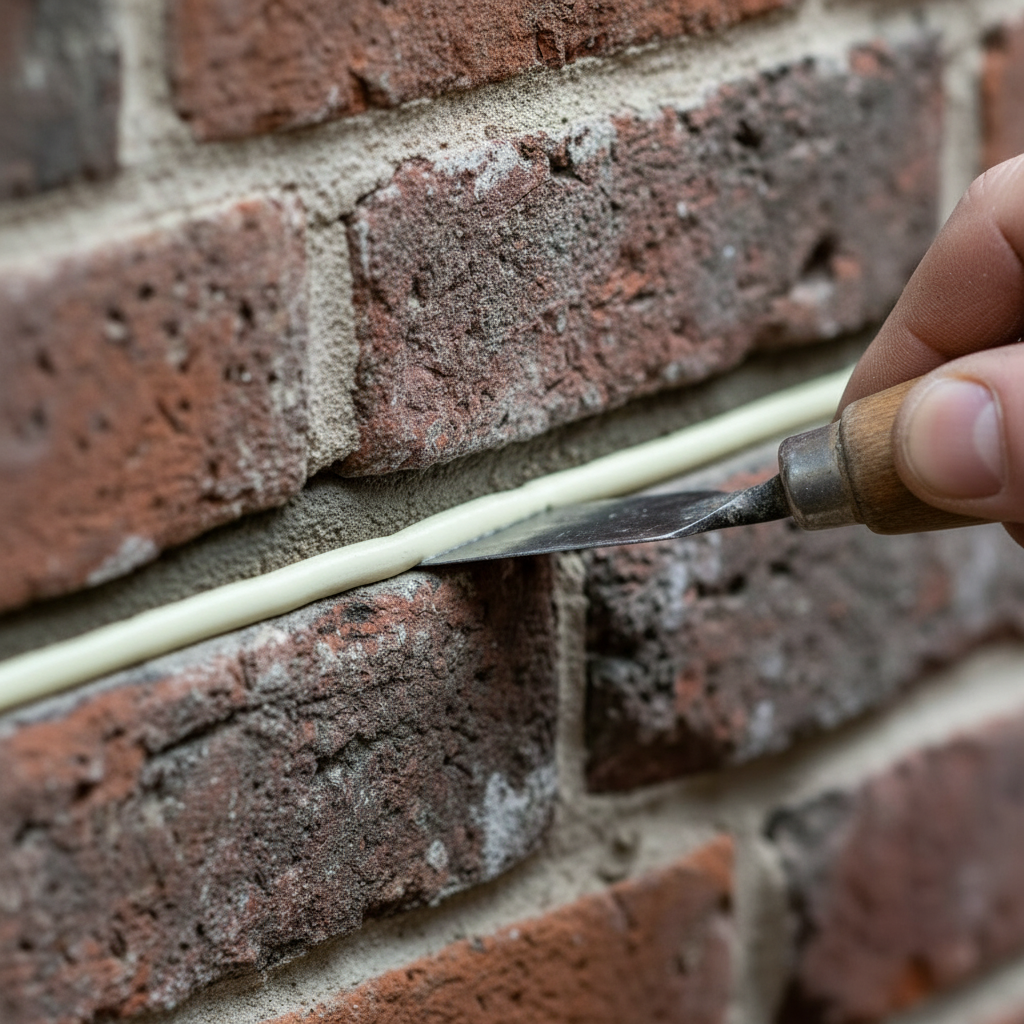
Tuckpointing? Pure aesthetics. We apply base mortar slightly recessed from the brick face, then add thin contrasting lines of colored mortar to create uniform joint lines.
Here's something most people don't realize – the International Building Code requires proper mortar composition matching original lime-to-sand ratios for historic structures. FEMA guidelines emphasize that improper repointing actually accelerates deterioration when modern Portland cement mortars are used on older lime-based masonry.
What is tuckpointing exactly? Tuckpointing is a decorative masonry technique that uses contrasting mortar colors to create the illusion of perfectly uniform joint lines, originally developed in 18th-century England.
⚠️ Red Flag Alert
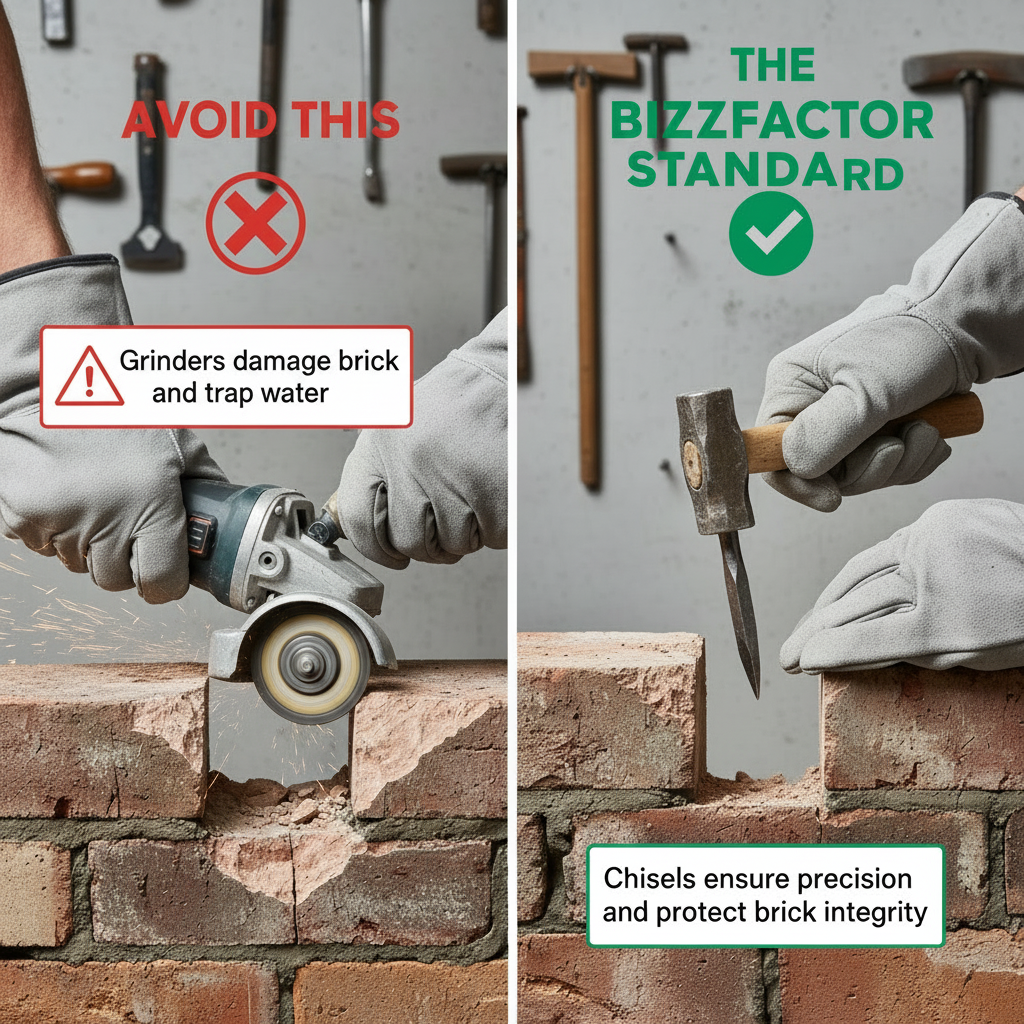
Even pros make this mistake – using angle grinders for mortar removal. Don't do it. Grinding discs damage the brick's hard outer skin (the arris), which widens joints and creates V-shapes that trap water.
Result? Spalling and accelerated decay.
True craftsmanship requires hammer and chisel or specialized plugging chisel on low-power hammer drill. We've seen too many DIY disasters from this simple mistake.
Our Team's Pro Recommendation
Think FEMA philosophy, not weekend DIY kit mentality. FEMA prioritizes long-term structural resilience over quick fixes – your home's masonry is a system.
We recommend the holistic approach: structural integrity first, aesthetics second. Products like ROCKWOOL insulation work better when your masonry envelope performs properly. Your home isn't a FirePitOutfitter project kit.
Industry Secret Most Guides Won't Share
Stop trying for perfect mortar color match on day one. Choose mortar mix that dries slightly lighter than original. Why?
New mortar naturally darkens over 2-3 years as it cures and weathers. Starting lighter ensures perfect blending over time. An "exact" match today creates tomorrow's dark, patched look.
Honestly? Most people make their first mistake right here – and our certified technicians learned this through 20+ years of field experience.
When Does Your Masonry Need Repointing?
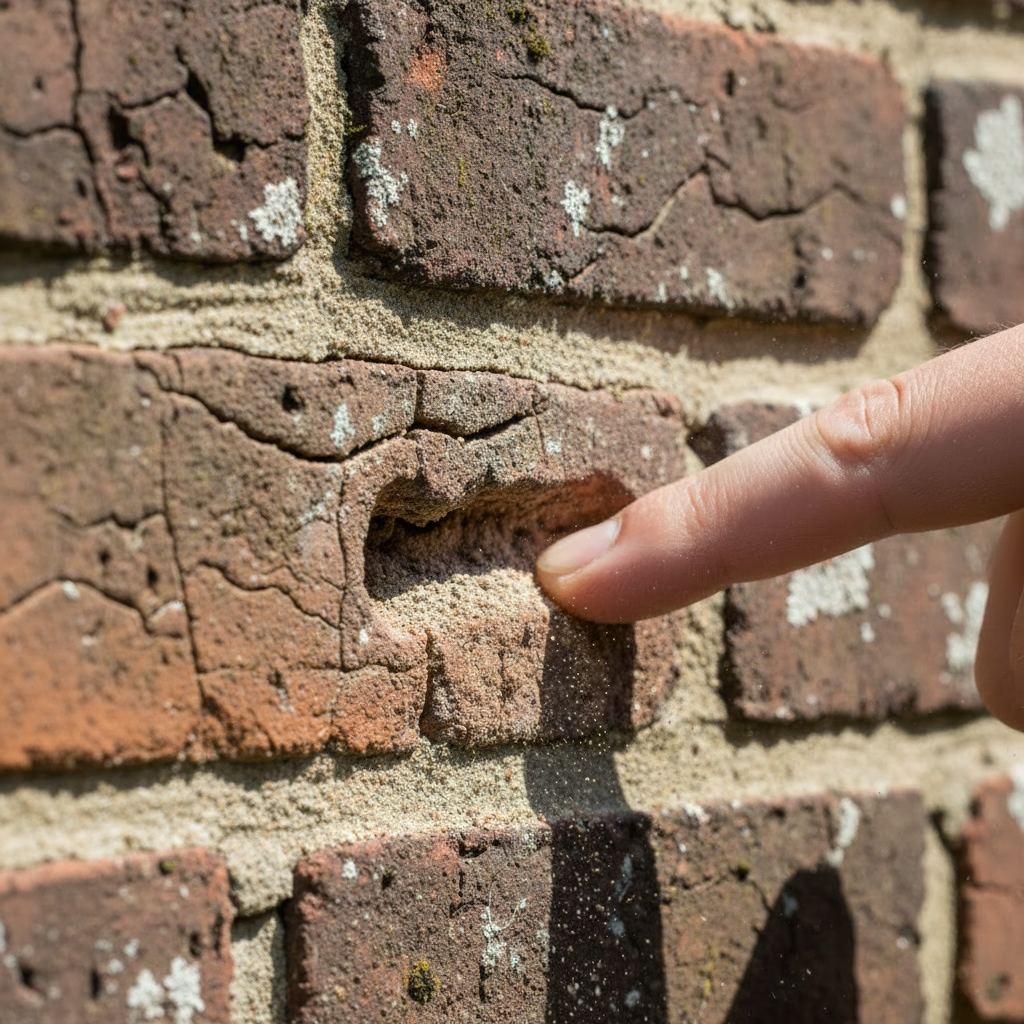
Repointing becomes necessary when mortar joints show cracking, crumbling, or weathering that compromises structural integrity. We recommend repointing when joints lose more than 25% of original depth or moisture infiltration threatens your building envelope.
How do you know if repointing is needed? Look for these warning signs that we inspect during every home assessment:
- Mortar powder falling from joints
- Visible gaps allowing water penetration
- Loose or shifting bricks
- White efflorescence staining on surfaces
- Interior moisture problems near masonry walls
International Residential Code mandates that repointing work must maintain original mortar's permeability characteristics. ROCKWOOL insulation experts often recommend addressing masonry permeability before installing exterior insulation systems.
What is repointing? Repointing is the process of removing deteriorated mortar from masonry joints and replacing it with new mortar to restore structural integrity and prevent water infiltration.
Real Project: 1920s Brownstone Disaster Turned Success
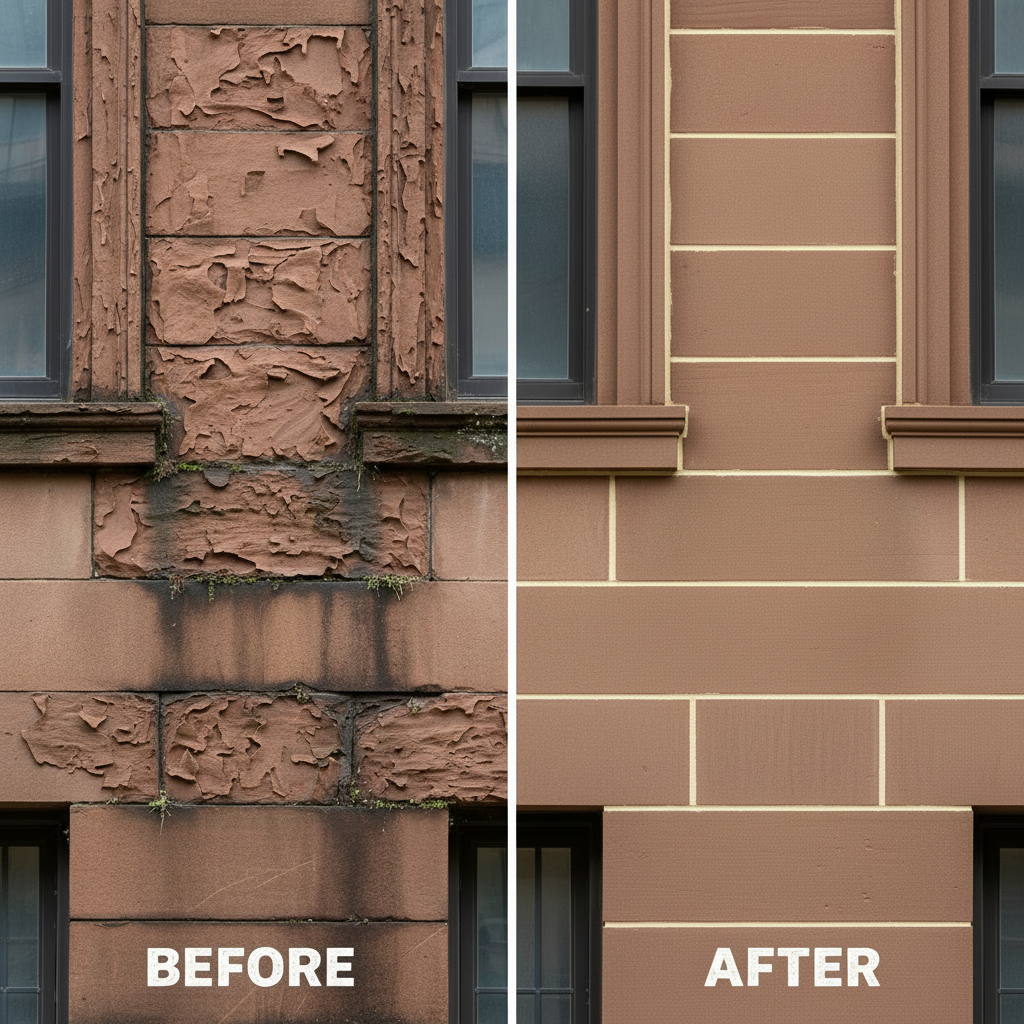
Just last month we inspected a 1920s brownstone where the owner wanted "tuckpointing" for curb appeal. Our assessment revealed 40% of mortar joints had deteriorated beyond cosmetic repair.
What was the problem? Original lime mortar was dissolving. Previous contractors had used inappropriate cement-based patches for decades – sound familiar?
We explained repointing was essential first. Remove all compromised mortar. Install properly matched lime-based mortar according to California Code Title 24 for historic preservation.
Project required custom mortar analysis by Peter Cox laboratory services. We matched the original 1920s formula exactly – preserving historic integrity while ensuring long-term durability.
Result? Client's insurance company verified the work met all safety standards. We provided a 5-year warranty on materials and workmanship.
Professional Tuckpointing: Art Meets Engineering
Tuckpointing transforms ordinary masonry into architectural showcase material through precise contrasting mortar lines – a technique that originated in 18th-century England to mimic expensive cut stone using common bricks and skilled craftsmanship.
Our certified process involves these critical steps:
1. Install base mortar flush with or slightly recessed from brick faces
2. Allow proper curing time for base mortar (typically 24-48 hours)
3. Apply thin contrasting lines using specialized tools
4. Achieve consistent width and depth across all joints
5. Protect finished work during curing period
Concrete Renovations specialists emphasize tuckpointing requires significantly more skill than standard repointing. BizzFactor Standard demands contractors demonstrate portfolio examples and provide detailed process explanations before beginning work.
Sound familiar? Most contractors can't deliver this level of craftsmanship consistently.
Material Selection: Why It Makes or Breaks Your Project
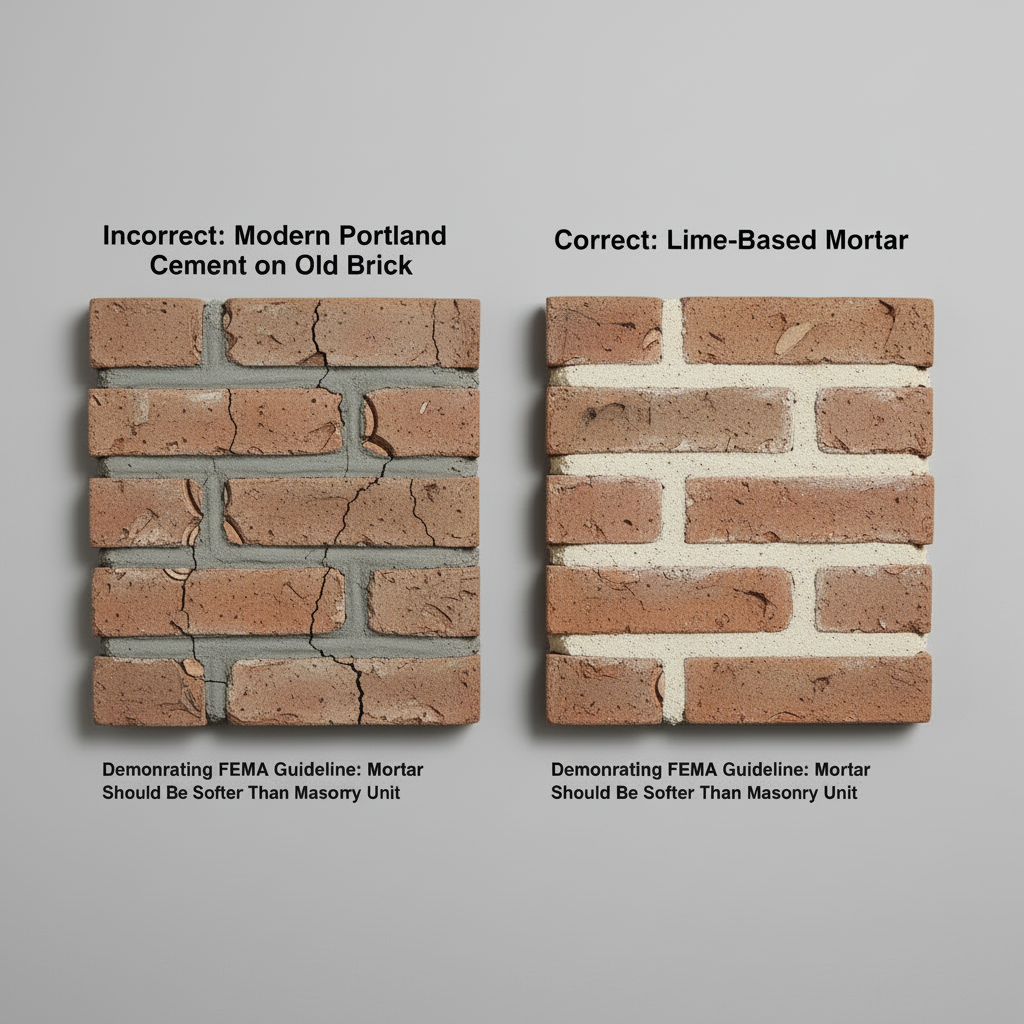
Professional masonry restoration depends on appropriate material selection – here's what we've learned from thousands of projects: modern Portland cement mortars can damage historic masonry.
Why? Because they create overly rigid joints that don't allow natural building movement.
For historic structures, we specify lime-based mortars matching original permeability and flexibility. International Mechanical Code requires masonry restoration maintain vapor transmission rates consistent with original construction.
Kurtz Bros. Landscape Supply provides specialized historic mortar mixes for our restoration projects. Their custom formulations account for regional aggregate characteristics and environmental conditions affecting long-term performance.
For newer construction, Type N mortar typically provides appropriate strength and durability for most residential applications. Starfire Direct offers color-matched mortars that eliminate guesswork in achieving consistent appearance across large projects.
What's the best mortar type for repointing? Type N mortar is best for most residential repointing projects because it provides optimal balance of strength, durability, and workability for standard masonry applications.
Cost Reality Check: What You'll Actually Pay
Repointing costs typically range from $8-15 per square foot – variables include accessibility, mortar condition, and local labor rates. Tuckpointing commands premium pricing of $15-25 per square foot due to specialized skills and additional labor.
Project timing significantly impacts costs. Spring and fall provide optimal working conditions. Winter work may require heated enclosures that increase expenses by 30-50%.
International Plumbing Code requires protection of adjacent plumbing systems during extensive masonry work. We factor this into every estimate.
FirePitOutfitter recommends scheduling masonry restoration before installing outdoor living features to avoid damage from scaffolding and construction activities.
Frankly, we see too many homeowners get sticker shock – quality masonry restoration isn't cheap, but it's cheaper than rebuilding walls later.
Quality Control: Professional vs Amateur Work
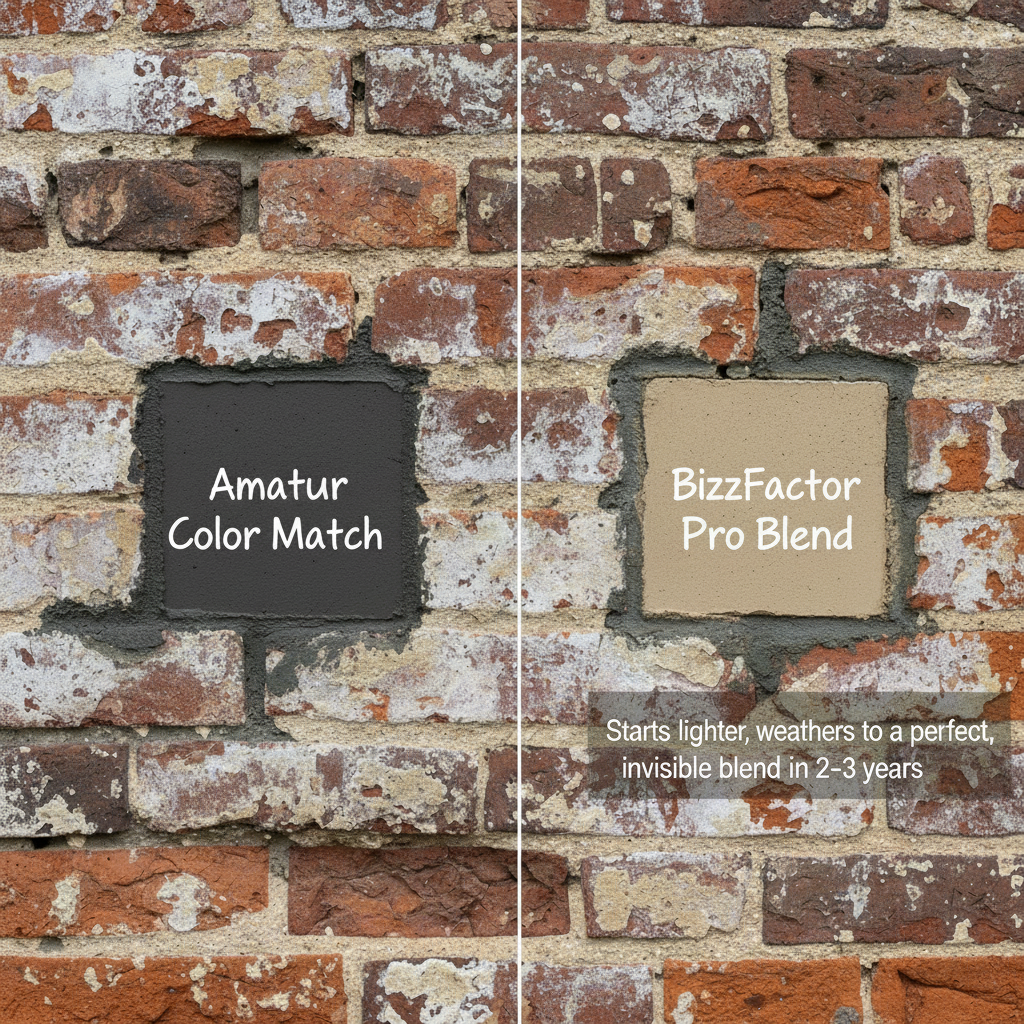
Our team includes proper surface preparation, appropriate mortar mixing, and systematic quality control throughout every project. We inspect joint preparation depth, mortar consistency, and curing conditions at each phase.
Amateur work shows these telltale signs:
- Inconsistent joint depths
- Mismatched mortar colors
- Inadequate surface preparation
- Poor weather protection during curing
Shortcuts like these lead to premature failure and costly rework within 2-5 years.
BizzFactor Standard requires our contractors provide written warranties covering materials and workmanship for minimum three-year periods – demonstrating confidence in proper techniques and quality materials.
How long should quality repointing last? Professional repointing should last 25-50 years under normal conditions, while tuckpointing may require touch-up work every 15-20 years due to exposure of decorative mortar lines.
Maintenance and Longevity: What to Expect
Properly executed repointing should last 25-50 years under normal conditions. Tuckpointing requires touch-up work every 15-20 years due to exposure of decorative mortar lines.
Regular maintenance includes:
- Annual inspections for crack development
- Prompt repair of minor issues
- Protective treatments as recommended by masonry professionals
- Proper drainage maintenance around masonry
FEMA disaster recovery guidelines emphasize that well-maintained masonry provides superior resistance to wind and seismic forces. Deteriorated joints compromise structural integrity during extreme weather events.
Our certified technicians provide detailed maintenance schedules with every completed project – helping homeowners protect their investment and maintain warranty coverage.
In-Depth Look
Detailed illustration of key concepts
Visual Guide
Infographic illustration for this topic
Side-by-Side Comparison
Visual comparison of options and alternatives
Sources & References
- Tuckpointing vs. Repointing: Key Differences in Mortar Joint Repair
- What Is the Difference Between Tuckpointing and Repointing?
- Tuckpointing Vs Repointing - Difference For Your Brickwork
- Tuckpointing vs. Repointing: Which Brick Joint Fix Saves You Money?
- Tuckpointing vs Repointing - Full Service Chimney
- Building Codes, Standards, and Regulations: Frequently Asked ...
- Building Codes and Standards - 101 Guide | ROCKWOOL Blog
- [PDF] Building Codes Toolkit for Homeowners and Occupants - FEMA
- [PDF] Guide to the Minnesota State Building Code
- Home Insurance Building Code Coverage - Allstate
Need Professional Help?
Find top-rated home services experts in your area