
Learn the 7 key factors controlling moving costs in 2025. Our licensed pros reveal insider pricing secrets, hidden fees to avoid, and money-saving strategies for your relocation.
Key Takeaways
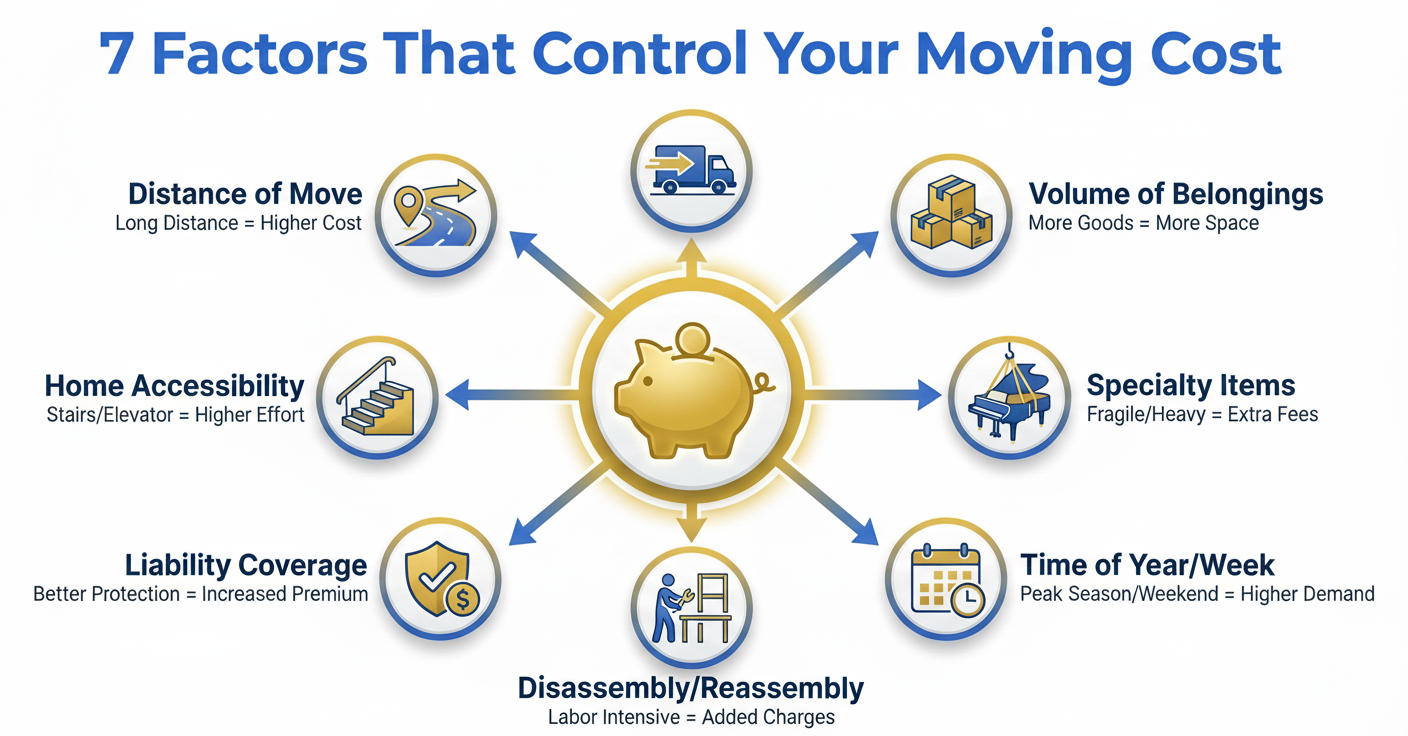
7 Key Moving Cost Factors That Control Your Price in 2025
Moving quotes often appear arbitrary, but in reality, they are meticulously calculated based on a variety of critical factors. Understanding these elements is essential for accurately anticipating your final moving expenses and implementing strategies to potentially reduce them.
Your total moving cost hinges on several critical variables, including the distance of your move, the volume and weight of your belongings, and the specific services you require. Each of these components significantly impacts the final price, making transparency, detailed planning, and informed decision-making paramount for a cost-effective relocation.
1. The Volume and Weight of Your Belongings: The Primary Cost Driver
Every possession you've accumulated directly contributes to your moving bill. Consequently, the size of your current residence serves as a strong indicator of this factor. A three-bedroom house, for instance, will inherently incur higher costs than a studio apartment due to the greater quantity and cumulative weight of items.
**Specialized items** like a grand piano, a large grandfather clock, or delicate antique furniture present a unique costing challenge. Such items frequently demand specialized handling techniques, bespoke packing materials, and sometimes custom crating, all of which elevate the complexity and cost of your move. For more in-depth insights on preparing and moving such items, refer to our comprehensive guide on [specialty item moving services](/guides/moving-companies/specialty-item-moving-services).
**Pro Tip:** Significantly reducing your possessions before professional movers provide an estimate is one of the most effective strategies to lower your overall moving cost. Less to move translates to less complexity, fewer required resources (labor, truck space), and consequently, a lower final bill.
⚠️ Common Misconceptions About Moving Weight
Many individuals focus predominantly on large furniture pieces when considering moving weight. While sectionals and king-sized beds are undoubtedly heavy, the cumulative weight of numerous boxes containing books, kitchenware, and personal effects often surprises people. These smaller, densely packed items can add substantial, often underestimated, weight, significantly impacting the final quote.
**Actionable Advice:** Start decluttering and organizing early. Discard, donate, or sell items you no longer need. This proactive approach not only lightens your load but also makes the packing process more efficient and reduces the risk of strain on moving day. Explore further tips on decluttering and efficient packing in our article about [efficient packing strategies](/guides/moving-companies/efficient-packing-strategies).
2. Distance of Your Move: Local vs. Long-Distance Considerations
The distance your belongings need to travel is a foundational cost factor. Local moves are typically priced hourly or with a flat rate, often within a certain mileage radius. Conversely, long-distance moves (classified as interstate or cross-country) are usually calculated based on the weight or volume of your shipment and the mileage. The longer the distance, the higher the fuel costs, labor hours, logistical coordination, and potential for additional fees.
3. Required Moving Services: From Basic Transportation to Full-Service White Glove
The level of service you choose dramatically impacts the price. A basic move might only include the transportation of your packed boxes and furniture. In contrast, a full-service move could encompass comprehensive packing, unpacking, precise furniture disassembly/reassembly, and even temporary storage solutions. Each additional service, while convenient, adds to the overall cost.
⚠️ The Overlooked Costs of Furniture Disassembly and Reassembly
Many household items, such as bed frames, dining tables, modular shelving units, and intricate wardrobes, require professional disassembly before transport and meticulous reassembly at your new home. These specialized services can add significant costs to your moving bill. Don't hesitate to ask upfront about specific fees associated with furniture disassembly and reassembly, as this information might influence your decision on which items to move or even whether to purchase new furniture.
The Strategic Approach to Packing Services
While packing everything yourself can save money on labor costs, it isn't always the most strategic approach, particularly for valuable or delicate items. Consider hiring professional movers for specialized packing of specific rooms or items that are fragile, high-value, or exceptionally difficult to pack correctly.
For example, kitchens (with numerous breakable dishes and glassware), home offices (with sensitive electronics and important documents), and china cabinets (filled with delicate heirlooms) are ideal candidates for professional packing services. The type of [packing services](/guides/moving-companies/packing-services-explained) you choose significantly affects your overall cost but can offer invaluable peace of mind, reduce the risk of damage, and save considerable time. Specialized packing services are precisely designed to protect your most vulnerable belongings.
4. Moving Date and Seasonality: Timing is Everything for Optimal Pricing
Moving prices are highly susceptible to seasonal demand and scheduling. Weekends, public holidays, and the peak moving season (typically the summer months from May to September) often command substantially higher rates due to increased demand and limited availability. Conversely, planning your relocation during less busy periods—such as mid-week, mid-month, or during the off-season (fall/winter, excluding holidays)—can lead to significant savings on [moving services](/guides/moving-companies/all-about-moving-services).
5. Accessibility Issues: Overcoming Logistical Challenges
Accessibility challenges at both your origin and destination addresses can directly affect labor costs and overall moving time. Factors such as a lack of elevators, multiple flights of stairs, long carries from the truck to the door, tight hallways, narrow doorways, or the need for shuttle services (if a large moving truck cannot directly access your street or drive) can all add extra time, require specialized equipment, and increase the overall price of your move. Clearly communicate all accessibility concerns during the initial estimate phase.
6. Insurance and Valuation Coverage: Protecting Your Assets Adequately
It's crucial to thoroughly understand the standard liability coverage provided by your chosen moving company. Most movers offer basic valuation coverage, which is usually minimal (e.g., $0.60 per pound per article) and often insufficient for valuable items. For high-value or highly-fragile items, you will likely need to explore additional full-value protection plans offered by the mover or consider purchasing third-party moving insurance. Always ask precise questions about what's included in the standard contract and what additional coverage options are available to protect your belongings adequately. Neglecting this crucial step could lead to significant unexpected financial burdens if damages occur during transit.
7. Additional Fees and Surcharges: Diligently Reading the Fine Print
Beyond core moving services, various surcharges can impact your final bill. These might include fuel surcharges (common for long-distance moves), charges for bulky or unusually shaped items, storage fees if there's a delay between moving out and moving in, or fees for specialized equipment required for certain items or access. Always request a comprehensive, itemized breakdown of all potential fees and understand what each one entails before signing any contract.
Strategic Planning: What Experienced Movers Do
Engage with multiple reputable moving companies for detailed quotes. Different companies offer varying levels of service, insurance options, and pricing structures. Crucially, scrutinize their liability coverage options *before* committing to a contract. Understanding precisely what your chosen moving company covers – and what it doesn't – is vital to avoid unexpected issues and financial stress should damages occur.
Demanding Transparent Estimates
Always request a detailed, itemized estimate, not just a lump sum. This transparency allows you to see how charges are allocated for labor, transportation, packing materials (if applicable), and any additional services. A clear breakdown empowers you to compare quotes accurately and question any unclear line items.
If you plan to reduce your belongings between the initial estimate and moving day, ensure you get a **revised quote in writing**. This is your safeguard to ensure that the reduction in items genuinely translates to a lower final invoice. Do not rely on verbal assurances.
⚠️ Avoiding the "Future You" Pricing Trap
Never agree to a moving quote based on the *anticipated* reduction of items. Movers base their estimates on the current inventory at the time of the walkthrough or survey. If that large pile of donations in your garage is still there on moving day, and the actual volume or weight differs significantly from the original estimate, your final bill could unexpectedly increase. Ensure that any item reductions are finalized and removed from your premises *before* the mover provides their final binding estimate. This proactive step prevents discrepancies and ensures cost accuracy.
How to Effectively Compare Moving Quotes
Do not simply choose the cheapest quote. Instead, compare *how* each company calculates its figures, ensuring you understand their methodology. Movers use different pricing models, which can involve weight-based pricing, volume-based pricing, hourly rates, or a combination. Ask each company to walk you through their specific pricing model, clarifying every line item, potential surcharge, and what constitutes a binding vs. non-binding estimate. This diligence will help you make an informed decision and budget accurately.
In-Depth Look
Detailed illustration of key concepts

Visual Guide
Infographic illustration for this topic
Side-by-Side Comparison
Visual comparison of options and alternatives

Sources & References
- Moving Costs (2026 Guide) - This Old House
- Top Factors That Influence Your Estimate Moving Costs
- A Guide to Moving Company Cost | 1-800-PACK-RAT
- Key Factors That Affect Your Moving Cost - iMoving
- Factors That Affect Your Local Move Cost - Moovick
- Types of Moving Companies & Services
- Best Long-Distance Moving Companies | Expert Reviews & ...
- How to Choose a Reliable Moving Company
- How to Choose a Moving Company
- Best Moving Companies of 2026 | Real Estate & Home
Frequently Asked Questions
Need Professional Help?
Find top-rated moving companies experts in your area