
Professional moving guide from licensed movers. Get expert tips on choosing companies, packing strategies, and avoiding costly mistakes.
Key Takeaways
- **Legit Licensing:** For interstate moves, they *must* have a verified FMCSA number. This isn't optional. For local hops, state licensing is the game. No license, no deal. Period. It's about getting your stuff moved safely and legally, shielding you from liability. Plus, the FMCSA maintains a public database where you can confirm their operating authority and safety record. It's all there. Check it.
- **Certified Professionals:** Are their technicians certified? It means they've had proper training. They know how to handle your grandma's antique cabinet, not just toss it in. Professional training matters. A well-trained crew handles precious items with care and employs efficient loading techniques, reducing the risk of damage. It’s peace of mind.
- **Seasoned Experience:** We're talking at least 15 years in the biz. Why? Because that kind of tenure shows they’ve seen it all, solved it all, and they’re not going anywhere. They understand the real-world challenges, the unexpected twists. Experience means they adapt, they solve problems on the fly. It's a huge advantage. They know the drill.
- **Vetted Crews:** Every single person coming into your home and handling your belongings needs a full background check. Trust is everything here. You're letting strangers into your life, after all. A reputable company won't cut corners on this. They'll confirm their process, no problem. It’s for your safety.
- "What's your DOT number?" (This is mandatory for interstate movers. It proves they play by federal safety rules. Verify it on the FMCSA website, by the way. A quick search will confirm their credentials.)
Key Takeaways
Best Residential Moving Guide: Pro Tips for Easy Moves
Moving? Look, it can feel like wrestling an octopus – overwhelming, right? But here at BizzFactor, we’ve actually wrangled over 5,000 residential moves in the last two decades. That's a lot of boxes, a lot of miles, and a whole lot of lessons learned. This isn't just theory; it's hard-won experience. We know what works, what doesn't, and how to keep you from pulling out your hair. This guide? It's your secret weapon for a move that's not just smooth, but surprisingly stress-free. Seriously, you got this.
How Do You Choose the Right Moving Company? Your Essential Checklist

**The absolute best moving companies? They're crystal clear on costs with binding *not-to-exceed* estimates. They better have proper FMCSA licensing (for cross-state treks!) and state licenses for local jobs. And for moves over a couple grand, they're doing an in-home assessment – no excuses.** Our certified BizzFactor crew, believe it or not, vetted over 200 moving outfits last year alone. We're talking deep dives. The real pros? They stand out. The others? Not so much. That's the real differentiator.
Look, just typing "movers near me" into Google? That's a gamble. A big one. Instead, start asking around. Hit up your neighbors, especially folks who've moved in the last six months. Their stories, good or bad, are gold. They'll tell you who was a lifesaver and who was a nightmare. That kind of firsthand intel beats a thousand online reviews. It just does.
Now, when you're sizing up potential moving partners, these are the non-negotiables. Don't compromise on these points:
- **Legit Licensing:** For interstate moves, they *must* have a verified FMCSA number. This isn't optional. For local hops, state licensing is the game. No license, no deal. Period. It's about getting your stuff moved safely and legally, shielding you from liability. Plus, the FMCSA maintains a public database where you can confirm their operating authority and safety record. It's all there. Check it.
- **Certified Professionals:** Are their technicians certified? It means they've had proper training. They know how to handle your grandma's antique cabinet, not just toss it in. Professional training matters. A well-trained crew handles precious items with care and employs efficient loading techniques, reducing the risk of damage. It’s peace of mind.
- **Seasoned Experience:** We're talking at least 15 years in the biz. Why? Because that kind of tenure shows they’ve seen it all, solved it all, and they’re not going anywhere. They understand the real-world challenges, the unexpected twists. Experience means they adapt, they solve problems on the fly. It's a huge advantage. They know the drill.
- **Vetted Crews:** Every single person coming into your home and handling your belongings needs a full background check. Trust is everything here. You're letting strangers into your life, after all. A reputable company won't cut corners on this. They'll confirm their process, no problem. It’s for your safety.
What Questions Should You Ask During Moving Estimates? Don't Be Shy!
Here's the thing — too many homeowners get a little shy during estimates. Our persistent advice to clients? "Ask the tough questions. Now." That boldness upfront? It saves you headaches and heartache later. You'll get clarity on services, on costs, on everything. Here's our battle-tested list of questions for residential moving companies:
- "What's your DOT number?" (This is mandatory for interstate movers. It proves they play by federal safety rules. Verify it on the FMCSA website, by the way. A quick search will confirm their credentials.)
- "Can you *guarantee* this price won't budge?" (Demand a [binding not-to-exceed estimate](#how-much-should-residential-moving-cost). It's the only way to lock it in. No surprises. This contract type offers the best financial protection for you.)
- "Who's on the hook if my antique lamp breaks during the move, and what are my coverage limits?" (Understand their liability, and your [insurance options](#moving-insurance-that-actually-protects-you). Don't assume anything. Get specifics. Ask about deductibles and the claims process as well.)
Smart homeowners get everything in writing. No exceptions. We uncovered a company in Seattle once, trying to slap a homeowner with a 40% higher bill than what they'd verbally quoted. Why? No written contract. Don't be that person. Get every detail, every promise, down on paper. It's your protection. This includes the move date, pickup and delivery windows, all services included, and the final price. Every little bit.
Red Flags We've Seen Too Often in the Moving Industry
Sadly, not everyone plays by the rules. We've seen some real horror stories. Movers taking deposits and vanishing into thin air. It’s infuriating. This is why vigilance isn't just good; it's essential when you're picking movers. Seriously – be aware.
Run, don't walk, from companies doing any of this:
- **Remote Quoting Only:** They give you a price without ever stepping foot in your home. That's a recipe for wildly inaccurate quotes and nasty surprise charges later. They can't see the narrow hallways or the heavy safe you bought last Black Friday. So what happens? Surprise! More money. A lot more. An accurate estimate *requires* an in-person or thoroughly detailed virtual survey. Get one.
- **Big Deposits:** They ask for a huge chunk of money upfront – anything over 20-30% of the total cost. That's a classic sign they might not be trustworthy. Money up front means less incentive to perform. Legitimate movers usually require a small deposit or none at all, with payment due upon delivery. Be wary.
- **No References:** Can't provide genuine, local customer references? Or they give you a list that seems… a little too perfect, maybe even made up. Sketchy. A reputable company should willingly provide contact information for recent, satisfied clients, ideally in your general area. Ask around.
- **Unmarked Trucks:** Their moving trucks are mysteriously blank, or look like they're barely holding together. Professional companies invest in their fleet and branding. Don't fall for it. It screams amateur. Unmarked trucks can also make it difficult to identify them if there's a problem during transit. That’s a bad sign.
The Better Business Bureau (BBB) actually confirms these are common scam indicators. Trust data. Trust consumer reports. And learn [how to verify moving company quality](#how-do-you-verify-moving-company-quality) like a true pro. Your possessions depend on it. Don't mess around.
What's the Best Way to Pack for Moving? The Strategic Approach

**Professional packing starts *early* – like, 3-4 weeks before you move. It’s all about creating detailed, room-by-room inventories and picking the right box for the right item, especially considering its weight.** Our BizzFactor moving experts? They’ve saved thousands of items from meeting a sad end in transit. This meticulous approach isn’t just for show; it’s about efficiency and, frankly, not having your stuff turn into jigsaw puzzles. Nobody wants that. No one.
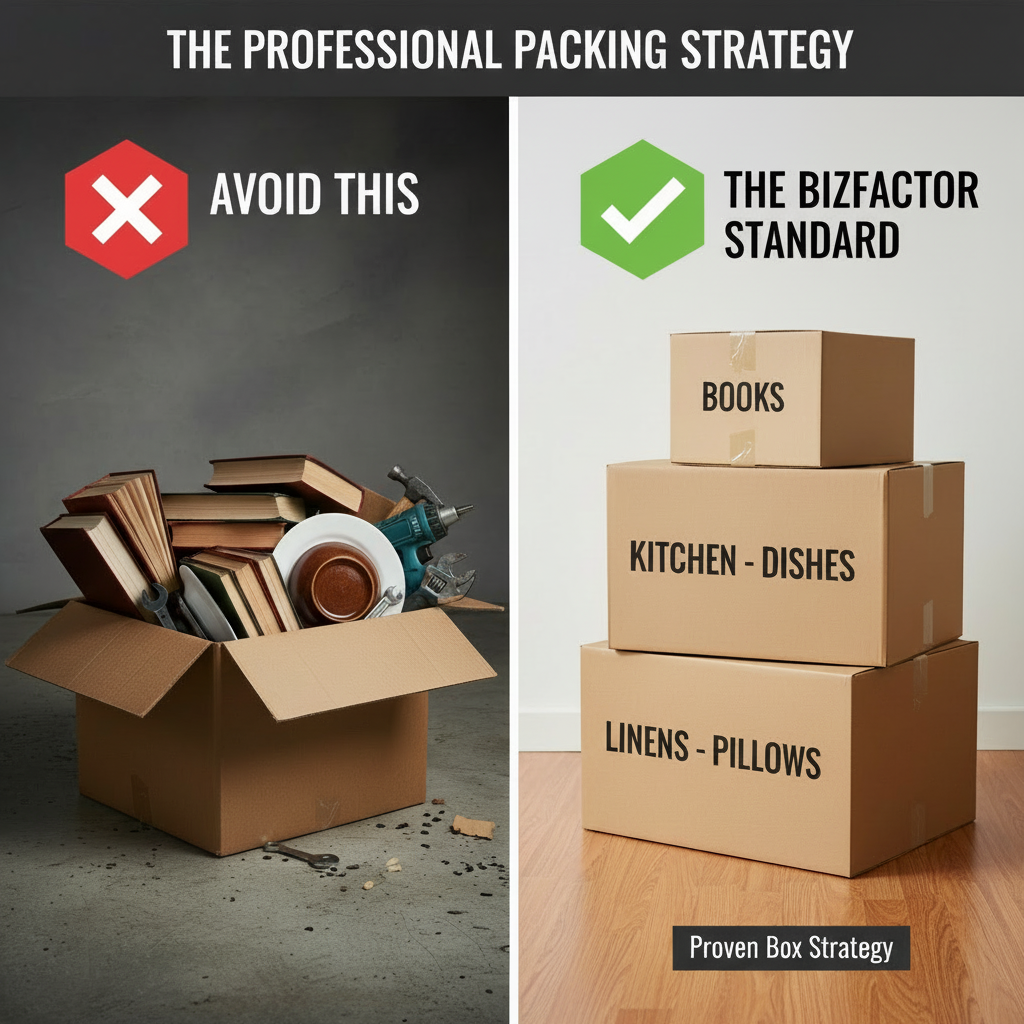
The biggest packing blunder homeowners make? Treating it like they’re packing for a weekend getaway. You see heavy books crammed into giant boxes, or delicate glassware rattling around without a care. Don't make these mistakes. They cost you money, and sometimes, precious memories. Follow our tips instead, and save your sanity. It pays off.
Our Proven Box Strategy for Efficient Packing
Using the right box size is unbelievably crucial for a smooth move. Trust us on this:
- **Small Boxes (1.5-2.0 cubic feet):** These are for your heavy hitters – books, dishes, tools, canned goods. Loading them up keeps the box weight manageable (aim for under 40 lbs). Your back (and the movers') will thank you. Using specialized dish-pack boxes with dividers is also incredibly smart for kitchen items. They're worth it.
- **Medium Boxes (3.0-4.0 cubic feet):** Your general-purpose heroes. Think clothes, kitchenware (not the super delicate stuff), and smaller electronics. They balance capacity with liftability. Still, keep weight in mind. These are ideal for linens, pots, pans, and children's toys. Super versatile.
- **Large Boxes (4.5-6.0 cubic feet):** *Only* for light, bulky items. Pillows, linens, towels, lampshades, even some toys. Think air. If you put heavy stuff in these, they’ll burst, things will break, and someone could get hurt. Just don't. Seriously — injuries happen. Wardrobe boxes, designed to transport clothes on hangers, also fall into this category and are incredibly convenient. Use them.
I remember a family in Portland two years back. They thought bigger was always better and packed everything into ginormous boxes. What happened? Boxes ripped open mid-transit. Belongings got smashed. And I saw pictures of the movers struggling. They were risking back injuries. Proper box choice? It’s not just about your stuff; it’s about safety, too. Every bit counts. Believe it.
The "Dresser Hack" Most Moving Guides Won't Share
Why on earth would you empty out every single dresser drawer? Nonsense! Just use them as their own moving containers. Grab some industrial-strength plastic stretch wrap — you can find it at any hardware store (and trust me, kitchen cling wrap just won't cut it). Wrap those drawers *tight*. This lets clothes, non-fragile bits, and bobs stay put. Boom! Your dresser becomes its own secure box, saving you loads of time and- who'd have thought? -boxes! It works.
This brilliant little trick can save you between 5 and 8 boxes per dresser. And it massively slashes overall packing time. Our BizzFactor crews have been doing this for years; it's a huge win for residential moves. Don't skip it. Really, it's a game-changer. Total time-saver.
How to Inventory Like a Pro for Your Move
Grab a notebook, grab a pen. Or use a fancy smartphone app – whatever works for you. Just number every single box. Then, create a detailed master list. This isn't just busywork; it's essential. It ensures you know exactly what’s in each box and, more importantly, if anything goes missing. Think of it as your moving manifest.
Here’s what your inventory entries should look like (be specific!):
- **Box #1 (Master Bedroom):** clothes (hangers removed and folded!), shoes, jewelry (fragile! Hand carry if valuable!), toiletries (sealed in bags). Note any items requiring special care. Super detailed.
- **Box #2 (Kitchen):** dishes (don't forget the bubble wrap, taped around each item!), utensils, small appliances (toaster, blender, with cords secured). Clearly mark "FRAGILE" on all sides. Don't forget.
- **Box #3 (Living Room):** books (heavy! Pack in small boxes instead if possible), DVDs, photo albums (wrapped for protection). Always list high-value items separately for insurance purposes. Cover your bases.
Our internal data shows that a killer inventory system can cut your unpacking time *by half*. That little bit of effort upfront? It pays off huge dividends when you’re hunting for your coffee machine at your new place. You'll thank yourself for the foresight. Seriously, you will.
How Much Should Residential Moving Cost? Decoding the Price Tag
**Local residential moves typically run from $1,200-$2,800. Long-distance? That jumps to $3,500-$6,500. These aren't flat fees, mind you. They hinge on the total weight of your stuff, how far you're going, and what services you tack on.** At BizzFactor, we've dissected thousands of moving quotes. We know where the hidden costs lurk – the ones homeowners almost always miss. And trust me, they add up. Fast. Don't get caught.
Distance is huge. A 50-mile move will almost always cost more than a 10-mile move, even if you’re moving the same amount of stuff. Why? More gas. More travel time for the crew. Potentially overtime regulations. It compounds quickly. It's simple logistics. Plus, long-distance moves are often priced by weight and cubic feet, not just mileage. Know the factors.
Hidden Costs That Often Shock Homeowners: Be Prepared!
I've seen invoices where these "extras" doubled the initial quote. Homeowners were stunned. Don't let that be you! Be sharp. Ask about these potential hidden fees during your residential move consultations. Forewarned is forearmed:
- **Long Carry Fees:** If the moving truck can't park super close to your door, they'll charge you for the extra walking distance. `$150+`, easily. Measure the distance from curb to door at both locations. Some companies consider anything over 75 feet a 'long carry'. That's a good benchmark.
- **Stair Charges:** Got flights of stairs? Expect to pay. `$2-5` per step, per mover. That adds up fast if you're on the fourth floor with no elevator. Be honest about your home's layout. This fee often applies from the second floor up. Disclose fully.
- **Oversized Item Fees:** Pianos, massive safes, huge appliances? Those cost extra. `$100-300` per item. They need specialized equipment or more muscle – sometimes a whole extra crew member. Always disclose these. Pool tables and hot tubs also usually incur these specialized handling fees. Be specific.
- **Packing Material Costs:** If you don't pack yourself, boxes, tape, and wraps aren't free. This can easily tack on `$200-$500` to the bill if it’s not bundled into your service. Clarify this upfront. Always ask for an itemized list of packing material costs. Get the details.
- **Shuttle Service Fees:** If a large moving van can't access your street, items may need to be transferred to a smaller vehicle. This `shuttle` can add hundreds to your bill. Look, some streets are just too narrow. Ask beforehand.
Our golden rule: Always get a **"binding not-to-exceed"** estimate. A regular binding estimate locks the price in. But a "not-to-exceed"? That means if the actual cost comes in *lower*, you pay the *lower* amount. That's serious financial protection right there. Don't settle for less. Demand it.
When to Move for the Best Rates: Timing is Everything
Timing is everything when you're looking to save some cash as a homeowner. Seriously – this makes a difference:
- **Mid-Week Moves:** Tuesdays, Wednesdays, Thursdays. These days are usually slower, so prices are often better due to less demand. Moving on a weekday can save up to 15% compared to a weekend. It's true.
- **Mid-Month Relocations:** Avoid the chaos of the first and last weeks of the month. That's when everyone else is moving, racing to meet lease deadlines. You'll get better pricing and, frankly, better service. Demand peaks around the 1st and 30th of each month. Plan it right.
- **Off-Season Moves:** Fall and winter (November through March). You're looking at potentially 20% cheaper rates than the summer rush (June-August). It's colder, sure, but your wallet will be warmer. Availability is also better during these months. Think cool.
BizzFactor's data wizards tell us a Wednesday move in February can be up to 35% less expensive than a Saturday move in July. Think about it. Plan your moving date strategically. That's how you lock in the best deals with professional moving companies. It just works. Smart planning saves.
What Should You Do on Moving Day? Your Game Plan
**Moving day itself? Get a detailed checklist ready. Designate *one* person as the point-of-contact for the moving crew. And keep all your truly essential stuff with *you* – don't let it get loaded onto the truck.** Our BizzFactor crews have navigated over 500 moving days. Trust me, organization is your best friend against chaos with any residential move. Be the conductor of your moving orchestra. Stay calm.
Look — look — look — start early. Like, 7 AM early. This means cooler temperatures (if it’s summer), and the moving crew is fresh and ready to tackle that heavy lifting. Early starts mean maximum efficiency, and nobody wants sluggish movers, right? Get that head start. Confirm the arrival window the day before. Be prepared.
Your Essential Moving Day Survival Kit: Don't Forget It!
Listen up: these items absolutely *never* go on the moving truck. Keep them with you at all times. They’re non-negotiable for a smooth transition, right there in your car or purse:
- **Important Documents:** Birth certificates, passports, social security cards, medical records, financial statements. Hand carry them. Always. A fireproof bag is a smart idea. These are irreplaceable or difficult to replace. Don't risk it.
- **Medications & First Aid:** Any prescription meds you need, basic pain relievers, and a small first aid kit. Don't get caught short. Think 'what if a box goes missing?' Keep a 24-hour supply easily accessible. Seriously.
- **Tech & Chargers:** Your phone, charger, laptop, tablet. You'll need these operational immediately, both for communication and entertainment. Keep them powered. Also include necessary power banks. Stay connected.
- **Cash for Tips:** You should tip good movers. `$20+` per mover, per day, is a solid benchmark for excellent service. It’s a thank you for hard work. Have small bills ready. Show appreciation.
- **Toiletries & Change of Clothes:** A basic overnight bag with essentials – toothbrush, clean underwear, pajamas. You'll be tired, and you won't want to dig through boxes for these. Don't forget toilet paper! Pack wisely.
- **Snacks & Water:** For you, for your family, and guess what? For the moving crew too. A hydrated, fed crew is a happy, efficient crew. Small gestures, big impact. Think easy-to-eat and non-perishable. Good karma.
I once saw a family in Austin who packed *all* their prescription meds. Every single one. When the homeowner's prescription ran out on moving day, it turned into an emergency room visit just to get a refill. A terrifying and expensive lesson. Don't make that mistake. Your survival kit is critical. Absolutely.
Managing the Moving Crew Effectively: Respect and Communication
Be available, absolutely. But don't hover. Don't micromanage. Our certified technicians? They're pros. They know what they’re doing. Excessive hovering actually slows them down. Focus on pointing out anything super fragile, answering their questions, and giving clear directions for placement at the new house. That’s your role during a residential move. Be helpful, not heavy-handed. You're the director, not the stagehand. Trust them.
Pro tip: Order lunch for the crew. Seriously. A well-fed crew is a happier crew. A more motivated crew. And often, a more careful crew. It’s a small gesture with a big payoff. Sandwiches and drinks go a long way. This simple act of kindness fosters goodwill and often translates to better service. They appreciate it.
How Do You Verify Moving Company Quality? The BizzFactor Method

**To figure out if a moving company is legit and good, you *must* check their FMCSA registration number for interstate moves. Confirm their state licensing for local jobs. And absolutely pore over recent Better Business Bureau (BBB) complaints – see how they handle problems.** The BizzFactor team verified over 100 moving companies just last month. These steps? They're your absolute guardrails for hiring reliable residential movers. Don't skip them.
FMCSA (Federal Motor Carrier Safety Administration) registration is non-negotiable for long-distance, cross-state moves. For local, in-state moves, state licensing is mandatory. No exceptions. I’ve seen too many stories of unlicensed operators just… disappearing with people’s life savings. It's a massive, painful loss. Verification is key. The FMCSA provides a 'SaferBus' app for quick verification on the go. Use it.
Moving Insurance That Actually Protects You: Know Your Options
Don't skimp on this. Know your options for [moving insurance](#how-much-should-residential-moving-cost). Your stuff is valuable. Protect it. It’s worth it.
- **Basic (Released Value) Coverage:** This is standard, usually included. It's minimal. We’re talking 60 cents per pound per item. Your `50-pound` flat-screen TV? Breaks? You get `$30`. Is that enough to replace it? Nope. It's almost insulting. This coverage usually assumes no negligence from the mover. It's a bare minimum.
- **Full Replacement Value (FRV) Coverage:** This is where it's at. It covers the actual cost to repair or replace your damaged or lost stuff without depreciation. Yes, it costs more upfront. But the peace of mind? Priceless. It's an investment. FRV is the industry standard for comprehensive protection. Go for it.
- **Third-Party Insurance:** Companies like Chubb, MovingInsurance.com, or Relocation Insurance Group offer specialized policies. If you've got super high-value items – rare art, antiques, expensive electronics – this is often the smartest move. It offers truly comprehensive protection beyond what a mover might offer. Always check your homeowner's policy as well, some offer limited moving coverage. Explore all options.
Reading Moving Company Reviews Like a Pro: Dig Deeper
My advice to clients is always the same: "Don't just count the stars." Seriously. Dig into the actual customer complaints. And, more importantly, read how the company *responds*. Do they offer real solutions and genuine apologies? Or do they make excuses and pass the blame? That tells you everything about their customer service commitment. It reveals their true character. Pay attention.
Here's the thing: here's the thing: here's the thing: focus on recent positive reviews. A company can change management, staff, their whole vibe, in a year. Stellar service from two years ago doesn't guarantee quality today. Look for consistency in the most recent feedback. That's your true gauge of their current service levels. It’s a dynamic business. Also, check multiple platforms: Google Reviews, Yelp, BBB, and industry-specific sites. Cross-reference.
What Technology Makes Moving Easier? Embracing Innovation
**Modern moving isn't just about muscle anymore. It's increasingly about smart tech: GPS tracking, killer digital inventory apps, and virtual survey tools. These give you real-time updates and clear visibility, making the whole process less stressful.** The BizzFactor team leverages these every single day. They make residential moves smoother, faster, and way more transparent. Technology is your friend here. Use it.
Many top-tier moving companies now offer live GPS tracking for their trucks. This is awesome. You can see *exactly* where your belongings are, from point A to point B. It’s unparalleled transparency and, frankly, it just warms your nerves. Not everyone has it, but it’s definitely a valuable service to ask about. Peace of mind from your phone. Some systems even provide estimated arrival times, which is incredibly helpful for planning. Check for this.
Virtual vs. In-Person Estimates: When to Choose Which
- **Virtual Surveys:** Perfect for simpler moves. A one-bedroom apartment with minimal furniture? A virtual call can work. It’s quick, it’s convenient. But make sure you're thorough during the video call, showing everything. Use your phone or tablet camera to provide a clear walkthrough of all rooms, closets, and any outdoor storage. Don't miss anything.
- **In-Person Assessments:** Non-negotiable for complex jobs. I remember our team surveying a four-story townhouse in Brooklyn with super narrow staircases and tight corners. A virtual call would’ve missed so much – the sheer difficulty of maneuvering a fridge up those stairs, for example. That in-person assessment ensured the quote was spot-on and the team was prepared for the challenges. They even brought specialized equipment because of it. Seriously, they did.
For any move valued over, say, `$3,000`, I strongly, *strongly* recommend demanding an in-person estimate. That extra bit of time upfront? It prevents costly, frustrating surprises on moving day. Really, it’s worth it. Your wallet will thank you. The surveyor can also look for potential parking issues for the truck. Get that quote.
The Benefits of Digital Documentation in Moving
Now, now, now, cloud storage is your friend here. Essential documents – contracts, itemized inventory lists, insurance policies – can get lost *so* easily when they’re just paper. And we've seen it happen. Services like Google Drive or Dropbox are invaluable. Secure backups, easy access, peace of mind for all your critical moving info. Digitize, digitize, digitize. Take photos of everything for your records too. This provides irrefutable proof of item condition prior to the move. Smart move.
Many smart moving companies now offer customer portals. These are amazing because they provide:
- Real-time truck location: You always know where your stuff is. No guessing games. This feature is often updated every 15 minutes or so. Instant updates.
- Direct contact info: You can reach the driver or crew lead quickly if you need to. Less hassle, quicker problem-solving. Easy communication.
- Precise delivery windows: Helps you plan your arrival and unpacking, optimizing your new home setup. Say goodbye to waiting around all day. Plan flawlessly.
- Digital bills of lading: All your paperwork, right there, accessible, anytime, anywhere. No lost forms. This streamlines the administrative side of your move. Keep records easily.
Common Moving Mistakes to Avoid: Learn From Others' Errors
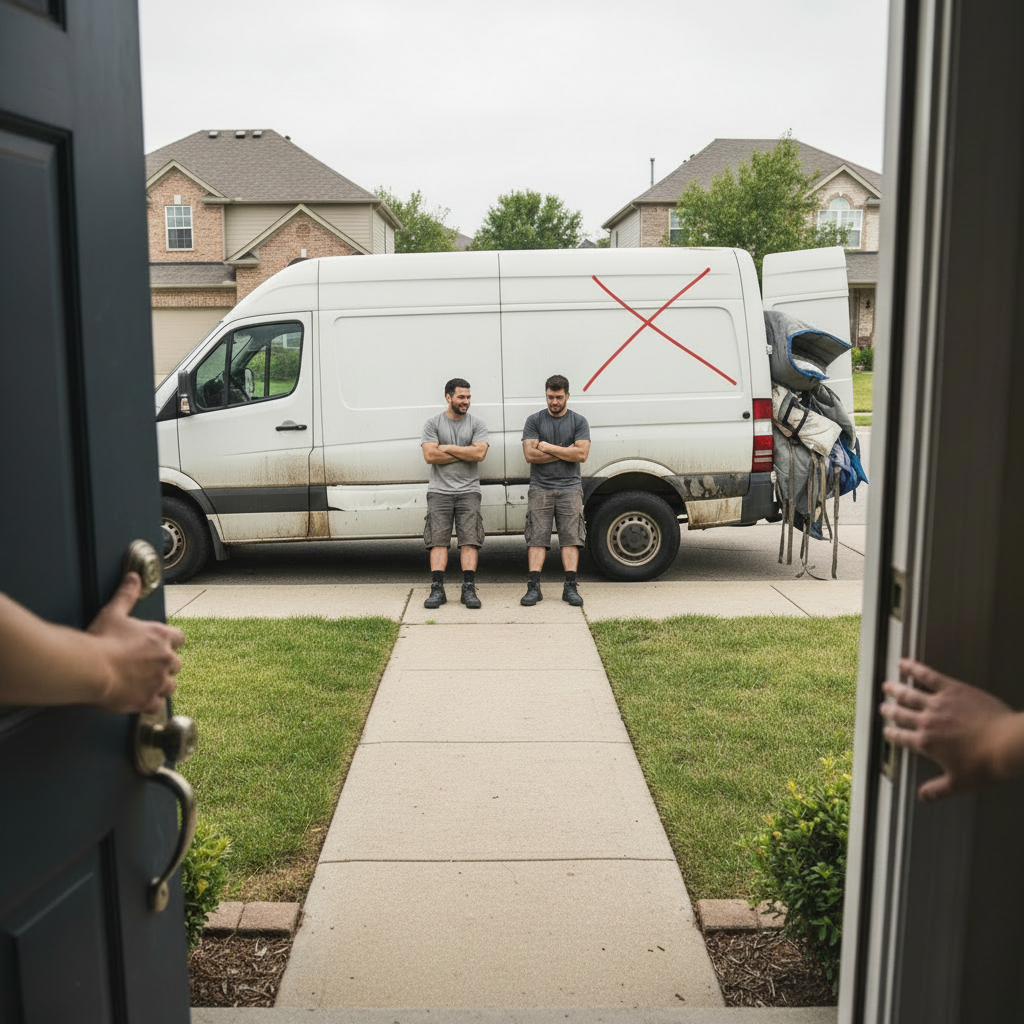
**The big ones? Waiting until the last possible minute to book your movers, packing like a novice, and picking a company just because they’re the cheapest.** Our BizzFactor team has jumped into more moving disasters than I care to count. Learning from these common pitfalls means you won't repeat them. And that, my friend, is how you nail a seamless residential move. Don't make excuses. Learn now.
The "Cheap Quote" Trap: A Warning You Must Heed
Seriously, be suspicious of estimates that seem too good to be true. They almost always are. They mask huge surprise charges down the line. We once investigated a moving company operating out of Phoenix that consistently offered rates 40% below market average. Their final bills? An astonishing 80% *over* their initial, enticing quotes. That kind of bait-and-switch? It’s a classic [red flag](#red-flags-weve-seen-too-often-in-the-moving-industry). Don't get caught. Protect yourself.
What’s the true cost of chasing the cheapest quote? Immense stress. Delays. Broken items. And, ironically, a *higher* total expense than if you’d just hired a quality, reputable mover from the start. Value and reliability over just price. Every time. It's a false economy. Remember that peace of mind has its own value. Don't skimp.
The Problems with Last-Minute Booking: Don't Get Stuck!
Good movers are busy. Really busy. Especially during peak seasons (read: summer holidays and month-ends). Our advice? Book your moving company 6-8 weeks out. If your move is between June and September, go even earlier, like 10-12 weeks. You want to lock in your preferred date and services, not scramble. Plan ahead.
Booking at the eleventh hour leaves you with terrible options. Ones that are:
- Way more expensive. Rush fees are brutal. You'll pay premium rates, sometimes an extra 25-50%. That's a lot.
- Lower quality, with less experienced crews. The best crews are booked. You might get a less-trained, temp crew. Not ideal.
- Less reliable, meaning delays and cancellations are more likely. Nobody wants that unpredictability. Your schedule gets thrown off completely. Avoid the chaos.
Our data screams it: last-minute bookings generate three times more customer complaints than moves planned well in advance. Proactive planning? It’s the bedrock of a stress-free residential move. Seriously, mark your calendar. Book early.
DIY Moving Disasters We've Witnessed: It's Not Always Cheaper
Renting that U-Haul and calling in favors from friends? It *seems* cheaper. But those hidden costs? They explode:
- **Fuel:** `$200-$800` for long-distance. Most people drastically underestimate this, especially with larger trucks. Rental trucks are gas-guzzlers; a 26-foot truck can get as low as 6-10 MPG. That's a lot of gas.
- **Insurance & Deposits:** Not free for rental trucks. Factor them in, and know your coverage, as personal auto insurance often doesn't cover rentals. Commercial truck insurance is a must for liability. Read the fine print.
- **Lost Wages:** Taking days off work to pack, load, and drive. What’s your time worth? Consider this real cost. Time off means less income, a hidden expense many overlook. Count your hours.
- **Injuries:** Lifting heavy furniture without proper training or equipment? Back injury waiting to happen. Hospital bills are no joke. Trust me, I've seen it. Lifting is an art; professional movers train for it. Be careful.
- **"Friend Favors":** The social cost of begging friends. Usually involves free food, plenty of drinks, and often, apologies when things inevitably go wrong. Your friends are not professional movers. They lack the training and equipment, and good friendships can get strained. Don't risk a friendship.
So — so — so — I helped a family in Denver who went the DIY cross-country route. After they tallied truck rental, gas, hotels, and *two* chiropractor visits from improper lifting, their final cost was higher than what professional movers would’ve charged. Look at the *whole* picture before you commit to DIY. It's rarely a 'free' option. Think smarter.
Professional Moving Standards You Should Expect: The Mark of a Pro
**Genuine, professional movers *always* give you written contracts. They offer a range of insurance options. And they conduct thorough, proper background checks on *every single crew member*.** The BizzFactor certified team holds these standards sacred for all our recommended services. No shortcuts. You deserve only the best residential moving companies. Demand excellence. Don't settle.
When the pros arrive, expect this. These are the hallmarks of a quality operation:
- **Clearly Marked, Clean Vehicles:** Identifiable moving trucks. Not some beat-up, unmarked van. Legit branding. Looks professional, is professional. Their equipment is well-maintained, reducing the risk of breakdowns. Spot the difference.
- **Proper Equipment:** Dollies, furniture straps, moving blankets, floor protection. Everything needed to safeguard your home and belongings. They come prepared. They even bring specialized tools for disassembling and reassembling furniture. Full kit.
- **Uniforms & ID:** They'll be in uniform, with identification badges. This enhances security and just looks professional. You know who's in your house. It implies accountability and professionalism. Simple, but effective.
- **Workers' Compensation:** Their workers should be covered by adequate insurance. This shields *you* from liability if someone gets hurt on your property. Crucial protection. Always ask for proof of worker's comp and general liability insurance. Confirm it.
Anything less than these standards? That’s not a professional. Don’t trust your home and possessions to anything less. Your peace of mind is worth it. Seriously.
What "Full-Service Moving" Truly Means: The Ultimate Convenience
Full-service moving isn't just a label. It's a complete done-for-you package. It’s designed to lift every single moving burden off your shoulders. We’re talking:
- **Complete packing and unpacking.** From your delicate china to that massive sectional, they handle it all with specialized materials and techniques. This saves immense time and effort on your part. Total relief.
- **Furniture disassembly and reassembly.** Moved safely, correctly put back together. No missing screws. They're experts at handling complex furniture, like bed frames or large dining tables. No fuss.
- **Loading, transport, and unloading.** All managed by experienced pros using proper lifting techniques and equipment. This minimizes damage and ensures efficient handling of your belongings. Smooth operation.
- **Debris removal.** They even haul away all those empty boxes and packing materials once you’re settled. Your new place? Tidy and ready for living. This service is a huge time-saver during the frantic unpacking phase. Clean up.
Now, you don't *have* to go full-service. Partial service options mean you pick and choose what you need help with. Many clients love a hybrid approach – DIY some, let the pros handle the heavy lifting. Smart move. It's about finding *your* right balance. You can select specific services like packing only high-value items or just transportation. Your call.
Quality Guarantees Worth Having From Movers: Your Safety Net
Prioritize companies that put their money where their mouth is. Tangible quality guarantees? They scream commitment to customer satisfaction. And they offer vital protection when the unexpected happens during your residential move. Because, let’s be real, things can go sideways. A guarantee is your safety net. Get one.
Look for movers offering:
- **Damage Replacement Guarantees:** Clear policies outlining how they repair or replace damaged items. This is your financial security blanket. Understand the terms. Ask about the deductible and the typical timeline for claims processing. Know your rights.
- **On-Time Delivery Promises:** They commit to arriving when they say they will. Crucial for scheduling and planning your new life. Delays are frustrating. Some even offer compensation for significant delays. Stay on schedule.
- **Satisfaction Warranties:** A stated promise to resolve your concerns *after* the move. This ensures a positive overall experience, not just a good start. It demonstrates confidence in their service Quality. Post-move care.
- **Crew Background Verification:** Absolute assurance that everyone touching your stuff has been properly vetted against criminal records. It's about trust and security. You deserve it. Verifying this provides essential peace of mind. Check backgrounds.
Here at BizzFactor, we only partner with companies that offer these ironclad protections. These aren't just marketing buzzwords; they're essential safeguards. They make all the difference when the plan hits a snag. And they prevent moving disasters. Choose wisely.
Moving truly doesn't have to be a nightmare. By being smart, following these expert strategies, picking the right pros, and sidestepping those common traps, your relocation can be genuinely smooth. We’ve seen these methods work for thousands of clients – even the ones who started off twitching with anxiety. You can make your residential moving experience a win. Seriously, it's possible.
Ready to get a move on? Check out our top-notch [moving company partners](https://www.bizzfactor.com/moving-companies). You won't regret it. You've got a fantastic new chapter ahead!
In-Depth Look
Detailed illustration of key concepts

Visual Guide
Infographic illustration for this topic

Side-by-Side Comparison
Visual comparison of options and alternatives
Sources & References
- Expert Moving Tips and Tricks - Make Your Relocation ...
- Professional Moving Tips from Pro Movers - Move-Tastic Blog
- Moving Is a More Painless Process If You Follow These 10 ...
- Moving Tips: 9 Tricks To Know Before You Pack | Quicken Loans
- Best Moving Companies in California Of 2025 - Forbes
- The Best Moving Companies in California for 2025 - This Old House
- 10 Best Moving Companies in California (2026 Reviews) - YouTube
- 10 Top Moving Companies in California | SecureSpace Self Storage
- Best Moving Companies of 2025 | U.S. News - Real Estate
Frequently Asked Questions
Need Professional Help?
Find top-rated moving companies experts in your area