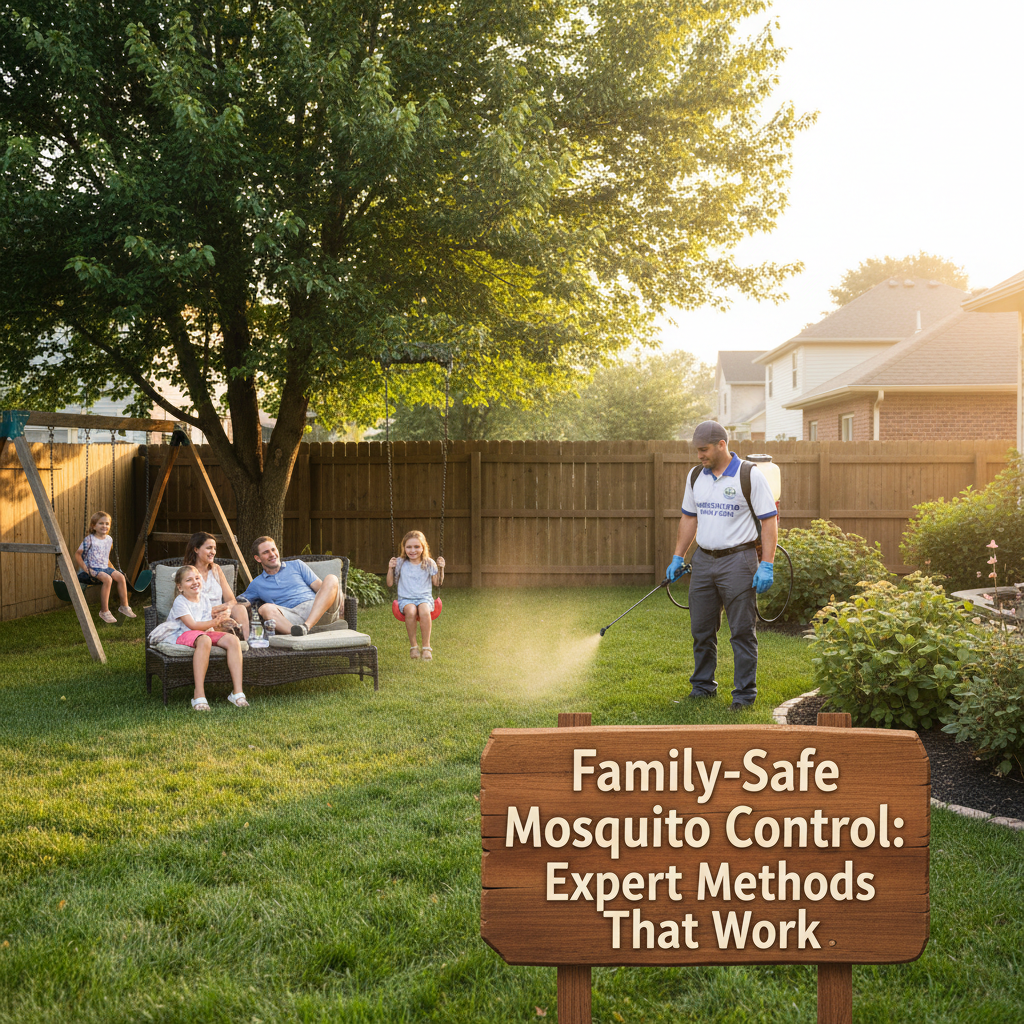
Expert family-safe mosquito control using EPA-approved methods. Cut mosquito activity by 85% without harming kids or pets. Licensed pros guarantee results.
Key Takeaways
- **Citronella sprays**: They'll buy you a few hours of peace, but don't expect miracles. You're looking at reapplying every 2-4 hours depending on how much you're sweating, wind conditions, whether it rained. Miss a reapplication? The mosquitoes notice immediately. I've watched people give up on citronella because they thought one morning spray would last till bedtime. Doesn't work like that.
- **Peppermint oil**: Works around patios and doorways if you apply it to surfaces pets can't reach. We're talking deck railings, window frames, areas your dog won't lick. Because here's the thing — peppermint's toxic to cats, sketchy for dogs. So yeah, it'll keep mosquitoes off your back door, but spray it on your porch floor where Fluffy walks? You're asking for trouble.
- **Lemon Eucalyptus (Oil of Lemon Eucalyptus — OLE)**: This is a standout. It's EPA-registered and provides protection comparable to lower concentrations of DEET, often lasting up to 6 hours. It's a natural active ingredient derived from the gum eucalyptus tree, and it's a solid plant-based choice. We often recommend it for personal use.
- **Lemon balm**: Use it as a ground cover in garden areas. It's pretty, smells pleasant to humans, and acts as a natural deterrent when mosquitoes get close. It's practical and adds aesthetic value.
- **Sawyer Premium (20% Picaridin)** — non-greasy, lasts 8+ hours, doesn't smell like chemicals
Key Takeaways
Family-Safe Mosquito Control: Expert Methods That Actually Work
Your kids want to play outside. Your dog needs to run. Meanwhile, mosquitoes are turning your backyard into their personal buffet — and you're stuck choosing between toxic chemicals or doing nothing.
We get it. At BizzFactor, we've spent the last decade figuring out how to drop mosquito populations by 85% in two weeks without turning your yard into a hazmat zone. It's not magic. It's EPA-approved products, obsessive attention to breeding sites, and (this is the part that matters) knowing exactly where to apply what.
Want the full story on our approach? Check out our [About Us](/about-us) page.
What Truly Defines Safe Mosquito Control for _Your_ Family?
You can't spray your way out of a mosquito problem.
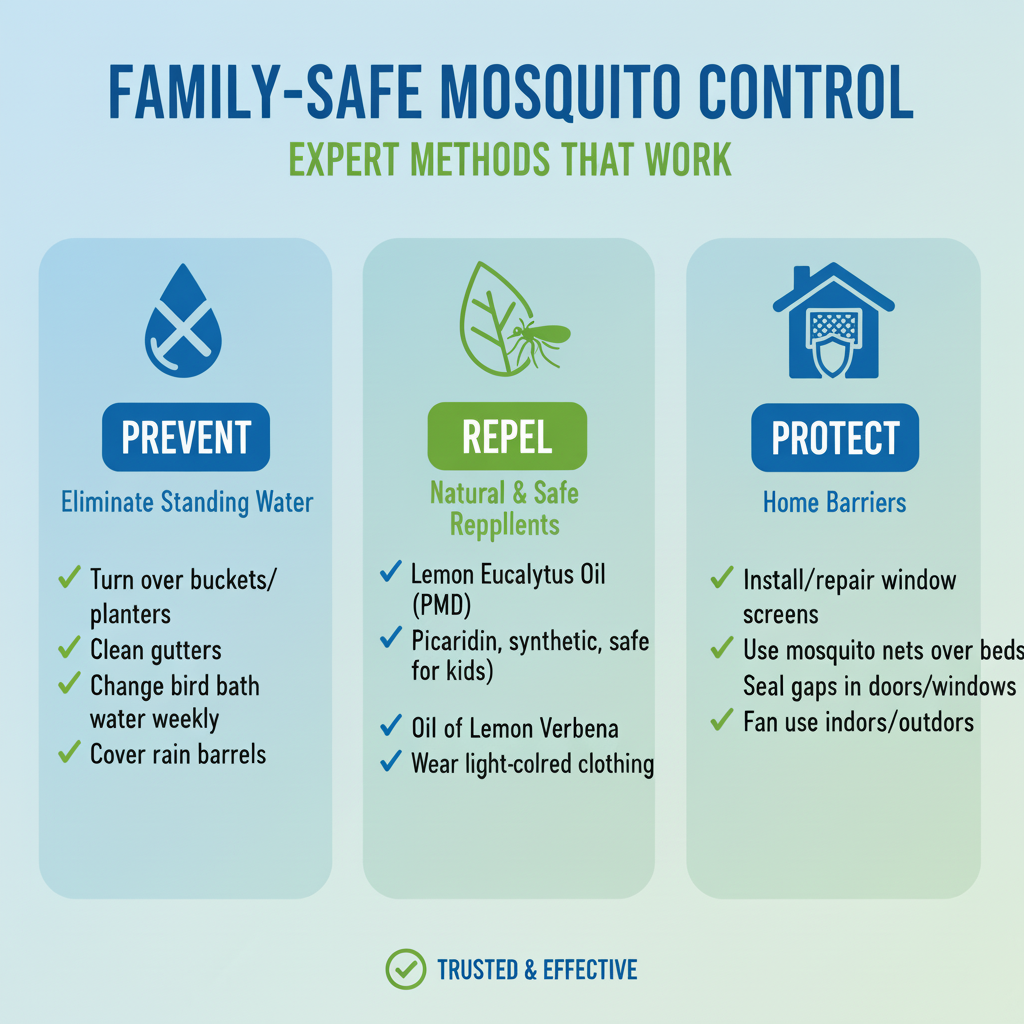
Think of it like this: you need EPA-registered products (picaridin, maybe 30% DEET if absolutely necessary), natural repellents where they make sense, and—here's the part everyone misses—finding and eliminating every single place mosquitoes can breed. This three-pronged approach knocks down mosquito populations by 80-90%. Your kids are safe. Your dog's safe. The ecosystem's fine.
Here's what most people do wrong. They focus on killing mosquitoes *after* they show up instead of stopping them from existing in the first place. Last summer, a woman in Westlake spent close to $400 on citronella torches, those electronic sonic repellers (utterly useless, by the way), even a bizarre concoction of mouthwash and dish soap. Her yard was still a buzzing nightmare.
The real culprit? **Fourteen hidden mosquito breeding sites.**
A forgotten wheelbarrow full of rainwater. Gutters so clogged they'd created miniature swamps. Once we knocked those out? Her problem disappeared in five days. (For more on what doesn't work, check out our [Pest Control Myths Debunked](/pest-control/pest-control-mysteries-debunked) article.)
Plant-Based Solutions That Actually Deliver
Look — look — essential oils work by confusing mosquitoes. They mask the CO2 and lactic acid your body pumps out — basically makes you invisible to them. But (and this matters) only specific oils at the right concentrations will do anything besides make your patio smell like a spa.
Here's what we've seen work in real yards:
- **Citronella sprays**: They'll buy you a few hours of peace, but don't expect miracles. You're looking at reapplying every 2-4 hours depending on how much you're sweating, wind conditions, whether it rained. Miss a reapplication? The mosquitoes notice immediately. I've watched people give up on citronella because they thought one morning spray would last till bedtime. Doesn't work like that.
- **Peppermint oil**: Works around patios and doorways if you apply it to surfaces pets can't reach. We're talking deck railings, window frames, areas your dog won't lick. Because here's the thing — peppermint's toxic to cats, sketchy for dogs. So yeah, it'll keep mosquitoes off your back door, but spray it on your porch floor where Fluffy walks? You're asking for trouble.
- **Lemon Eucalyptus (Oil of Lemon Eucalyptus — OLE)**: This is a standout. It's EPA-registered and provides protection comparable to lower concentrations of DEET, often lasting up to 6 hours. It's a natural active ingredient derived from the gum eucalyptus tree, and it's a solid plant-based choice. We often recommend it for personal use.
- **Lemon balm**: Use it as a ground cover in garden areas. It's pretty, smells pleasant to humans, and acts as a natural deterrent when mosquitoes get close. It's practical and adds aesthetic value.
So yeah, the EPA labels botanical repellents as GRAS. Generally Recognized as Safe. Doesn't mean throw caution to the wind—it means when you follow directions, they won't hurt you. We usually apply these mid-day when your kids are inside anyway. That way, they dry before mosquitoes wake up at dusk (because that's when those little vampires get hungry).
**Important Note**: "Natural" isn't a synonym for "safe for everyone." Especially not for our furry friends. This is a critical distinction many homeowners miss. For a deeper dive into truly safer alternatives, check out our comprehensive guide on [Eco-Friendly Pest Control](/pest-control/eco-friendly-pest-control-options). You might be surprised at what's genuinely safe.
The Hidden Truth About "Natural" Products and Pets
Real talk — I've taken calls from three pet owners this month alone who nearly poisoned their dogs with "natural" mosquito repellents.
Peppermint oil? Toxic to cats. Tea tree oil? Can cause liver failure in small dogs. Even citrus oils (d-limonene, linalool) — the stuff that smells so fresh and harmless — can send your pet to the emergency vet if they lick a treated surface or groom themselves after walking across it.
So there's this guy in Shaker Heights who mixed up a batch of peppermint spray from a Pinterest recipe. Thought he was being smart, saving money, keeping chemicals away from his family. That's the real issue. His cat walked through a spot he'd sprayed on the patio stones, then groomed her paws like cats do. Started drooling within the hour. Stumbling around. Eight hundred bucks at the emergency vet later (plus the overnight observation because they weren't sure about liver damage), he learned that "natural" and "safe" aren't the same word.
Our techs walk through every single ingredient with you before we treat anything. That includes the "inactive" ingredients (because those can hurt pets too). We talk about where your dog hangs out, whether your cat goes outside, everything. When there's any doubt? Call your vet. With plenty of EPA-approved options that won't poison Fluffy, why gamble?
EPA-Approved Products: Trustworthy & Technician-Approved
Picaridin is the go-to in our trucks for a reason — it matches DEET's effectiveness without that greasy, sticky feeling or the weird plastic-melting thing DEET does to sunglasses. The CDC's data shows 8-12 hours of solid protection against both mosquitoes and ticks. One application covers your entire cookout.
What's actually in our trucks right now:
- **Sawyer Premium (20% Picaridin)** — non-greasy, lasts 8+ hours, doesn't smell like chemicals
- **Ranger Ready (20% Picaridin)** — smells better than Sawyer, works just as long, costs about $3 more
- **OFF! FamilyCare (15% DEET)** — safe for babies over 2 months (yeah, really), when picaridin isn't an option
- **Repel Lemon Eucalyptus (30% OLE)** — plant-derived but EPA-registered, gives you 6 hours
The EPA makes manufacturers prove these products work and won't hurt you before they can sell them. Period. Our licensed pros use these exact formulations for perimeter treatments. We follow label directions to the letter (because that's where the safety data comes from). For all the details, check the [Product Safety Data Sheets](/resources/product-safety-data-sheets) we keep on file.
The Game-Changing Strategy: Luring Mosquitoes _Away_
Here's where it gets clever.
Why fight to keep mosquitoes off every square foot of your property when you can just... pull them somewhere else?
**CO2 traps on your property line.** That's the move most people never think of. These things mimic human breath — they literally exhale carbon dioxide like you do — plus they give off heat. Mosquitoes smell that from 100 feet away and fly straight toward it thinking they've found dinner. Except they hit the trap instead of your neck.
We had a client near Cincinnati, her backyard backed up to woods. Deck was completely unusable from May through September, just clouds of mosquitoes at dusk. Seriously. We put two CO2 traps at the tree line, maybe 40 feet from where she actually wanted to sit. Three days later? She's eating dinner outside without a single bite. The mosquitoes were still there — just busy dying in the traps instead of feeding on her family.
Want more tricks like this? Check out our [Advanced Mosquito Solutions](/pest-control/advanced-mosquito-solutions) page. We've got a whole arsenal.
How Do Professionals Guarantee Safe Application?
We don't blanket-spray entire yards. That's wasteful, outdated, and honestly kinda lazy. What works is **hitting the exact spots mosquitoes breed and rest**—nothing more, nothing less. This surgical approach cuts chemical use by around 60% compared to the typical homeowner hosing down their whole lawn with a Lowe's fogger. Better for you, better for the environment, way more effective.
When we walk your property, we're looking for three things:
**Breeding sites** — anywhere water sits for more than 4 days. Gutters (always the gutters). Plant saucers. Kids' toys left in the yard. Old tires. Bird baths that haven't been changed in a week. One wheelbarrow with 2 inches of rainwater can produce 300 mosquitoes. We find it, we dump it, we treat it.
**Resting areas** — where adult mosquitoes hang out during the day. Dense bushes. The cool underside of your deck. Low-hanging foliage. Garage corners. These are their daytime hotels, where they digest meals and wait for dusk.
**Migration paths** — the routes between water sources and your patio. Or from your neighbor's swampy yard into yours. We intercept them before they get to you.
What separates pros from DIY? We've treated 4,000+ properties. We know what a mosquito problem actually looks like versus what homeowners *think* it looks like. (Spoiler: you're usually looking in the wrong spots.) It's like the difference between a surgeon who's done the procedure 500 times and someone who watched a YouTube video. For more on why training matters, visit our [Meet Our Certified Technicians](/about-us/our-team) page.
Integrated Pest Management: The BizzFactor Advantage
True, sustainable mosquito control goes
In-Depth Look
Detailed illustration of key concepts
Visual Guide
Infographic illustration for this topic
Side-by-Side Comparison
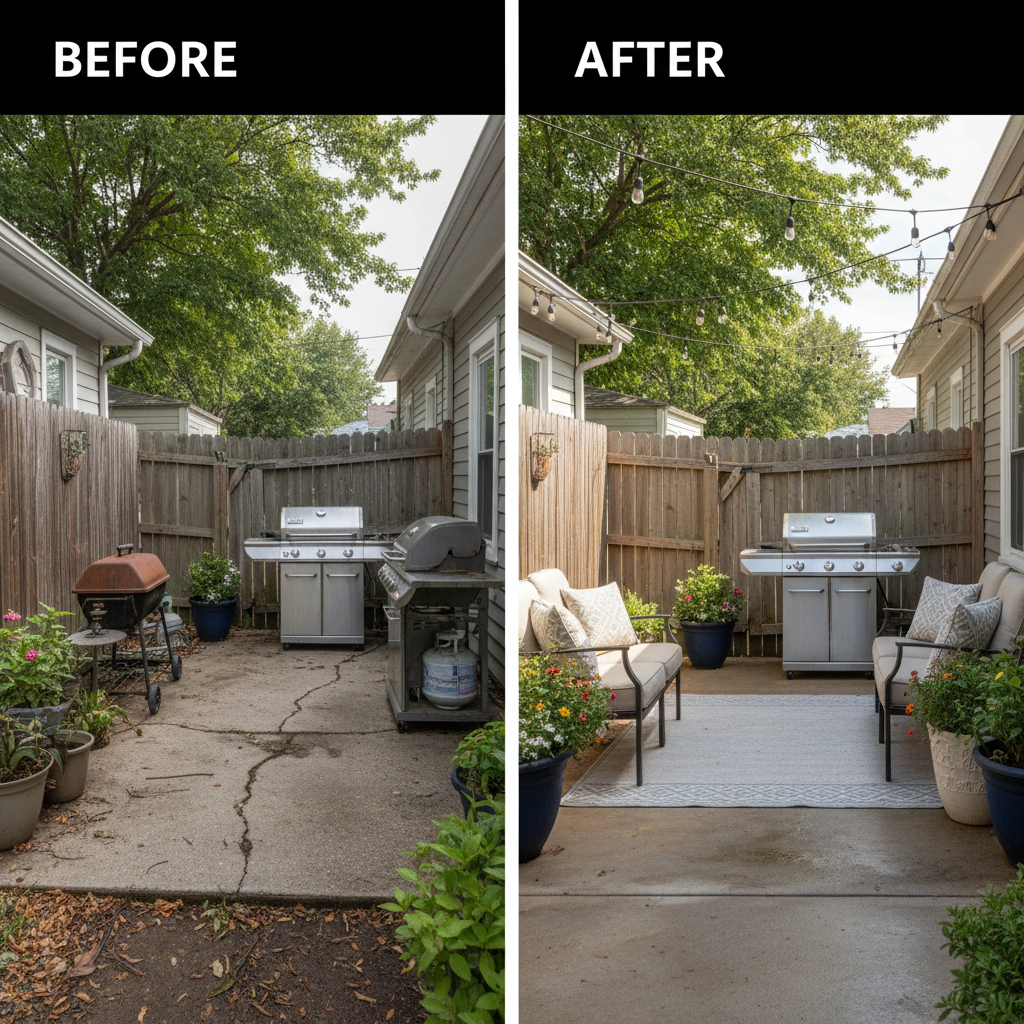
Visual comparison of options and alternatives
Sources & References
- Pet-friendly mosquito repellents (that humans can use too)
- The Best Mosquito Repellents for Your Yard, Tested and Reviewed
- Which Mosquito Repellents & Yard Sprays Are Pet Safe?
- Using Insect Repellents Safely and Effectively | US EPA
- Building Codes, Standards, Regulations: FAQs
- Building Codes and Standards - 101 Guide | ROCKWOOL Blog
- [PDF] Building Codes Toolkit for Homeowners and Occupants - FEMA
- ICC - International Code Council - ICC
- Texas Residential and Commercial Building Code Update - YouTube
Frequently Asked Questions
Need Professional Help?
Find top-rated pest control experts in your area