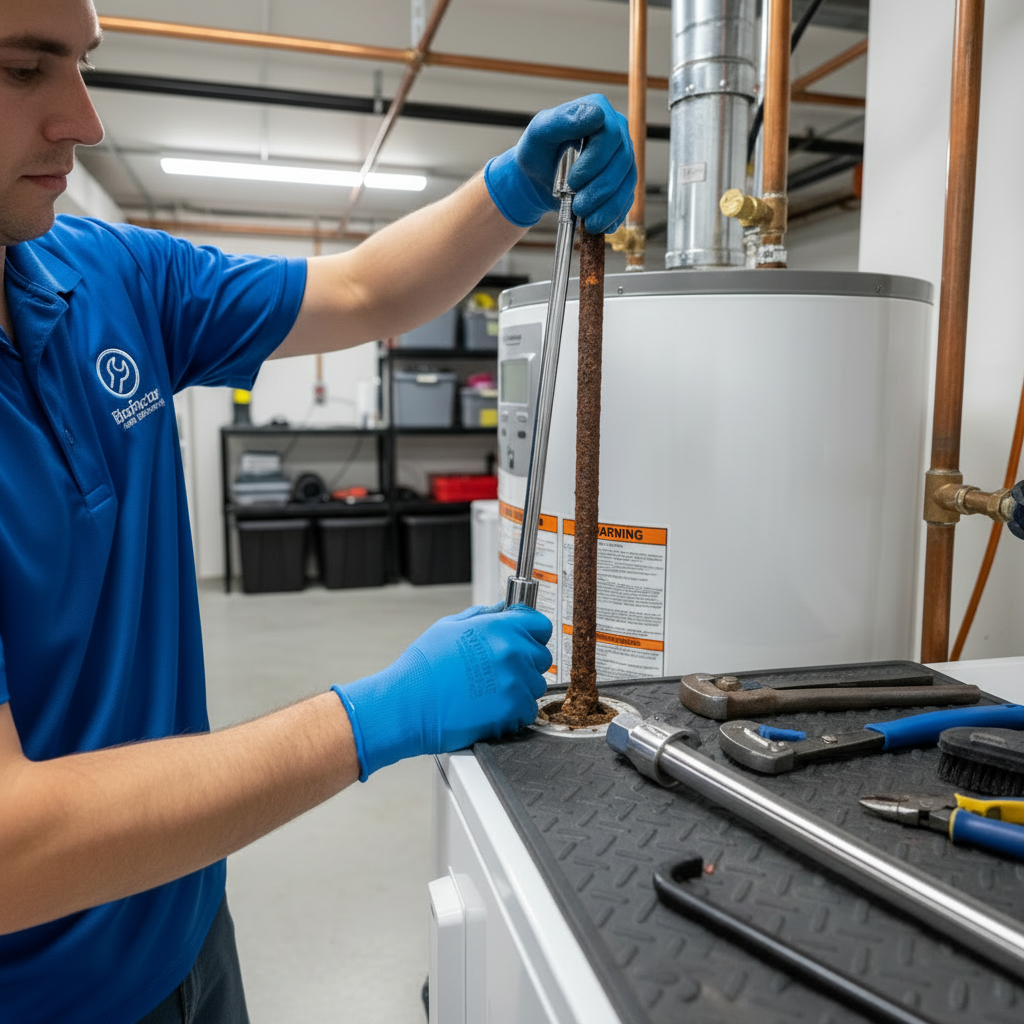
Protect your water heater! Learn why anode rod replacement is critical, understand costs ($150-$400), and when to replace it (3-5 years) to prevent costly tank failure.
Key Takeaways
- **Hard Water Areas** (you see white crusty buildup on faucets):
- Check it every year
- Replace every 2-3 years
- Your anode's working overtime
- **Soft Water Areas:**
Key Takeaways
Water Heater Anode Rod Replacement Cost Guide 2025
Ever smelled rotten eggs coming from your tap water? That's your anode rod screaming for help.
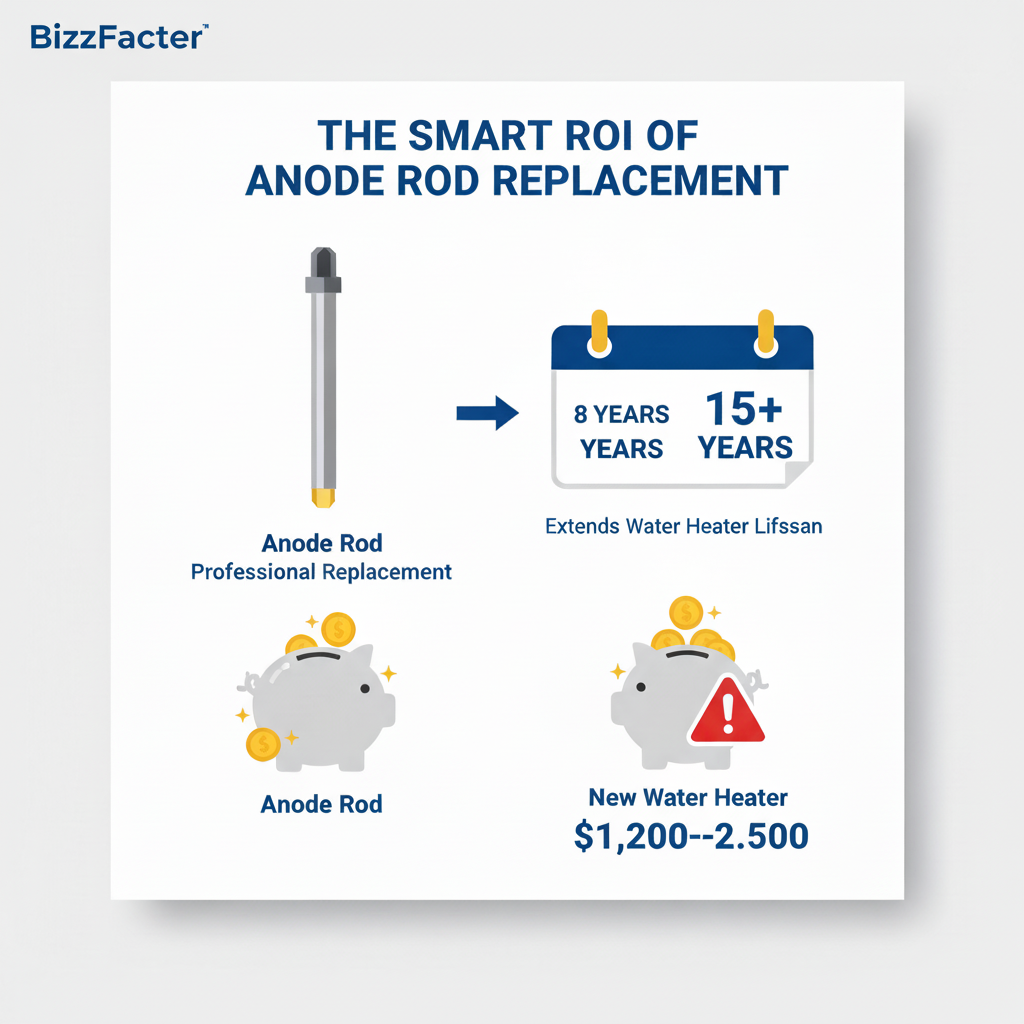
Most people have never heard of this part until it fails. Then they're staring at a $2,400 water heater replacement bill, wondering what the hell happened. Here's what you need to know: replacing your anode rod runs $150-$400 when you call a pro. That's the real issue. Skip it, and you're looking at $1,200-$2,500+ for a whole new tank.
I've pulled anode rods that looked like chewed-up licorice sticks. Completely dissolved. And the homeowner had no idea this part even existed until we showed them the rusted-out stub.
what's a Water Heater Anode Rod & Why Is Its Replacement Critical?
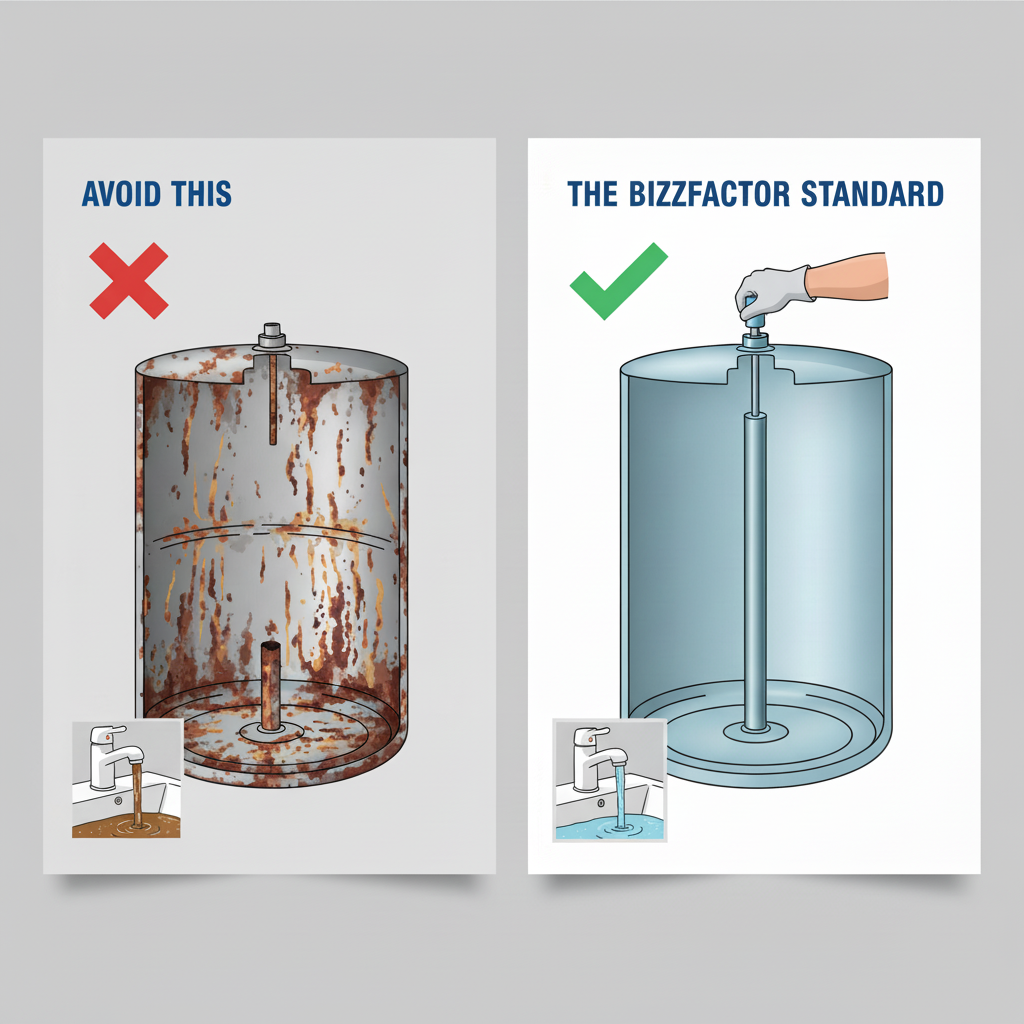
Look — an anode rod is basically a metal stick that hangs inside your tank and corrodes so your tank doesn't have to. It's called "sacrificial" because it literally sacrifices itself to save the tank.
This thing costs maybe $40-$80 to buy. But it can add 7+ years to your water heater's life.
Think about it this way: your water heater tank is constantly filled with water (obviously). That water contains minerals and corrosive elements that want to eat through steel. Seriously. The anode rod is made from magnesium, aluminum, or zinc—metals that corrode *faster* than steel. So the corrosive elements attack the rod first, leaving your tank alone.
Our team's inspected probably 5,000+ water heaters over the last decade. Tanks with regularly replaced anodes? Fifteen years, sometimes twenty. Tanks where nobody touched the anode rod? Six to eight years before they're leaking all over your basement floor.
How Does Water Heater Anode Rod Protection Work?
Basic electrochemistry. (Stay with me — this matters.)
Look — the anode rod's metal is more "reactive" than your tank's steel lining. When water fills the tank, an electrochemical reaction starts. Corrosive ions in the water get attracted to the anode rod like moths to a flame. They eat away at the rod instead of attacking your tank's glass lining.
We've seen 20-year-old tanks still running strong because someone changed the anode every few years. Conversely, I pulled a 6-year-old tank out of a Marietta home last fall that had rusted completely through the bottom. Owner had never heard of an anode rod. Cost him $2,100 for emergency replacement on a Sunday.
Don't be that guy.
For more on keeping your tank alive, check our guide on [Water Heater Maintenance Tips](/blog/water-heater-maintenance-tips).
When Is the Ideal Time to Replace Your Water Heater Anode Rod?
The standard answer is every 3-5 years. But that's like saying "drive 3,000 miles between oil changes" — it depends on what you're driving and where.
Your water quality changes everything.
I've seen rods completely eaten away in 18 months in homes with well water. And I've pulled rods from city water tanks after 6 years that still had half their material left.
Here's what actually works:
- **Hard Water Areas** (you see white crusty buildup on faucets):
- Check it every year
- Replace every 2-3 years
- Your anode's working overtime
- **Soft Water Areas:**
- Inspect every 18 months
- Replace every 4-5 years
- Less aggressive, but don't get complacent
- **Well Water Systems** (especially high-sulfur):
- Check every 6 months, seriously
- Replace every 1-2 years
- This stuff eats rods for breakfast
- **City Water:**
- Annual inspection
- Replace every 3-4 years
- Pretty standard stuff
Critical Warning Signs: Replace Your Anode Rod Immediately!
These symptoms mean your rod's toast and your tank's next:
- **Rusty or Discolored Hot Water:** Your tank's corroding from the inside. The anode's gone.
- **Metallic Taste in Water:** You're literally tasting dissolved metal. Not great.
- **Rotten Egg Smell from Hot Water:** Classic sign. The depleted anode's reacting with sulfates to create hydrogen sulfide gas. (Yes, that's the same gas that makes sewers smell.) Check our article on [Eliminating Water Heater Odors](/blog/eliminate-water-heater-odors) if this sounds familiar.
- **Reduced Hot Water Supply:** Could be sediment buildup, could be advanced tank degradation. Either way, not good.
- **Unusual Tank Noises:** Gurgling, popping, rumbling — these sounds mean trouble brewing inside.
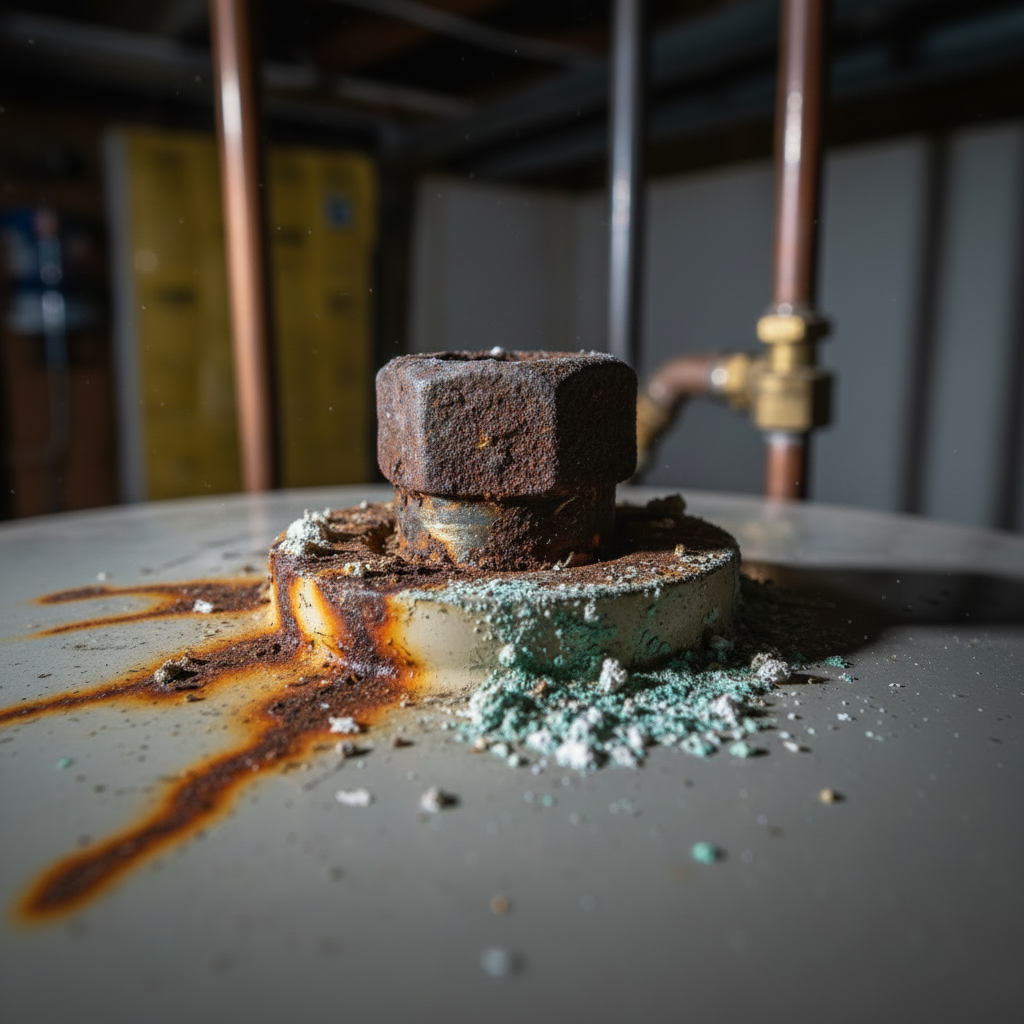
- **Visible Rust Spots on Tank Exterior:** Game over. You're already leaking or about to be.
If you're seeing any of these, call someone today. Not next week.
The "Hands Off" Rule for Older Water Heater Tanks
Here's something most DIY articles won't tell you: if your tank's 8+ years old and you've never touched the anode rod, don't start now.
Seriously.
Why? Because that rod is corroded and seized in there tighter than a rusted lug nut. Try forcing it out yourself and you'll strip the threads, crack the glass lining, or deform the tank itself.
A guy in Boulder tried this last month. $2,400 emergency replacement on a Saturday.
The old rod becomes fused to the tank opening. When you try to muscle it out, something's gotta give — and it won't be the corroded rod. It'll be your tank's structural integrity. Then you've got water spraying everywhere and plumbers charging emergency rates.
If your tank's old and the rod's never been touched, budget for a new tank. That's just reality.
Understanding Water Heater Anode Rod Replacement Costs
What does professional replacement actually cost?
$150-$400 in most markets. That's for a licensed plumber to show up, drain the tank, pull the old rod, install a new one, refill everything, and test it.
Is that expensive for what looks like simple work? Maybe. But here's the ROI math:
Professional Anode Rod Replacement Service Breakdown:
- **Quality Anode Rod:** $40-$80 (magnesium, aluminum, or powered)
- **Licensed Technician Labor:** $100-$250 (drain, remove, replace, refill, test, system check)
- **Total Professional Cost:** $150-$400
- **Warranty Protection & System Evaluation:** Included
DIY Anode Rod Replacement Costs:
- **Standard Anode Rod:** $25-$60
- **Tools** (socket wrench, sealant, etc.): $15-$30 (if you don't have them)
- **Total DIY Investment:** $40-$90
- **Risk Factor:** High if the rod's seized or you've never done this before
How Much You're Really Saving:
- **Avoided Tank Replacement:** $1,200-$2,500+ (huge)
- **Better Energy Efficiency:** $50-$150/year (sediment-free tank heats faster)
- **Water Damage Prevention:** $2,000-$10,000+ per incident (flooded basement, ruined drywall, destroyed belongings)
The math's pretty clear. A $300 service call every 4 years versus a $2,000+ disaster? Not a hard choice.
Should You Opt for Professional Anode Rod Replacement or DIY?
So yeah, should you DIY this or call someone?
Depends. Not on your budget — on your skill level and tank condition.
When Our Licensed Team Should Handle It:
- You've never done plumbing work before (no shame in that)
- The rod looks corroded or won't budge (don't force it)
- You have a tankless water heater (different system entirely)
- You want warranty protection and documentation
- You want someone to actually inspect the whole system, not just swap a part
Our techs are background-checked and licensed. They'll spot problems you wouldn't notice — like sediment buildup, failing heating elements, or pressure relief valve issues.
DIY Is a Viable Option If:
- Your tank's easily accessible (not wedged in a crawlspace)
- You're comfortable with basic plumbing (know how to shut off water and power)
- The anode fitting is standard ¾-inch hex threading
- You own the right tools (correct-size socket, pipe thread sealant)
- Time isn't critical (you can work carefully without rushing)
But here's the thing: one mistake — over-tightening, cross-threading, damaging the tank lining — can cost thousands. Our guide on [DIY vs. Pro Plumbing](/blog/diy-vs-professional-plumbing) breaks down when to call help versus when to grab your wrench.
Selecting the Best Anode Rod Material for Your Water Heater
Not all anode rods are created equal. Your water chemistry dictates which one works best.
- **Magnesium Rods:**
- Best for soft to moderately hard water
- Lasts 2-4 years
- Cheap and effective
- Deteriorates fast in very hard water; can make sulfur smell worse
- **Aluminum/Zinc Alloy Rods:**
- Best for hard water and sulfur smell problems
- Lasts 4-6 years
- More expensive but worth it if you have rotten-egg odor
- Zinc specifically helps neutralize sulfur bacteria
- **Powered Anodes** (my top pick):
- Best for extreme conditions and long-term protection
- Lasts 10+ years (often the life of the tank)
- Uses a tiny electrical current to protect continuously
- Completely eliminates odors
- No replacement needed
- Costs more upfront, requires outlet near tank
Why We Strongly Recommend Powered Anode Rods
Most people just replace their old magnesium rod with another cheap magnesium rod. Makes sense, right? Keep costs down.
But a powered anode changes everything. We install Corro-Protec units probably twice a week now. Higher upfront cost — around $150-$200 for the unit — but
In-Depth Look
Detailed illustration of key concepts
Visual Guide
Infographic illustration for this topic
Side-by-Side Comparison
Visual comparison of options and alternatives
Sources & References
- Water Heater Anode Rod Replacement, A How-To Guide
- How To Change a Water Heater Anode Rod - This Old House
- The Ultimate Guide to Changing Your Anode Rod in Water Heater
- A Guide to Sacrificial Anode Rod Replacements - Boyd Plumbing
- Water Heater Anode Rod [What Is It? When Should it Be Replaced?]
- Building Codes, Standards, and Regulations: Frequently Asked ...
- Building Codes and Standards - 101 Guide | ROCKWOOL Blog
- [PDF] Building Codes Toolkit for Homeowners and Occupants - FEMA
- Adopted Building Safety Codes - Oklahoma City
- 5 Reasons Building Codes Should Matter to You
Frequently Asked Questions
Need Professional Help?
Find top-rated plumbing experts in your area