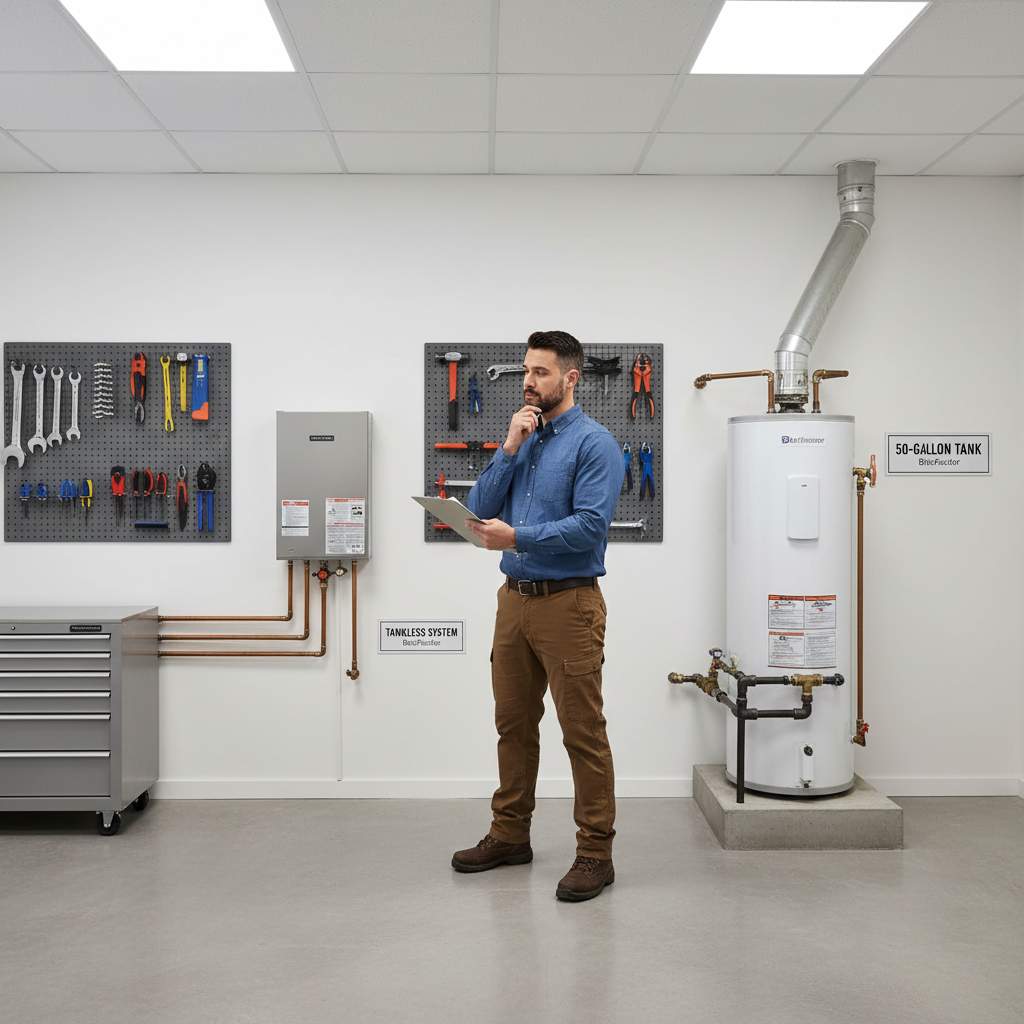
Tankless vs. tank water heaters: Uncover real costs, performance, and expert insights. Learn about energy savings, installation challenges, and optimal sizing for your home in this in-depth guide.
Key Takeaways
- **Unit cost:** $1,200 — $4,500 (and yeah, you get what you pay for)
- **Gas line upgrade:** $500 — $1,500 — this one catches people off guard every time
- **New electrical:** $300 — $800 (sometimes the panel needs expansion)
- **Venting changes:** $400 — $1,200 — those Category III stainless steel vents aren't cheap
- **Licensed labor:** $800 — $1,500
Key Takeaways
Tankless vs. Tank Water Heaters: Real Costs, Performance & Expert Insights
A contractor in Sandy Springs called me last month, panicking. His client's brand-new $4,800 tankless system couldn't handle three morning showers. The unit worked perfectly — on paper. In reality? Lukewarm water and angry teenagers.
That's the problem with this decision. Everyone obsesses over efficiency ratings and forgets to ask the actually important questions.
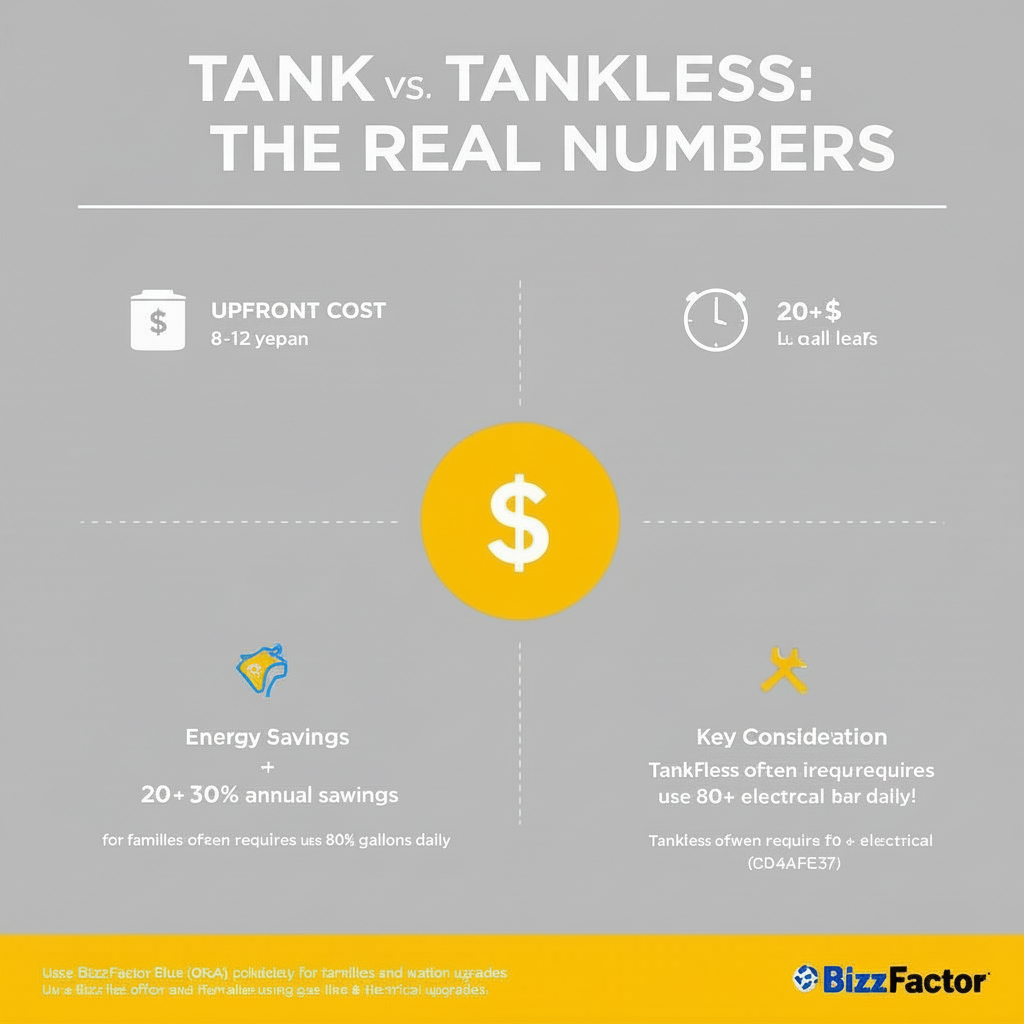
Look — look — while tankless units offer impressive energy savings (20-30%) and endless hot water, their upfront cost can be 2-3 times higher than traditional tank heaters. Tank heaters cost less to install but consume more energy over time. After installing both systems for twenty-plus years, I've learned the "right" answer depends entirely on your household's actual habits and your home's existing infrastructure (not what the marketing materials promise).
How Do Tankless and Traditional Water Heaters Operate? A Deep Dive
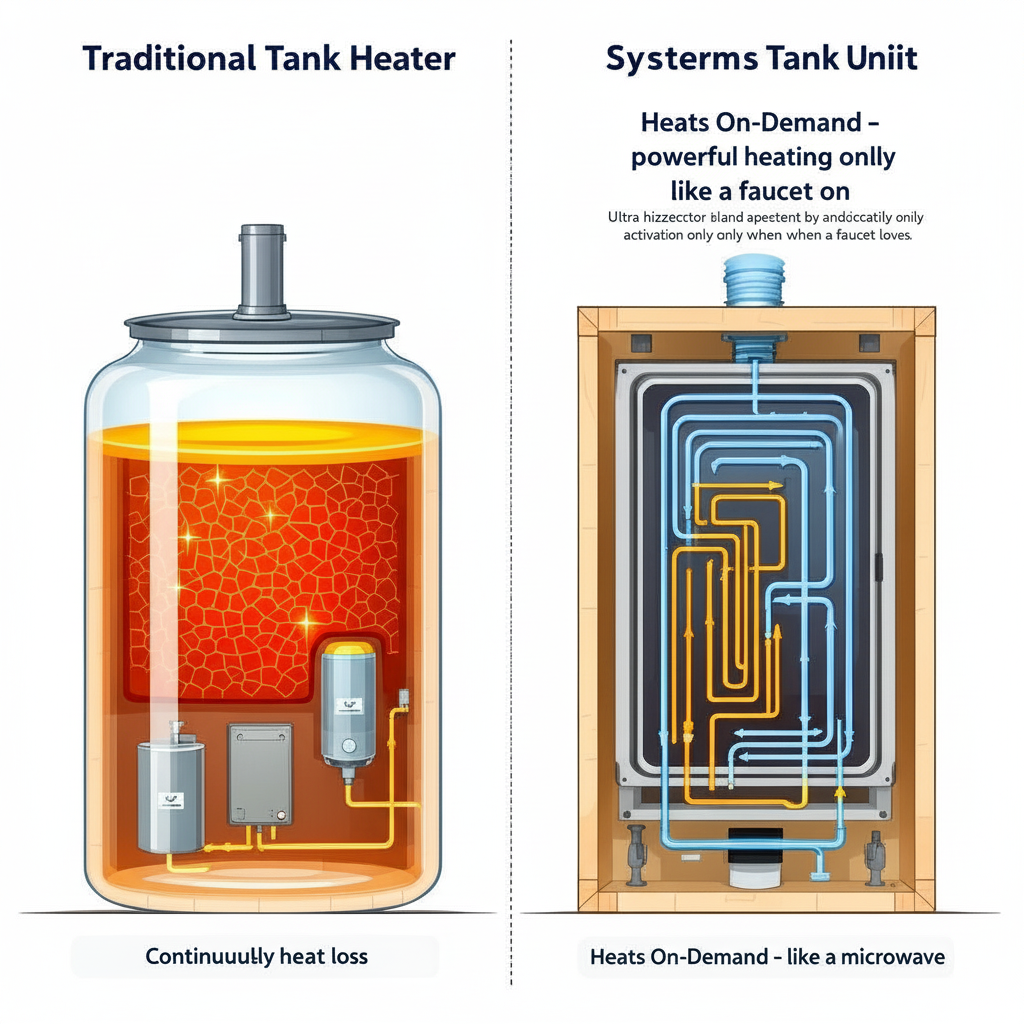
Look — the mechanics are actually pretty different between these two systems. **Tankless water heaters** heat water on-demand — only when you turn on a faucet. Nothing's happening inside the unit until you need it.
**Traditional tank water heaters** work differently: they're storing 40-80 gallons in an insulated tank, keeping it hot all day and night.
All that continuous heating? It bleeds energy just maintaining temperature. Same way a coffee pot left on all day wastes electricity keeping the same pot warm. The industry calls it "standby heat loss" — and it's where traditional tanks lose the efficiency battle.
I tell customers to think of tankless like a microwave — flip it on, immediate heat, then it shuts off. High-powered gas burners or electric elements kick in only when you're actually using water. Which sounds great until you realize that instant-on power draw means your existing gas line (or electrical service) probably isn't sized for it. A.O. Smith and Rheem units typically need ¾" gas lines minimum, sometimes 1". Your current setup? Probably ½".
That upgrade isn't optional.
And yeah, both systems need proper venting per International Plumbing Code. But tankless venting gets way more complicated (we'll get to that disaster later).
⚠️ A Critical Sizing Error to Avoid
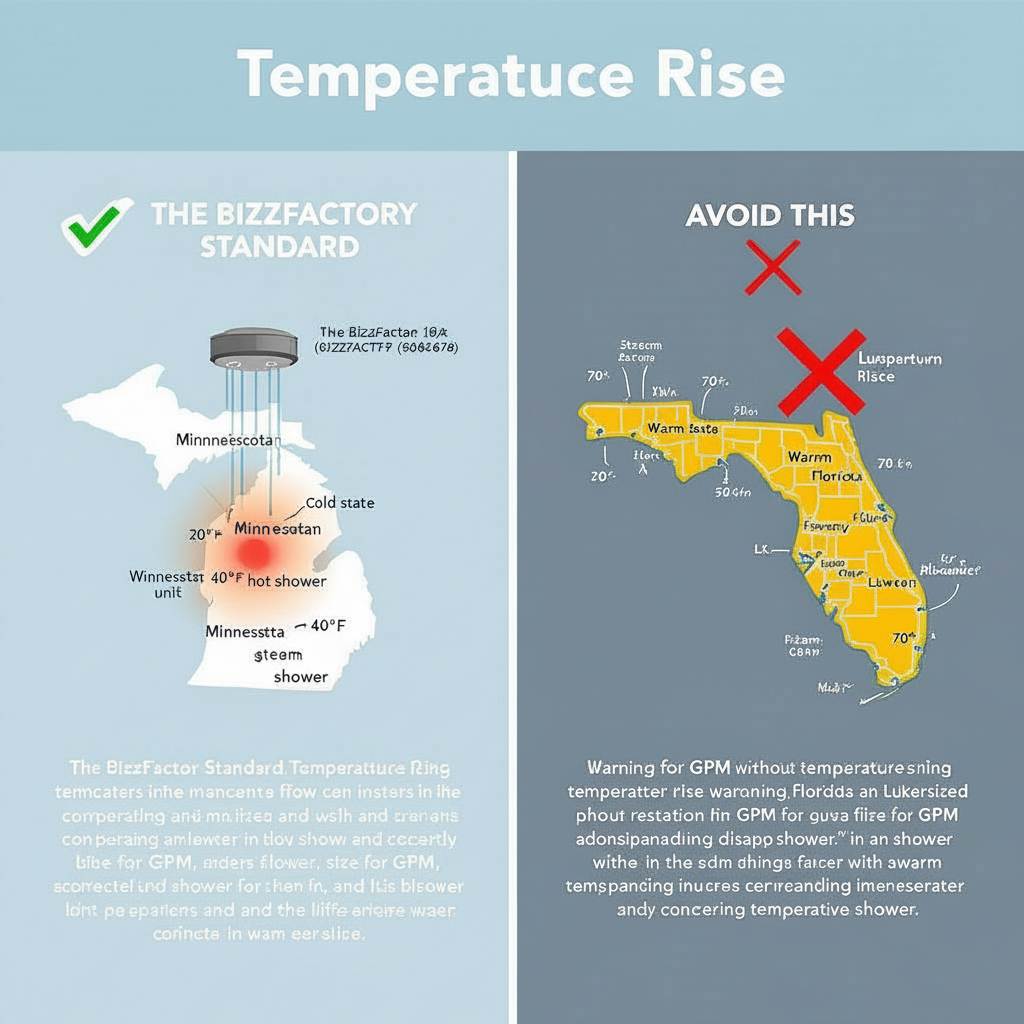
I see contractors make this mistake constantly — they size tankless units purely on **Gallons Per Minute (GPM)** and completely ignore **temperature rise**. Then they wonder why the customer's calling back furious.
Here's what actually happens: that same unit pumping out 5 GPM in Florida might only deliver 2.5 GPM in Minnesota. Why? Groundwater temperature. Your incoming water in January in Minneapolis is 37°F. In Tampa? It's 77°F. The unit has to work twice as hard to hit 120°F output.
That's the real issue.
Here's the thing: we had a family near Roswell — paid good money for a properly-sized system (on paper). First winter hits and their showers are lukewarm at best. Know what happened? The installer calculated GPM based on summer groundwater temps. Classic mistake that cost them probably $800 in callbacks and eventually a larger unit.
What I Actually Install After 1,000+ Jobs
Yeah, Navien and Rinnai make solid units. Nobody's arguing that. But their proprietary parts system? Absolute nightmare when something breaks. You're waiting 5-7 days for a specialty component while your family's showering at the gym.
I usually push people toward **Rheem's Performance Platinum series** instead. Same efficiency numbers (we're talking maybe 1-2% difference). But the parts? Standard. Generic. Your average plumber's got them on the truck.
That matters at 7 PM on a Friday when your heat exchanger dies.
An Industry Secret: Point-of-Use Tankless Units
So here's something nobody tells you: I've been installing these tiny **point-of-use tankless units** under bathroom sinks for years now. Like, just for the master shower. Maybe $400 for the unit, couple hours labor.
Why? Because you get endless hot water where you actually want it without ripping out your entire system or upgrading gas lines. I did this for a couple in Dunwoody last fall — their teenage daughter was taking 30-minute showers and draining their 50-gallon tank every morning. Dropped in a little Bosch Tronic under her bathroom vanity. Problem solved. Total cost was maybe $850.
It's not gonna work for everyone, but man — when it fits the situation? Way cheaper than going whole-house tankless.
Unpacking Real Installation Costs
Now, here's where tankless systems get expensive in ways nobody tells you up front. Your home's existing setup — the gas lines, the electrical panel, the venting — probably wasn't built for a tankless unit. A simple like-for-like tank replacement? Pretty straightforward. Going tankless? You're looking at upgrades that add up fast.
**Tankless Installation Reality Check:**
- **Unit cost:** $1,200 — $4,500 (and yeah, you get what you pay for)
- **Gas line upgrade:** $500 — $1,500 — this one catches people off guard every time
- **New electrical:** $300 — $800 (sometimes the panel needs expansion)
- **Venting changes:** $400 — $1,200 — those Category III stainless steel vents aren't cheap
- **Licensed labor:** $800 — $1,500
- _Real example:_ I quoted a Buckhead client $4,200 last month. Rinnai unit ran $1,800. Everything else? Infrastructure he didn't know he needed.
**Traditional Tank Setup:**
- **Unit cost:** $400 — $1,500 (depends if you want basic or Bradford White quality)
- **Basic installation:** $300 — $800
- Usually hooks right up to what you've already got. No drama.
Here's the deal with permits and code stuff — International Residential Code isn't messing around on water heater installations. You need a licensed guy pulling permits because one failed inspection can snowball into a nightmare. That's the real issue. I watched a homeowner in Smyrna try to DIY a tankless install to save maybe $600 on labor. Failed inspection. Twice. Had to hire someone anyway to fix his mistakes. Ended up spending $1,100 more than if he'd just called a pro in the first place.
Ask me how I know inspectors love finding DIY water heater jobs.
Energy Efficiency: Do Tankless Heaters Truly Save Money?
So yeah, tankless units typically hit 80-98% thermal efficiency (compared to 60-80% for decent tank heaters), but the actual money you'll save? That's more complicated than the marketing brochures suggest.
Here's what our follow-up visits show: if your household uses less than 40 gallons daily, you probably won't see much benefit going tankless. The family with teenagers running the shower for 45 minutes? They're routinely hitting that 20-30% energy savings mark.
But here's where it gets messy — a poorly-sized tankless unit can actually waste MORE energy by constantly cycling on and off trying to meet demand. I've seen this happen in probably a dozen homes in Vinings alone.
Decoding Energy Star Certification
Here's the thing: okay, so Energy Star basically means the manufacturer sent test results to the EPA proving their unit beats the minimum efficiency benchmarks. For tankless, you're looking at a Uniform Energy Factor around 0.82 or higher. Traditional tanks? They need to hit 0.67+ UEF.
Does that sticker automatically mean lower bills?
Not necessarily.
Look — those ratings definitely matter for rebates (Georgia Power'll throw you a couple hundred bucks sometimes). And they help with tax credits. But I've installed plenty of Energy Star units where the customer's bills barely moved. Wrong size for the house? Usage habits that fight against the system? That certification just becomes another logo on the box. Doesn't change physics.
Performance Realities: Hot Water When and How You Need It
Real talk — **flow rate** is where tankless systems hit their biggest wall. Most residential tankless units pump out somewhere between 2-5 GPM, whereas a tank system just dumps its full capacity instantly until it runs dry.
I've been in homes with even high-end Rinnai units where two people showering at once causes noticeable temperature drops. Not freezing cold, but that annoying lukewarm thing where someone yells "stop running the dishwasher!" Traditional tank heaters? They deliver consistent temperature and pressure until the reservoir empties (then you're waiting 20-40 minutes for recovery).
How Much Hot Water Do You Really Need?
Think about when everyone's home at once — that's your peak demand moment. Shower's using 2.5 GPM. Dishwasher's pulling 1.5 GPM. Washing machine adds another 2 GPM.
All three running together? You need 6 GPM capacity. And that's pushing most residential tankless units to their absolute limit (sometimes past it).
I always run the math on worst-case scenarios before recommending anything. Because the 6 AM rush in a house with teenagers? That's when you find out if you sized correctly — and by then it's too late to fix it cheaply.
Real Home Case Study: Efficiency vs. Performance
Last year we retrofitted a 3,200 sq ft place in East Cobb — replaced their 50-gallon traditional tank with a high-end condensing tankless unit. Total project ran $6,400 after gas line upgrades and the specialty Category IV venting (International Mechanical Code requirement, not optional).
Eighteen months later?
The homeowners reported around 25% utility savings, which is solid. But they also complained about lukewarm water during peak usage times — specifically when their three teenagers were showering back-to-back before school. The 4.8 GPM unit simply couldn't keep pace with their family's actual morning routine.
And that's the lesson right there. The unit was "efficient" on paper. Hit all the energy benchmarks. But it didn't solve their problem — it created a new one. Because we focused on efficiency metrics instead of their lifestyle reality.
The Unspoken Truth About Maintenance
Here's where things get annoying in different ways. **Tankless units?** You're descaling them every year if you've got hard water. And most of us have hard water (trust me — I test it). Skip that annual service and mineral buildup chokes out the heat exchanger. Seriously. Which costs roughly the same as buying a new unit to replace.
Annual descaling runs you $150-$300 usually.
**Traditional tanks?** They don't need babysitting. They just work. Then one day — usually around year 8 to 12 — they die. And you replace the whole thing.
I always test water quality during installs now because hard water absolutely murders tankless systems. Had a client in Marietta who ignored the descaling thing for three years straight. "It still works," he kept saying. Yeah, until it didn't. Heat exchanger looked like someone poured concrete through it. $1,400 replacement on a unit that was only five years old. Could've spent $600 total on three descaling services instead.
What Does Descaling Involve?
We're basically giving the tankless unit a 45-60 minute acid bath using a pump system. Vinegar works. Commercial descaler works better. The solution circulates through, breaks down the mineral deposits, then we flush everything clean.
It's not complicated. But it's definitely necessary.
Correctly Sizing Your Water Heater System
**Tank sizing** is pretty straightforward: take your family size and multiply by daily usage. Four people? You're probably looking at a 50-60 gallon tank. Done.
**Tankless sizing** gets complicated fast. You've got to calculate:
1. **Maximum simultaneous demand** (how many GPM when everything's running)
2. **Temperature rise** (the difference between your incoming cold water and what temperature you actually want)
3. **Peak usage patterns** (because 6 AM in a house with teenagers is different than 6 PM)
Most homes that want to stay comfortable need around 7-10 GPM capacity. Which might mean you're looking at commercial-grade units or even installing multiple residential tankless systems (yes, that's a thing we do — and yes, it gets expensive).
Quick Sizing Reference
| Number of People | Tank Recommendation | Tankless Recommendation |
| :--------------- | :------------------ | :---------------------- |
| 1-2 people | 40-gallon tank | 6-8 GPM tankless |
| 3-4 people | 50-60 gallon tank | 8-10 GPM tankless |
| 5+ people | 80+ gallon tank | Multiple tankless units |
Critical: Building Codes and Permits
Both systems need to comply with **International Plumbing Code** requirements — that's non-negotiable. And yeah, you need permits. A licensed contractor handles the permit applications so you don't have to deal with that bureaucratic maze.
Now, what does compliance actually look like? We're making sure gas lines are sized correctly, condensate venting is handled properly, electrical circuits can handle the load, and safety shutoffs function correctly. Tankless installations throw an extra wrench in things because their higher BTU ratings often trigger additional
In-Depth Look
Detailed illustration of key concepts
Visual Guide
Infographic illustration for this topic
Side-by-Side Comparison
Visual comparison of options and alternatives
Sources & References
- Regular Water Heater vs Tankless: What's the Smarter Investment?
- Traditional vs Tankless Water Heater: What to Know
- Tankless vs Tank Water Heaters: Which is Best For You? | A. O. Smith
- Tankless Vs. Tank Heaters: Phoenix Cost & Efficiency Guide
- Tankless vs Traditional Water Heaters — What's REALLY Better?
- Building Codes, Standards, and Regulations: Frequently Asked ...
- Building Codes and Standards - 101 Guide | ROCKWOOL Blog
- [PDF] Building Codes Toolkit for Homeowners and Occupants - FEMA
- ICC Digital Codes - Home
- Local Building Codes | America's Best House Plans
Frequently Asked Questions
Need Professional Help?
Find top-rated plumbing experts in your area