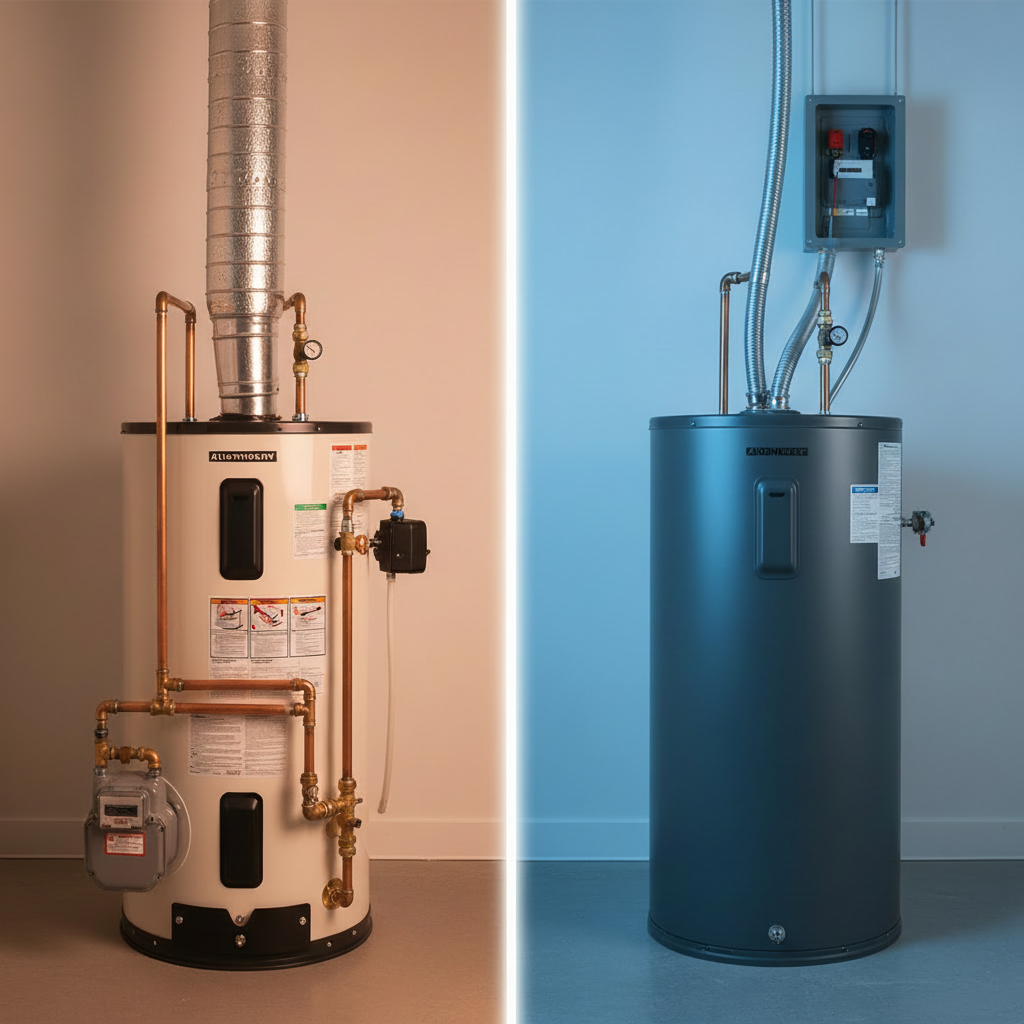
Gas vs electric water heater costs 2024: Real savings breakdown from pros. Compare upfront costs, monthly bills & payback periods.
Key Takeaways
- It's going to cost you closer to $3,000 when everything's done
- Look, I've been installing water heaters for 20+ years, and the sticker price is just the opening act
- The real show — and the real money — happens when you start looking at what your house actually needs versus what it currently has
- That's the real issue
Key Takeaways
Gas vs Electric Water Heater: 2024 Cost Comparison – The Ultimate BizzFactor Guide
Here's something most contractors won't tell you upfront: that $1,200 water heater you're eyeing? It's going to cost you closer to $3,000 when everything's done. Maybe more.
Look, I've been installing water heaters for 20+ years, and the sticker price is just the opening act. The real show — and the real money — happens when you start looking at what your house actually needs versus what it currently has. That's the real issue. Gas models typically save you money over time (we're talking hundreds per year), but they'll punish you on installation day. Electric units are cheaper to buy and install, but they'll quietly drain your wallet every month for the next decade.
Look — look — this guide breaks down the 2024 numbers — the actual costs you'll face, not the fantasy pricing you see online. We're talking upfront investment, installation surprises (especially with gas lines, which trip up about 40% of homeowners), monthly operating costs, and which option makes sense for *your* situation. By the end, you'll know exactly what you're getting into.
Unpacking the Real Upfront Costs of Water Heater Systems
So you're shopping for a water heater. You're not just buying the tank itself — you're buying whatever nightmare it takes to get that thing working safely in your house. The unit price? Sure, that depends on type and size (40-50 gallons for most families), the brand you pick, and those energy efficiency ratings nobody reads (look for the UEF number — Uniform Energy Factor).
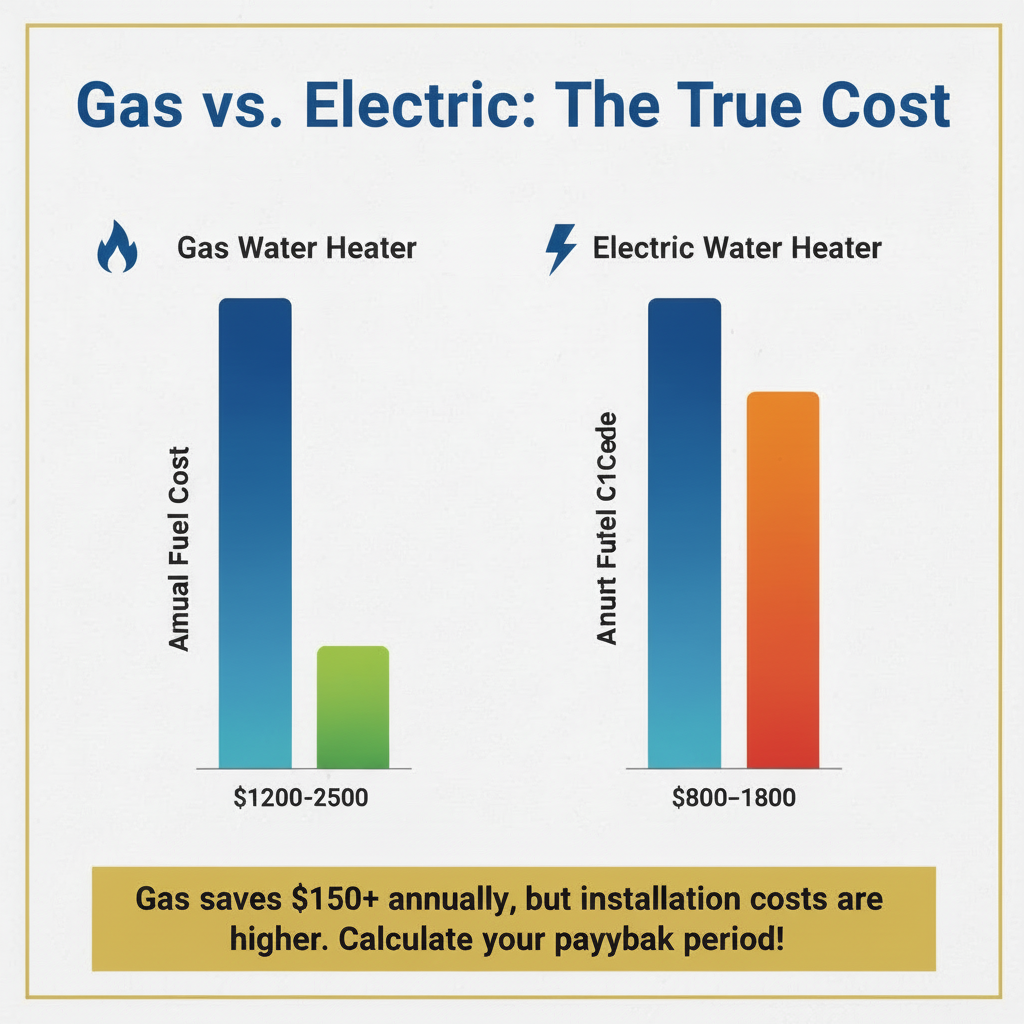
Gas tanks run **$1,200 to $2,500** for the unit alone.
Electric? **$800 to $1,800** for comparable capacity.
So far, electric looks like the winner.
That's the trap.
Installation Complexities and Hidden Costs: A Deeper Dive
Here's where gas installations get expensive — and honestly, kind of annoying if you're not prepared.
Gas heaters need serious safety infrastructure. I mean, you're literally burning fuel inside your house. That creates carbon monoxide, sulfur dioxide, and a bunch of other gases that'll absolutely kill you if they don't vent properly (fun, right?). So you need a dedicated flue or chimney system. Not just any vent — one that meets NFPA 54 and whatever your local fuel gas codes demand.
Vent sizing matters. Wrong size = dangerous backdrafting, which is exactly as bad as it sounds.
Material matters too. B-vent for standard atmospheric units. PVC or CPVC for condensing models. You also need a properly sized gas line — not the one you *have*, the one you actually *need* for the new unit. And here's the kicker: you need a sediment trap (drip leg) right before the heater to catch debris. IFGC 408.4 requires it. Skip this and you get gas control failures three years down the road. Ask me how I know.
These requirements add **$500 to $1,500** minimum to your project. Sometimes way more.
I worked with a homeowner in Dunwoody last year who thought he was getting a simple swap. His new 50,000 BTU gas heater needed way more fuel than his old 30,000 BTU unit. His existing 1/2-inch gas line? Completely inadequate for a run that long (about 35 feet from the meter). We had to upgrade to 3/4-inch black iron pipe, pressure test to 1.5 times working pressure (IFGC 406.4.1), and reroute through two wall cavities.
Total gas infrastructure cost: **$2,100**. He wasn't happy, but he would've been less happy with a heater that barely worked.
This is why you need a licensed professional who actually knows the International Fuel Gas Code (IFGC), International Plumbing Code (IPC), and your local amendments. Not your buddy who "does plumbing on weekends." For more on why professional installation isn't optional, check out our [Professional Water Heater Installation Services](/services/water-heater-installation).
Here's the thing: electric installations? Way simpler in most cases. Most homes already have electrical infrastructure that'll work. Our techs usually finish electric installs in roughly half the time of gas units — less labor, lower cost.
But here's the thing about electric: simpler doesn't mean you can phone it in. You still need a dedicated 30-amp double-pole 240V circuit for a standard 4500-watt element. That's the real issue. That's 10 AWG copper wire with proper overcurrent protection per NEC Article 422 and 210.23(A). Grounding and bonding (NEC Article 250) aren't optional — they're literally life-safety issues. People think electricity is safer than gas because there's no flame. Both will kill you if you cut corners.
Both gas and electric need a temperature and pressure relief (T&P) valve with discharge piping to prevent explosions and scalding (IPC Section 504.6). Overflow pans matter if you're in an attic or upper floor. And use dielectric unions where copper pipes meet steel tank connections, or you'll get galvanic corrosion that eats through your connections.
The Critical Gas Line Sizing: An Overlooked Reality Check
Real talk — this is where most homeowners get blindsided.
You'd think replacing an old gas water heater with a new one would be plug-and-play. It's not. Modern high-efficiency units often have higher BTU ratings than whatever you're replacing. That old 30,000 BTU unit from 1998? Your new energy-efficient model might be 50,000 BTUs.
That 1/2-inch gas line that worked fine for 20 years? It's now starving your new heater. Over runs longer than 20-30 feet (check IFGC Table 402.4(1) for specific capacities based on pressure and length), you need a 3/4-inch line. Period.
An undersized gas line creates "fuel starvation." Your heater runs inefficiently, takes forever to reheat, and produces soot from incomplete combustion. Ask me how I know.
Now, i've seen contractors give quotes without even looking at the existing gas line. That's either incompetence or intentional lowballing. When they discover mid-job that your 1/2-inch line won't cut it, suddenly you're looking at an extra $800–$2,000 for pipe replacement, wall patching, and delays.
The diameter difference between 1/2-inch and 3/4-inch pipe seems tiny (0.625" vs. 0.824" internal diameter). The installation difference is massive — especially when the run goes through finished walls, requiring demolition, rerouting, permits, patching, and paint.
**BizzFactor's Pro Tip:** Before signing *anything*, make your contractor verify your gas line capacity. This should include measuring the run length from the meter, checking pipe diameter, confirming pressure at the meter, and calculating whether your existing infrastructure can handle the new unit's BTU demand. IFGC requires this assessment. Good contractors do it automatically. Sketchy ones hope you don't ask.
This one step will save you easily $1,000–$3,000 in surprise costs.
Bradford White vs. Big Box Brands: BizzFactor's Unwavering Recommendation
You'll see Rheem, A.O. Smith, and State water heaters at every Home Depot and Lowe's. They're fine. They work.
But after installing and servicing pretty much every brand for two decades, we exclusively install **Bradford White** — and there's a reason.
Bradford White units are built heavier. Thicker gauge steel tanks. Vitraglas ceramic lining (proprietary formula that exceeds ASTM standards for porcelain enamel tank liners) for superior corrosion resistance. Brass drain valves instead of plastic ones that crack when you look at them funny.
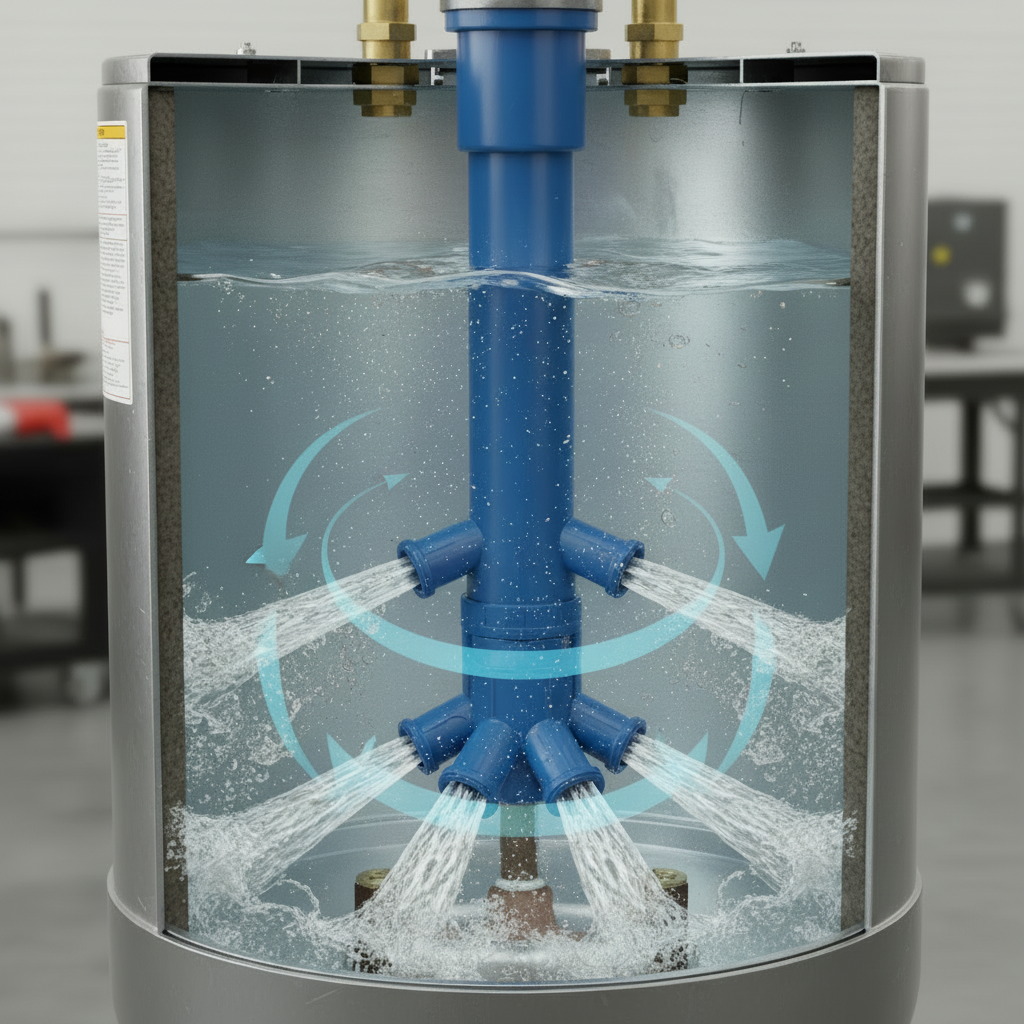
But here's the real differentiator: the **Hydrojet® Total Performance System**.
So sediment buildup? That's what kills tank water heaters. It settles at the bottom of your tank — just sits there like sludge. Then it insulates the heating element (if you've got electric) or the burner (if it's gas) from the actual water. Your efficiency tanks. Your element fails early. The tank itself corrodes faster. Most heaters just... let this happen. They're designed to die in 8-12 years, and sediment is a big reason why.
Bradford White's Hydrojet system uses this specially designed inlet tube that creates turbulence down at the tank bottom. Constantly disrupting sediment accumulation. It doesn't *eliminate* sediment — nothing does — but it dramatically reduces buildup. Better efficiency over the unit's entire life. Longer element life. Fewer maintenance calls. These things routinely hit 15+ years.
A guy I installed a Bradford White for in Brookhaven back in 2009? Still running. That's 15 years on a water heater. His neighbor with an A.O. Smith from the same year replaced his twice.
The upfront difference is maybe $200–$400. The long-term value difference? Thousands. Plus Bradford White's warranty (typically 6-10 years on the tank) actually backs up their build quality.
That's why we won't install anything else.
In-Depth Look
Detailed illustration of key concepts
Visual Guide
Infographic illustration for this topic
Side-by-Side Comparison
Visual comparison of options and alternatives

Sources & References
- The Ultimate Guide to Ditching Gas & Going Electric for Your Home!
- Gas vs. Electric Water Heaters: Pros, Cons, and Costs | Angi
- Gas vs. Electric Water Heaters: What's Best for Your Home?
- Reduce Hot Water Use for Energy Savings
- Save on Heating Costs with ENERGY STAR This Season
- Building Codes and Standards - 101 Guide | ROCKWOOL Blog
- Building Codes, Standards, and Regulations: Frequently Asked ...
- [PDF] Building Codes Toolkit for Homeowners and Occupants - FEMA
- 5 Reasons Building Codes Should Matter to You
- [PDF] City of Phoenix Minimum Property Standards
Frequently Asked Questions
Need Professional Help?
Find top-rated plumbing experts in your area