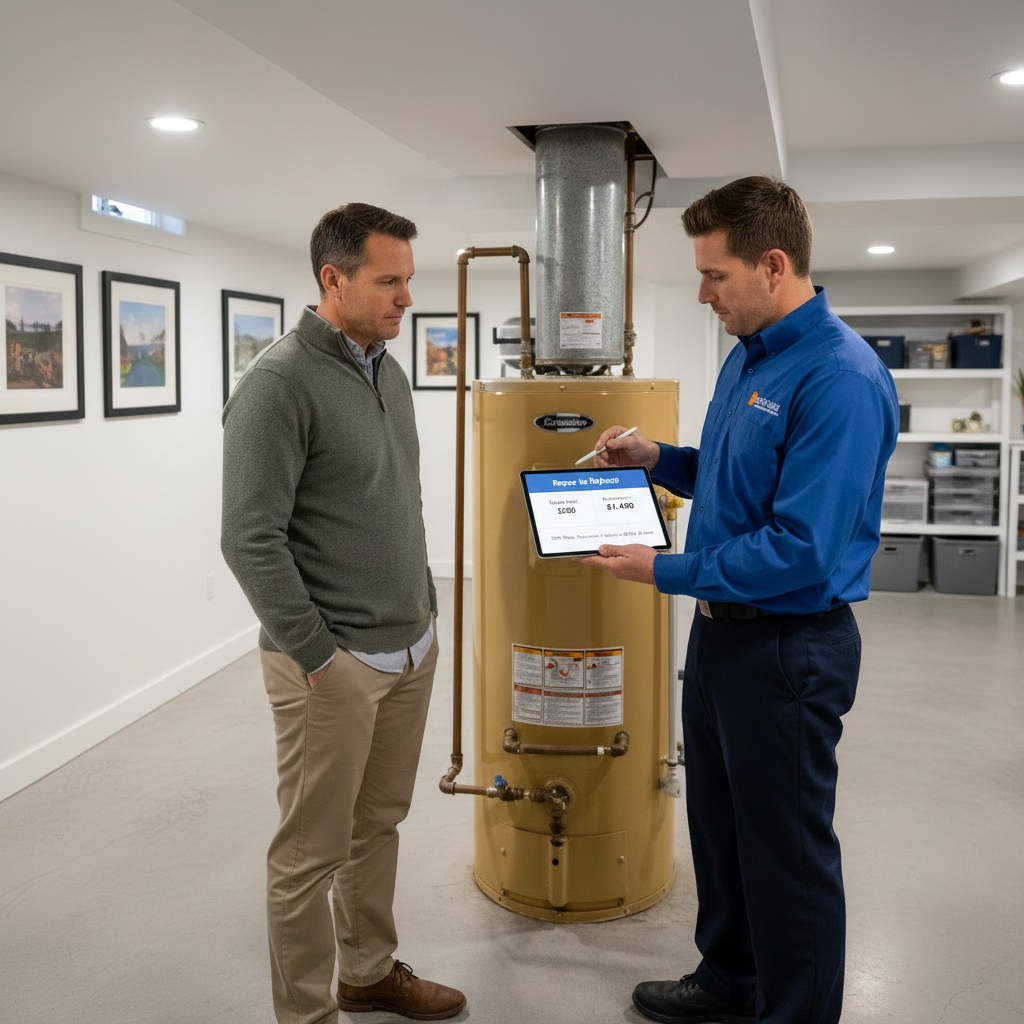
Water heater repair vs. replacement? Use our 2024 cost guide to decide if you should fix your old unit or upgrade to a new, more efficient model. Learn the '50% rule'.
Key Takeaways
- **Repair costs under 50% of replacement = Fix it.** Minor issues on newer units.
- **Unit under 7 years old = Usually repairable.** Unless it's a major component failure.
- **Major component failure + Old age = Replace.** Beyond economical repair.
- **Multiple recent repairs = Time to upgrade.** Indicates systemic issues and decreasing reliability.
- Electric heating element: $200-425
Key Takeaways
Water Heater Repair vs Replace: 2024 Cost Guide
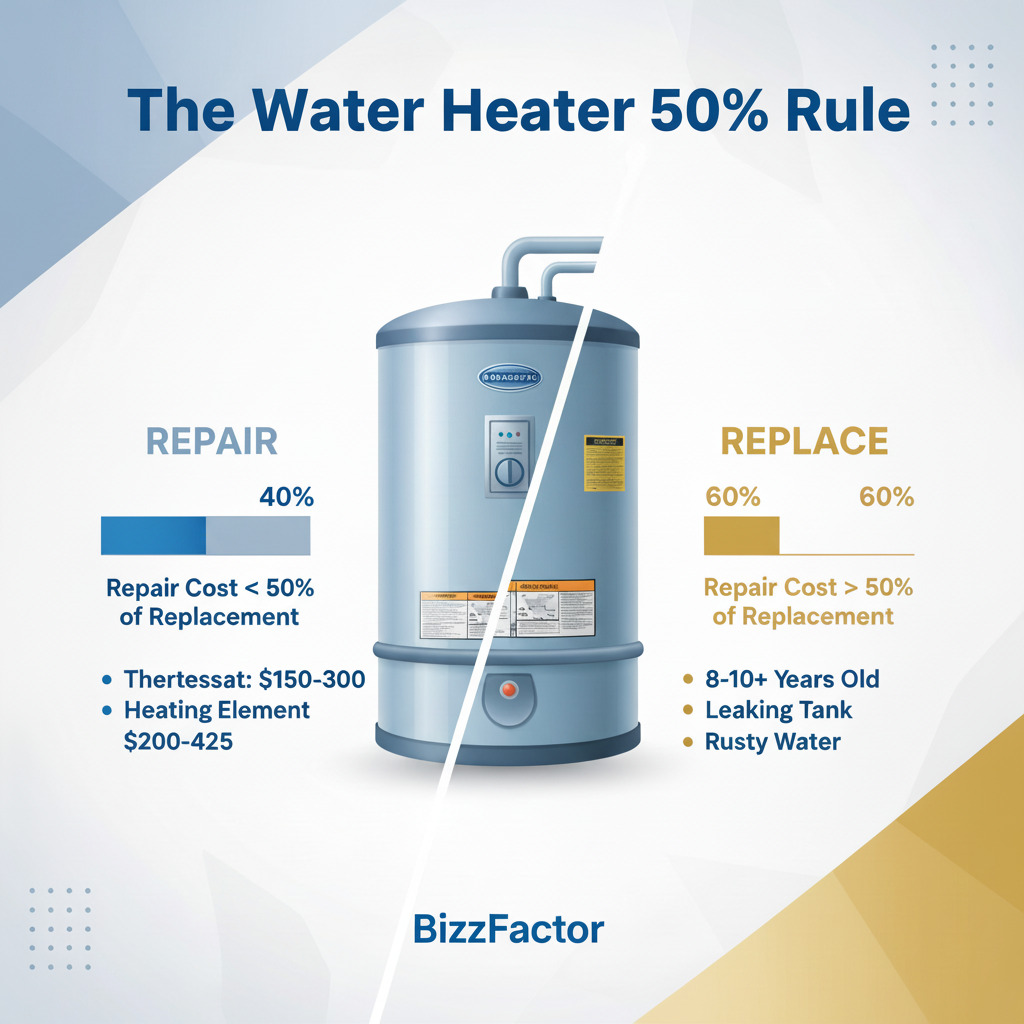
Is your home's water heater acting up? Deciding between **repairing a water heater** and investing in a **new water heater installation** can be a daunting choice. At BizzFactor, with over two decades of inspecting thousands of units, we've identified a consistent rule that saves homeowners significant money: if the cost of repair exceeds 50% of a brand-new replacement, opting for replacement is almost always the smarter financial decision. It's a straightforward principle designed to prevent costly recurring issues.
Understanding the 50% Rule for Water Heater Decisions
Look — look — the **50% rule** is an industry benchmark that advises homeowners to replace their water heater when the repair expense reaches half the price of a full unit replacement. I've seen this play out hundreds of times — plumbers I trust actually push back on repairs sometimes because they know what's coming. You avoid sinking money into a system that's limping toward the finish line. Typically, water heaters older than 8-10 years are prime candidates for replacement, while newer models experiencing minor, isolated issues might still be good candidates for repair.
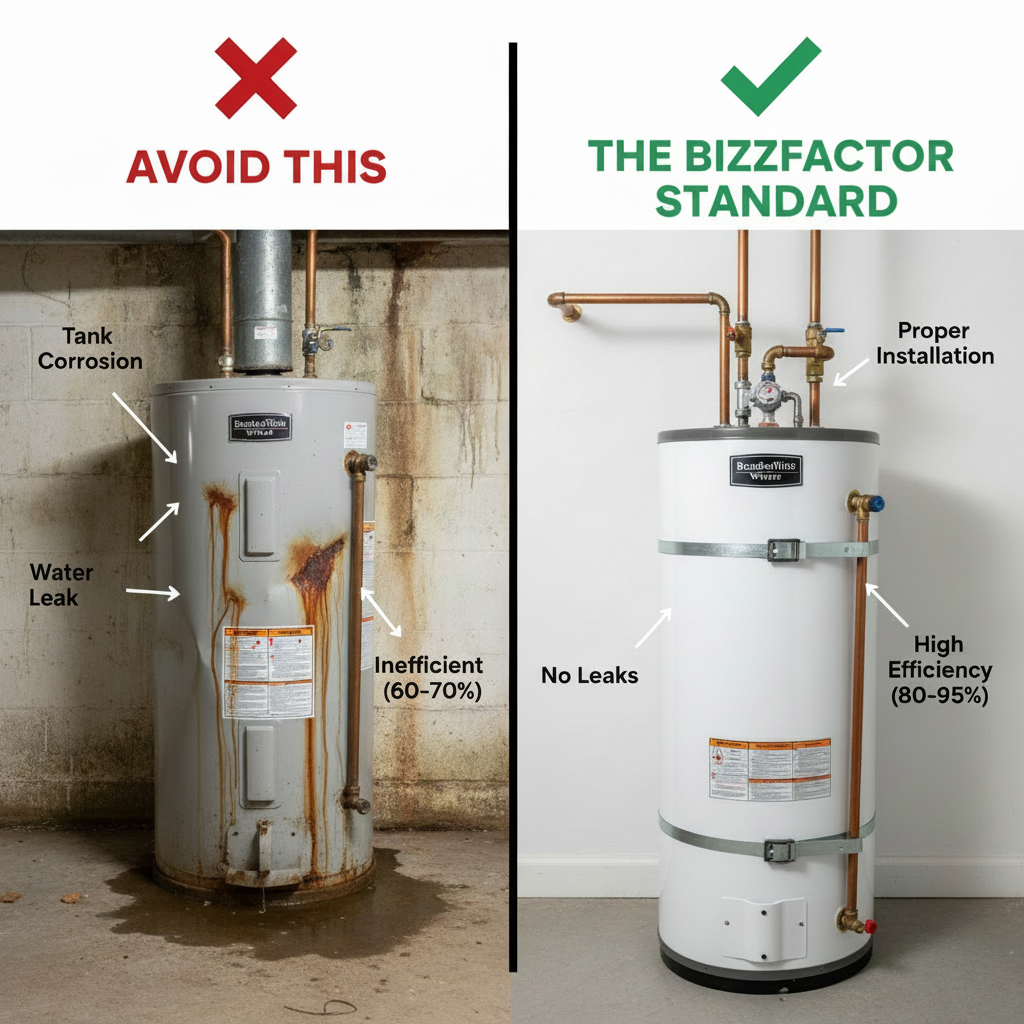
A homeowner called us last spring — 9-year-old Bradford White needed $850 in work. That's 60% of what a brand-new Rheem Performance Platinum would cost installed. We told them straight up: replace it. Why keep patching something that old? Modern units run at 80-95% efficiency, compared to the 60-70% you're getting from anything made before 2015. That efficiency gap shows up every month on your gas bill.
Quick Decision Framework:
- **Repair costs under 50% of replacement = Fix it.** Minor issues on newer units.
- **Unit under 7 years old = Usually repairable.** Unless it's a major component failure.
- **Major component failure + Old age = Replace.** Beyond economical repair.
- **Multiple recent repairs = Time to upgrade.** Indicates systemic issues and decreasing reliability.
How Much Does Water Heater Repair Cost?
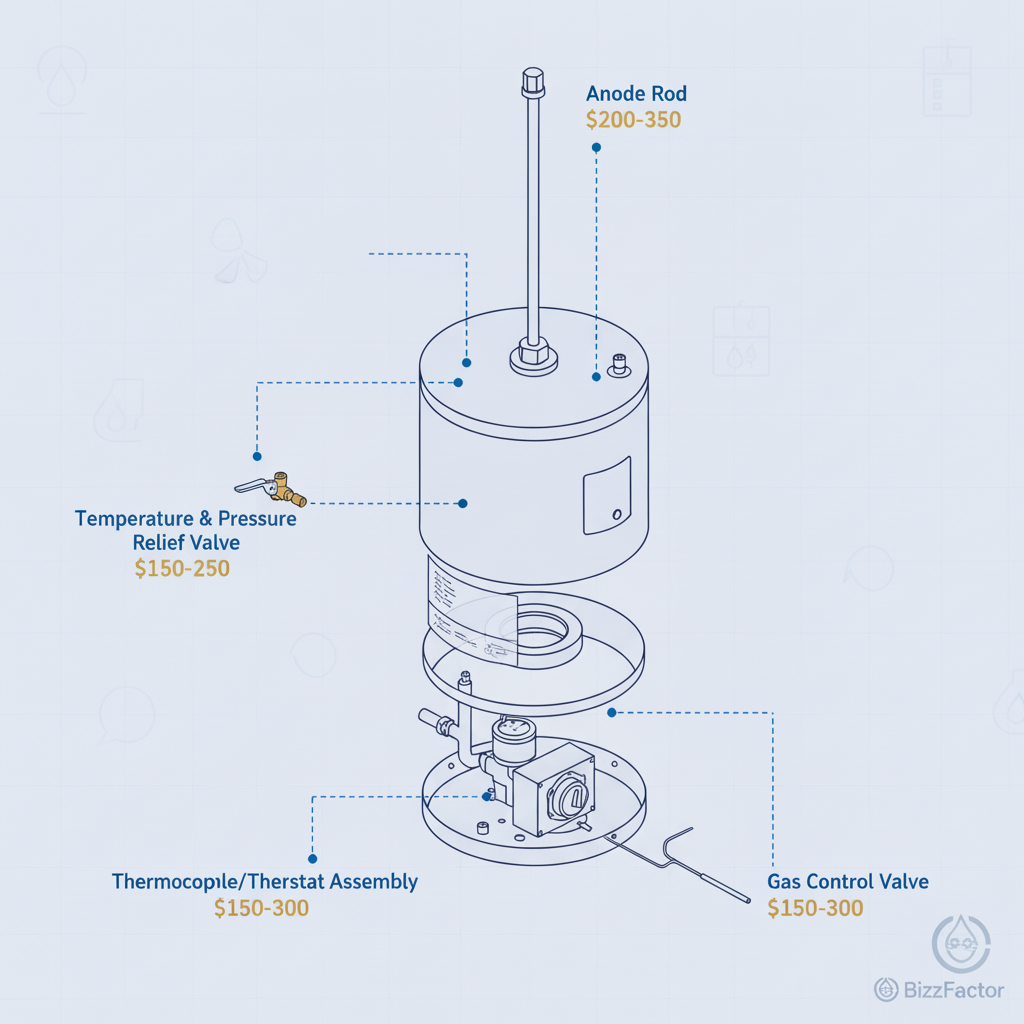
You're probably looking at anywhere from $150 to $850 for most repairs, but it depends entirely on what's broken. I've got a guy who does mostly residential work, and he says thermostats run $150-$300 to swap out. Heating elements (on electric units) cost more — usually $200-$425 including labor. Gas valves? Those get expensive fast, anywhere from $400 to $700.
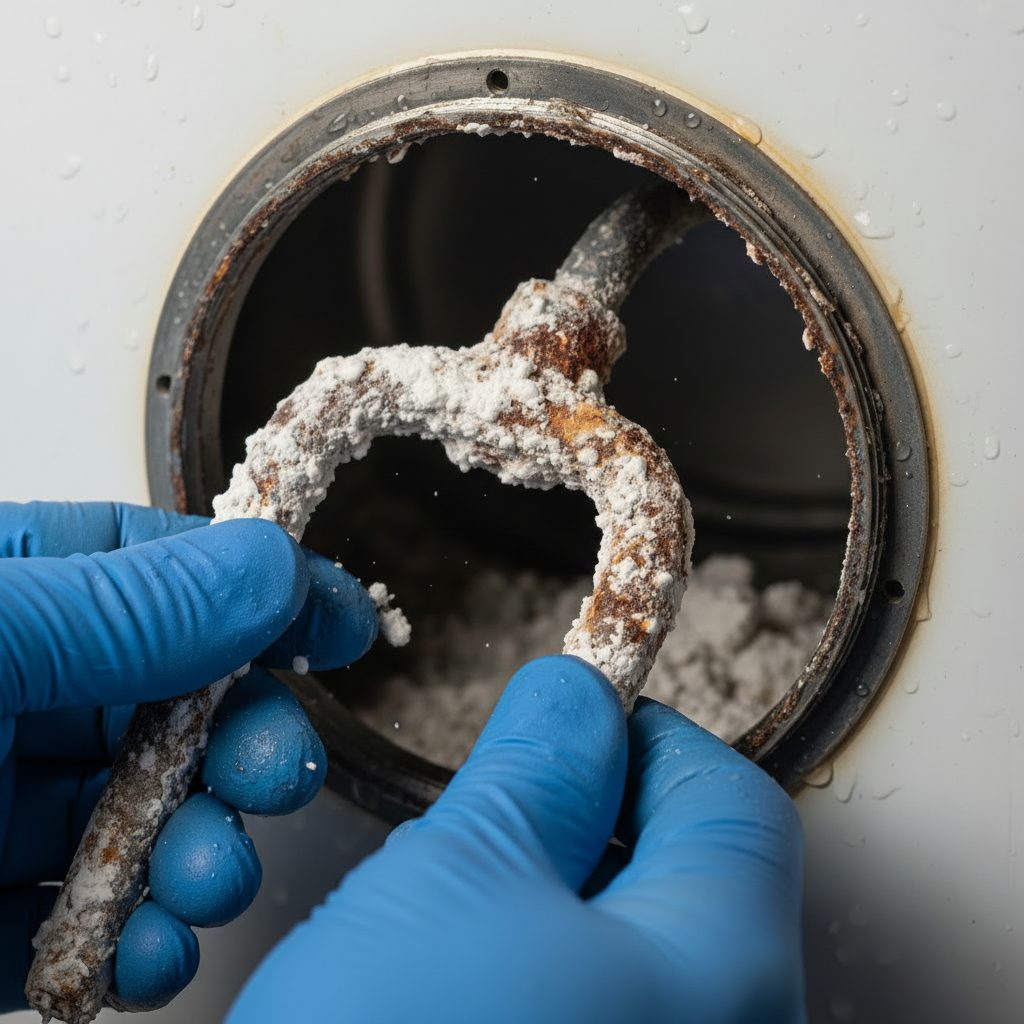
Here's what kills me: homeowners see that $300 price tag and think they're in the clear. Then the tech notices the pressure relief valve's weeping. Or the anode rod's completely dissolved. What looked like a quick element replacement turns into $1,200 because everything's failing at once. We had exactly this happen last month in Buckhead — lady thought she needed one part, ended up needing three. That's the real issue. That's why I always tell people: get the whole system checked while they're there, not just the obvious problem.
Real Repair Costs Our Experts Have Observed:
- Electric heating element: $200-425
- Gas control valve: $400-700
- Thermostat replacement: $150-300
- Anode rod replacement: $200-350
- Temperature relief valve: $150-250
Here's the thing: you've also got to factor in labor rates (usually $75-$125 per hour around here) plus diagnostic fees of fifty to a hundred bucks. That adds up fast. For detailed insights, explore our article on "[Signs Your Water Heater Needs Repair](https://bizzfactor.com/signs-water-heater-needs-repair)".
When Is It Time to Replace Your Water Heater?
Here's when you need to start thinking replacement: your unit's hit eight years old and something expensive just broke. We see this constantly — rusty water coming out of taps, temps bouncing all over the place, weird rumbling sounds that make homeowners nervous. Those aren't quirks you can patch. That's corrosion eating through the tank from the inside.
Last fall, family in Decatur had an 11-year-old A.O. Smith start leaking from the bottom. Tank leaks? There's no fixing that. The steel's compromised. They went with a Bradford White Defender series and their gas bill dropped 25% the first month (they sent us the comparison — I've got the email somewhere). Yeah, you're looking at $1,200-$3,500 upfront depending on tank size and whether you're running gas or electric, but that investment pays you back. Learn more about the benefits in our guide to "[Energy-Efficient Water Heaters](https://bizzfactor.com/energy-efficient-water-heaters)".
Replace When You Notice These Red Flags:
- **Rusty or discolored water:** Often indicates tank corrosion.
- **Inconsistent water temperature:** A sign of failing components or sediment buildup.
- **Strange noises (rumbling, popping):** Usually caused by sediment accumulation.
- **Water pooling around the base:** A critical sign of a leaking tank, requiring immediate attention.
- **Unit over 10 years old:** Approaching or exceeding its typical lifespan.
- **Rising utility bills:** Can indicate declining efficiency.
Calculating Total Water Heater Replacement Costs
So yeah, **total water heater replacement costs** include the equipment (obviously), installation labor, permits, and whatever surprise upgrades your inspector decides you need. Standard 40-50 gallon units? You're looking at $800-$1,500 for the tank itself, then another $400-$800 for installation. But that's just where it starts.
Last month, a guy in Druid Hills thought he was getting a straightforward swap — ended up needing new electrical because his panel couldn't handle the amperage. These curveballs happen more than you'd think:
- **Electrical upgrades for newer models:** $200-$500
- **Venting modifications:** $150-$400
- **Permits and inspections:** $50-$200 (mandatory in most areas)
- **Code compliance updates:** $100-$300 (e.g., expansion tanks, seismic straps)
Here's the thing: fEMA says throw an extra 15-20% on top of whatever they quote you. And honestly? That's not paranoid, that's realistic. I've watched "simple" swaps turn into $3,000 jobs when the house was built in 1987 and nothing's been touched since. Older homes always need something brought up to code — expansion tank, different venting setup, earthquake straps if you're in the right zone. For a complete financial breakdown, see our article on "[Water Heater Installation Costs](https://bizzfactor.com/water-heater-installation-costs)".
What Professional Installation Includes:
Pulling out the old unit (safely, not just yanking it).
New heater goes in per the manufacturer's specs.
Gas or electric hookups get connected.
Every safety device gets tested — TPR valve, seismic straps, the works.
Permits pulled with the city (don't skip this).
Final inspection scheduled and passed.
Exploring the Best Water Heater Brands
After installing probably two thousand units over the years, I'll tell you what holds up: **Bradford White Defender series**. And it's not just about the tank quality (though that's solid) — it's the parts availability. You need a thermocouple at 8 PM on a Friday? Any supply house has Bradford parts in stock. The units are designed so a tech can actually get to components without disassembling half the damn thing.
Rheem Performance Platinum looks great on paper with the WiFi controls and leak sensors, but that's more electronics that can fail. I've replaced circuit boards on those that cost $400. A.O. Smith makes dependable equipment, don't get me wrong, but they're not quite built with the same service-friendly approach. Also worth mentioning — we source from plumbing supply houses, not Home Depot. Better warranty support, better tech backup when something weird happens.
Our Top Water Heater Picks by Category:
- **Best Overall:** Bradford White Defender MI-50T6BN (Known for durability and ease of service)
- **Best Budget:** Rheem Performance 50-gallon (Reliable and cost-effective)
- **Best Electric:** A.O. Smith Vertex 100 series (High-efficiency electric option)
- **Best Tankless:** Rinnai RU199iN (Excellent for on-demand hot water and longevity)
Should You Downsize Your Water Heater?
If your kids moved out and you're heating 75 gallons of water for two people, yeah, **downsizing your water heater** makes sense. We do this all the time for empty nesters. Why pay to keep that much water hot 24/7 when you're barely using it?
Couple in Virginia Highland went from a 75-gallon monster down to a 40-gallon unit last year. Saved them about three hundred bucks on the tank itself, plus their gas bill dropped $15-ish every month. That's the real issue. Doesn't sound like much until you multiply it out — that's $180 a year, every year. Their showers didn't get any shorter. They just stopped heating water they weren't using. If your household shrunk or you upgraded to those low-flow fixtures, might be worth running the numbers.
Right-Sizing Questions to Consider:
- How many people currently reside in your home?
- What are your peak hot water usage times and demands?
- Do you frequently run multiple hot water-consuming appliances simultaneously?
- Are you planning to upgrade to more efficient faucets, showerheads, or appliances?
How Long Do Water Heaters Actually Last?
Gas water heaters, if you're doing the maintenance, usually give you 8-12 years. Electric ones? You might squeeze out 10-15. But here's what they don't tell you in the brochures — performance starts dropping hard after year seven. Ask me how I know.
Gas units don't last as long because of all that combustion stress and venting complexity. Electric models hang on longer but you'll pay more to run them. Tankless heaters can hit 20 years (seriously), though they need regular descaling if your water's hard.
Most manufacturers will tell you that around 90% of tank failures happen after the eight-year mark. I don't have their internal data, but that tracks with what we see in the field. You hit year eight, start putting money aside for the replacement. It's coming. Regular [water heater maintenance](https://bizzfactor.com/water-heater-maintenance-tips) can extend its life.
Factors Influencing Water Heater Lifespan:
- **Water quality and mineral content:** Hard water can lead to sediment buildup and corrosion.
- **Maintenance frequency:** Regular flushing and inspections can prevent premature failure.
- **Installation quality:** Proper installation ensures optimal performance and longevity.
- **Usage patterns:** High demand can accelerate wear and tear.
- **Local climate conditions:** Extreme temperatures can affect efficiency and lifespan.
What Building Codes Affect Water Heater Installation?
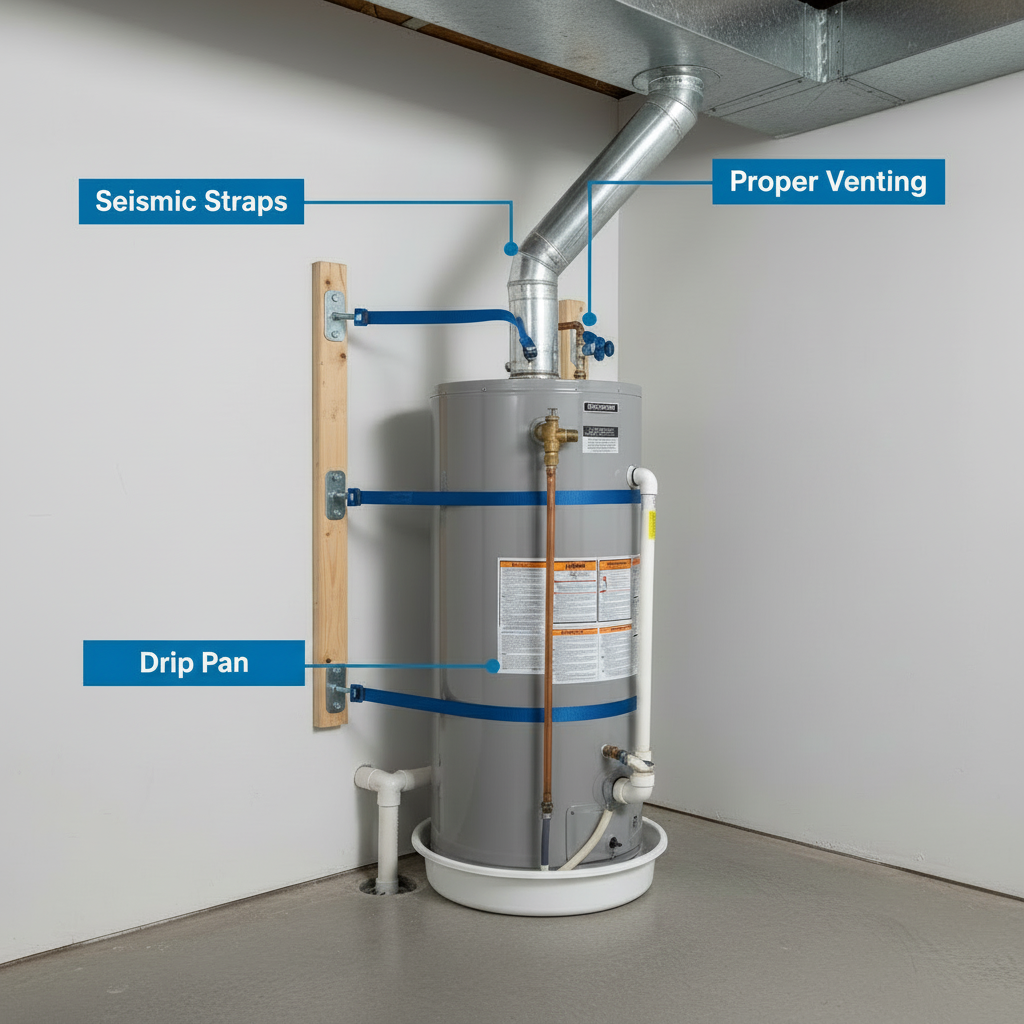
Current building codes and regulations impose updated safety and efficiency standards that older water heater units often fail to meet. The International Plumbing Code (IPC), for instance, now mandates improved venting, seismic strapping, and specific energy efficiency ratings. These requirements frequently necessitate replacement, even if an older unit is still nominally functional.
Now, we recently handled a case where a homeowner's perfectly operable water heater couldn't meet new earthquake safety requirements during a bathroom remodel, requiring an upgrade. While permit costs typically range from $50-$200 depending on location, they're generally required for complete replacements, not just component repairs.
Common Code Requirements Include:
- **Proper venting and combustion air:** Essential for gas water heaters to prevent hazardous gas accumulation.
- **Seismic strapping:** Mandatory in earthquake-prone regions to secure the unit.
- **Expansion tanks for closed systems:** Prevents excessive pressure buildup.
- **Temperature and pressure relief valve (TPR valve) upgrades:** Ensures safety against explosions.
- **Adequate clearances for service:**
In-Depth Look
Detailed illustration of key concepts
Visual Guide
Infographic illustration for this topic
Side-by-Side Comparison
Visual comparison of options and alternatives
Sources & References
- Water Heater Repair vs. Replacement: What's the Right Choice?
- Water Heater Repair vs Replacement Guide - Woods Comfort Systems
- Water Heater Repair Vs. Replace: Is It Worth Fixing?
- Understanding and Managing Hot Water Heater Repair Costs
- The Great Water Heater Debate: Is It Better to Repair or Replace in ...
- Building Codes, Standards, and Regulations: Frequently Asked ...
- Building Codes and Standards - 101 Guide | ROCKWOOL Blog
- [PDF] Building Codes Toolkit for Homeowners and Occupants - FEMA
- Navigating California Building Codes: Best Practices for Facilities ...
- ICC - International Code Council - ICC
Frequently Asked Questions
Need Professional Help?
Find top-rated plumbing experts in your area