
Learn what water heater warranties actually cover vs. common exclusions. Expert guide to warranty protection, claims, and maintenance requirements.
Key Takeaways
- **Tank Integrity:** Cracks or leaks in the tank itself from bad welds or steel defects at the factory. We're talking genuine manufacturing screwups here — not the rust-through you get when a spent anode rod sits unchanged for seven years. That's different. That's on you.
- **Heating Elements:** For electric units, element failures caused by defective materials or factory workmanship. Sediment-fried elements? That's on you.
- **Gas Valve & Burner Assembly:** Component failures in gas units, assuming nothing external caused it (blocked vents, low gas pressure, dirty burners you never cleaned).
- **Thermostat:** Temperature regulation failures if the thermostat itself was defective from day one.
- **Internal Components:** Dip tubes, anode rods (initial defects only), pressure relief valves — but only if they failed because of how they were made, not because you ignored them for 8 years.
Key Takeaways
Water Heater Warranty Guide: What's Really Covered & How to Protect Yours
A guy in Buckhead spent $2,400 replacing a 4-year-old water heater because he didn't know one crucial thing about his warranty. The tank failed. He had the receipt. He called the manufacturer expecting a free replacement.
Denied.
Why? He'd never registered it. Never flushed it. And the failure was classified as "sediment damage" — which every manufacturer explicitly excludes.
That's not a rare story. Most water heater warranty claims get rejected, and it's almost never because the manufacturer is being difficult. It's because homeowners don't understand what these warranties actually cover (spoiler: not much) or what silently voids them (spoiler: almost everything).
What Standard Water Heater Warranties Actually Cover: The Fine Print You Can't Ignore
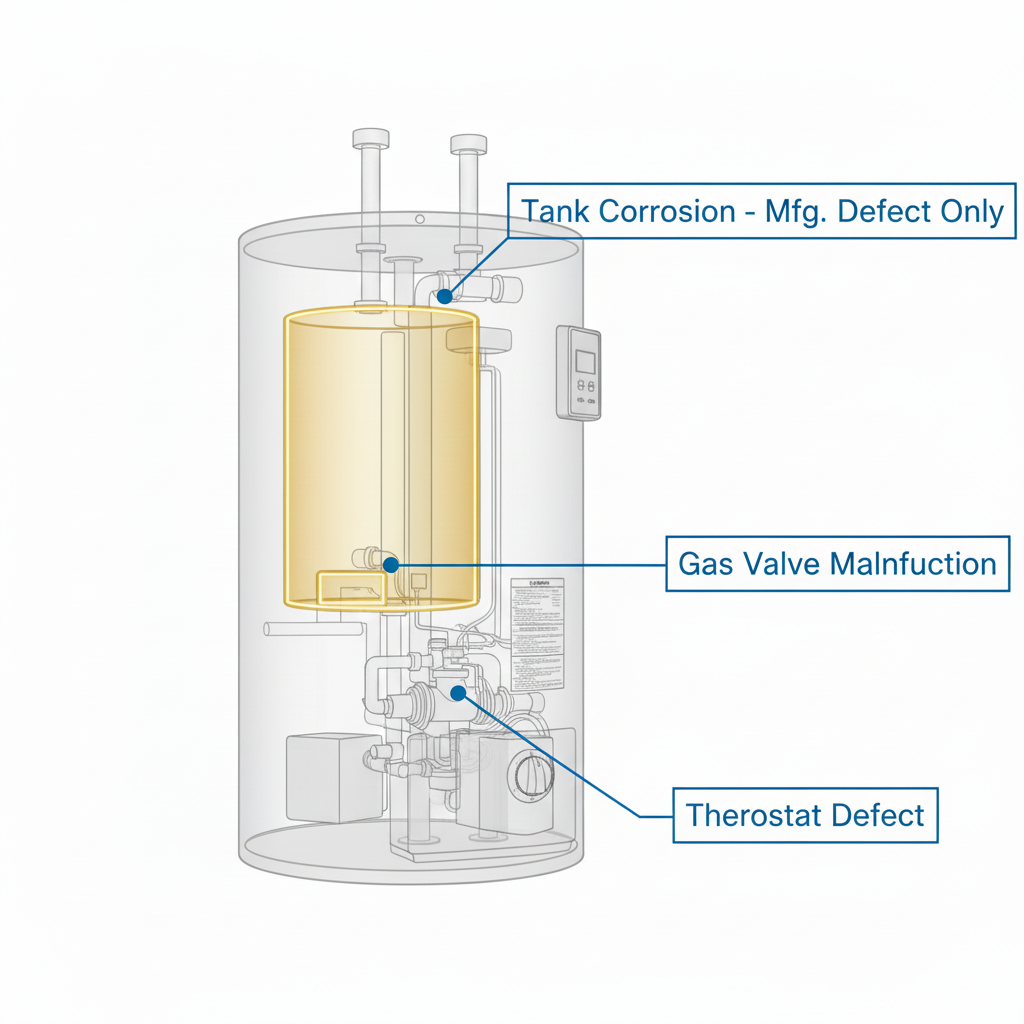
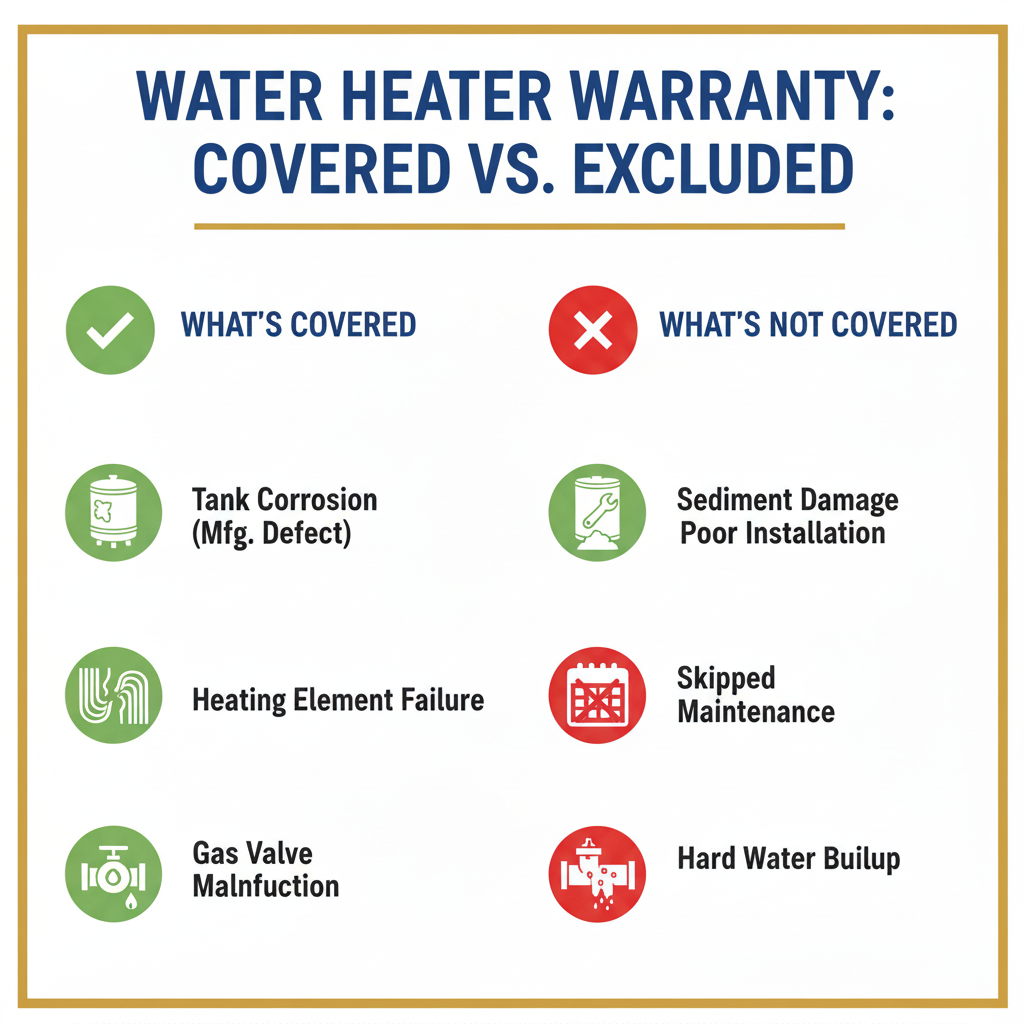
Look — standard water heater warranties? They're basically insurance against the factory screwing up. Tank defects, faulty components straight from the assembly line — that's what you're covered for during the warranty window. But the stuff that actually breaks water heaters in real life? Installation mistakes, skipping maintenance, hard water eating away at your tank?
Not covered. Not even close.
Here's what you're actually protected against:
- **Tank Integrity:** Cracks or leaks in the tank itself from bad welds or steel defects at the factory. We're talking genuine manufacturing screwups here — not the rust-through you get when a spent anode rod sits unchanged for seven years. That's different. That's on you.
- **Heating Elements:** For electric units, element failures caused by defective materials or factory workmanship. Sediment-fried elements? That's on you.
- **Gas Valve & Burner Assembly:** Component failures in gas units, assuming nothing external caused it (blocked vents, low gas pressure, dirty burners you never cleaned).
- **Thermostat:** Temperature regulation failures if the thermostat itself was defective from day one.
- **Internal Components:** Dip tubes, anode rods (initial defects only), pressure relief valves — but only if they failed because of how they were made, not because you ignored them for 8 years.
See the pattern? "Manufacturing defect" is the magic phrase. Everything else falls under "homeowner responsibility."
Look — look — the International Code Council (ICC) and local plumbing codes (UPC, IPC) don't just recommend professional installation — they basically require it for warranty validity. There's a reason for that. For a deeper dive, check out our guide on [Professional Water Heater Installation](https://www.bizzfactor.com/articles/professional-water-heater-installation).
The Warranty Registration Trap No One Tells You About (Until It's Too Late)
Even if you hire the best installer in town, never assume they registered your warranty.
Some do it (and register under their company name, which doesn't help you). Others forget. Others figure it's not their problem.
I've watched homeowners in Cary discover their 5-year-old unit was never registered. Clean installation, proper permits, everything by the book — except the warranty paperwork. That's the real issue. When the tank failed, the manufacturer wanted proof of purchase, installation date, and registration. Without it? They treated it like it was installed yesterday and the "warranty period" hadn't started.
What a mess.
**Here's what you do:** Soon as the installer leaves, grab that model and serial number off the tank. Register it yourself on the manufacturer's website. Takes 5 minutes. Ties the warranty directly to you and your address. If something goes wrong in year 4, you've got documentation that's not buried in some contractor's filing cabinet (or email trash folder).
Our Pro Recommendation: Which Brands We Actually Install (And Why)
Contractors love Bradford White. Build quality is incredible — those tanks can take a beating in commercial applications.
But for regular homeowners? We usually recommend **Rheem Performance Platinum**.
Why? Parts availability.
When a Rheem heating element dies at 7 PM on a Saturday, you can walk into Home Depot or Lowe's and grab a replacement. Same-day fix. Hot water back by bedtime. A.O. Smith is solid too (their warranty service is excellent), but Rheem's parts network is unmatched in residential markets.
Compare that to supply-house exclusive brands. A friend had a Bradford White in rural Georgia that needed a control board. Ten-day wait for the part. His family took cold showers for a week and a half because no local supplier stocked Bradford White electronics.
Premium build quality doesn't mean much when you're washing your hair with ice water.
What Most Guides Won't Tell You About Water Heater Maintenance
Everyone says "flush your water heater annually." Standard advice, right?
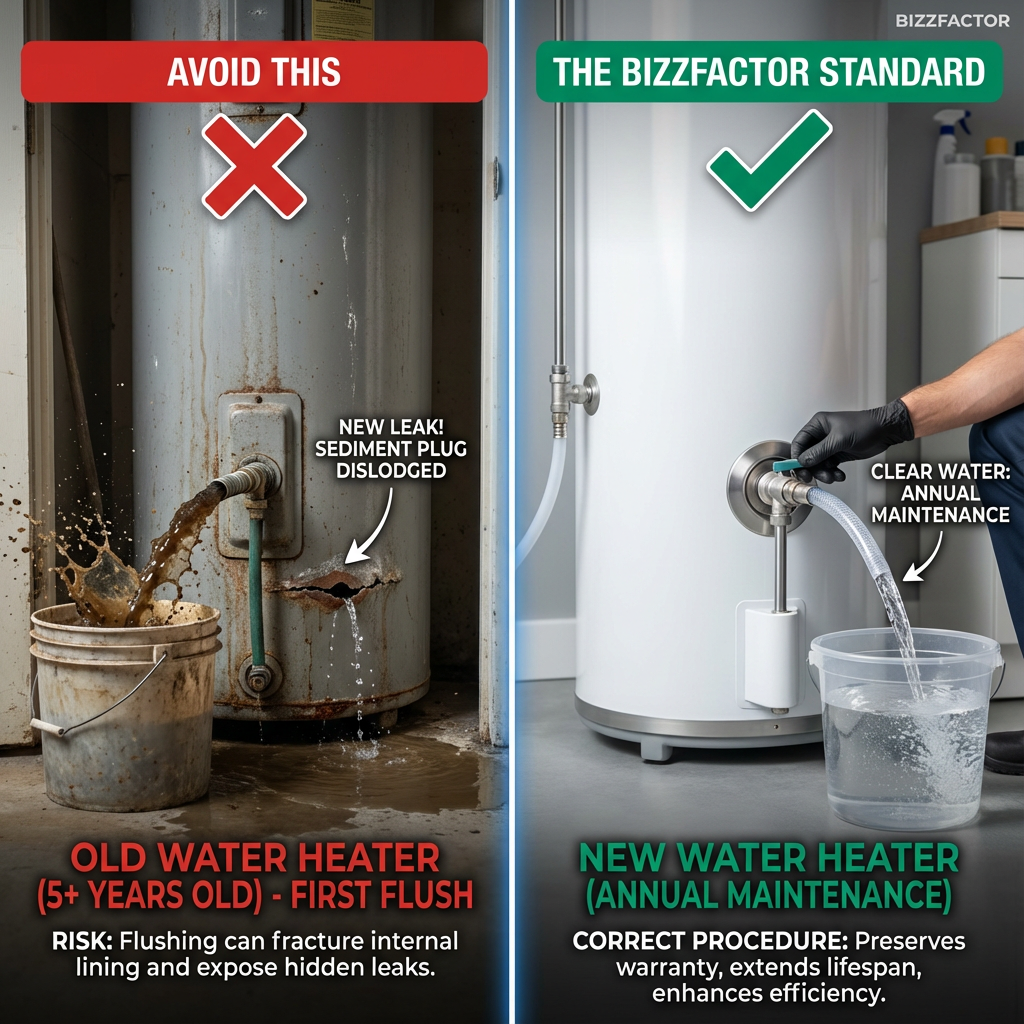
Here's what they don't tell you: if your water heater is over 5 years old and has never been flushed, doing it now might actually cause immediate failure. Not joking.
Over years, sediment (calcium, magnesium, rust, lime) builds up at the bottom of the tank. Sometimes 2-3 inches thick. That layer can actually seal existing pinhole leaks and weak spots in the tank lining — corrosion that's been slowly developing but hasn't broken through yet.
Flush that sediment out suddenly? Those weak spots get exposed to full water pressure again.
Boom. Leaks. Sometimes within hours.
I've seen this exact scenario in older Atlanta homes — homeowner finally decides to "do the right thing" and maintenance their neglected tank, only to have it start dripping (or gushing) the next morning. Now they're facing a $3,000 replacement that could've waited another year or two if they'd just left it alone.
So what do you do? If you've got an older unmaintained unit, call a plumber before you flush it. We can inspect the tank condition, check the anode rod (if it's accessible), and advise whether flushing is safe or if you're better off riding it out until replacement makes sense anyway.
Don't turn a working water heater into an emergency because you followed generic internet advice.
Critical Warranty Exclusions Every Homeowner Must Know
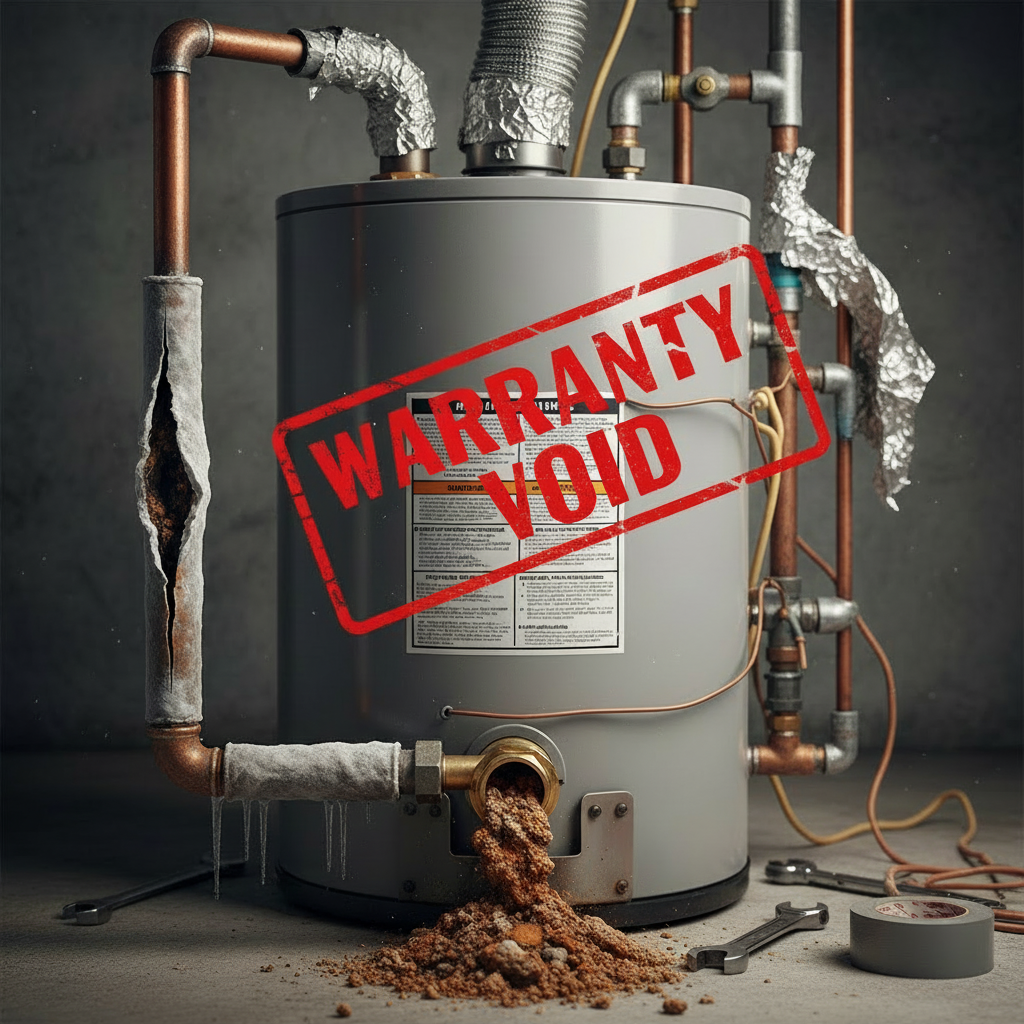
Here's the frustrating part: probably 80% of actual water heater failures get you nowhere with the warranty. The manufacturer won't pay. Won't send parts. Won't even return your call.
Why? Because the fine print lists about seventeen different exclusions, and real-world tank failures almost always hit one of them.
These are the usual suspects that void coverage:
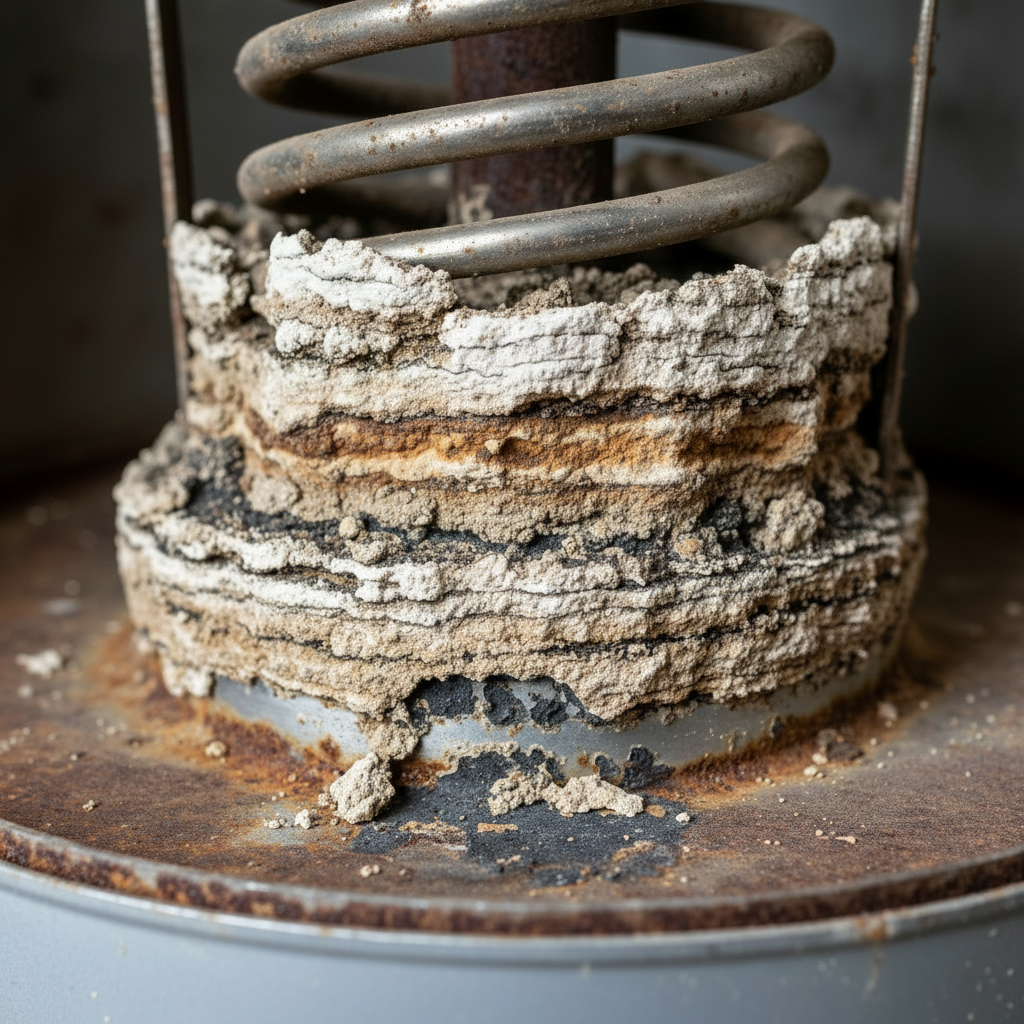
- **Sediment Damage:** Tank failure from sediment buildup you never flushed. Probably the #1 warranty denial reason. Sediment bakes the tank bottom, causes overheating, cracks the glass lining, accelerates corrosion. Manufacturers consider this preventable neglect.
- **Hard Water Corrosion:** Tank damage from mineral-heavy water if you didn't install a water softener or treatment system. Places like Phoenix, Vegas, San Antonio — hard water territory. If you knew you had hard water and did nothing about it, that's on you. For more on this, check out our article on [The Impact of Water Quality on Plumbing Systems](https://www.bizzfactor.com/articles/water-quality-plumbing-systems).
- **Freeze Damage:** Water heater froze in your unheated garage or crawl space? Not covered. Manufacturers expect proper location selection and winterization in cold climates.
- **Electrical Problems:** Fried components from power surges, incorrect voltage, bad wiring, or an undersized breaker. Your electrician's problem, not the manufacturer's.
- **Venting Issues (Gas Units):** Blocked vents, undersized flues, improper draft hoods — these cause combustion problems and carbon monoxide risks. Definitely not covered, and potentially dangerous.
- **Aggressive Water Chemistry:** Extremely low pH (acidic), high chlorine, excessive iron, unusual mineral content — damage from water conditions beyond normal parameters. Unless you treated the water, it's excluded.
- **Improper Installation or Repairs:** Anything not done to code or manufacturer specs. And definitely anything your handy neighbor tried to fix with YouTube videos and borrowed tools.
Real talk — if you skip the annual flush and anode rod check (we've got a detailed [Water Heater Maintenance Checklist](https://www.bizzfactor.com/articles/water-heater-maintenance-checklist) if you want the step-by-step), you can basically kiss that warranty goodbye. The manufacturer will find a way to link any failure back to that neglect. That's the real issue. It's right there in the paperwork you didn't read when they installed it.
Extended Warranty Options: Worth It?
Sometimes yes. Sometimes absolutely not.
Look, I've seen extended warranties save people thousands. I've also seen people pay $400 for coverage they never used on a tank that lasted 15 years without a hiccup.
Here's the thing: here's when they actually make sense:
- Premium tankless units ($2,000+ installation cost)
- High-end tank models with complex features
- Homes with terrible water quality where you know early failure is likely
- Investment properties where emergency replacement costs hurt cash flow
What should decent extended coverage actually include?
**Labor Costs** — This is where standard warranties screw you. Factory coverage might send you a $60 heating element for free, but you're paying $250 for a plumber to install it. Good extended plans cover the labor. That's the part that matters.
**Parts After Year 6 or 7** — When the manufacturer's warranty expires but the tank should still have life left. You want coverage that bridges that gap.
**Emergency Service** — Water heater dies Sunday night before Thanksgiving? Some plans cover after-hours and holiday calls. Worth every penny when you're facing a $400 emergency service charge.
**Prorated Replacement** — If the thing's completely toast, a few plans give you cash toward a new unit instead of throwing good money after bad trying to repair a dying tank.
**Before you buy:** Read the actual contract. Check for deductibles (some are $100+ per claim, which kills the value). Verify they use licensed, insured techs who know local codes. Compare at least 3 options.
Some extended warranties are great. Others are designed to collect premiums and deny claims on technicalities.
Know which you're getting before you pay.
Case Study: How Skipped Maintenance Voided a Warranty (A True Story from Denver)
Our licensed team got a call from a homeowner in
In-Depth Look
Detailed illustration of key concepts
Visual Guide
Infographic illustration for this topic
Side-by-Side Comparison
Visual comparison of options and alternatives
Sources & References
Frequently Asked Questions
Need Professional Help?
Find top-rated plumbing experts in your area