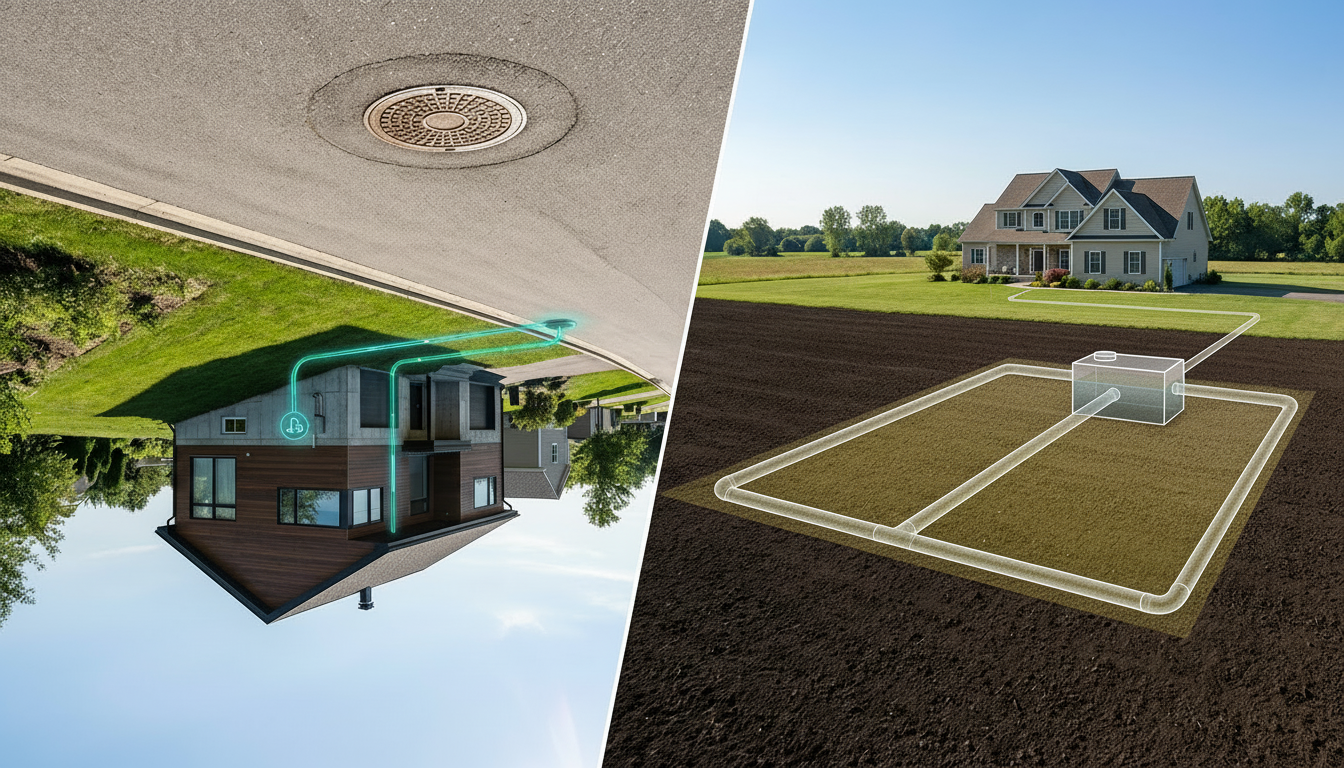
Grinder pump vs. septic system: Discover the 2024 cost guide and expert advice. Learn key factors like property elevation, soil type, and budget to choose the best wastewater solution for your home.
Key Takeaways
Grinder Pump vs Septic System: 2024 Cost Guide & Expert Choice
Last month, a homeowner in Alpharetta called me in a panic. Her brand-new construction sat 12 feet below street level, and the contractor just told her a traditional septic system wouldn't work. Clay soil, bad drainage, and that brutal elevation drop — she was looking at $18,000 for a grinder pump setup. "Why didn't anyone tell me this before I bought the lot?" she asked.
Yeah. That's the conversation nobody wants to have after closing.
Look — choosing between a grinder pump and a septic system isn't really about preference — it's usually about what your property will tolerate. Topography decides. Soil type decides. And sometimes, the city sewer line location makes the whole decision for you before you've even thought about it.
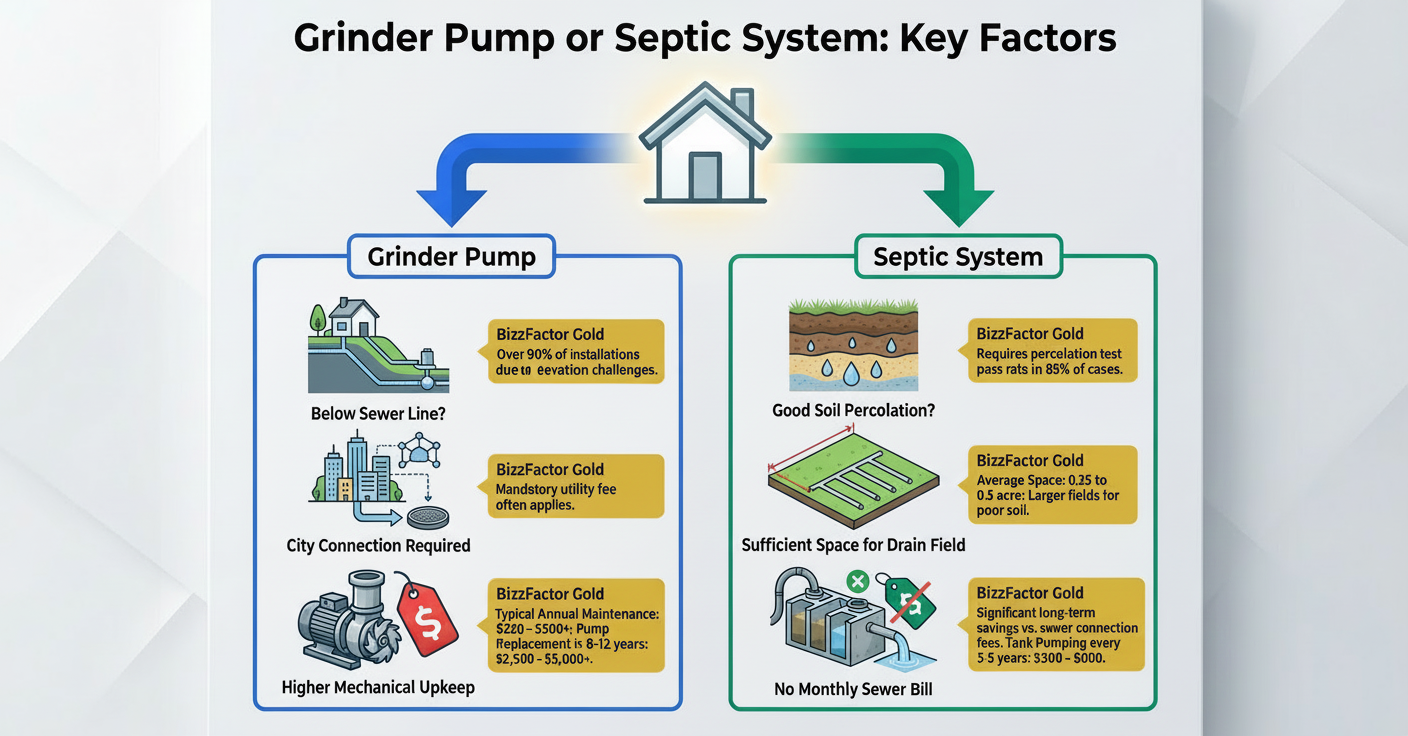
Quick Answer: Grinder Pump vs. Septic System – Key Deciding Factors
**Opt for a Grinder Pump if:**
- Your property sits *below* the city sewer line (even 6-8 feet makes gravity impossible).
- You've got **heavy clay soil** that won't drain — the kind that stays soggy three days after a rainstorm.
- **Limited lot size** means there's physically nowhere to put a 300+ square foot drain field.
**Choose a Septic System if:**
- You've got **land to spare** — at least half an acre with decent, well-draining soil (sandy loam is perfect).
- You're out in the sticks where tapping into municipal sewer would cost $40K+ in connection fees and line extensions.
- You'd rather treat wastewater on-site and avoid the monthly electric draw of a pump running constantly.
Here's what actually matters: if you're more than 10 feet below street level and dealing with questionable soil, a grinder pump's probably your only realistic option. I've seen engineers try to make septic work in those situations — it never ends well. On the flip side, if you've got room to breathe and soil that drains in under 24 hours after heavy rain, septic makes way more sense financially over 20 years.
So what's the mechanical difference? A grinder pump chews up everything that goes down your drains — and I mean *everything* — into a slurry, then forces it uphill through pressure pipes to the city sewer main. No drain field. No soil treatment. Just a direct connection to municipal infrastructure.
Septic's a different animal entirely. Wastewater flows into an underground tank where solids settle, bacteria break down organic matter, and then partially-treated liquid spreads out across a drain field. The soil does the final filtering before water rejoins the groundwater table. It's elegant when it works (and low-maintenance when you're not screwing it up with the wrong household products).
We put in a Liberty ProVore system three years ago for a split-level in Dunwoody — 15 feet below the street, soil test came back as "basically modeling clay." That pump's still running smooth. A septic system there? Forget it. The drain field would've been a permanent swamp.
⚠️ Common Mistake to Avoid: Basin Size over Horsepower
Everyone obsesses over horsepower ratings. "I need a 2HP pump!"
Wrong focus.
Basin size matters way more than motor muscle. A 30-gallon basin paired with a big pump means that motor's cycling on and off every 45 minutes during normal use — that's called short-cycling, and it'll burn out the motor in 6-7 years instead of 15. Your basin needs to match your household's peak flow. Four-bedroom house with teenagers taking back-to-back showers? You want at least a 50-gallon basin to give that pump some breathing room between cycles.
Ask me how I know. (I've replaced way too many motors that died young because someone cheaped out on basin volume.)
Expert Tip: Prolonging Grinder Pump Life While Away
Going on vacation for two weeks?
Before you leave, run 5-6 gallons of clean water through the system. Just fill a bucket, dump it down the toilet, repeat. This flushes out residual waste that'll otherwise harden around the impeller blades while the pump sits idle. When you come back, that pump fires right up instead of straining against crusty buildup.
Simple trick. Saves service calls.
⚠️ Common Mistake to Avoid: Shared Electrical Circuits
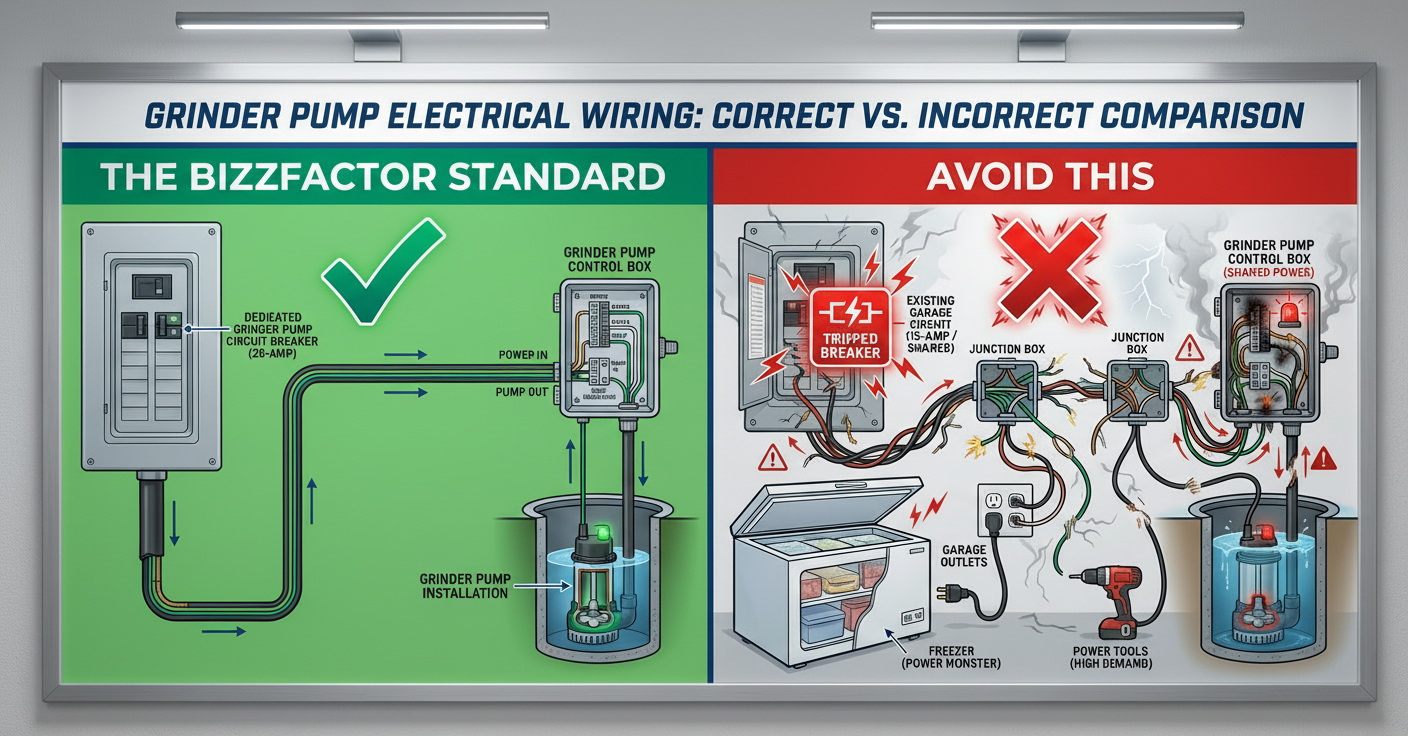
Your grinder pump needs its own **dedicated 20-amp circuit**.
Not shared with the garage. Not piggybacking on the basement outlets. Its own line, straight from the panel, GFCI-protected. I can't tell you how many "pump failure" calls I've gotten where the real problem was a tripped breaker because someone plugged in a space heater on the same circuit. When that breaker pops, sewage backs up into your house within hours.
Don't cheap out here.
Our Pro Recommendation: Myers MWSG20 Series
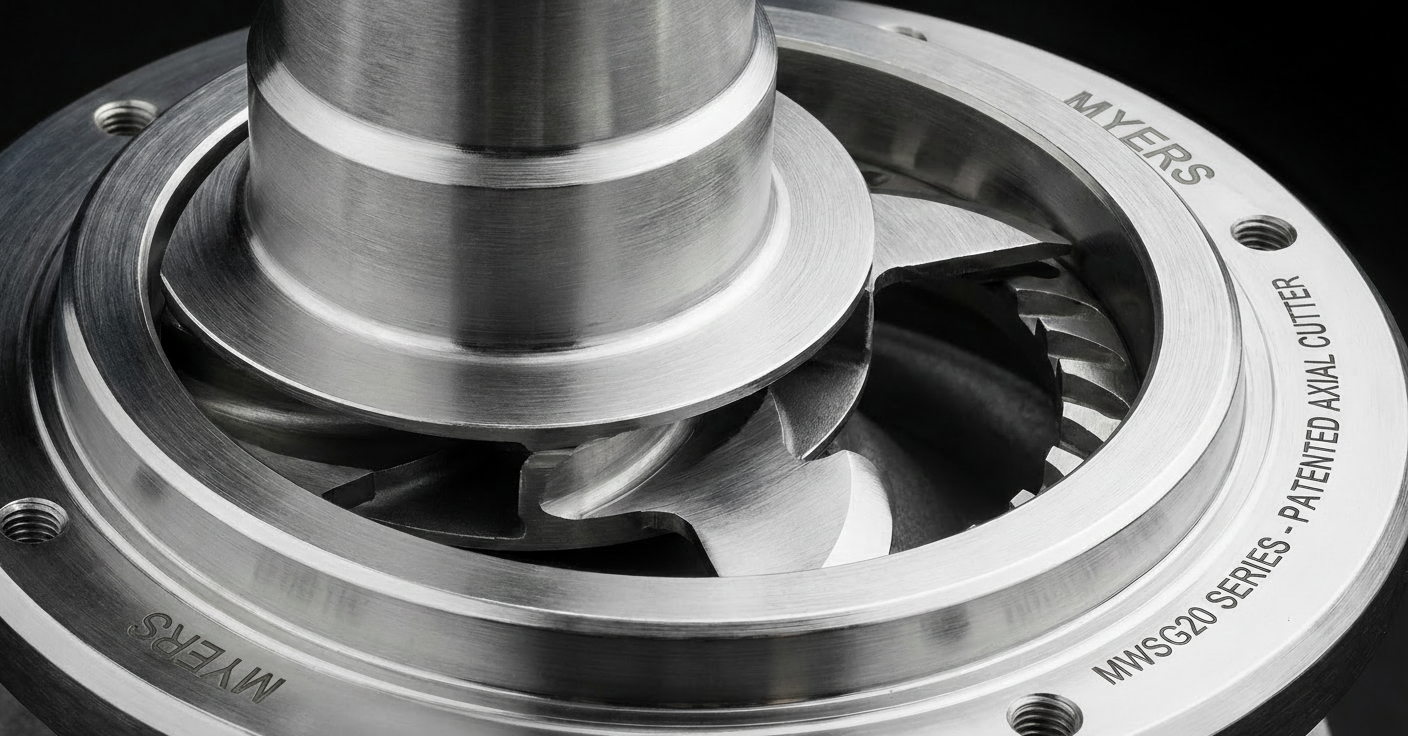
Liberty ProVore gets all the name recognition, and it's solid (we install plenty of them). But if I'm putting one in my own house? Myers MWSG20 every time.
The difference is in the cutter design. Myers uses this patented axial cutter — it's way more aggressive than Liberty's V-Slice system. Those "flushable" wipes that everyone secretly flushes even though they shouldn't? Myers chews through them. Feminine products that slip past? Myers handles it. I've pulled apart failed Liberty pumps that jammed on a hairband — Myers would've shredded it.
Trade-off: Liberty parts are stocked everywhere. Myers requires a bit more hunting. But if clog resistance matters (and it should), Myers wins.
Expert Tip: The Unexpected Benefit of Garbage Disposals
This sounds backwards, but hear me out.
Running your garbage disposal with a high-quality grinder pump (ProVore or Myers-level) actually *helps* the system. Small amounts of organic matter keep those cutter blades active and sharp — it prevents the slurry from getting too stagnant and sludgy in the basin. The grind action from food scraps acts like a self-cleaning mechanism.
Obviously don't dump coffee grounds by the pound down there. But normal disposal use? It's beneficial. Counter-intuitive, I know.
⚠️ Common Mistake to Avoid: The "Flushable" Wipe Deception
Let's talk about the number-one killer of residential grinder pumps: those damn wipes.
"Flushable" is a marketing lie. Those things don't break down — they form stringy ropes that wrap around cutter blades, stall motors, and cause $1,200 service calls. I've pulled wad after wad of them from jammed pumps. They look intact after sitting in sewage for weeks.
Toilet paper and human waste. That's it. Everything else is risking a breakdown at the worst possible time (which is always a holiday weekend, somehow).
Our Pro Recommendation: E/One (Environment One) Extreme D-Series
Want the absolute tank of grinder pumps? E/One Extreme D-Series.
This thing uses a progressive cavity pump design — same technology they use in industrial wastewater plants. It's basically impossible to jam. I'm talking about a pump that'll handle things that would destroy a standard grinder in minutes. The initial cost stings (usually $3K-$4K more than Liberty), but if you're in a high-use situation or you've got questionable habits (big family, rental property, people who ignore the "no wipes" rule), that reliability pays for itself.
We installed one for a B&B in Helen. Five guest bathrooms, constant turnover, zero control over what people flush. Three years in, zero service calls. That's the value.
Expert Tip: Optimizing Septic Pumping Schedules
If you've got a septic system, stop blindly pumping every three years just because that's what your neighbor does.
Schedule an actual inspection (usually $150-200) where they measure your sludge and scum layers. You might find out you're at 30% capacity and can safely wait another 2-3 years. That's the real issue. Or you might discover you're at 80% and about to have a drain field disaster. Pumping costs $400-600 — doing it too often wastes money *and* disrupts the beneficial bacterial colony that's actually treating your waste.
Most households can stretch it to 5-7 years if they're not abusing the system. Get the measurements, then decide.
⚠️ Common Mistake to Avoid: Relying Solely on the Built-in Alarm
Every grinder pump has an alarm. And every homeowner thinks that alarm will save them.
It won't.
Float switches fail. And here's the killer mistake some installers make — they power the alarm *on the same circuit as the pump*. So when that breaker trips (which it will eventually), both the pump and the warning system go dark simultaneously. You'll have sewage backing up into your basement before you realize anything's wrong.
Install a secondary monitoring system. Wi-Fi-connected models run $200-300, cellular dialers around $400. Put it on a *completely separate circuit*. That redundancy is the difference between "minor inconvenience" and "call ServPro for sewage remediation."
Expert Tip: The Silent Killer – High-Sudsing Detergents
Grease gets all the attention, but high-sudsing laundry detergent quietly destroys grinder pumps.
Here's the thing: excessive foam tricks the float switches — the pump thinks the basin's full when it's actually just bubbles, so it runs dry or cycles constantly. The motor overheats, life expectancy drops by years. Switch to HE (high-efficiency) low-sudsing detergents, preferably biodegradable ones. We've diagnosed this issue dozens of times — people replace pumps when all they needed to do was change detergent brands.
⚠️ Common Mistake to Avoid: Ignoring the Discharge Line's Depth
In climates where it actually freezes (anywhere north of Atlanta, basically), a shallow discharge line is a disaster waiting to happen.
That line freezes solid. The pump tries to push against ice blockage. Back-pressure roasts the motor within hours. I've seen $4,000 pump replacements because the installer buried the line 18 inches down in a zone-6 climate where frost goes to 30 inches.
Your discharge line needs to be **below the frost line** for your region. Non-negotiable. Ask for the burial depth in writing before installation.
Our Pro Recommendation: Zoeller Shark 840/841/842 Series for Serviceability
Myers cuts aggressively. Liberty's reliable. E/One's indestructible.
But Zoeller Shark 840/841/842 is what I'd actually buy if I'm thinking about the next 20 years.
Now, the radial cutter design isn't as aggressive as Myers with fibrous materials (it'll struggle with a wad of floss). But that cast-iron housing? Legendary durability. And here's what really matters — **every plumbing supply house in North America stocks Zoeller parts**. When something breaks (and something always eventually breaks), you're not waiting four days for a specialty part from a regional distributor. Your local guy has it on the shelf that morning.
Downtime is the real enemy with sewage systems. Zoeller minimizes that.
Expert Tip: Natural Cleaning for Grinder Pump Impellers
Skip the "pump-safe" chemical cleaners ($18 a bottle, mostly marketing).
Once a month, dump a tray of ice cubes down the toilet. The tumbling ice scrubs sludge and grease buildup off the impeller blades and basin walls as it melts — it's mechanical cleaning without harsh chemicals. Old plumber's trick that actually works.
Expert Tip: The Gentle Scrub – A Single Paper Towel
This contradicts the "nothing but toilet paper" rule, but context matters.
*Occasionally* — like once every 4-6 weeks — flushing a single paper towel (not a wipe, an actual paper towel) can help. The mild abrasive action scours soft solids and grease film from the impeller without the clogging risk of "flushable" wipes. One towel. Not a roll. Just enough texture to clean without jamming.
Use judgment. If your pump's already struggling, don't try this.
⚠️ Common Mistake to Avoid: Improper Venting for Odor and Pressure Control
Half the grinder pump installs I've seen have a 12-inch vent pipe sticking out of the ground next to the house.
That's wrong.
Sewer gas vents directly into your yard at nose height. It smells like... well, like sewage. The vent line needs to run up *past your roofline*, just like your main plumbing stack does. This prevents odors, allows proper system breathing, and avoids pressure locks that disrupt flow and strain the pump.
I've fixed this on probably 30+ houses where people thought they had a "mystery smell" problem. It was just laziness during installation.
Expert Tip: Boosting Septic System Bacteria
Septic purists will tell you to add nothing but waste to your tank — and they're mostly right.
So — but if you're heavy on antibacterial cleaners, or you've got a full house that's stressing the system, that bacterial colony can get depleted. Every three months, dissolve a packet of active dry yeast (the bread-making kind, $2 at any grocery store) in warm water and flush it. It repopulates beneficial bacteria, improves waste breakdown, and helps control solids.
It's not necessary for everyone. But if your last pumping showed higher-than-expected solids, this cheap trick helps.
What's a Grinder Pump and How Does It Work?
A grinder pump's basically a heavy-duty garbage disposal for your entire house's wastewater — installed in a sealed basin buried at your property's lowest point.
Here's the process:
Everything that goes down any drain flows by gravity into that basin. Toilets, showers, washing machines, kitchen sink. When the wastewater level hits a certain point (usually around 30 gallons), a float switch triggers the pump. Sharp rotating blades spin up and shred everything — toilet paper, solid waste, whatever made it down there — into a liquified slurry.
Then the real work happens.
A high-pressure pump (usually 2HP in residential applications) forces that slurry through a small-diameter discharge pipe, uphill if necessary, to the municipal sewer main. These pumps can lift sewage 40+ feet vertically and push it hundreds of feet horizontally. The city sewer system takes it from there.
Look — the whole setup runs on a dedicated 20-amp circuit with GFCI protection. Most basins hold 30-50 gallons before triggering a pump cycle. There's an alarm system (hopefully redundant, if your installer knew what they were doing) that alerts you if the basin fills too high or the pump fails.
Code requirements are strict — International Plumbing Code covers installation standards, including proper venting, electrical separation, and alarm functionality.
With proper maintenance (annual pro inspections, reasonable usage habits, nothing stupid going down the drains), these systems last 15-20 years. I've seen well-maintained units hit 22 years before needing replacement. I've also seen abused systems fail in under eight.
What's a Traditional Septic System and How Does It Work?
A septic system treats wastewater right there on your property using natural biological processes. No grinding. No electric pumps (usually). Just gravity, bacteria, and soil doing what they've done for thousands of years.
**Here's the flow:**
Wastewater leaves your house and flows into a large underground septic tank (1,000-1,500 gallons for most homes). Inside that tank, physics takes over — heavy solids sink to the bottom forming sludge, lighter materials (grease, oils, stuff that floats) rise to form a scum layer on top. The middle liquid layer is partially-treated effluent.
Anaerobic bacteria living in that oxygen-free environment break down the organic matter. This isn't instant — it takes time, which is why tank size matters for your household occupancy.
An effluent filter at the outlet prevents solid particles from escaping into the drain field (this filter needs cleaning every 3-5 years, and everyone forgets about it until there's a problem).
From the tank, liquid effluent flows to a distribution box — basically a junction that splits the flow evenly into multiple drain field lines. Those perforated pipes buried in gravel-filled trenches spread the effluent across your drain field.
This is where the magic happens: as that liquid percolates down through layers of gravel and soil, the soil acts as a biological filter. Harmful bacteria get trapped and die. Remaining organic compounds break down. By the time that water reaches groundwater depth (usually 4-6 feet down), it's been naturally purified.
The whole system needs soil that drains properly — percolation tests during permitting determine if your soil can handle it. Clay soil fails. Rocky soil fails. Sandy loam and similar soils pass beautifully.
Maintenance is minimal but critical: pump the tank every 5-7 years (based on actual sludge measurements, not arbitrary schedules), keep grease and harsh chemicals out of your drains, and never drive heavy equipment over the drain field.
That's it. No electricity. No moving parts. Just bacteria and dirt doing their thing for decades.
In-Depth Look
Detailed illustration of key concepts
Visual Guide
Infographic illustration for this topic
Side-by-Side Comparison
Visual comparison of options and alternatives
Frequently Asked Questions
Need Professional Help?
Find top-rated septic services experts in your area