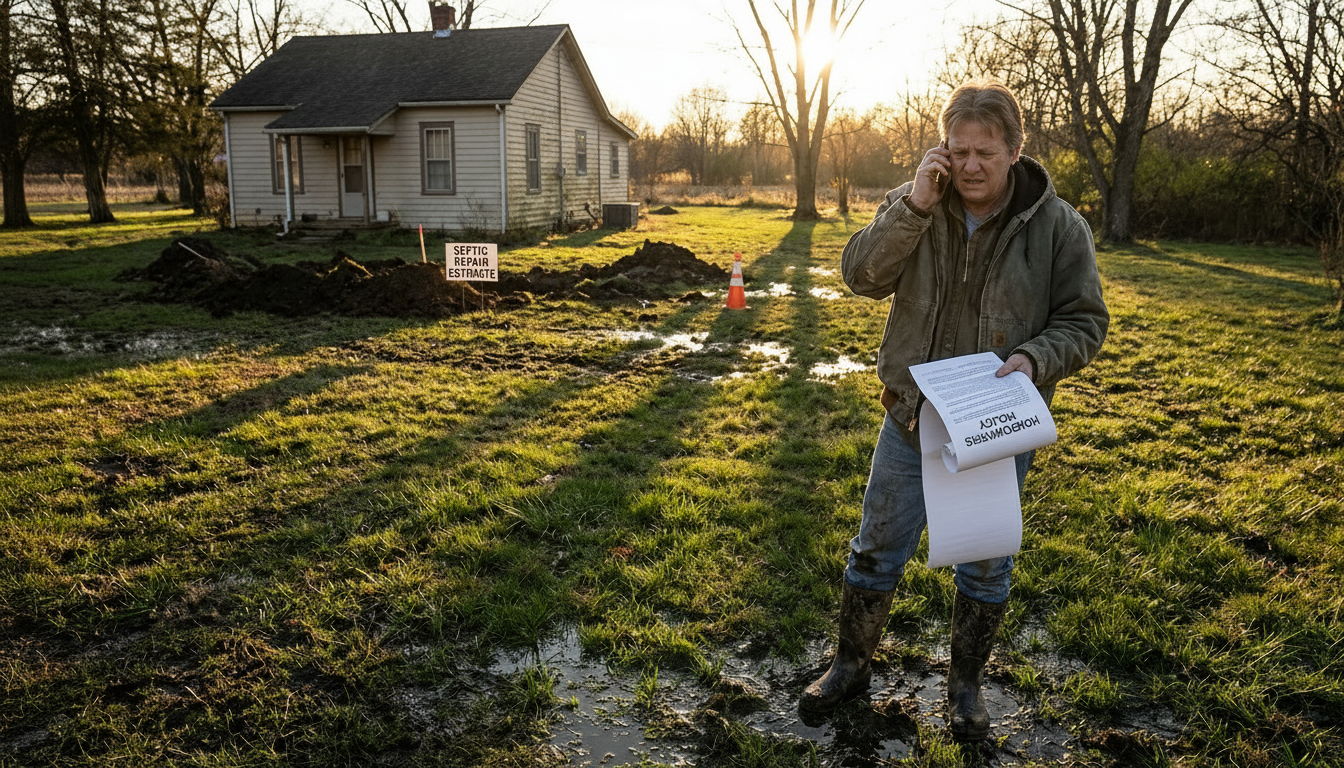
Most homeowners insurance excludes septic tanks. Our pros explain what's actually covered, smart alternatives, and how to avoid costly repair surprises.
Key Takeaways
Septic Tank Insurance: What Homeowners Need To Know About Coverage & Exclusions
Experiencing a septic system malfunction can be one of the most daunting and expensive aspects of owning a home. Many homeowners instinctively turn to their insurance policy, anticipating financial relief. However, the reality often comes as a surprise: standard homeowners insurance policies typically offer very limited coverage for septic tank repairs or replacements.
This comprehensive guide will illuminate the complexities of **septic tank insurance coverage**, detail common exclusions, and provide actionable strategies to protect your investment. You'll learn:
- When your homeowners insurance *might* cover septic issues
- Specialized options like service line coverage
- The role of home warranties in septic system protection
Ensuring you're prepared long before a problem arises, safeguarding your peace of mind and financial well-being.
Does Homeowners Insurance Cover Septic Systems?
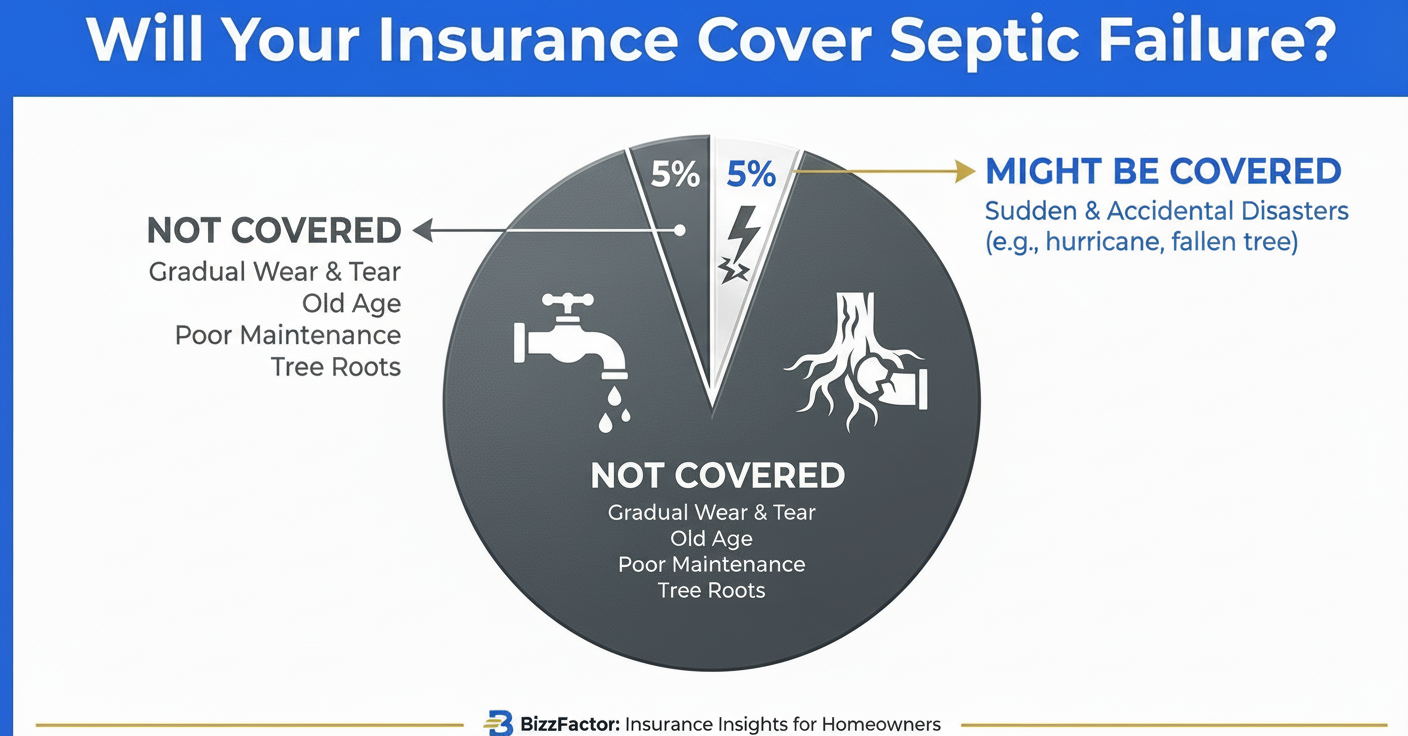
Generally, no. Standard homeowners insurance policies are designed to protect against sudden and accidental damage stemming from specific "named perils," such as fire, theft, or certain natural disasters. Failures in septic systems, which frequently result from normal wear and tear, insufficient maintenance, or gradual degradation, usually fall outside this protective scope. This means common issues like a collapsed drain field, a failing pump, or pipe corrosion due to age are rarely covered by a typical homeowner's policy.
**Key Takeaway:** Never assume your general homeowners policy will cover septic issues. Understanding these limitations *before* a problem arises is critical for adequate preparedness. Discover more about managing your home's vital systems in our guide to [Home Maintenance Essentials](/blog/home-maintenance-essentials).
When Your Homeowners Policy *Might* Offer Limited Septic Coverage
While uncommon, certain severe scenarios might trigger limited relief from a standard policy. This coverage typically hinges on the damage being caused by a "covered peril" explicitly listed in your policy. For example:
- **Sudden & Accidental Damage (e.g., Falling Objects):** If a tree falls directly onto your septic tank during a storm, crushing it, the repair might be covered under perils like windstorm or falling objects. For more on property damage, see our guide on [Understanding Property Damage Claims](/blog/understanding-property-damage-claims).
- **Vehicle Impact:** Should a vehicle accidentally drive over and damage components of your septic system, coverage might apply under specific circumstances. This is often considered accidental damage, particularly if it involves an insured vehicle and the incident was unforeseen.
Nevertheless, these are exceptional cases. The vast majority of septic system failures—such as those caused by pipe corrosion, drain field collapse due to soil saturation, or root intrusion—are classified as maintenance issues or gradual damage and are almost universally excluded from standard coverage.
What Standard Homeowners Policies Typically Exclude for Septic Systems:
Homeowners insurance policies are very clear about their exclusions. For septic systems, common exclusions include:
- **Wear and Tear:** The natural, gradual deterioration of system components over time due to age and normal use. This is a primary reason why routine issues aren't covered.
- **Lack of Maintenance:** Failure to regularly pump the tank or address minor issues. For strategies to prevent such issues, refer to our comprehensive [Septic System Maintenance Guide](/blog/septic-system-maintenance-guide).
- **Root Intrusion:** Damage caused by tree roots slowly penetrating and disrupting pipes or the tank. This is often deemed a preventable maintenance issue.
- **Settling, Shifting, or Expansion:** Damage resulting from ground movement that is not a sudden, catastrophically covered event like an earthquake (which typically requires separate coverage). This also includes general ground conditions affecting the drain field.
- **Defective Construction/Workmanship:** Problems originating from improper installation or faulty materials, which are typically the responsibility of the builder, installer, or covered under a warranty.
- **Flooding from External Sources:** While water backup *from your septic system* might be covered by an endorsement, general flooding from rivers, heavy rainfall, or rising groundwater overwhelming the drain field is typically excluded. This necessitates a separate [Flood Insurance Policy](/blog/understanding-flood-insurance).
Specialized Septic Coverage Options: A Deeper Look
Some insurance providers offer specific endorsements or separate policies that can extend protection to your septic system components or related damage. These typically fall into distinct categories:
1. Water Backup and Sump Pump Overflow Coverage
This endorsement, frequently added to a standard homeowners policy, can be highly beneficial. Its primary function is to cover damage caused by water backing up through sewers or drains or overflowing from a sump pump. Significantly, this *can* extend to damage inside your home resulting from sewage backing up from your septic system.
**Important Note:** This coverage usually compensates for the *damage within your home* (e.g., ruined flooring, furniture) directly caused by the backup, not for the repair or replacement of the septic system itself that initiated the backup. Consult your policy for precise details on limits and exclusions regarding septic tank backup within the home.
2. Service Line Coverage
Often misunderstood as direct septic system coverage, service line coverage protects the underground utility lines (such as water, sewer, power, and communication lines) extending from your property boundary to your house. While some modern service line policies might include a segment of your septic system's outgoing line, scrutinizing the fine print is paramount.
**Verify:** It is crucial to confirm that the policy explicitly covers the integral components of your septic system (e.g., the tank, distribution box, and drain field) rather than just the main sewer line originating from your dwelling. This coverage typically applies to breaks, leaks, tears, ruptures, or collapse of service lines impacting your septic tank or lines leading to it. This can be a valuable add-on for underground pipe issues. For more details on utility lines, see our article on [Understanding Your Home's Utility Connections](/blog/understanding-home-utility-connections).
What About Home Warranties for Septic Systems?
Home warranties are distinct from insurance policies; they are service contracts. They cover the repair or replacement of specified home systems and appliances that fail due to normal wear and tear. Some home warranties *do* offer optional add-on coverage for septic systems.
**Caveats to Consider:**
- **Extensive Exclusions:** Warranties often feature extensive lists of exclusions, including pre-existing conditions, lack of routine maintenance, or damage from external forces. They are not a substitute for proper system care.
- **Payout Caps:** There are typically financial limits on what they will cover for repairs or replacements, which may not fully cover a major septic system overhaul. For deep insights into costs, refer to our guide on [Septic System Replacement Costs](/blog/septic-system-replacement-costs).
- **Authorized Contractors:** You may be required to use contractors from their pre-approved network, limiting your choice of service provider.
- **Deductibles/Service Fees:** You will almost always pay a service fee each time a claim is made.
Always rigorously examine the warranty contract, paying close attention to covered items, exclusions, service fees, and reimbursement limits. For guidance on selecting qualified professionals, explore our article on [Hiring a Septic Service Professional](/blog/hiring-a-septic-service-professional).
Proactive Steps: Review Your Policy and Protect Your Septic Investment
1. **Examine the "Exclusions" Section Thoroughly:** This section is the most critical part of your policy for understanding what is not covered. Look for specific terms like "wear and tear," "settling," "faulty workmanship," and any explicit mentions regarding subsurface drainage or septic systems.
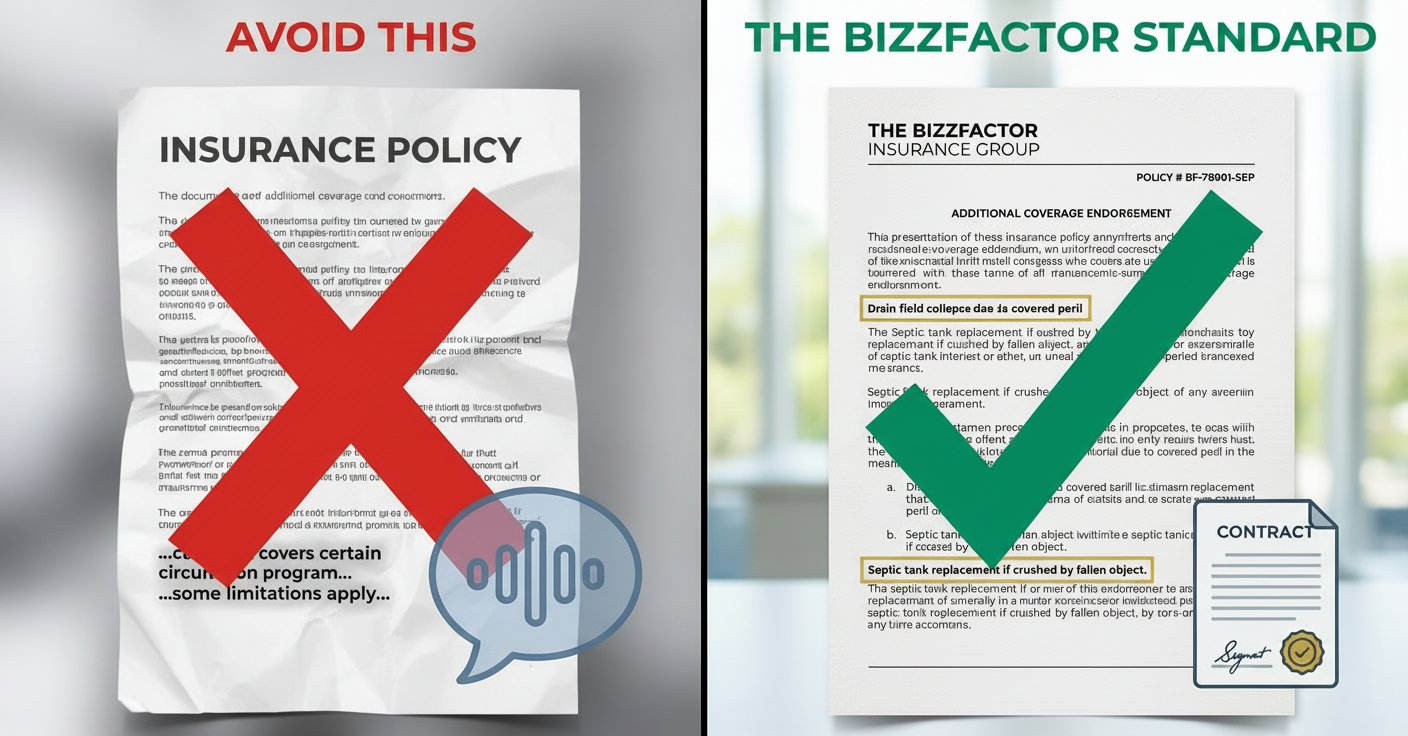
2. **Engage Directly with Your Insurance Agent:** Have a thorough conversation and ask pointed questions about septic system coverage. Avoid relying on general statements. Request that they identify the exact clauses in your policy that address septic tanks, drain fields, and sewage backups, and ask for this information in writing. Document these discussions.
3. **Document All Modifications and Endorsements:** If you purchase any riders, endorsements, or specialized coverages, ensure they are clearly documented within your official policy papers. Verbal assurances lack legal enforceability.
4. **Prioritize Preventative Maintenance:** This remains the most effective strategy to avert costly septic failures. Regular pumping (typically every 3-5 years, depending on household usage), avoiding harsh chemicals, and being diligent about what enters your drains are fundamental practices. Delve deeper into effective septic care with our article, [The Ultimate Guide to Septic System Care](/blog/the-ultimate-the-ultimate-guide-to-septic-system-care).
5. **Establish an Emergency Fund:** Given the inherent limitations of insurance, creating a dedicated savings fund specifically for potential septic repairs is a prudent financial move. Even modest monthly contributions can build a significant financial buffer over time, safeguarding against unexpected costs. Consider this your personal "septic insurance policy."
The Real Talk: Prepare for the Inevitable
Septic systems are not "install and forget" utilities. They are intricate, underground wastewater treatment facilities demanding ongoing care and attention. Eventually, components will degrade, and repairs or even complete replacements will become necessary. Understanding the lifespan of your septic components, such as highlighted in our guide on [How Long Do Septic Tanks Last?](/blog/how-long-do-septic-tanks-last), is crucial for planning.
Instead of solely relying on the slim chances of comprehensive insurance coverage, shift your focus towards rigorous proactive maintenance and robust financial preparedness. This balanced approach will significantly reduce stress and minimize expenses in the long term, ensuring the longevity and efficient operation of your septic system and your peace of mind.
In-Depth Look
Detailed illustration of key concepts

Visual Guide
Infographic illustration for this topic
Side-by-Side Comparison
Visual comparison of options and alternatives
Sources & References
- Does Homeowners Insurance Cover Septic Tanks? - Bankrate
- Are Septic Systems Covered by Homeowners Insurance?
- Homes With Septic Tanks: What You Need to Know - Allstate
- Essential Tips and Best Practices for Septic Tank Maintenance
- How do septic tank and septic tank insurance work?
- Building Codes, Standards, and Regulations: Frequently Asked ...
- Building Codes and Standards - 101 Guide | ROCKWOOL Blog
- [PDF] Building Codes Toolkit for Homeowners and Occupants - FEMA
- How Building Codes Work in the US - by Brian Potter
- [PDF] Introduction to Model Codes
Frequently Asked Questions
Need Professional Help?
Find top-rated septic services experts in your area