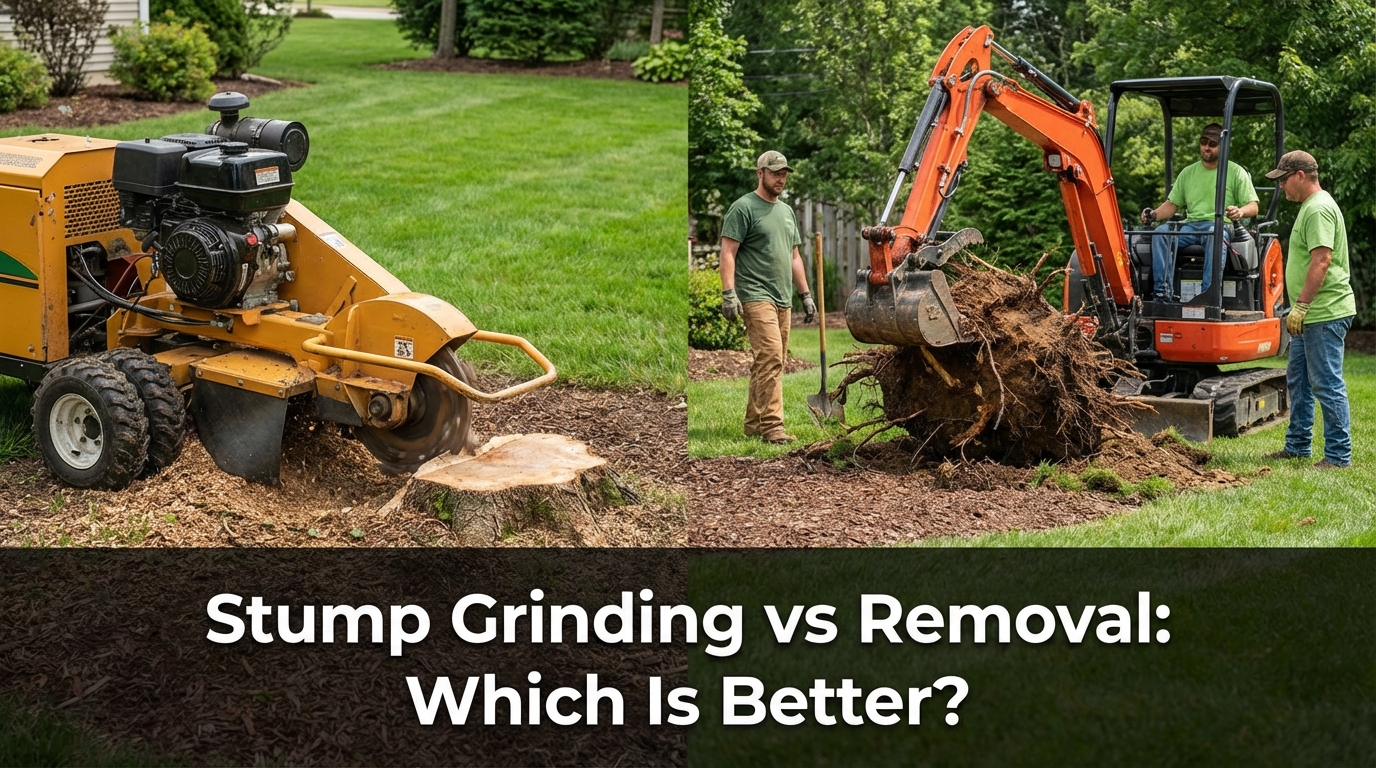
Expert comparison of stump grinding vs removal costs, timelines & results. Get professional advice on choosing the best method for your property needs.
Key Takeaways
- **Speed matters:** It's heavily machine-driven, turning solid stumps into usable chips fast. Modern grinders have automatic controls that prevent stalling mid-job.
- **Time commitment:** Most residential projects (even multiple stumps) wrap up within a single day. We're talking 2-4 hours per stump in typical conditions. Minimal disruption to your daily routine.
- **What you get:** A substantial pile of wood chips. You can use these as mulch or compost once they've aged properly (more on that later — don't rush it).
- **The wallet factor:** Grinding runs about 50-70% cheaper than complete removal. For most homeowners, that's the deciding factor right there.
- **Immediate payoff:** Tripping hazards? Gone. Eyesore in the yard? History. Makes things look good, fast.
Key Takeaways
Stump Grinding vs. Removal: The Definitive Homeowner's Guide to Choosing the Best Solution for Your Property
Last month, a guy in Buckhead paid $2,800 to fix damage from a decision he made three years earlier. He'd ground down a massive silver maple, planted a deck right over the spot, and then watched his $15,000 investment buckle as the roots decomposed and settled.
That's why this choice matters.
Look — look — you've got two main players in the game: professional **stump grinding** and complete **stump removal**. They solve the same problem — what to do with that ugly tree stump — but in totally different ways. Cost, mess, long-term consequences? All different. The BizzFactor team has been dealing with stubborn stumps since 2008, and we've learned the hard way which method works for what situation. Here's how each approach actually plays out in your yard, what they'll cost you, and when one makes way more sense than the other. Real scenarios, real numbers, zero BS.
Stump Grinding vs. Complete Stump Removal: Unpacking the Critical Distinctions
Okay, so grinding's pretty straightforward.
You bring in a machine that looks like an oversized lawnmower from hell. It's got a rotating disc with carbide teeth — think chainsaw teeth on steroids — that chews through wood like it's nothing. **Stump grinding** pulverizes the visible portion of the stump, along with its main root crown, usually to a depth of 6 to 12 inches below grade (sometimes deeper if you're paying extra or the operator's feeling generous). The grinder chews through the wood, turning it into a pile of chips you can actually use later. What's left behind? The vast majority of the underground root system, which is then left to naturally decompose over time. It's faster, way less invasive, and honestly? Usually runs about half the cost of removal. Works great when you just need that stump gone from sight and want to avoid turning your yard into a construction zone.
Now removal? That's a different animal entirely.
You're basically doing tree surgery in reverse — excavating the entire stump structure from the ground. The central taproot (when there's one), the expansive root ball, those sneaky lateral roots that spread 20 feet in every direction — all of it comes out. You need excavators, skid steers with root grapples, sometimes a crew of three guys and half a day of work. Depends on the size and species. And yeah, you're left with a crater that looks like a meteorite hit your yard. That's the real issue. That hole needs backfilling, soil amendment, compaction, maybe even imported topsoil if you want grass to grow there again. It's more time, more labor, more money (usually 2-3x the cost of grinding). But you get one thing grinding can't deliver: absolute permanence. There's zero chance of regrowth. Ever. This is the definitive solution when you need a pristine, root-free area.
Here's how we think about it at BizzFactor: grind when you need quick results, safety improvements, or you're working within a tight budget. Go for complete removal when future construction is happening, when regrowth would be a nightmare, or when you absolutely need that ground totally clear. That's the real issue. For a deeper dive into maintaining the health and vigor of your trees, our comprehensive [guide on tree care services](https://www.bizzfactor.com/tree-care-services) offers invaluable information.
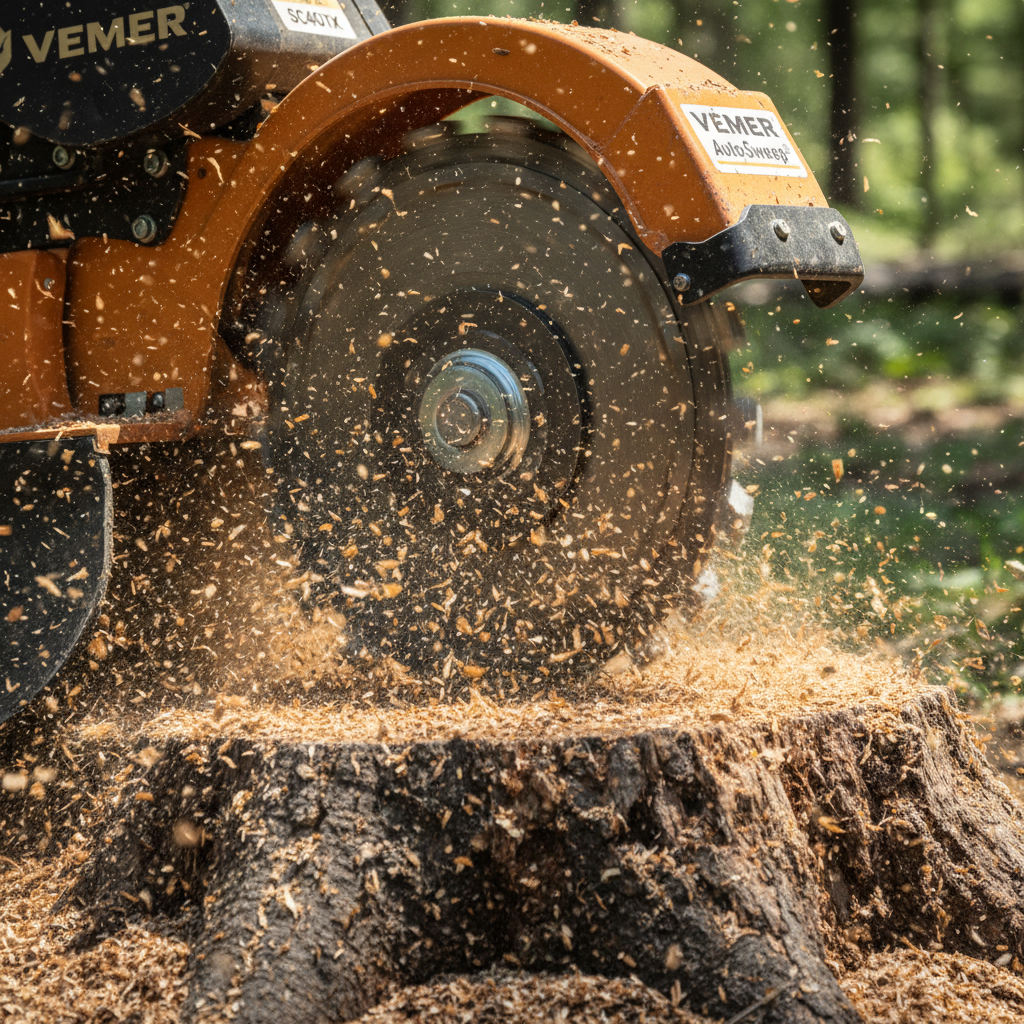
I've been running equipment in the home services world since 2008 — mostly with those big Vermeer grinders like the SC60TX. Man, those things just eat stumps. They've got hydraulic systems ranging from 35 to 75 horsepower (depending on what you're paying for), and they'll turn a 24-inch stump into sawdust in maybe 90 minutes to 3 hours. Depends on the wood.
Here's the thing: here's the thing: but here's what the sales brochures don't tell you: those roots underground? Still alive. Maples, poplars — they'll send up new shoots like nobody's business. One time in Fayetteville, I saw a homeowner who went the grinding route on a massive sweetgum. Six months later, his yard looked like an angry hedgehog – dozens of suckers everywhere. We ended up doing the full removal.
Full removal means heavy equipment and a crew that knows what they're doing. You'll need excavators with root rakes or buckets to systematically unearth the entire root mass — and I mean *entire*. Seriously. It's messier, tears up more of the surrounding area (expect some collateral lawn damage), and costs more. But it delivers an unequivocal, definitive resolution with zero future sprouting concerns. It's truly a final answer.
Stump Grinding: A Rapid, Efficient, and Economical Surface Solution
We did a job in Ballantyne (south Charlotte) a few months back — 12 black walnut stumps, all pretty big. Brought in the Vermeer SC382 with the AutoSweep system (automatically adjusts cutting speed so the machine doesn't bog down mid-grind). Finished all 12 in two afternoons. That's what modern equipment can do.
**Why grinding usually makes the most sense:**
- **Speed matters:** It's heavily machine-driven, turning solid stumps into usable chips fast. Modern grinders have automatic controls that prevent stalling mid-job.
- **Time commitment:** Most residential projects (even multiple stumps) wrap up within a single day. We're talking 2-4 hours per stump in typical conditions. Minimal disruption to your daily routine.
- **What you get:** A substantial pile of wood chips. You can use these as mulch or compost once they've aged properly (more on that later — don't rush it).
- **The wallet factor:** Grinding runs about 50-70% cheaper than complete removal. For most homeowners, that's the deciding factor right there.
- **Immediate payoff:** Tripping hazards? Gone. Eyesore in the yard? History. Makes things look good, fast.
So yeah, grinding gets rid of what you can see. What you can't see — that's where it gets tricky. Those roots are still down there, still alive in a lot of cases. Oaks, maples, sycamores? They'll shoot out new growth from buds you didn't even know existed. Sometimes 18 months after grinding. Depends on the species, how deep you ground, how wet the soil is.
Real talk — grinding's your best bet when you need fast, visible results without major yard surgery. Safety hazards gone, curb appeal improved, and you're not dropping $1,500+ on excavation work. We follow TCIA safety standards on every job (we're licensed and insured, which honestly should be baseline for anyone touching your property). Curious about local tree service mandates? Our [Tree Service Regulations post](https://www.bizzfactor.com/tree-service-regulations-your-guide) provides an excellent overview.
Complete Stump Removal: The Permanent and Comprehensive Elimination Solution
Here's what removal actually looks like in practice.
You're excavating the taproot (when there's one — not all trees have them), the lateral roots spreading 15-30 feet underground, every chunk of woody material bigger than your forearm. Nothing stays behind. This guarantees that tree won't send up new shoots next spring or five years down the road. It's the only approach that truly prepares a site for new construction, major hardscaping work (think patios or driveways), or planting new trees right in that same spot.
Just last spring, we got called to a property in the historic district of Asheville. Some previous contractor had just ground down several callery pear stumps and called it done. Problem? Those pears are aggressive as hell. Within eight months, the homeowner had dozens of new shoots erupting everywhere — through the lawn, between walkway pavers, even cracking through a newly paved path. She'd been fighting them with loppers and herbicide for months before finally giving up and calling us for complete removal. Cost her probably $1,800 more than if she'd done it right the first time. But the peace of mind? Priceless.
**When you really need complete removal:**
- **Construction projects:** Can't lay a foundation, install a pool, or build retaining walls with massive roots underneath. They'll mess up your structure every time. No contractor wants to discover a 3-foot taproot halfway through excavation.
- **Aggressive sprouting trees:** Sycamore, willow, black locust, silver maples, tree of heaven — these guys will come back with a vengeance if you only grind. Complete removal is the only real solution. Trust me on this.
- **Major landscaping plans:** Clearing everything out eliminates underground competition. Essential for new tree plantings, elaborate garden designs, turf installation, or putting in irrigation systems. Your new plants won't be fighting old roots for nutrients.
- **Disease control:** If you removed a tree because of oak wilt, Dutch elm disease, or emerald ash borer infestation, those pathogens can survive in the root system. Removing everything prevents spread to healthy trees nearby. It's basically preventative medicine for your yard.
Here's the reality nobody mentions in the estimates: complete removal takes longer and costs more because you're literally undoing years of root growth. Figure 4-8 hours per stump just for excavation — sometimes more if you hit clay soil or the tree's been there 40+ years. Then you've got backfilling, compaction, site grading, hauling debris. The Dingo or excavator tears up surrounding lawn (can't really avoid it). You'll probably need topsoil brought in.
But you get permanent resolution. That tree won't haunt you again.
⚠️ Critical Mulch Mistake to Avoid
People see that pile of fresh wood chips and think, "Free mulch!"
Don't do it.
Those chips — especially from hardwoods like oak, maple, or hickory — have a crazy high carbon-to-nitrogen ratio. When you spread them around plants, soil microbes go into overdrive trying to break down all that carbon. That's the real issue. Problem is, they steal nitrogen from the surrounding soil to fuel the decomposition process. Your plants end up nitrogen-starved. You'll see yellowing leaves (chlorosis), stunted growth, general unhappiness. It's called nitrogen tie-up, and it's absolutely real.
I've seen homeowners dump fresh chips around their prize azaleas or vegetable gardens and then wonder why everything looks terrible by mid-summer. Ask me how I know.
We consistently advise all our clients: allow those fresh wood chips to age and undergo a composting process for a minimum of 6 to 12 months before incorporating them as mulch into your garden beds. If circumstances absolut
In-Depth Look
Detailed illustration of key concepts
Visual Guide
Infographic illustration for this topic
Sources & References
- Stump Grinding vs. Stump Removal: Which Makes Sense for Your ...
- Stump Grinding Versus Stump Removal: What's The Difference?
- Stump Grinding vs Removal: Expert Guide for 2024
- Stump Grinding vs. Stump Removal - Timber Works Tree Care
- Difference Between Stump Grinding and Stump Removal
- Tree Care Industry - Standards | Occupational Safety and Health ...
- Tree Trimming Services in the US Industry Analysis, 2025 - IBISWorld
- Top Commercial Tree Care Service Companies & How to Compare ...
- How to Start a Tree Service Business in 2025 - GorillaDesk
- Five Revenue-Generating Strategies to Power Up Your Tree Service
Frequently Asked Questions
Need Professional Help?
Find top-rated tree service experts in your area