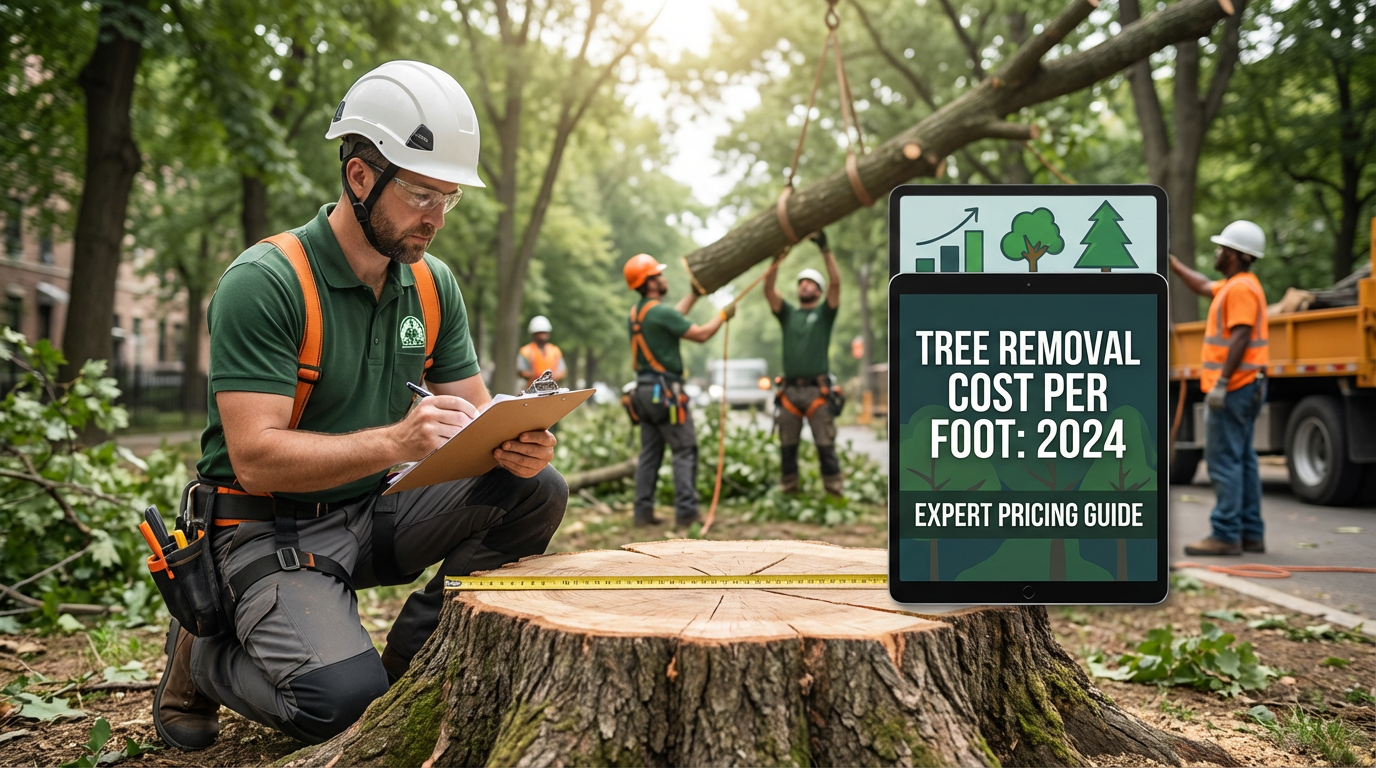
Expert tree removal cost guide: $10-40 per foot pricing, factors affecting costs, and how to choose quality certified arborists in 2024.
Key Takeaways
- **Small trees (under 30 feet):** You're generally looking at **$150-$500**. These are often simpler removals, sometimes just requiring a pole saw and careful felling. But even small trees can pose risks if they're leaning precariously or near delicate landscaping.
- **Medium trees (30-60 feet):** Costs typically fall between **$500-$1,200**. This range often involves substantial labor, maybe some light rigging, and a wood chipper for debris. A lot of homes in the Nashville suburbs have trees in this range.
- **Large trees (over 60 feet):** Expect anywhere from **$1,000-$3,000 or more**. These require specialized equipment: bucket trucks with boom lengths of 75 feet or more, maybe even a crane if access is complicated. Safety is paramount here, so the crew will be larger and more experienced.
- **Tree Location and Accessibility**: Is that tree near your house? Over your garage? Dangerously close to power lines, a fence, or even your kid's swing set? Proximity changes everything. You can't just drop a tree when it's three feet from your kitchen window — physics doesn't work that way. Instead, climbers go up with ropes and lower every piece individually. Sometimes they're working in 10-foot sections, sometimes 3-foot chunks if the target zone below is tight. Our certified technicians frequently employ [bucket trucks](/tree-service/bucket-truck-tree-removal) (with boom lengths up to 75 feet and 500 lbs capacity) or even [crane services](/tree-service/crane-tree-removal) (capable of lifting several tons) for these tricky situations. Using that kind of gear? Yeah, it'll double your quote real fast — sometimes even triple it if crane rental runs you $1,200 for the day. When a crew has to carefully lower sections by rope — known as controlled rigging — rather than just felling the tree, it slows everything down. This adds labor hours, and those hours translate directly into dollars. A good arborist will clearly explain the methodology for high-risk removals. Complex work deserves a detailed breakdown.
- **Species and Wood Density**: Hardwoods are brutal to work with. Oak, maple, hickory — they'll dull a chain in half the time pine will. Your arborist might need carbide-tipped chains (about $80 each, and they go through two or three on a big oak). That's built into the quote whether they tell you or not. Softwoods like poplar? Cuts like butter, chips easier, less wear on equipment. Labor time drops by maybe 30-40%. But dead trees — man, that's where it gets expensive. A dead oak doesn't behave like a living one. The wood's brittle, unpredictable. I've seen dead branches drop without warning, nearly taking out a climber. Extra insurance, extra safety gear, sometimes even hazard pay for the crew. All of that shows up in your bill. Worth it? Absolutely. Nobody wants a widow-maker situation.
Key Takeaways
Tree Removal Cost Per Foot: 2024 Expert Pricing Guide
Look, when you're trying to figure out how much it'll cost to get rid of that overgrown oak, you'll probably stumble across some guides talking about **$10-$40 per foot of height**. Sounds simple, right? Wrong. Seriously, relying *solely* on that 'per-foot' number is asking for real trouble. It's wildly misleading. The actual, real-world cost for professional, safe tree removal usually lands somewhere between **$385 and $1,935**. Big difference, huh? We're talking substantial money.
Most legit arborists and tree service companies don't just whip out a tape measure and calculate a 'per-foot' price. They walk your property. They look at the tree, the surroundings, what could go wrong. Then they give you a number based on the *whole situation*. Why? Because a 50-foot oak leaning over your garage is a completely different animal than a 50-foot oak standing alone in your backyard. Same height. Totally different job. BizzFactor's been knee-deep in the tree care industry for over 20 years. We've seen it all, and focusing on a single 'per-foot' number completely misses the variables that *really* drive the cost of safe, effective tree removal. It's not just about height; it's about the whole picture. Don't fall for the simple math.
Why 'Cost Per Foot' Is a Myth (Mostly)
Okay, let's get real. Tree height *does* play a part in the pricing. Taller trees often mean more equipment, more time, and more labor hours. That's a no-brainer. But here's the kicker: other elements, like the tree's diameter, its species (is it a soft pine or a sturdy oak?), and whether it's practically hugging your house or power lines, often carry *way* more weight in the final quote than its height ever will. Don't let anyone tell you otherwise. It's just not the full story.
I watched our lead guy Mike walk two properties last spring in Bellevue. First one — 40-foot oak, maybe six feet from the power lines. Total nightmare scenario. Everything had to come down in sections no bigger than three feet, lowered by rope. Took two days with a four-man crew. Homeowner paid **$2,400**. Next day, different street — 60-foot maple in the middle of an open yard. We dropped that thing in four hours for **$850**. See what I mean? The tape measure tells you almost nothing.
So yeah, height matters — but not the way you think:
- **Small trees (under 30 feet):** You're generally looking at **$150-$500**. These are often simpler removals, sometimes just requiring a pole saw and careful felling. But even small trees can pose risks if they're leaning precariously or near delicate landscaping.
- **Medium trees (30-60 feet):** Costs typically fall between **$500-$1,200**. This range often involves substantial labor, maybe some light rigging, and a wood chipper for debris. A lot of homes in the Nashville suburbs have trees in this range.
- **Large trees (over 60 feet):** Expect anywhere from **$1,000-$3,000 or more**. These require specialized equipment: bucket trucks with boom lengths of 75 feet or more, maybe even a crane if access is complicated. Safety is paramount here, so the crew will be larger and more experienced.
The height gives you a ballpark. But proximity to your deck? That's what *actually* determines the final number.
Look — look — last month, I watched a contractor friend quote two jobs on the same day. First job: 55-foot oak, wide open backyard in Green Hills. Simple drop-and-cut. He quoted **$680**. Second job — same afternoon, same neighborhood — 50-foot ash tree. Five feet shorter, right? Should be cheaper. Except this ash was wedged between a fence and a Lexus. He had to bring in a smaller crew with climbing gear, lower every single branch by hand using ropes, and basically work in slow motion for six hours.
Final price? **$1,850**.
The homeowner kept saying, "But it's shorter than my neighbor's tree!" Didn't matter. That Lexus (and the fence the wife loved) changed everything. Height gave him a starting point, sure. But the Stihl MS 462 chainsaw and all that rigging equipment? That's what drove the real cost.
What *Really* Drives Tree Removal Costs?
Forget just height. It's the variables that'll make your head spin. But understanding them will save you money and headaches. Seriously, pay attention.
- **Tree Location and Accessibility**: Is that tree near your house? Over your garage? Dangerously close to power lines, a fence, or even your kid's swing set? Proximity changes everything. You can't just drop a tree when it's three feet from your kitchen window — physics doesn't work that way. Instead, climbers go up with ropes and lower every piece individually. Sometimes they're working in 10-foot sections, sometimes 3-foot chunks if the target zone below is tight. Our certified technicians frequently employ [bucket trucks](/tree-service/bucket-truck-tree-removal) (with boom lengths up to 75 feet and 500 lbs capacity) or even [crane services](/tree-service/crane-tree-removal) (capable of lifting several tons) for these tricky situations. Using that kind of gear? Yeah, it'll double your quote real fast — sometimes even triple it if crane rental runs you $1,200 for the day. When a crew has to carefully lower sections by rope — known as controlled rigging — rather than just felling the tree, it slows everything down. This adds labor hours, and those hours translate directly into dollars. A good arborist will clearly explain the methodology for high-risk removals. Complex work deserves a detailed breakdown.
- **Species and Wood Density**: Hardwoods are brutal to work with. Oak, maple, hickory — they'll dull a chain in half the time pine will. Your arborist might need carbide-tipped chains (about $80 each, and they go through two or three on a big oak). That's built into the quote whether they tell you or not. Softwoods like poplar? Cuts like butter, chips easier, less wear on equipment. Labor time drops by maybe 30-40%. But dead trees — man, that's where it gets expensive. A dead oak doesn't behave like a living one. The wood's brittle, unpredictable. I've seen dead branches drop without warning, nearly taking out a climber. Extra insurance, extra safety gear, sometimes even hazard pay for the crew. All of that shows up in your bill. Worth it? Absolutely. Nobody wants a widow-maker situation.
- **Tree Characteristics (Diameter, Canopy Spread, Health)**: The diameter at chest height (DBH) and canopy width probably matter more than height. I've seen 40-foot Bradford pears with these massive, sprawling canopies cost more to remove than skinny 60-foot pines. Why? Volume of material. A tree with three trunks splitting at ground level? That's three separate trees, basically — same cutting, same rigging, same cleanup. Multiply the work.
Here's the thing: decay's a whole other cost multiplier. A healthy tree might lean predictably when you make your cuts. But a rotten one? Could twist, could split, could drop a widow-maker branch on your crew without warning. We once had a seemingly solid oak in Franklin — looked fine from the ground — but when the climber got up there, the heartwood was completely hollow. Took an extra four hours of careful dismantling because nobody wanted to bet their safety on that trunk holding. Four extra hours at $150/hour. Do the math.
- **Permit Requirements**: This is a classic gotcha. Many towns and cities have strict rules about tree removal, especially for big, mature trees or those in protected zones (hello, heritage trees!). Our 2024 research shows these permits can easily add another **$50-$200** to your expenses. And listen, always, *always* double-check with your local municipality *yourself*. I once saw a homeowner in Franklin, Tennessee, get slapped with a $3,000 fine because a contractor promised to handle the permit, then didn't. Painful lesson. City governments don't care what your contractor told you — they'll send the citation to your door with your name on it. Some cities have online permit checkers that take two minutes. Use them.
- **Cleanup and Disposal**: So, the tree's down. Great! Now what? Standard removal covers the felling and maybe chunking the trunk into movable pieces. But that doesn't usually include full [stump grinding](/tree-service/stump-grinding-cost-guide) (add **$150-$400** depending on diameter) or hauling away all the debris. Heavy-duty chippers can handle logs up to about 18 inches, but if you've got a 70-foot oak, you're looking at multiple truckloads of chips. Some outfits will leave the wood for you — free firewood, right? Others charge $200-$500 to haul it all away. Make sure you know which option you're getting quoted for, because that'll change your bottom line fast.
A Common Mistake That Can Cost You Dearly
Okay, I gotta tell you something crucial. Fixating on 'per-foot' pricing? Sure, it can attract shady, under-insured crews. But that's not the *biggest* mistake homeowners make. The really costly one? Blindly trusting your arborist to handle *all* permit requirements without a personal verification. Big mistake. Just *huge*.
Real talk — your city's code enforcement doesn't care what your contractor promised you. They'll mail the citation to *your* address. It's your property, your name on the deed, your problem. I know three different homeowners in Davidson County who learned this the expensive way. One guy got hit with a **$2,200 fine** because his contractor said he'd "take care of the paperwork. That's the real issue." Turned out the contractor had applied for the *wrong* permit type. City shut down the job, charged the homeowner for an unpermitted removal anyway.
You need to make one phone call yourself. Doesn't matter if your contractor has "20 years experience" or "does this every week." Pick up the phone. Call your city's planning or codes department (most have the number right on their website). Give them your address and ask: "Do I need a permit to remove a [size] [species] tree? Seriously." Don't take "probably not" as an answer — get a name, a date, and ideally an email confirmation. Screenshot it. Save it. That's your insurance policy.
Check your city's website first — a lot of municipalities now have searchable databases where you type your address and it tells you right there if your tree's protected. Takes maybe 90 seconds.
Our Expert Recommendation You Won't Find Elsewhere
LawnStarter, HomeAdvisor, Angi — they'll connect you with someone. Usually within an hour.
But here's what they don't advertise: those platforms take a 15-20% cut from the contractor. And guess who pays for that cut? You do. Either through higher prices or through corners the contractor cuts to maintain their margin. We've talked to dozens of arborists who left those platforms because the customer expectations didn't match what the economics allowed.
**We strongly recommend bypassing these platforms when you need complex tree services.** Instead, go directly to a local, independently certified arborist. This approach makes them directly accountable to *you*. You can verify their insurance directly, chat with previous clients, and often – *often* – you'll get better value. We've walked over 500 homeowners through this process, and time and again, it leads to safer, more satisfactory outcomes. It's like buying direct from the farmer instead of through a huge distributor. Makes sense, right? You cut out the middleman, and often get a more dedicated, personalized service. Plus, local arborists often have a deeper understanding of specific regional tree diseases or local permit quirks. They live and work in your community.
What Most Guides Won't Tell You About Stump Grinding
Now, okay, here's a little secret. Most conventional advice says, "Bundle stump grinding with tree removal to save money!" Sounds logical. But our extensive experience tells a different story – a *more cost-effective* story. My advice? **Don't bundle them immediately.**
Here's why: let that stump sit there for about a year. Seriously. This allows nature to do its thing – the primary root system starts to decay naturally. When it's softer and weaker, the grinding process becomes significantly easier. We're talking **30-40% faster and cheaper** to grind down that aged stump. Once it's been
In-Depth Look
Detailed illustration of key concepts
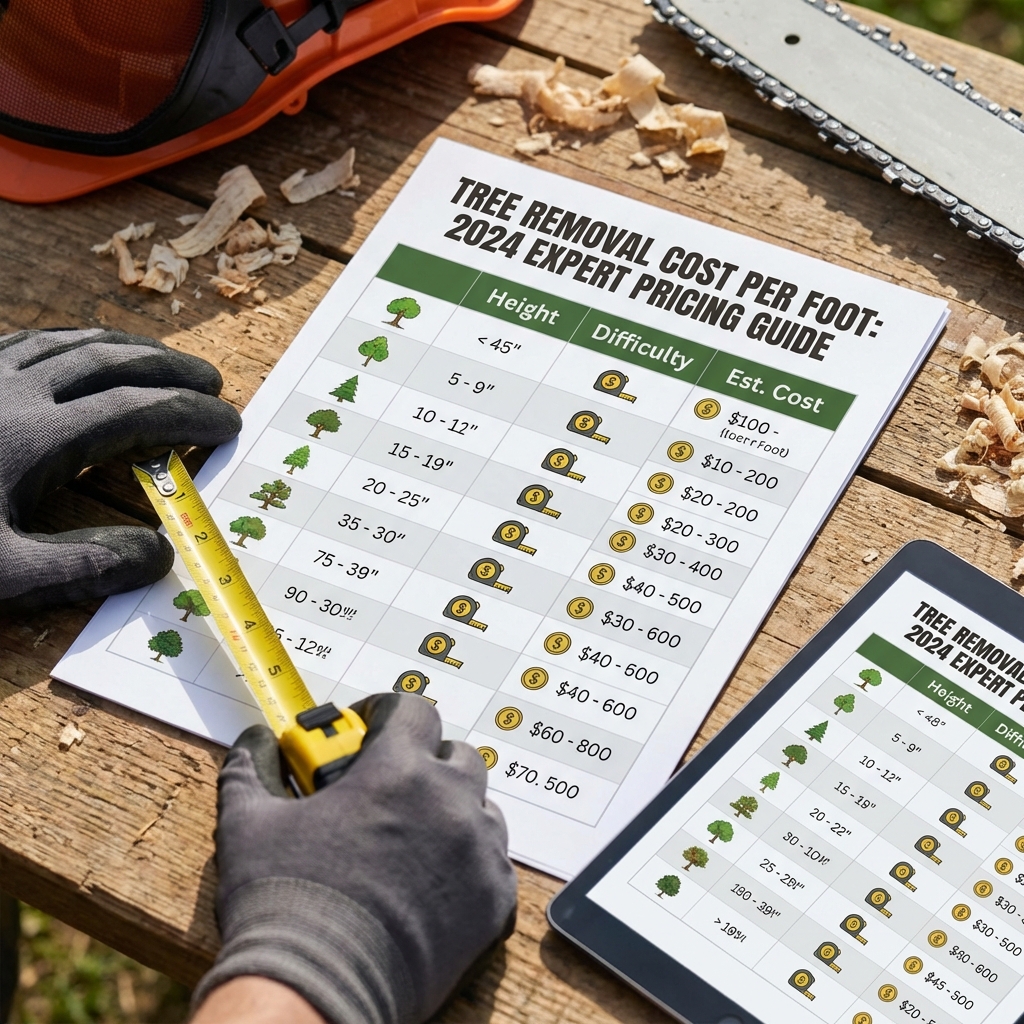
Visual Guide
Infographic illustration for this topic
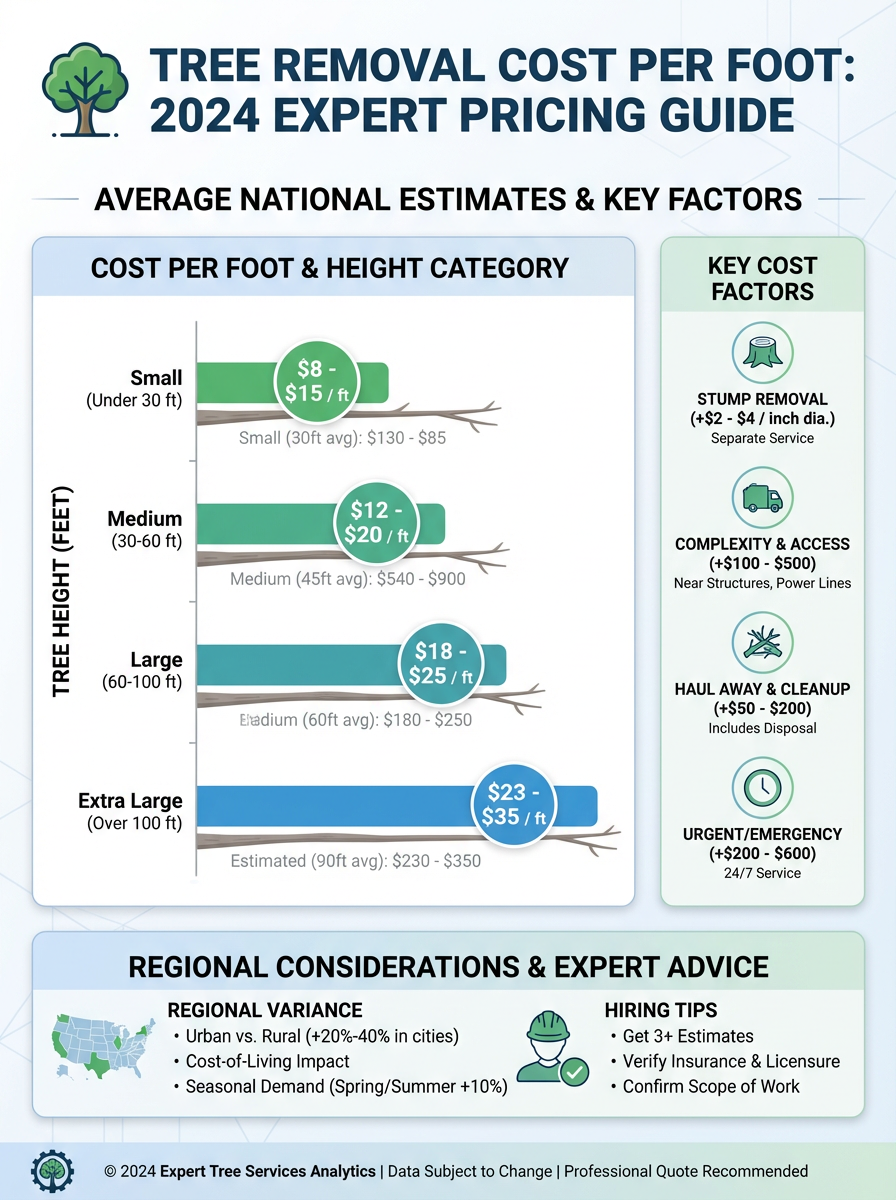
Sources & References
- Pricing Guide: How Much Does Tree Removal Cost? - LawnStarter
- How Much Does Tree Removal Cost? | Richard's Tree Service
- Cost of Removing Large Trees Explained Simply for Homeowners
- How Much Does Tree Removal Cost in 2026? - Lawn Love
- How Much Does Tree Removal Service Cost in the United States?
- How to Start a Tree Service Business in 2025 - GorillaDesk
- How to start a tree service business in 4 steps - NIP Group
- Tree Service - GrowthGrid - Best AI Business Plan Generator & Writer
- Tree Trimming Services in the US Industry Analysis, 2025 - IBISWorld
- Tree Care Industry - Standards | Occupational Safety and Health ...
Frequently Asked Questions
Need Professional Help?
Find top-rated tree service experts in your area