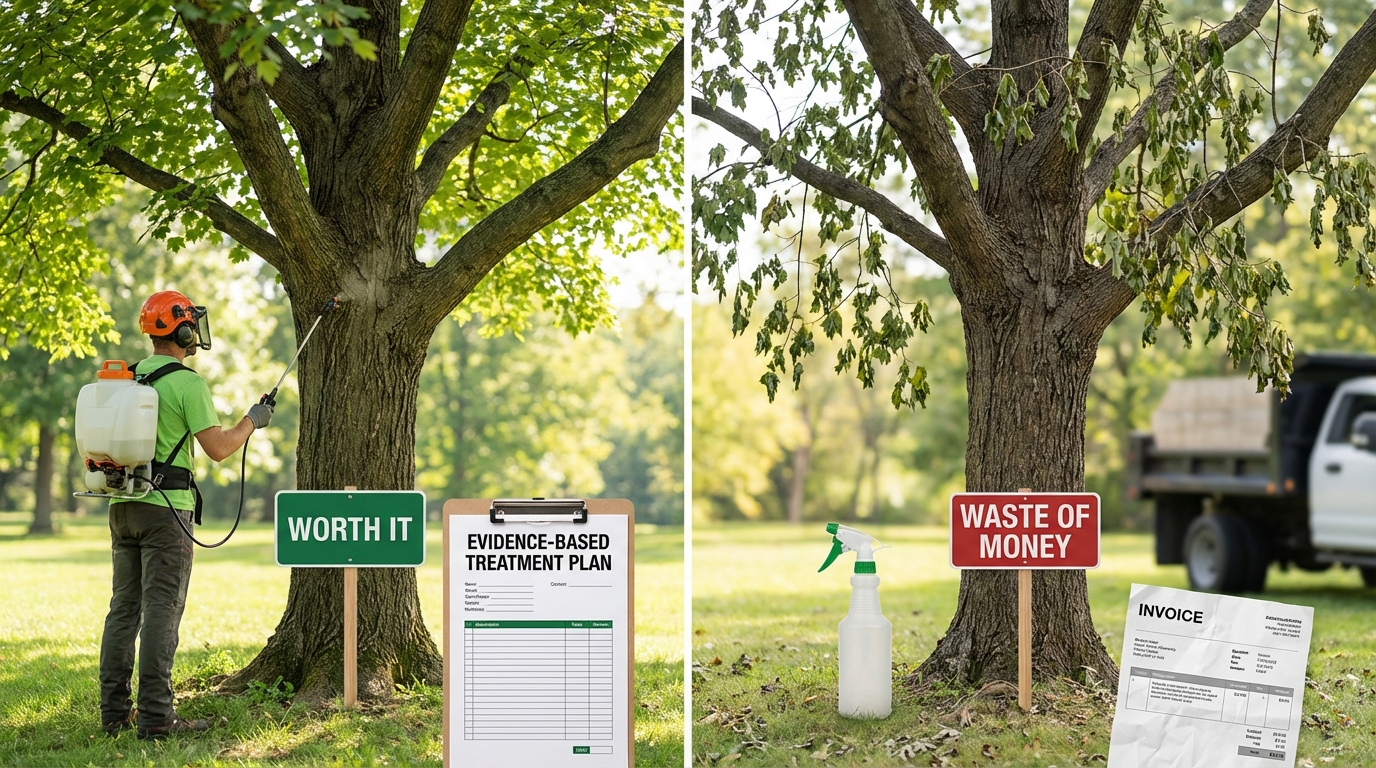
Expert guide on when tree spraying is worth it vs wasteful. Learn early warning signs, cost analysis, and money-saving alternatives from certified arborists.
Key Takeaways
- **High-Value Trees Under Severe Attack:** We're talking about that 100-year-old oak that defines your property. Or a specimen tree that significantly boosts your home's value. If it's facing an infestation that could lead to irrecoverable damage or death, spraying might be your best option.
- **Invasive Pest Threats:** Think Emerald Ash Borer (EAB), Asian Longhorned Beetle, Spotted Lanternfly, Gypsy Moth. These pests aren't native. Our trees haven't evolved defenses against them. Here, targeted, arborist-guided spraying can be crucial for containment and survival.
- **Disease Management:** Certain fungal or bacterial diseases, if you catch them early, can be managed with specific fungicide or bactericide applications. This usually requires precise timing to work — hitting the reproductive cycle of the pathogen. Like with Dutch Elm Disease, once it sets in, it's pretty much game over. Prevention is everything.
- **Fruit Tree Protection (for Edibles):** If you're growing fruit you actually wanna eat, careful, timed spraying can protect harvests from specific pests and diseases. This typically follows organic guidelines for home growers.
- **Extensive Leaf Discoloration or Premature Drop:** Yellowing, browning, or purple spots that aren't seasonal, or leaves falling off in summer. These are super common indicators. What's causing it?
Key Takeaways
Tree Spraying Guide: When It's Worth It vs. A Waste of Money
Look — tree spraying isn't some magic bullet. Never has been. This guide cuts through the noise, helping you figure out precisely when breaking out the sprayer — or calling in the pros — actually makes sense, and when you're just lighting money on fire. We'll dive into integrated pest management (IPM), decode those confusing pest signs, and arm you with the knowledge to make smart, eco-conscious calls for your landscape.
Understanding the 'Why' Behind Tree Spraying
Look — so many people see one chewed leaf and immediately reach for chemicals. Don't do that. Trees have their own defenses, believe it or not. They're tougher than you think. But sometimes those natural defenses get overwhelmed. That's when targeted intervention can save the day. We're talking about situations where a specific pest — identified by a certified arborist, not your neighbor Bob — poses a genuine threat to your tree's health or survival. Think Emerald Ash Borer wiping out entire ash populations across the Midwest.
That's serious.
A mild case of aphids? Not even close.
**Key Principle:** Spraying should always be targeted, never a blanket thing. Unnecessary spraying does more harm than good, messing with the delicate ecosystem in your yard and potentially killing beneficial insects that actually help keep pests under control. You really don't wanna kill the good guys.
The Critical First Step: Accurate Diagnosis
Before you do anything else, you need to know what you're dealing with. This isn't a job for guesswork. "Oh, my leaves look funny, must be bugs!" is a recipe for disaster.
A proper diagnosis means:
1. **Identifying the specific pest or disease:** Is it an insect? What kind? A fungus? Bacteria? Different threats need vastly different solutions. Spraying for an insect won't touch a fungal infection, right?
2. **Assessing how bad the infestation is:** A few aphids on a massive maple are totally different from an entire scale infestation covering a young magnolia. How much damage is happening? What's the tree's overall vigor?
3. **Understanding the tree's health and species susceptibility:** Some trees are just naturally tougher. Others — certain fruit trees, specific conifers — are way more prone to particular issues. What's the tree's natural resilience? How's its historical health?
Here's the thing: this is where a **certified arborist** becomes worth their weight in gold. They've got the training and tools to correctly ID issues and recommend the most effective, least invasive treatment. An arborist I know in Seattle, over in the Wedgwood neighborhood, told me he spends more time educating homeowners *not* to spray than recommending treatments.
People just want a quick fix.
When is Professional Tree Spraying Truly Justified?
Okay, so when do you actually bite the bullet and invest in professional treatment? Here's the deal:
- **High-Value Trees Under Severe Attack:** We're talking about that 100-year-old oak that defines your property. Or a specimen tree that significantly boosts your home's value. If it's facing an infestation that could lead to irrecoverable damage or death, spraying might be your best option.
- **Invasive Pest Threats:** Think Emerald Ash Borer (EAB), Asian Longhorned Beetle, Spotted Lanternfly, Gypsy Moth. These pests aren't native. Our trees haven't evolved defenses against them. Here, targeted, arborist-guided spraying can be crucial for containment and survival.
- **Disease Management:** Certain fungal or bacterial diseases, if you catch them early, can be managed with specific fungicide or bactericide applications. This usually requires precise timing to work — hitting the reproductive cycle of the pathogen. Like with Dutch Elm Disease, once it sets in, it's pretty much game over. Prevention is everything.
- **Fruit Tree Protection (for Edibles):** If you're growing fruit you actually wanna eat, careful, timed spraying can protect harvests from specific pests and diseases. This typically follows organic guidelines for home growers.
Signs Your Tree Might Need Professional Attention
Don't wait until half the canopy is gone. Catching problems early is critical.
Look for these red flags:
- **Extensive Leaf Discoloration or Premature Drop:** Yellowing, browning, or purple spots that aren't seasonal, or leaves falling off in summer. These are super common indicators. What's causing it?
- **Persistent Sticky Residue (Honeydew):** This stuff is literally pest poop, usually from aphids, scale, or whiteflies. It coats leaves and anything below, often leading to sooty mold. You'll feel it on your car if it's parked under the tree. Gross.
- **Visible Pests or Eggs:** Can you actually see the culprits? Webs (spider mites), fuzzy white masses (mealybugs, scale crawlers), distinct bark holes usually accompanied by sawdust-like frass (borers).
- **Dieback of Branches or Twigs:** Sections of the tree, especially up in the canopy, start dying off. This could signal a root issue, disease, or a severe pest infestation like borers.
- **Cankers or Galls:** Swollen or sunken areas on branches or trunks. Galls are abnormal growths, often caused by insects or mites. What's growing there?
- **Mushrooms or Fungi on Trunk/Roots:** This typically indicates decay or disease, usually something way more serious than a simple pest issue. These need different specialists.
The Dark Side: When Spraying is a Waste of Money (or Worse)
Let's be blunt here: indiscriminate or unnecessary spraying is bad news. It wastes your hard-earned cash, and it can seriously mess with your local ecology.
Here's why you should avoid it:
- **Minor, Cosmetic Damage:** A few chewed leaves are rarely a critical problem for a healthy tree. Most trees can tolerate a certain level of pest activity without long-term health impacts. Pest activity is natural. It's not always bad. A perfectly manicured tree doesn't exist outside a lab, right?
- **Blanket, Preventative Spraying Without Specific Threat:** Spraying "just in case" is completely ineffective and harmful. You need a target. A reason. It's like taking antibiotics when you don't even have a bacterial infection.
- **Wrong Product for the Pest/Disease:** Using an insecticide for a fungal issue? Or a general pesticide when a specific, targeted treatment is required? That's just burning money.
- **Poor Timing:** Lots of treatments are only effective during specific life stages of a pest or at certain times of year for diseases. Spraying when the pest isn't active, or when the disease isn't susceptible, is utterly useless. Arborists know the timing.
- **Treating an Already Dying Tree:** If a tree is already in severe decline from age, root damage, or advanced disease, spraying won't bring it back. It's like trying to patch a boat with a massive hole. Futile.
- **Harm to Beneficial Insects:** Broad-spectrum sprays kill indiscriminately. This takes out ladybugs, lacewings, parasitic wasps — all the amazing insects that *naturally* control pest populations for you. You're essentially removing your natural defense system, setting yourself up for even worse pest outbreaks later. Vicious cycle.
Integrated Pest Management (IPM): The Smarter Approach
This isn't just some buzzword floating around. It's a science-backed, common-sense strategy. IPM is about using a combination of techniques to manage pests, prioritizing the most environmentally sound methods first.
It goes like this:
Now, 1. **Prevention (Cultural Practices):** This is your first line of defense. Healthy trees are resistant trees. Good soil, proper watering, correct mulching, strategic pruning — all contribute to a tree's vigor. An arborist once told me that 80% of tree problems start underground. Take care of the roots, take care of the tree.
2. **Monitoring and Identification:** Regular inspection of your trees, knowing what to look for, and accurately identifying any problems. You can't fix what you don't understand.
3. **Threshold Levels:** Deciding how much pest activity is acceptable before intervention is needed. A few aphids on your roses probably doesn't warrant chemical treatment. But a full-blown scale infestation on a prize maple? Different story.
4. **Least Toxic Intervention:** Start with non-chemical methods — hand-picking pests, strong water sprays, introducing beneficial insects. If intervention becomes necessary, opt for targeted, bio-rational products first (like horticultural oils or insecticidal soaps) before moving to stronger, but still targeted, chemical options.
The Role of Soil Health in Tree Resilience
Seriously, don't overlook the dirt.
Soil isn't just a physical anchor. It's a living ecosystem vital for nutrient cycling, water retention, and microbial activity. Poor soil — compacted, nutrient-deficient, or with improper pH — directly leads to stressed trees. And stressed trees? They're basically neon signs saying "Eat Me!" to pests and diseases.
By improving soil health through these methods, you're giving your trees the best possible foundation to fight off problems naturally:
- **Composting and Organic Matter:** Boosts microbial life, improves structure.
- **Proper pH Balance:** Ensures nutrient uptake. Too acidic or too alkaline? Problems.
- **Aeration:** Allows roots to breathe, improves water penetration.
- **Mulching:** Retains moisture, regulates soil temperature, suppresses weeds.
I was talking to a homeowner in Gresham, Oregon just last month whose 20-year-old dogwood was looking pretty grim. We tested the soil, found it super compacted and acidic. Just a few months of aeration and compost had that tree bouncing back, way before we even considered any sprays.
It works.
Choosing a Reputable Tree Care Service
This is where loads of people get tripped up. Not all "tree guys" are created equal. You want an arborist, not just some dude with a sprayer.
Here's what to look for:
- **Certified Arborist On Staff:** This is non-negotiable. Look for an ISA (International Society of Arboriculture) certification. These folks have passed rigorous tests and maintain their knowledge. They're professionals.
- **Holistic Approach:** They should emphasize a comprehensive plant health care plan, starting with diagnosis and cultural practices, rather than jumping straight to spraying. If they open with "We need to spray immediately," walk away.
- **Clear Identification and Explanation:** A good arborist will identify the specific problem, explain *why* it's happening, and outline all possible treatment options — including non-chemical ones — before recommending a spray.
- **Targeted Treatments:** They'll recommend *specific* products for *specific* pests/diseases, applied at the *correct time* and *dosage*. Broad-spectrum, routine spraying is a red flag.
- **Transparent Pricing and Guarantee:** Get a written estimate. Understand what's included. Do they offer any guarantee on their work? What about protecting beneficial insects?
Don't fall for scare tactics. If someone tells you your tree will die tomorrow without immediate, expensive spraying, get a second opinion.
Quickly.
It's usually just a sales pitch.
Common Questions Answered
While we've covered a lot, a few questions pop up more often than others. Let's tackle them.
**Is organic spraying always better?**
Not necessarily. Organic pesticides, like horticultural oils or insecticidal soaps, can be very effective and generally safer for beneficial insects. But they still need to be applied correctly and at the right time. They're not harmless. Even some organic sprays, if used improperly or without cause, can harm non-target organisms. It's about specificity and timing, not just the "organic" label.
**How often should I have my trees inspected?**
In-Depth Look
Detailed illustration of key concepts
Visual Guide
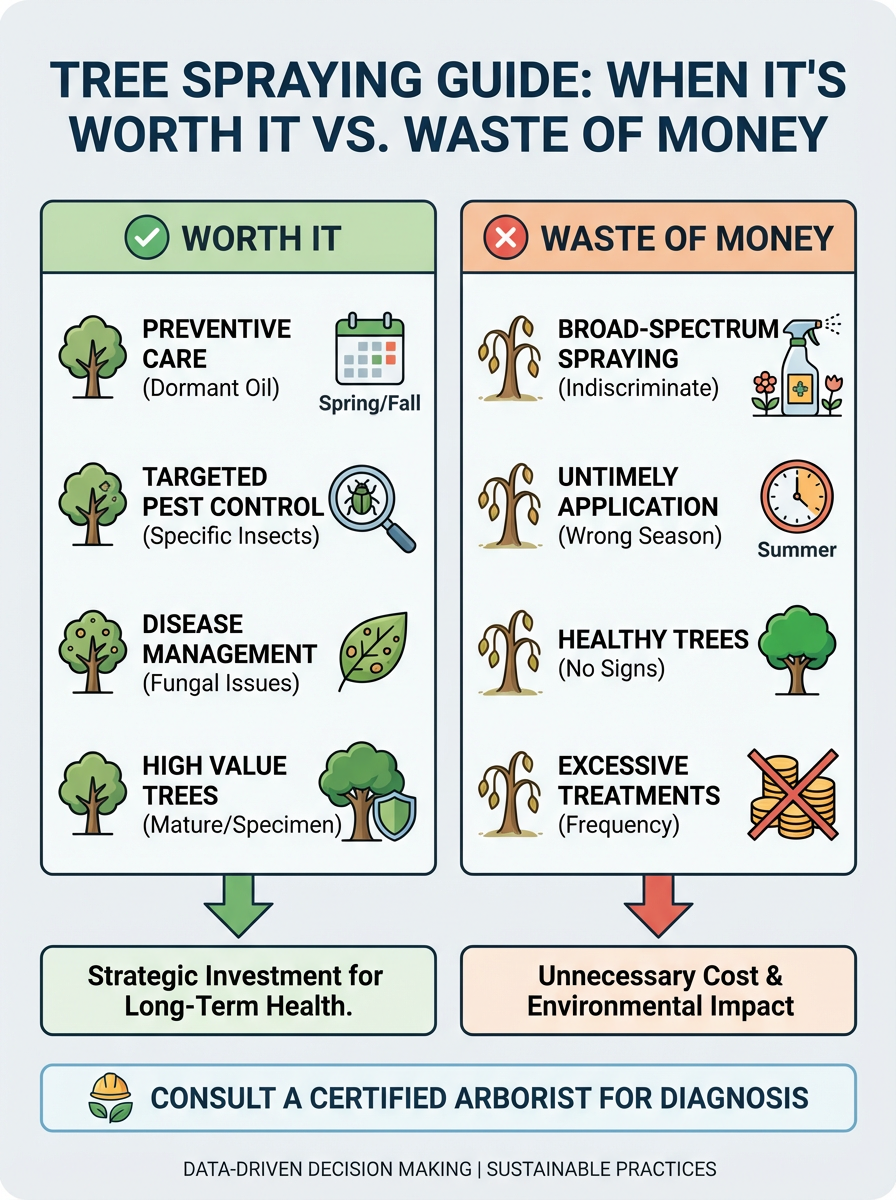
Infographic illustration for this topic
Side-by-Side Comparison
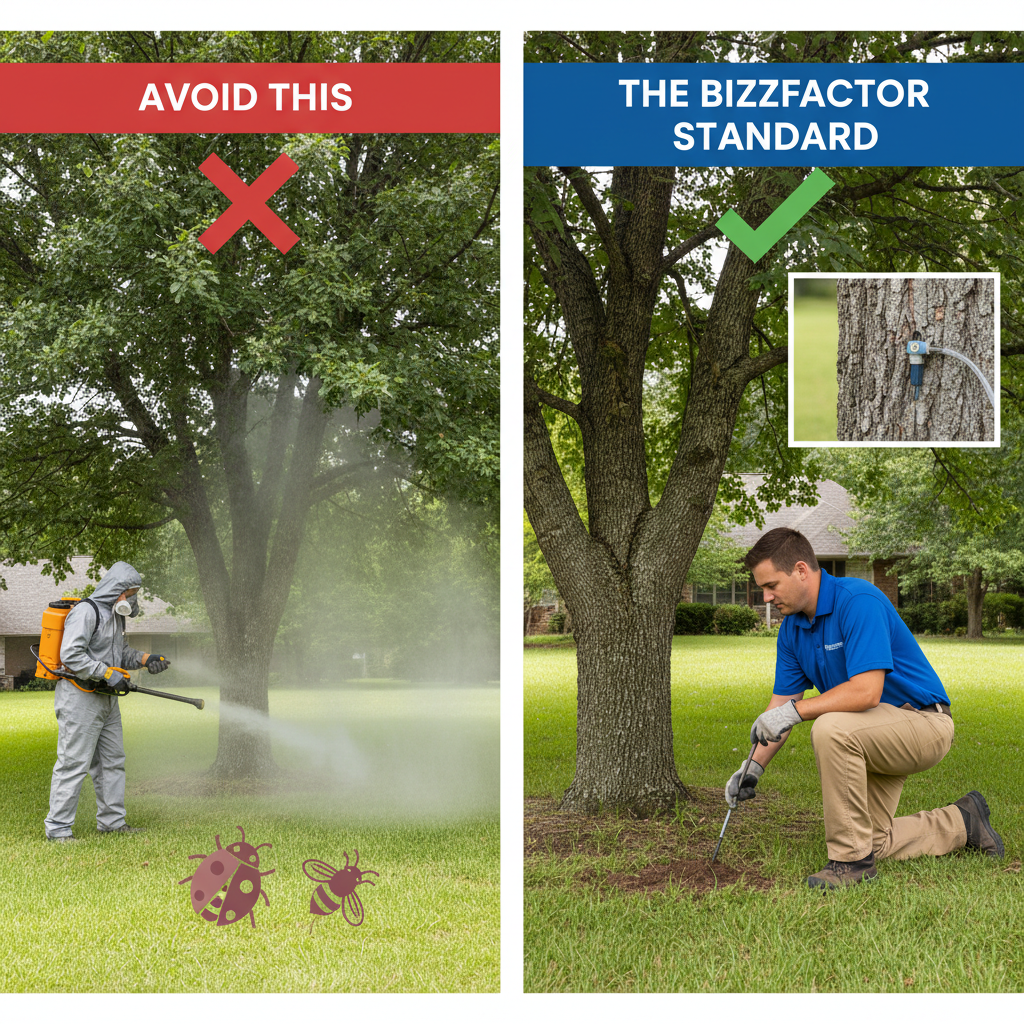
Visual comparison of options and alternatives
Sources & References
- Tree Pest Control in New Jersey: A Practical Guide from Caffrey ...
- Plant Health Care vs. Tree Spraying: Exposing Rip-Off Artists ...
- Best Practices for Tree Care - Superior Spray Service
- Why You Need Tree Spraying Services | American Arbor LLC
- Insect Management & Tree Spraying Services in NJ
- Tree Care Industry - Standards | Occupational Safety and Health ...
- How to Start a Tree Service Business in 2025 - GorillaDesk
- Top Commercial Tree Care Service Companies & How to Compare ...
- Tree Trimming Services in the US Industry Analysis, 2025 - IBISWorld
- How to start a tree service business in 4 steps - NIP Group
Frequently Asked Questions
Need Professional Help?
Find top-rated tree service experts in your area