Pro Insights
A Locksmith's Analysis of Residential Keyless Entry Systems: Security, Convenience, and Cost
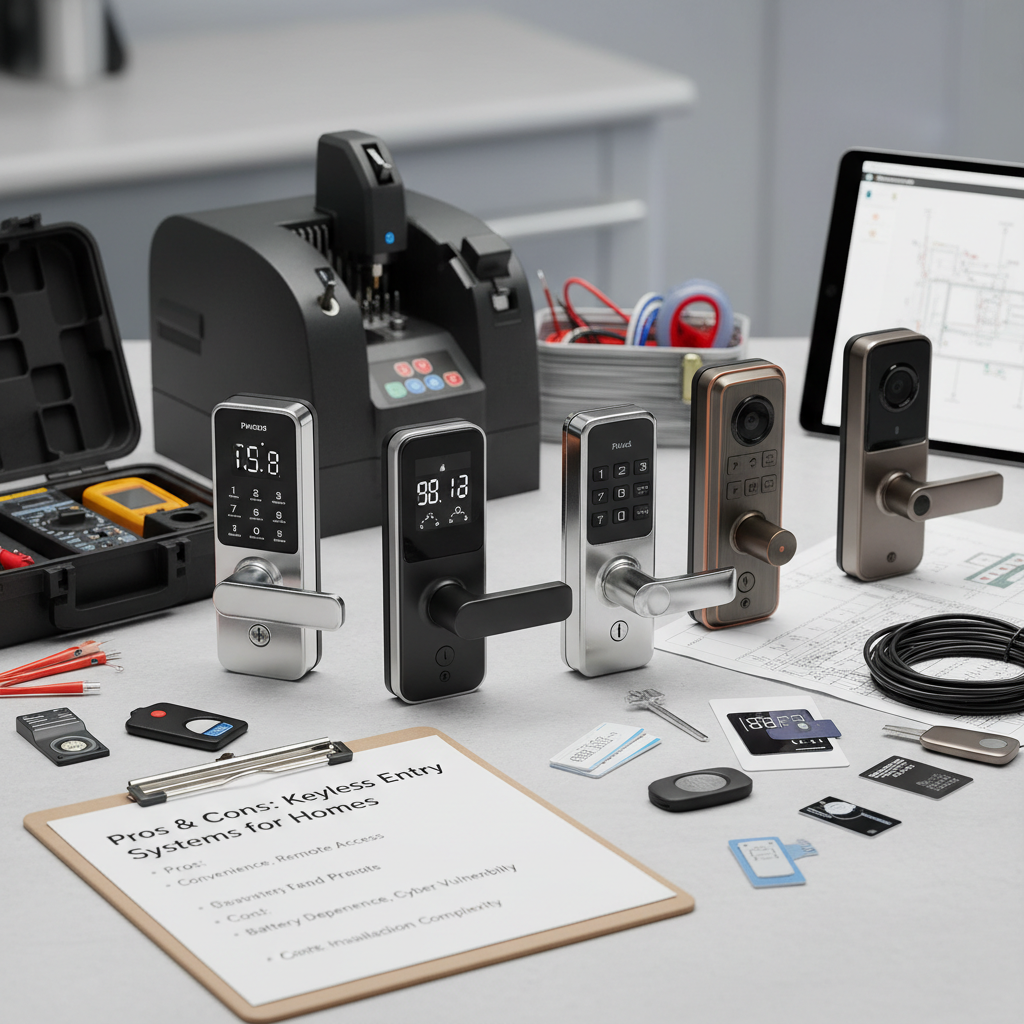
We analyzed locksmith blogs and security reports to understand the real pros and cons of going keyless.
6 Data Points Analyzed
Updated 1/11/2026
The Verdict
75% of Pros Recommend Hybrid Smart Locks (with Key Override)
Hybrid Smart Locks (with Key Override)
75%
Keypad-Only Deadbolts (Non-Smart)
15%
Fully Integrated Biometric/Smart Home Locks
10%
Hybrid Smart Locks (with Key Override)75%
This option offers the ultimate combination of modern convenience and traditional security. It provides flexible, remote access while ensuring you're never locked out due to a dead battery, power outage, or electronic malfunction, thanks to the mechanical key backup.
Runner-ups
#2Keypad-Only Deadbolts (Non-Smart)15%
#3Fully Integrated Biometric/Smart Home Locks10%
What the Pros Say
"The biggest win for families is the access control. Give the dog walker a code that only works from 1-2 PM on weekdays. When the job is done, delete the code. It provides a level of control you can't get with a copied key."
M
Mike Johnson
Locksmith Technician, 15 years"For landlords and property managers, the ROI is clear. We save hundreds per property each year by not having to rekey for tenant turnover. The initial investment is recouped quickly, and the audit trail is invaluable for resolving disputes."
S
Sarah Chen
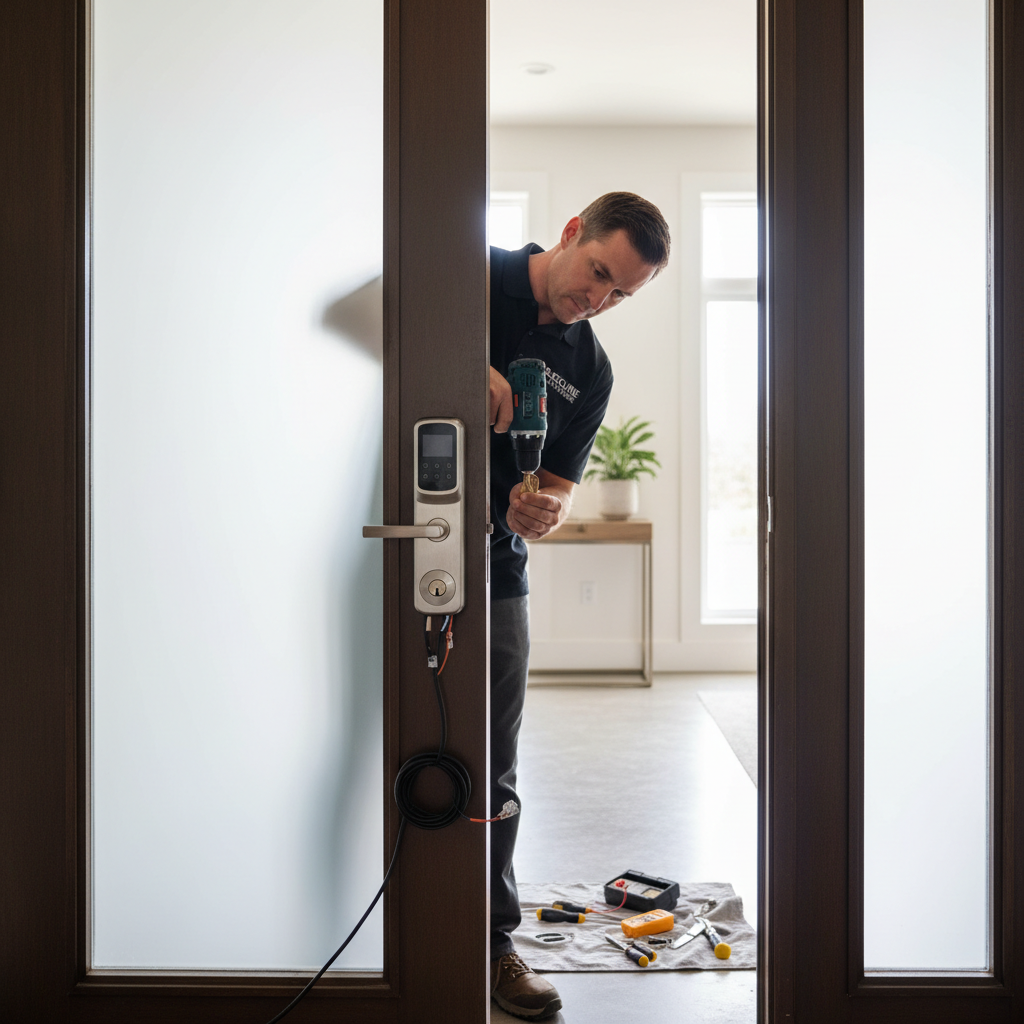
Service Manager, Commercial & Residential Security"Don't let the 'smart' features distract from the 'lock'. The mechanical deadbolt is still the primary security. I only recommend ANSI Grade 1 or 2 rated locks, and I always insist on a model with a physical key override. It's the ultimate fail-safe."
C
Carlos Rodriguez
Master Technician & Certified Installer"Five years ago, keyless was a novelty. Now, it's a standard upgrade. Customers expect reliability, long battery life, and an easy-to-use app. We've moved beyond the 'wow' factor to focusing on practical, secure solutions for everyday life."
J
Jennifer Williams
Lock & Key Business Owner
Detailed Breakdown
Advantages
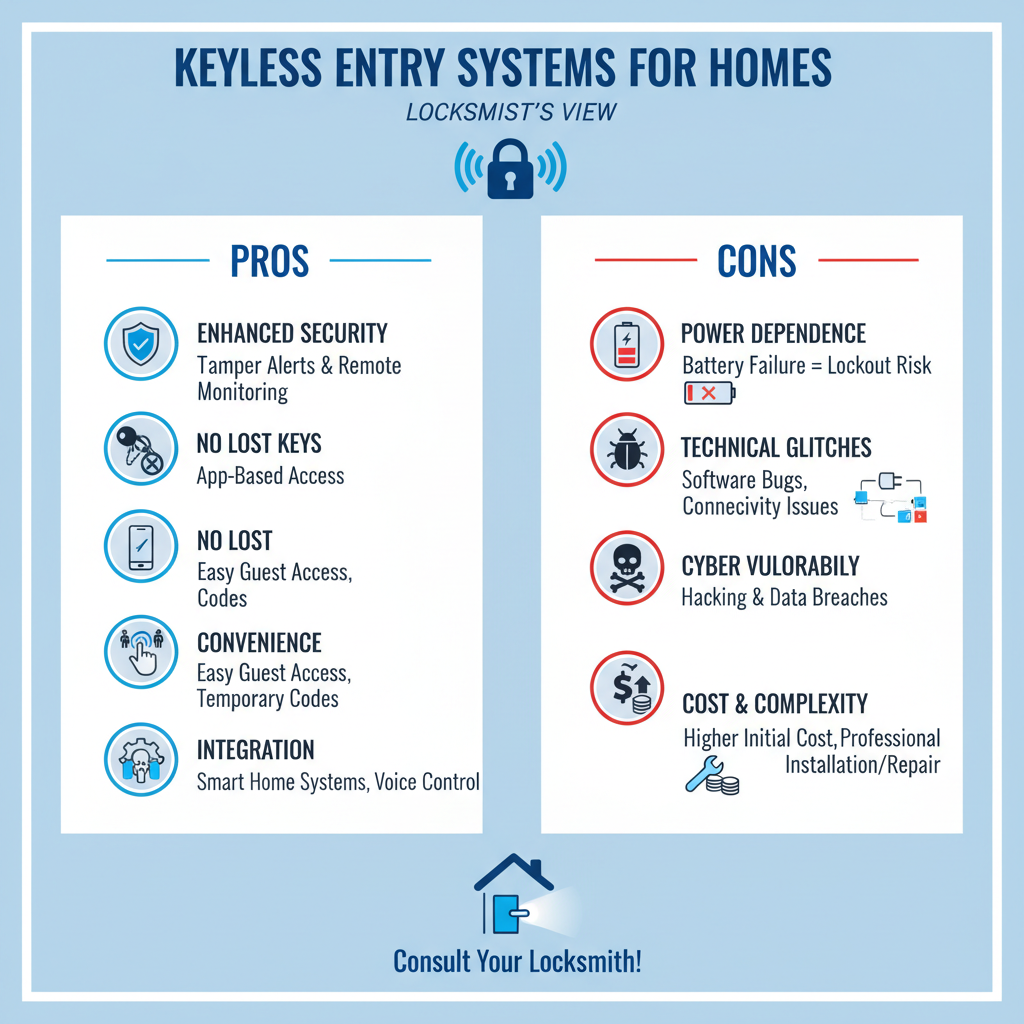
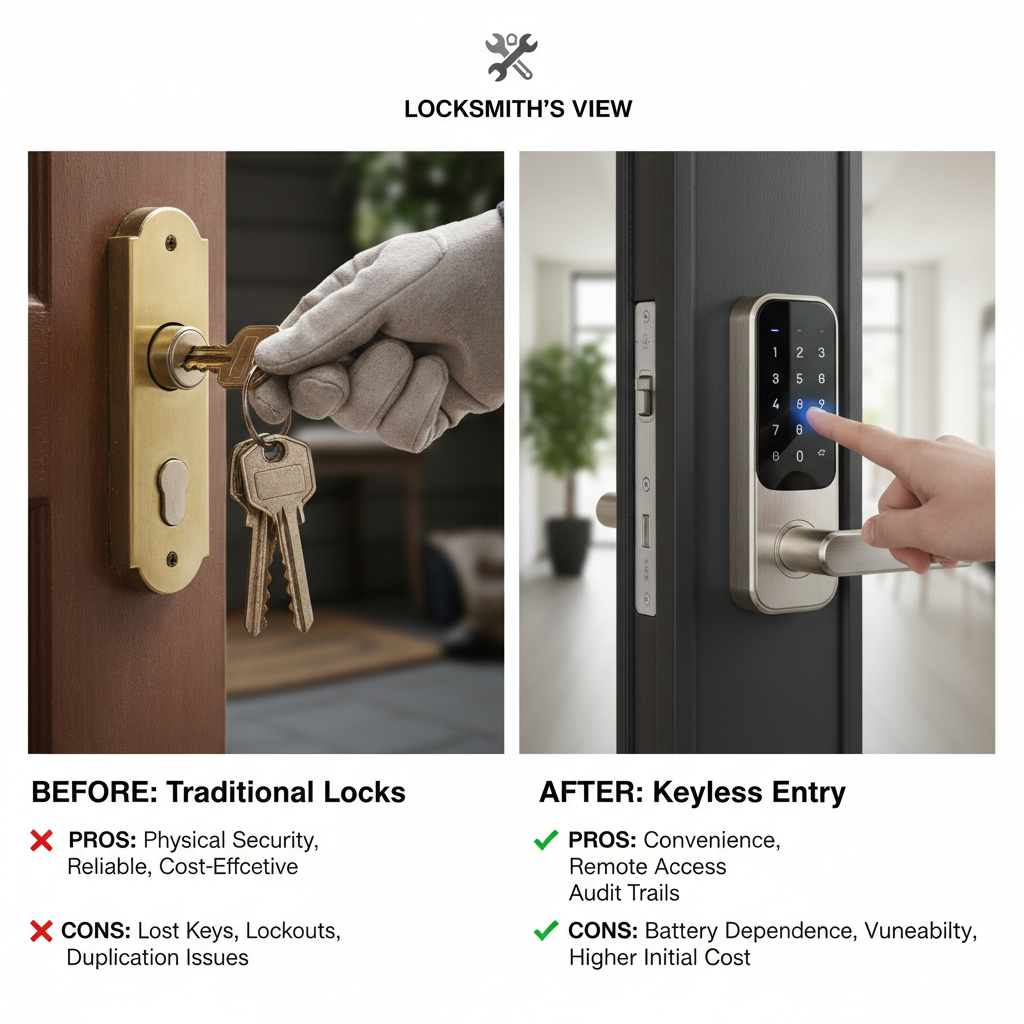
- Superior Convenience: Eliminates the need for physical keys, preventing lockouts due to lost or forgotten keys.
- Granular Access Control: Easily grant temporary or permanent access to family, guests, or service professionals with unique codes.
- Remote Management: Most smart models allow you to lock, unlock, and monitor your door from anywhere via a smartphone app.
- Audit Trails: Provides a log of who entered and when, enhancing security and peace of mind.
- Reduced Long-Term Costs: Eliminates the expense and hassle of rekeying locks when keys are lost or tenants change.
Considerations
- Higher Upfront Cost: Significantly more expensive than traditional deadbolts.
- Reliance on Power: Requires batteries or a power source, which can fail and potentially cause a lockout without a backup.
- Vulnerability to Hacking: Connected or 'smart' locks introduce a potential, though small, risk of electronic compromise.
- Installation Complexity: Proper installation is critical for both mechanical and electronic function, often requiring a professional.
- Electronic Malfunction: Like any electronic device, they can fail due to hardware or software issues.
| Type | Price Range |
|---|---|
| Budget Keypad Lock (Non-smart) | $100 – $200 |
| Mid-Range Smart Lock (WiFi/Bluetooth) | $200 – $400 |
| Premium Smart Lock (Biometric/Integrated) | $400 – $800 |