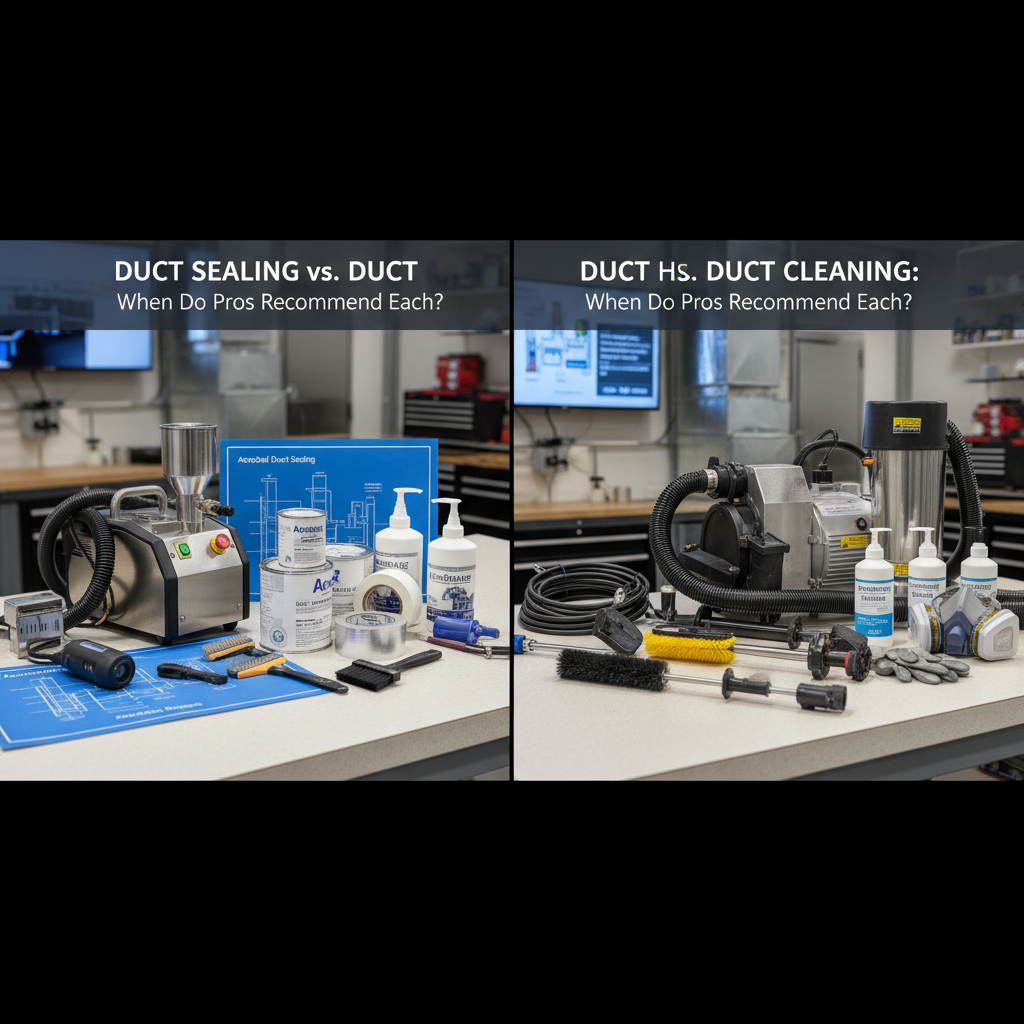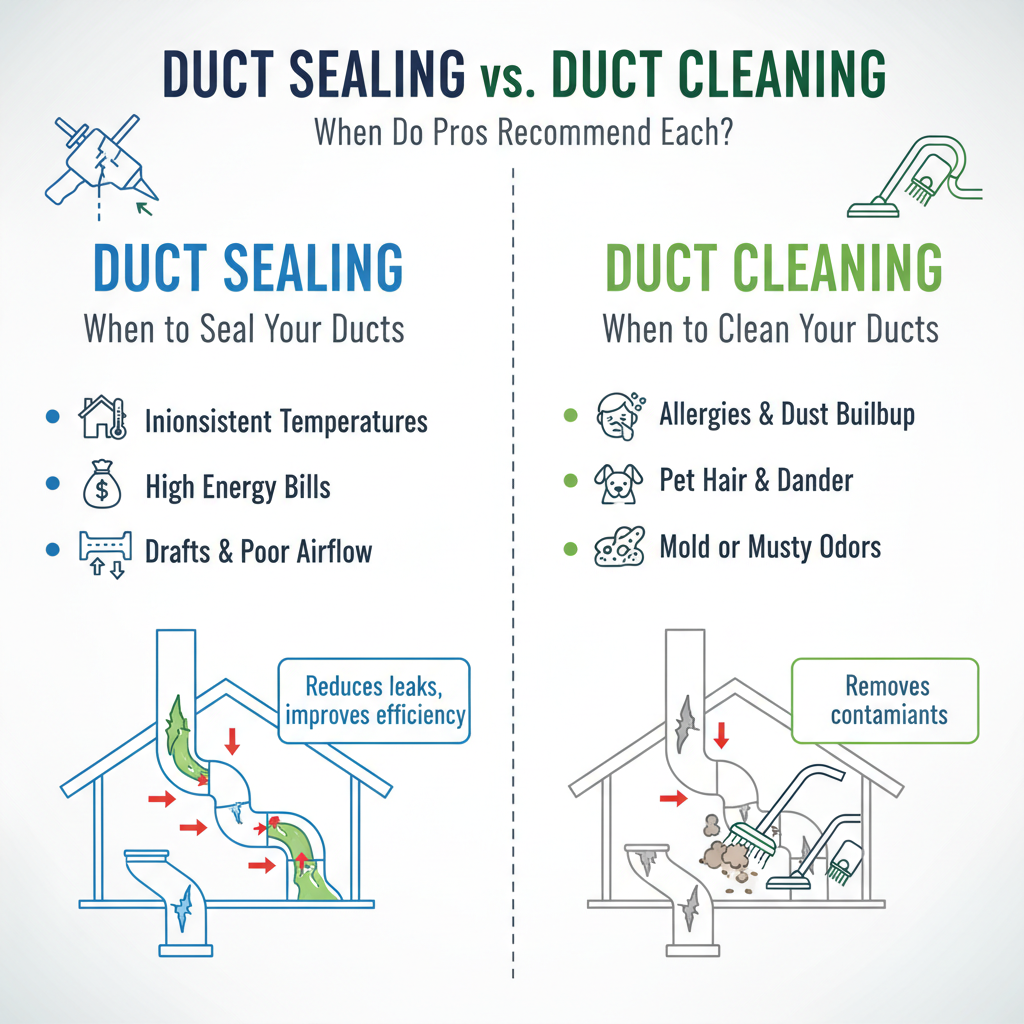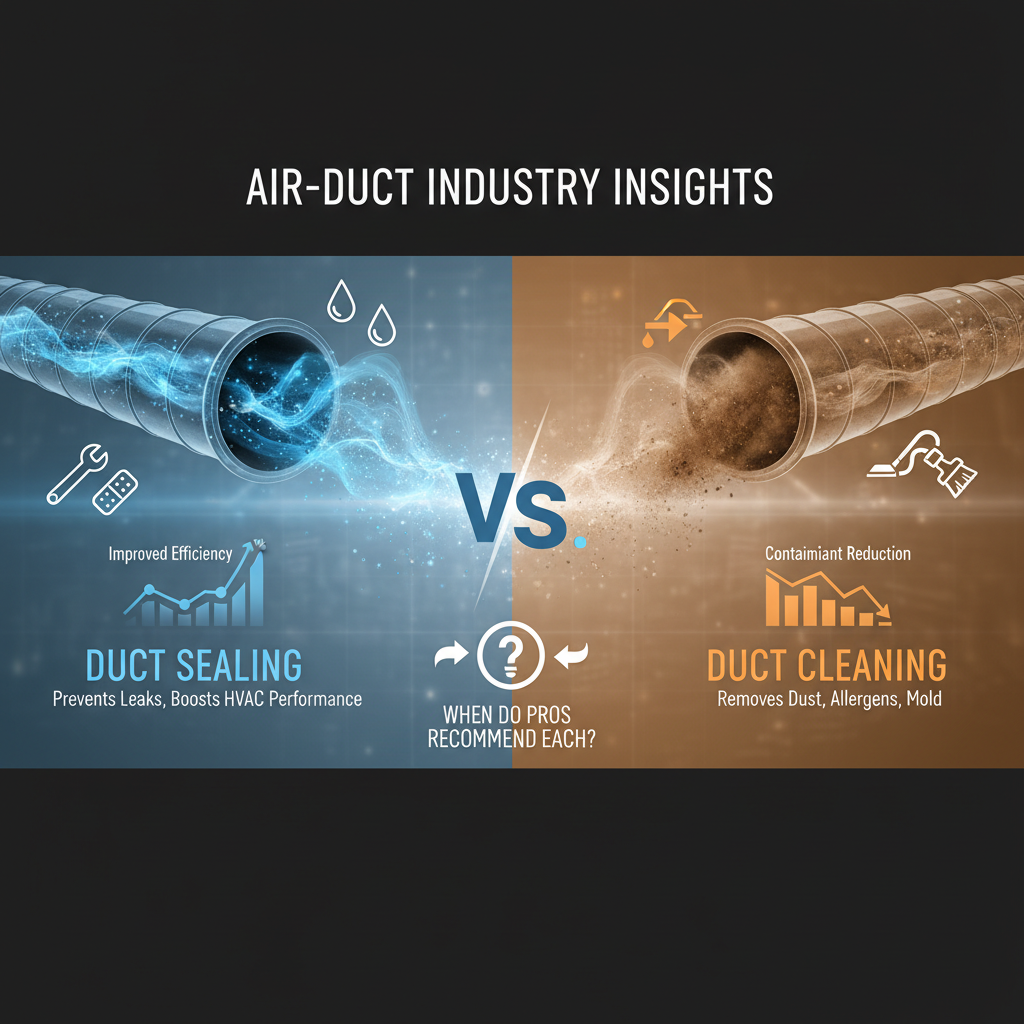
Pro Insights
Duct Sealing vs. Duct Cleaning: The Ultimate Guide to HVAC Efficiency & Indoor Air Quality
BizzFactor Pro Insights leverages EPA recommendations and extensive HVAC industry data to determine whether duct sealing for energy savings or duct cleaning for air purity concerns should be your priority.
45 Data Points Analyzed
Updated 1/12/2026
The Verdict
80% of Pros Recommend Duct Sealing
Duct Sealing
80%
Duct Cleaning
20%
Duct Sealing80%
Our rigorous analysis, drawing upon EPA guidelines and vast HVAC industry data, conclusively identifies duct sealing as the superior investment for optimizing home energy efficiency and overall indoor air quality for most homeowners.
Runner-ups
#2Duct Cleaning20%
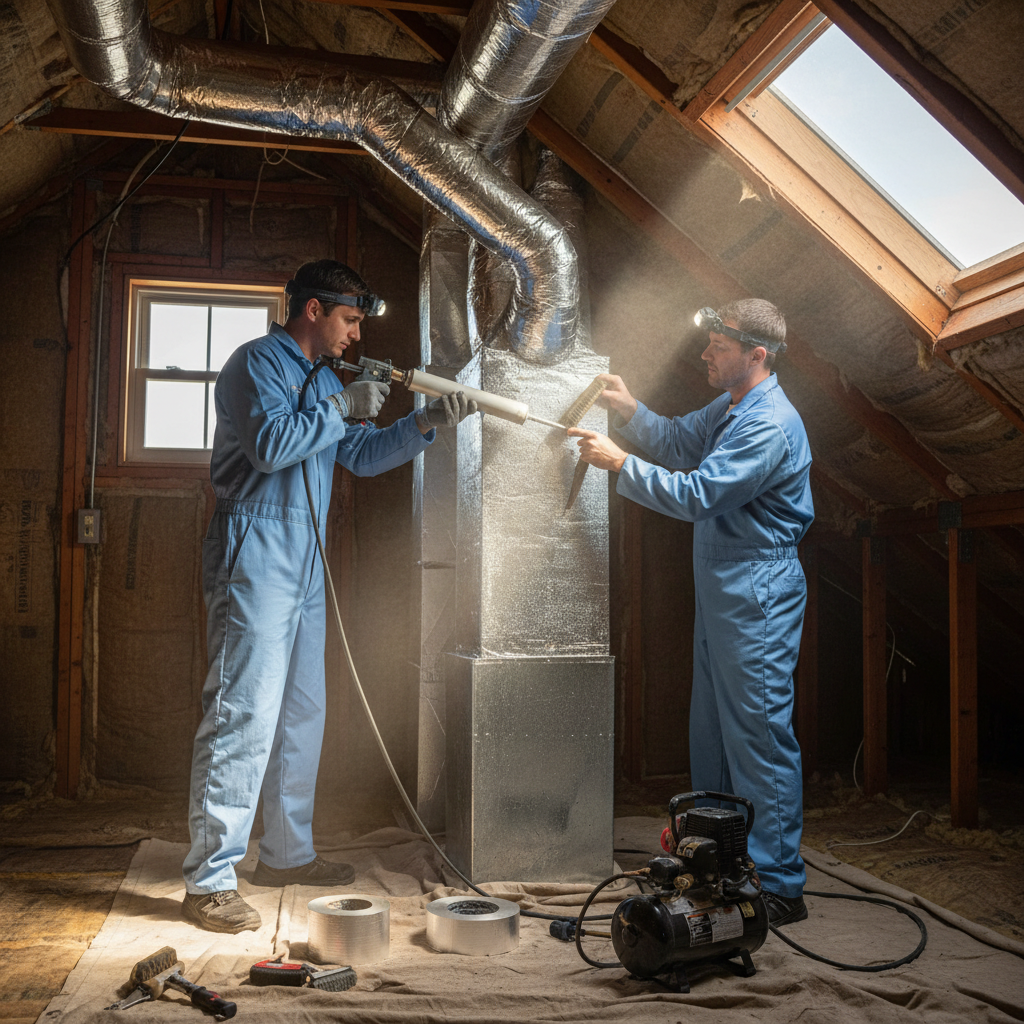
What the Pros Say
"I see leaky ducts in 9 out of 10 homes. You can have the cleanest ducts in the world, but if 25% of your conditioned air is leaking into the attic, you're just throwing money away. Sealing is a no-brainer for efficiency."
M
Mike Johnson
HVAC Technician, 15 years"Customers call us about two things: high bills or uneven temperatures. Duct sealing solves both. We recommend cleaning only when we see visible mold, signs of pests, or if a family has severe allergies and wants to cover all bases."
S
Sarah Chen
Service Manager"A sealed system allows the HVAC unit to achieve the static pressure it was designed for. This means better airflow, less strain on the blower motor, and a longer lifespan for the entire system. It’s a foundational fix, not just a cleaning."
C
Carlos Rodriguez
Master Technician"Duct sealing offers a clear ROI for our clients through verifiable energy savings. While we offer cleaning, we educate homeowners that sealing is the investment that pays for itself, whereas cleaning is a remedial task for specific situations."
J
Jennifer Williams
HVAC Business Owner
Detailed Breakdown
Advantages
- Duct Sealing demonstrably reduces heating and cooling expenses by 20-30%, generating significant annual savings and a rapid ROI.
- Sealing actively enhances indoor comfort by promoting uniform temperatures throughout the home, effectively eliminating common hot and cold spots.
- A sealed duct system reduces the operational strain on HVAC units, potentially extending equipment lifespan by several years and minimizing maintenance requirements.
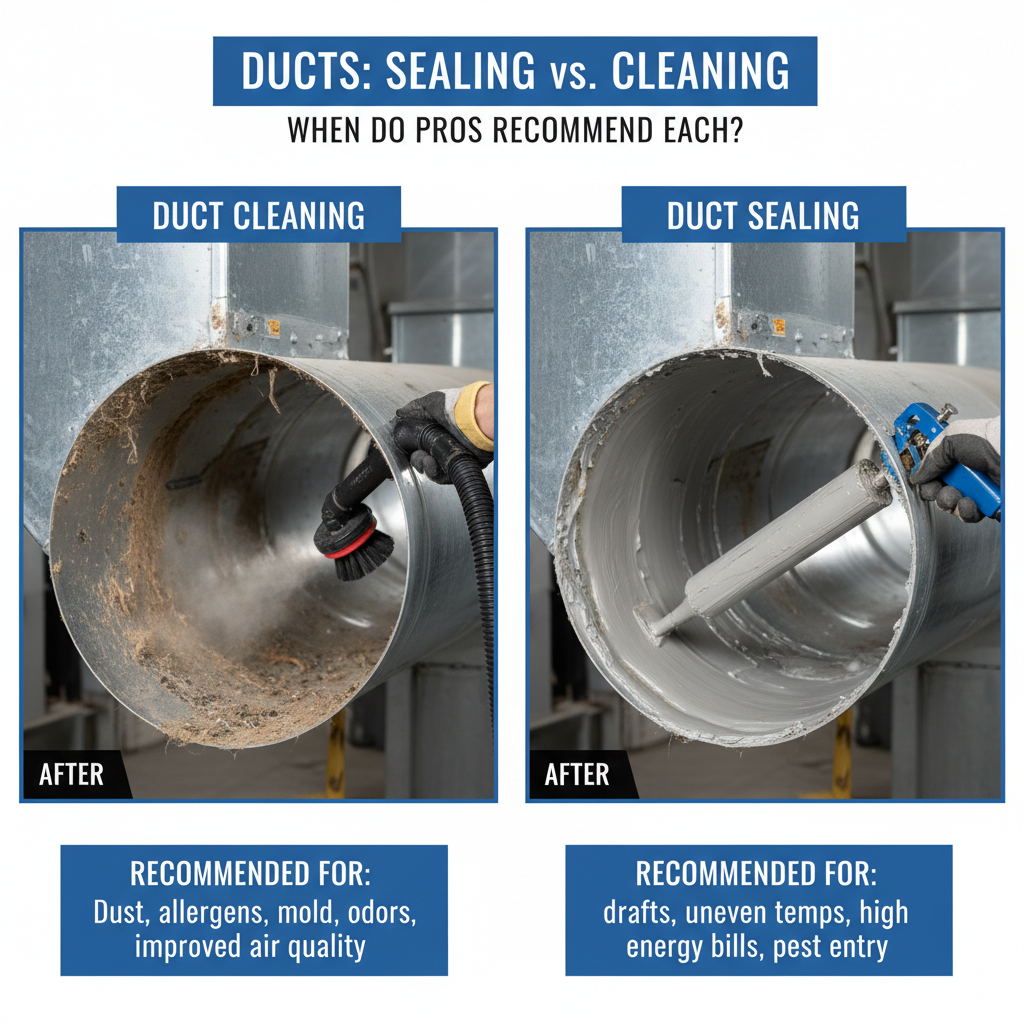
- Sealing dramatically improves indoor air quality by preventing contaminants like dust, allergens, insulation fibers, and outdoor pollutants from infiltrating the air stream from unconditioned spaces (e.g., attics, crawl spaces).
- Duct Cleaning effectively removes accumulated dust, pet dander, pollen, and other airborne particles, particularly beneficial after construction or renovation when debris levels are high and can improve airflow resistance in certain cases.
- Cleaning is essential for eliminating visible mold growth, microbial contaminants, or addressing active pest infestations (e.g., rodents, insects) within the duct system, which pose serious health risks and can degrade air quality.
- Professional cleaning can eradicate persistent, offensive odors originating from biological growth, pest activity, or other sources within the HVAC system, contributing to a fresher home environment.
Considerations
- The impact of routine duct cleaning on occupant health and general indoor air quality, in homes without specific identified issues, is not consistently supported by scientific research or EPA findings, making its cost-effectiveness questionable for general maintenance.
- Improper or overly aggressive duct cleaning methods risk damaging ductwork integrity, dislodging insulation, or inadvertently releasing more particulates into the living space, potentially worsening air quality if not executed by certified professionals adhering to NADCA standards.
- The initial investment for comprehensive duct sealing, especially when employing advanced sealant technologies like Aeroseal, can be higher than a standard duct cleaning service, though the long-term ROI is generally superior.
- Effectively sealing all duct leaks, particularly within older, complex, or difficult-to-access systems, can be a labor-intensive process requiring specialized tools, advanced diagnostic testing (e.g., blower door tests, thermal imaging, duct blaster tests), and experienced technicians to ensure thorough coverage and maximum efficacy.
| Type | Price Range |
|---|---|
| Duct Cleaning | $300 – $700 |
| Manual Duct Sealing | $500 – $2,000 |
| Pressurized (Aeroseal) Duct Sealing | $1,500 – $3,500 |