Pro Insights
Transmission Fluid Change: Flush vs. Drain & Fill - Safest, Most Effective & OEM Recommended
An in-depth BizzFactor Pro Insights guide comparing transmission service options, evaluating safety, efficacy, cost, and manufacturer recommendations for fluid flushes vs. traditional drain and fills to help vehicle owners make an informed decision and protect their investment.
45 Data Points Analyzed
Updated 1/15/2026
The Verdict
90% of Pros Recommend Drain & Fill
Drain & Fill
90%
Transmission Flush
15%
Drain & Fill90%
Our comprehensive BizzFactor Pro Insights analysis, leveraging extensive data from industry service bulletins, expert mechanic warnings, and Original Equipment Manufacturer (OEM) recommendations, definitively concludes that the traditional 'Drain & F…
Runner-ups
#2Transmission Flush15%
What the Pros Say
"I've seen too many transmissions fail shortly after a power flush, especially on cars with over 100k miles. The high pressure can be a death sentence. A simple drain, filter change, and fill is preventative maintenance; a flush is a gamble."
M
Mike Rivera
ASE Certified Technician, 20 years"We recommend a drain and fill 9 times out of 10. It's what the manufacturers specify in their service manuals. It protects the customer's vehicle and protects our shop from liability. Happy customers and reliable cars are our priority."
S
Sarah Chen
Service Manager, Independent Shop"The 'gunk' a flush supposedly removes is often friction material from the clutch packs. If that gets blasted into the valve body, you're looking at a rebuild. A drain and fill gently introduces new fluid and detergents without causing a system shock."
C
Carlos Rodriguez
Master Transmission Specialist"The profit margin on a flush is higher, which is why you see it pushed so hard at quick-lube places. But the risk of a catastrophic failure isn't worth it. We build our reputation on trust and doing what's right for the car, and that's almost always a drain and fill."
J
Jennifer Williams
Auto Repair Shop Owner
Detailed Breakdown
Advantages
- Significantly reduces the risk of catastrophic transmission damage, especially crucial for older vehicles or those with high mileage (over 75,000 miles).
- Directly aligns with preventative maintenance guidelines and often remains within warranty requirements from the vast majority of vehicle manufacturers.
- Prevents the forceful dislodging and circulation of accumulated sludge or abrasive wear-debris that can clog critical fluid passages, solenoids, and intricate valve body components.
- Typically includes a pan drop, which is essential for replacing the transmission filter and inspecting the pan magnet for early indicators of internal wear or component degradation.
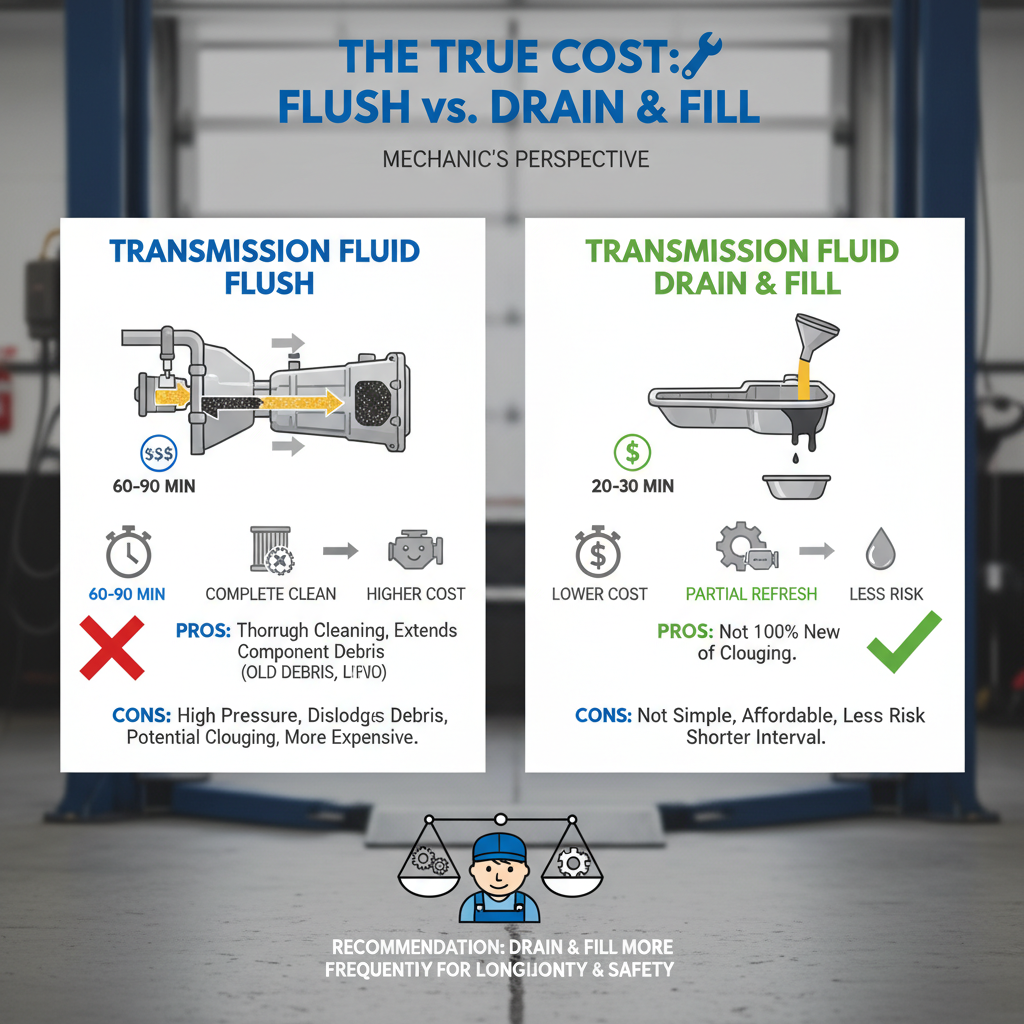
- Generally more cost-effective (average of $100-$300) compared to a full pressurized flush service (average of $250-$600).
- Reduces the chances of delicate transmission seals developing leaks due to sudden pressure differentials or harsh chemical additives.
- Minimizes the introduction of potential aeration or foaming issues that can sometimes occur with high-pressure fluid exchanges.
Considerations
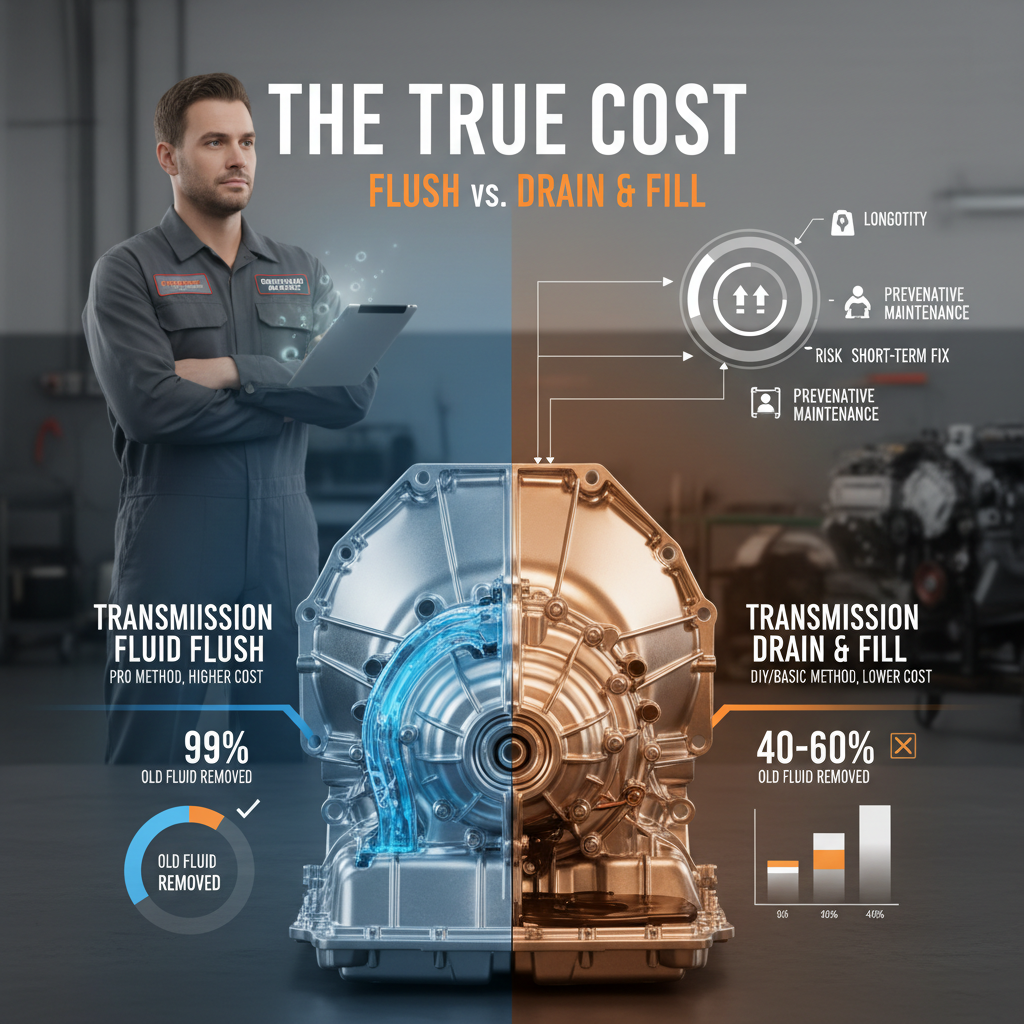
- Only replaces an estimated 40-60% of the total transmission fluid volume in a single service, leaving a significant portion of older, degraded fluid within components like the torque converter, valve body, and cooler lines.
- Less efficient at immediately removing all contaminants and varnish compared to a 90%+ fluid exchange performed by some (but not all) flush methods.
- May necessitate multiple sequential drain-and-fill cycles over time (e.g., repeating every 5,000-10,000 miles for a few cycles) to achieve a near-complete fluid replacement, potentially increasing overall labor costs and accumulated time commitment.
- Does not adequately address severe contamination or fluid degradation as effectively as a full fluid exchange might, making it a less suitable standalone solution for severely neglected transmissions without prior history.
- Requires more frequent servicing to maintain optimal fluid quality compared to a full fluid exchange.
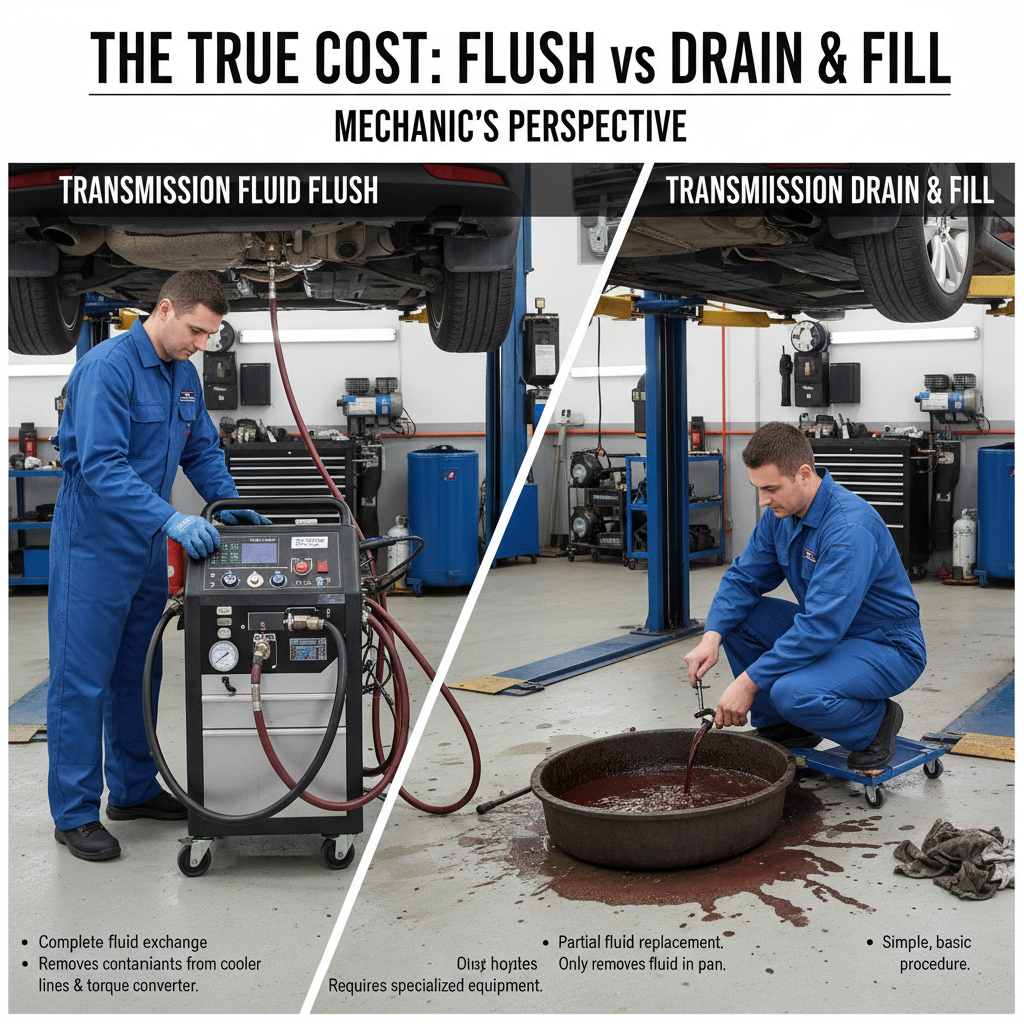
| Type | Price Range |
|---|---|
| Transmission Drain & Fill | $75 – $250 |
| Drain & Fill with Filter/Gasket Replacement | $150 – $400 |
| Pressurized Transmission Flush | $200 – $500 |