Pro Insights
Dryer Vent Booster Fans (DEDPVs): The Ultimate Guide to Safety, Efficacy, & Code Compliance
BizzFactor Pro Insights offers a data-driven comparison and expert analysis of Dryer Exhaust Duct Power Ventilators (DEDPVs), evaluating building codes, critical safety factors, performance metrics, and professional consensus for homes with extended dryer vent systems.
45 Data Points Analyzed
Updated 1/11/2026
The Verdict
10% of Pros Recommend Prioritize Duct Re-routing & Optimization: The Safest & Most Efficient Solution
Other
60%
Install a UL 705 Listed DEDPV
25%
Prioritize Duct Re-routing & Optimization: The Safest & Most Efficient Solution
10%
Increased Cleaning Frequency
5%
Prioritize Duct Re-routing & Optimization: The Safest & Most Efficient Solution10%
Building codes and safety experts resoundingly advocate for shortening and straightening dryer vent runs as the safest, most efficient, and lowest-maintenance solution.
Runner-ups
#2Install a UL 705 Listed DEDPV25%
#3Increased Cleaning Frequency5%
What the Pros Say
"A booster fan is a last resort, not a first choice. We always try to find a shorter path for the vent first. If we absolutely can't, then a DEDPV is the tool for the job, but it has to be the right one and installed perfectly."
M
Mike Johnson
HVAC & Vent Technician, 15 years"We see dryer heating elements burn out prematurely all the time from excessive back pressure in long vents. A properly functioning booster can solve that, but a malfunctioning one just masks the problem or makes it worse."
S
Sarah Chen
Appliance Service Manager"Don't even think about using a standard inline duct fan. It must be a UL 705 listed 'Dryer Exhaust Duct Power Ventilator.' These are specifically designed to handle the moisture and lint, and they have safety interlocks. Anything less is a serious fire risk."
C
Carlos Rodriguez
Master Technician & Inspector"From a business perspective, booster fans mean more maintenance calls. Homeowners often forget they exist until their clothes stop drying again. We educate our clients that if they have one, it needs to be inspected and cleaned annually, just like the rest of the vent."
J
Jennifer Williams
Owner, Vent Cleaning Professionals
Detailed Breakdown
Advantages
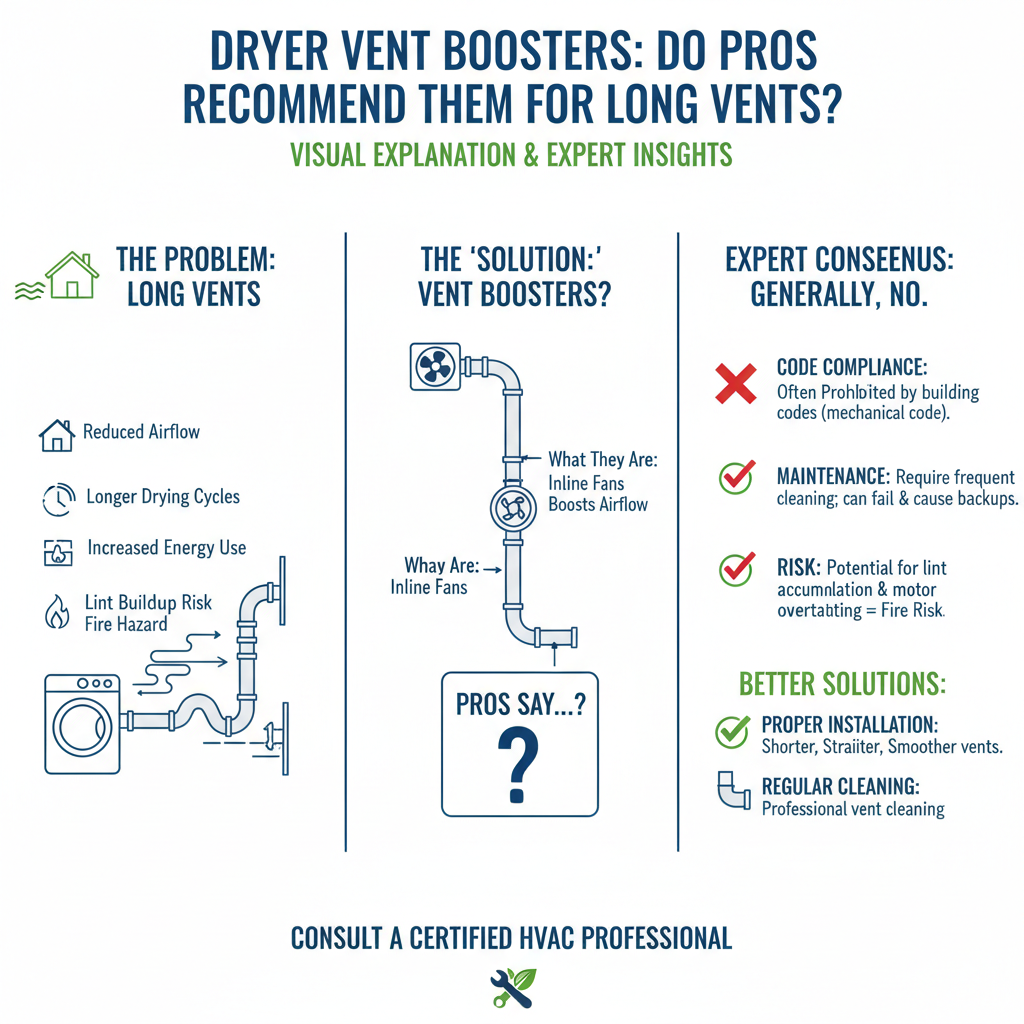
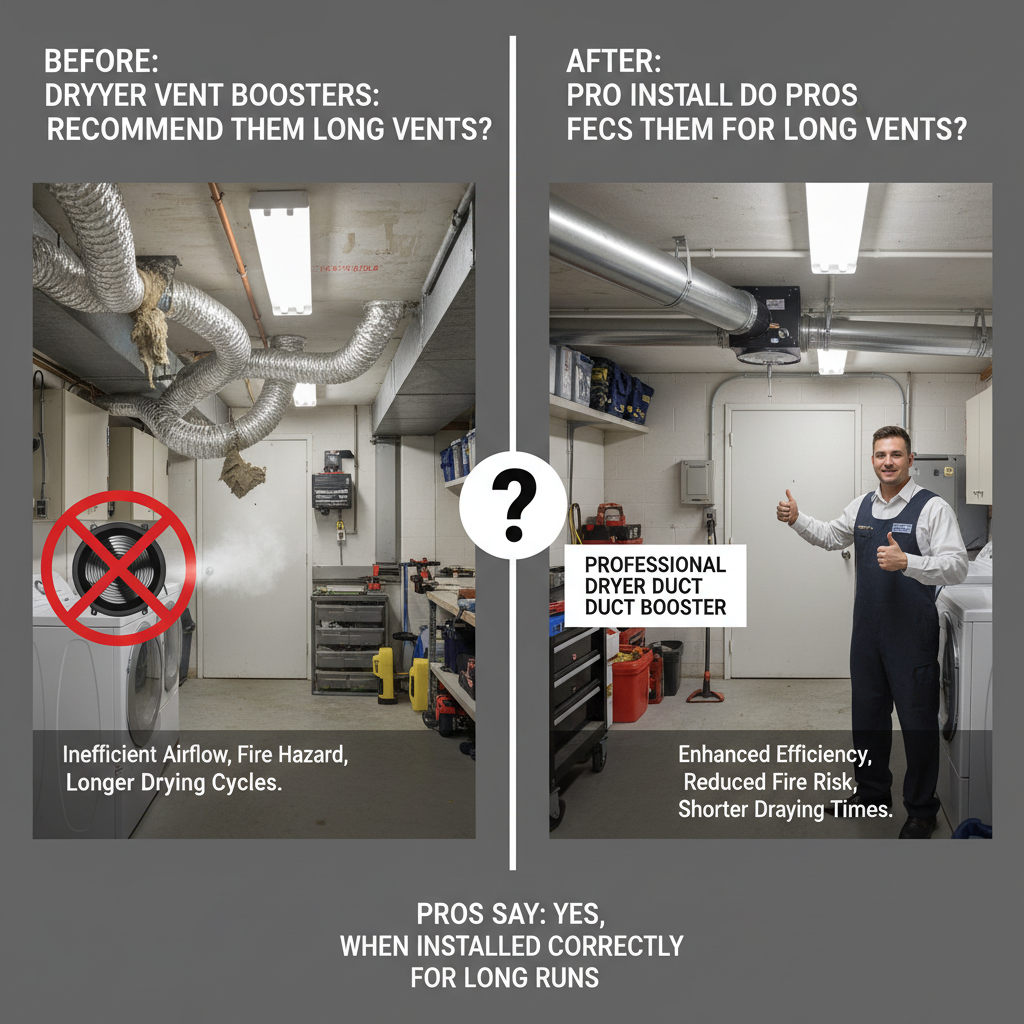
- Significantly enhances drying efficiency and reduces cycle times for excessively long or architecturally complex ventilation systems (e.g., exceeding 35 equivalent feet).
- Lowers energy consumption by enabling the dryer to operate under optimal conditions, preventing garment damage from over-drying.
- Reduces the critical risk of lint buildup and potential fires in dryer ducts that exceed manufacturer specified lengths, provided the DEDPV itself is rigorously maintained.
- Offers architectural design flexibility, allowing laundry appliance placement in locations far from exterior walls where conventional passive venting is impractical.
- Modern, smart DEDPV units equipped with pressure sensors activate only when the dryer is operating, optimizing energy usage and extending fan life while providing diagnostic feedback.
Considerations
- Introduces an additional mechanical point of failure into the dryer exhaust system, increasing overall system complexity and potential for malfunction.
- The booster fan unit itself can become a significant lint trap and a fire hazard if not meticulously and regularly cleaned.
- Requires diligent and periodic inspection, cleaning, and maintenance, which homeowners frequently neglect, significantly escalating inherent safety risks.
- Improper installation can lead to severe building code violations (e.g., IMC, IRC) and pose serious health and safety hazards, including elevated fire and carbon monoxide risks.
- Adds an audible noise source to the home's utility areas and within the ductwork, which may be disruptive, particularly in open-concept living spaces.
- Represents an additional upfront purchase cost, professional installation expense, and potential ongoing operational and maintenance costs beyond the dryer itself.
| Type | Price Range |
|---|---|
| DEDPV Unit Only | $150 – $300 |
| Standard Professional Installation | $400 – $700 |
| Complex Professional Installation | $700 – $1,200 |