Pro Insights
ANSI/BHMA Commercial Lock Grades: Your Essential Business Security Guide
Navigate the complexities of commercial door hardware with BizzFactor Pro Insights. This definitive guide deciphers ANSI/BHMA lock grades, offering expert recommendations, data-driven cost-benefit analysis, and critical compliance insights to fortify your business's physical security.
45 Data Points Analyzed
Updated 1/11/2026
The Verdict
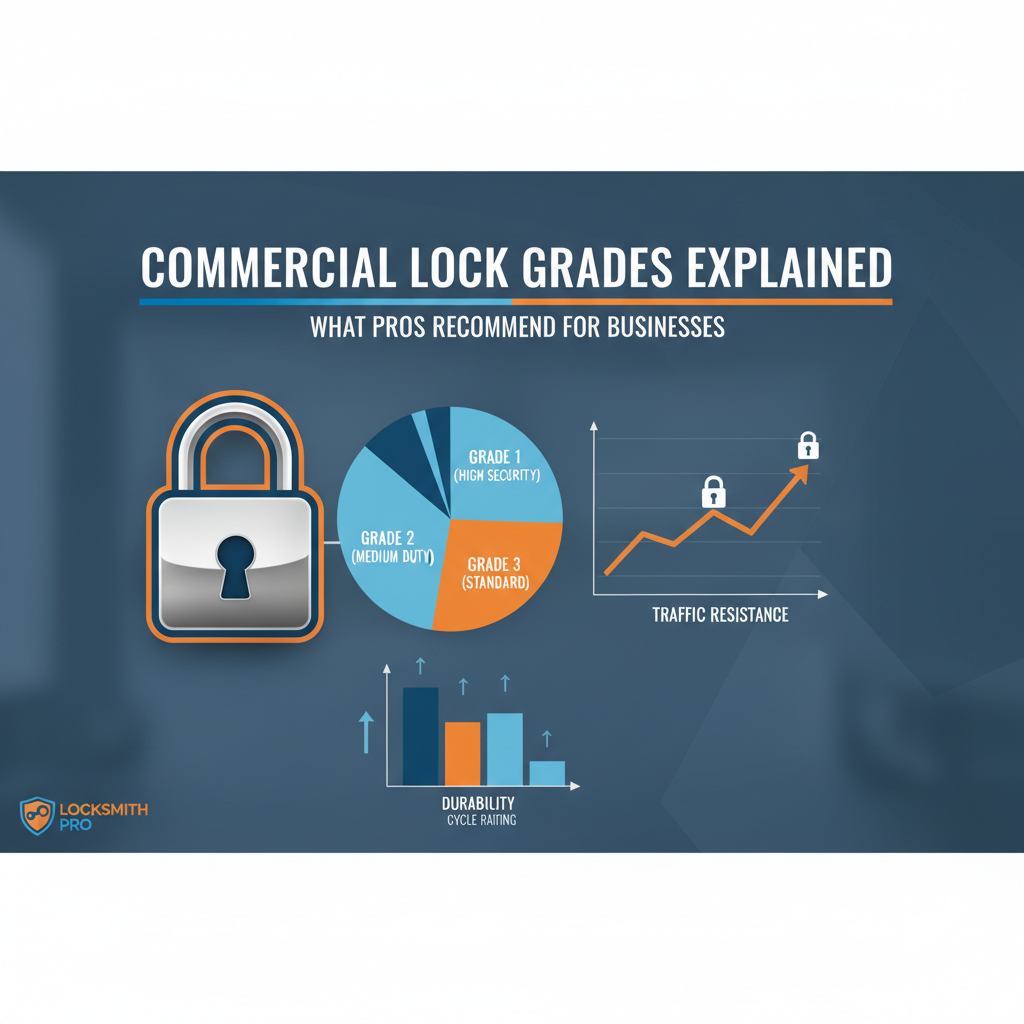
80% of Pros Recommend ANSI Grade 1 Locks: Unrivaled Security, Unmatched Durability
ANSI Grade 1 Locks: Unrivaled Security, Unmatched Durability
80%
ANSI Grade 2 Locks
20%
ANSI Grade 3 Locks
0%
ANSI Grade 1 Locks: Unrivaled Security, Unmatched Durability80%
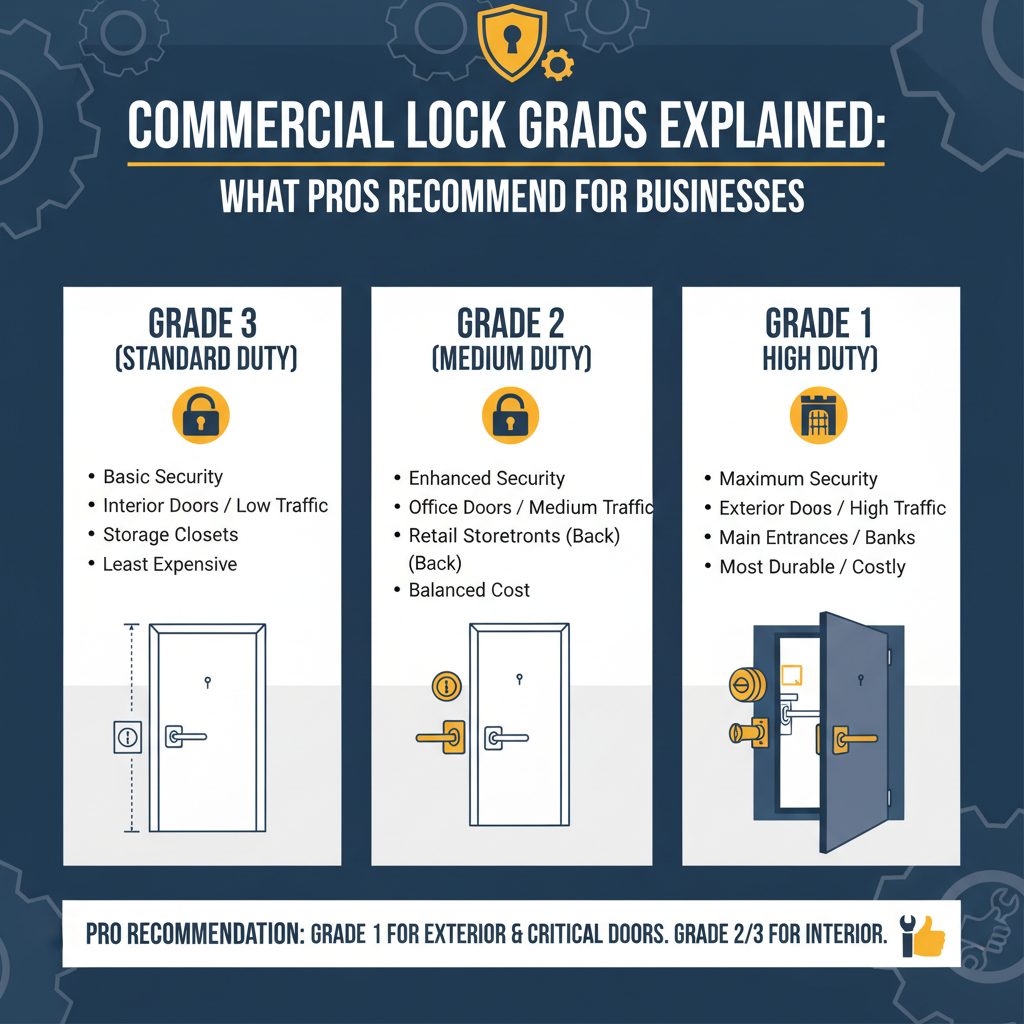
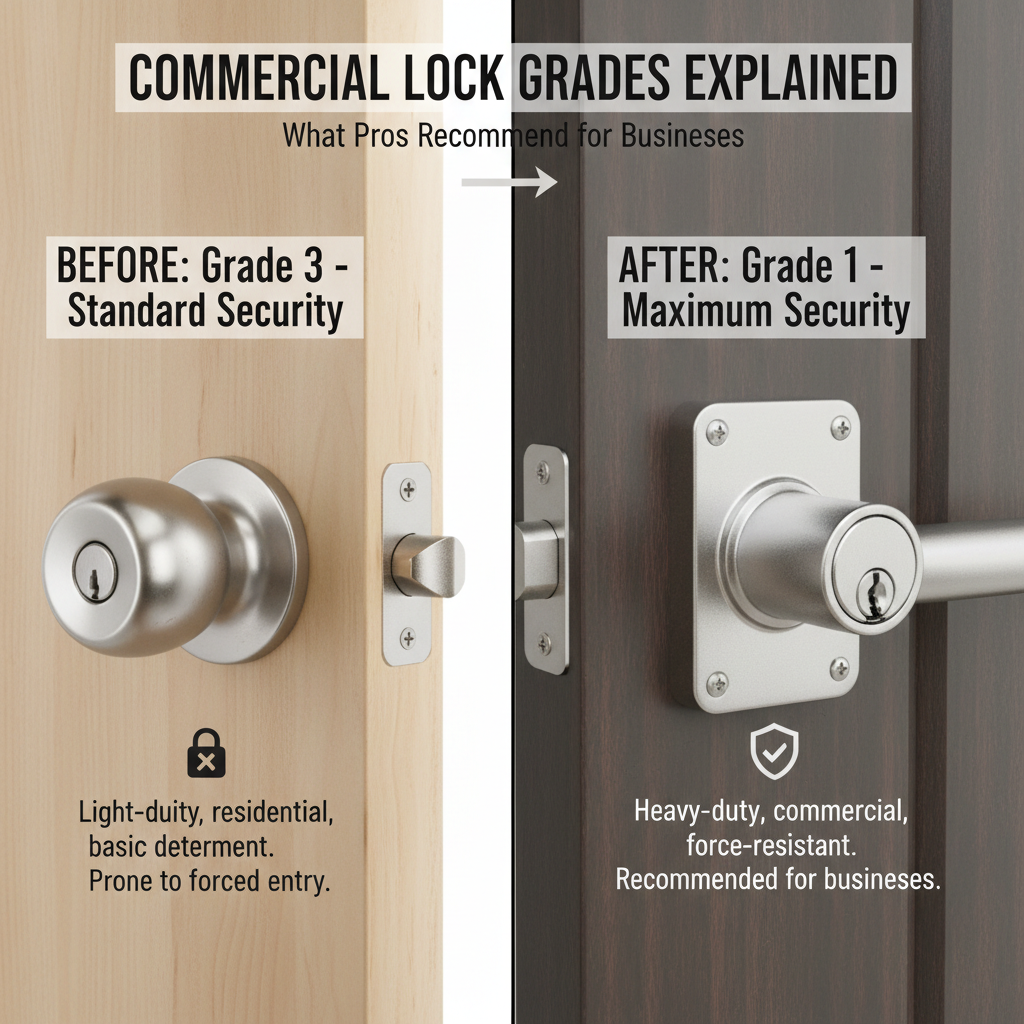
ANSI Grade 1 locks epitomize the zenith of commercial security, meticulously engineered to deliver unparalleled durability and formidable resistance against forced entry.
Runner-ups
#2ANSI Grade 2 Locks20%
#3ANSI Grade 3 Locks0%
What the Pros Say
"Don't ever let a budget convince you to put anything less than a Grade 1 lock on your main entrance. A Grade 1 is tested for 800,000 cycles. That's the difference between a lock that lasts over a decade in a busy office and one you'll replace in three years."
M
Mike Johnson
Commercial Locksmith Technician, 15 years"We always start a business consultation by auditing their lock grades. The most common mistake we find is a residential-grade lock on a back door or storage area. We recommend a minimum of Grade 2 for any commercial door, and always Grade 1 for perimeters and sensitive areas like server rooms."
S
Sarah Chen
Security Solutions Manager"The difference is physical. A Grade 1 bolt is typically hardened steel and has a longer throw. The cylinder housing is reinforced to resist drilling, and the lock body itself can withstand hundreds of pounds more force than a Grade 2. It’s not just about picking; it’s about brute force."
C
Carlos Rodriguez
Master Lock Technician"My insurance broker was clear: Grade 1 certified locks on all exterior doors were non-negotiable for our policy. The initial cost was higher, but the investment meant better premiums and knowing my inventory was properly secured after hours. It's a foundational business expense."
J
Jennifer Williams
Retail Business Owner
Detailed Breakdown
Advantages
- Supreme resistance to forced entry, drilling, and picking, substantially elevating business security posture
- Engineered for exceptional durability, surpassing 800,000 operational cycles for consistent reliability
- Offers the longest operational lifespan, leading to significant reductions in long-term maintenance and replacement costs
- Mandatory for meeting most stringent commercial insurance carrier requirements and building codes, ensuring full compliance
- Provides maximum security and profound peace of mind for high-value asset protection, data integrity, and employee safety
- Enhanced resilience against severe environmental stressors, high-volume traffic, and daily operational wear
- Establishes a potent physical deterrent, proactively minimizing security vulnerabilities and risks
Considerations
- Higher initial procurement and professional installation expenses compared to lower-grade alternatives, impacting immediate budgetary allocations
- Installation typically necessitates specialized expertise from a certified commercial locksmith due to intricate mechanisms and precision requirements
- Potentially over-engineered and cost-prohibitive for minimal-security, internal doors with very low traffic and negligible risk exposure
- Can be heavier and bulkier than lower-grade options, which might be a minor aesthetic consideration in select interior designs
| Type | Price Range |
|---|---|
| ANSI Grade 2 Lock (Light Commercial) | $80 – $250 |
| ANSI Grade 1 Mechanical Lock (Heavy Commercial) | $150 – $500 |
| ANSI Grade 1 Electronic Lock System | $400 – $1,200 |