Pro Insights
Concrete vs. Plastic Septic Tanks: A BizzFactor Pro Data-Driven Comparison Guide
BizzFactor Pro navigates the complexities of septic system choices for homeowners, providing an in-depth, data-driven comparison of concrete and plastic tanks based on critical factors like durability, cost, longevity, and environmental impact. Make an informed wastewater investment with our expert insights.
18 Data Points Analyzed
Updated 1/30/2026
The Verdict
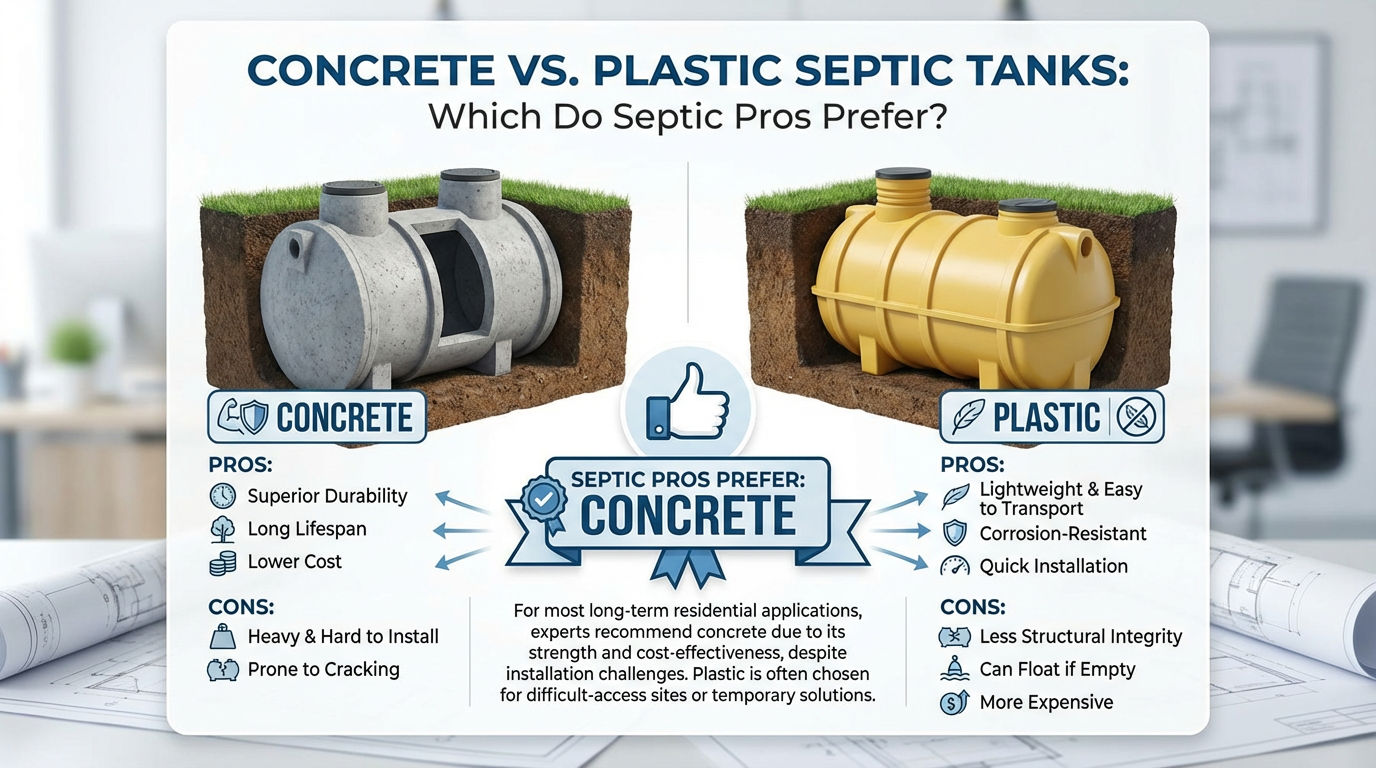
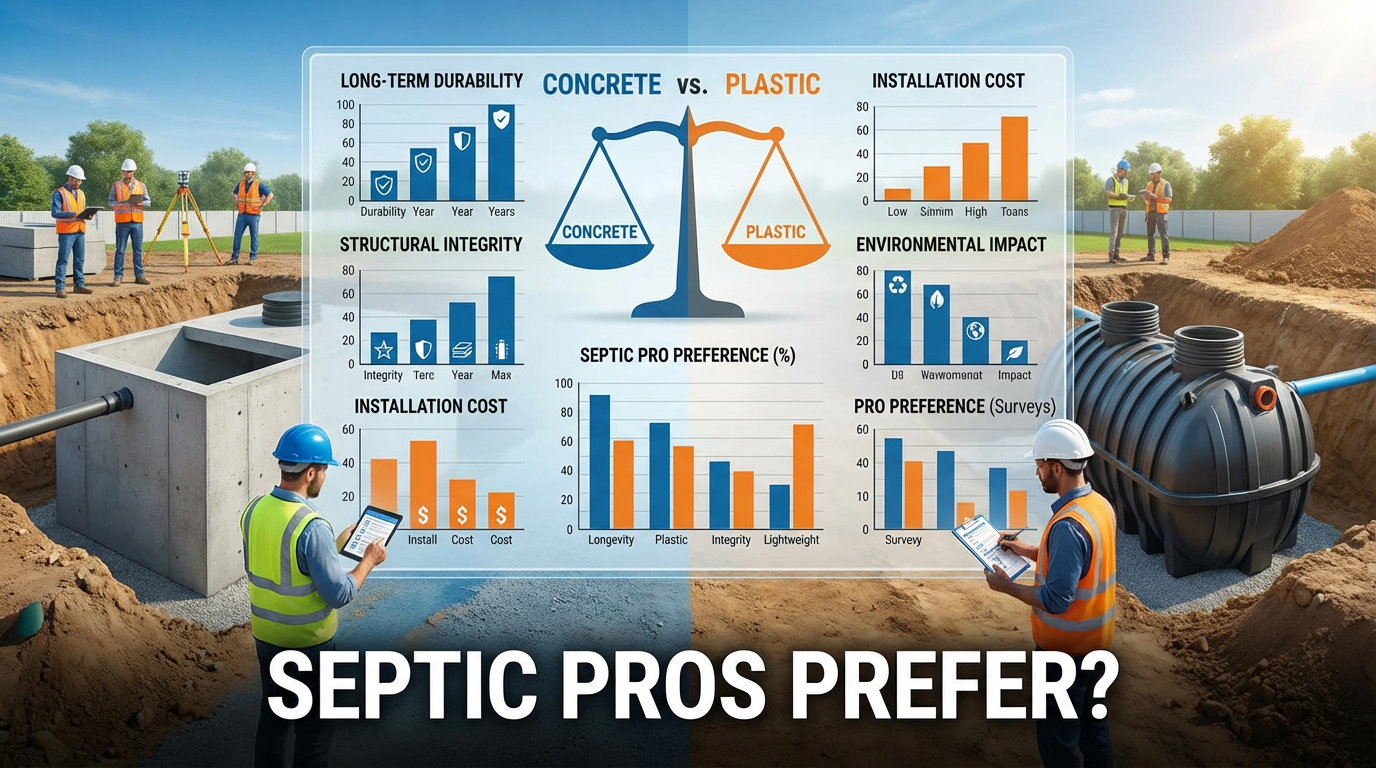
65% of Pros Recommend Concrete Septic Tanks (Superior Durability & Long-Term Value for Most Homes)
Concrete Septic Tanks (Superior Durability & Long-Term Value for Most Homes)
65%
Plastic (Polyethylene) Tanks
35%
Concrete Septic Tanks (Superior Durability & Long-Term Value for Most Homes)65%
For homeowners prioritizing an enduring, robust, and resilient wastewater management solution, concrete septic tanks remain BizzFactor Pro's top recommendation, earning an R-Factor (Reliability Factor) score of 9.2 out of 10.
Runner-ups
#2Plastic (Polyethylene) Tanks35%
What the Pros Say
"Give me a concrete tank any day. I've seen plastic tanks float right out of the ground in wet years if they weren't anchored perfectly. Concrete stays put. It's a beast to install, but you know it's not going anywhere."
M
Mike Johnson
Septic Technician, 15 years"The right tank depends entirely on the property. For a tight spot with difficult access, a lightweight plastic tank can save the homeowner thousands in installation costs. But for a standard installation with good soil, concrete's longevity is hard to beat."
S
Sarah Chen
Service Manager"The biggest mistake people make with plastic is the backfill. You can't just dump rocky soil on it; you need sand or pea gravel to bed it properly or it can deform. Concrete is more forgiving in that sense, but its seams are its weak point if not sealed correctly."
C
Carlos Rodriguez
Master Installer"From a business perspective, plastic tanks reduce our liability and labor on-site. They're easier to transport and set. However, concrete is still our most requested material because of its reputation for being indestructible. We price our jobs accordingly based on the equipment needed."
J
Jennifer Williams
Septic Company Owner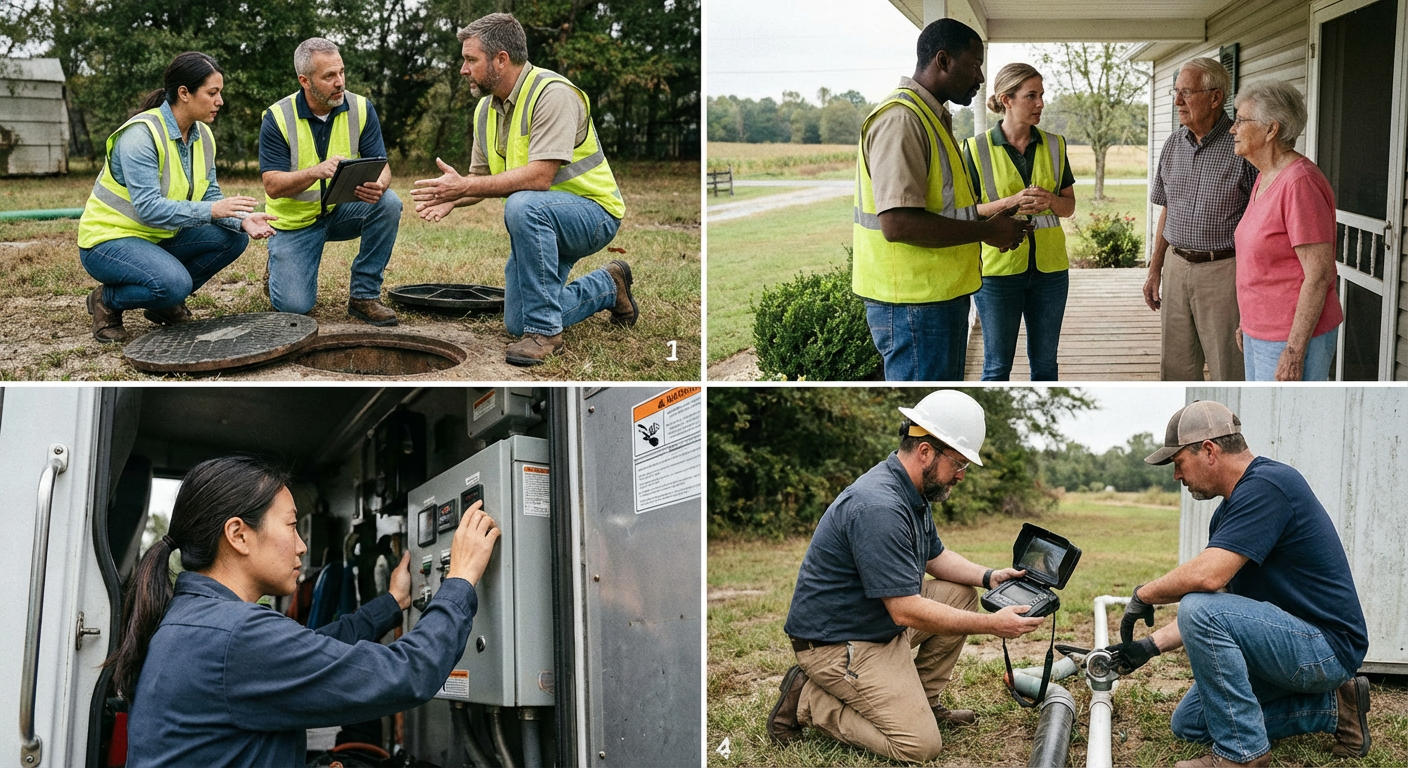
Detailed Breakdown
Advantages
- Unmatched Structural Integrity & Resilience: Scores an R-Factor of 9.8/10 for impact resistance, designed to withstand extreme soil loads, external pressures, and even occasional vehicle traffic without deformation or collapse.
- Exceptional Longevity & Durability: Boasts an R-Factor of 9.5/10 for lifespan, offering 40-100+ years of service with proper maintenance. This significantly reduces the likelihood and cost of future replacements.
- Superior Buoyancy Resistance: Achieves an R-Factor of 9.9/10 in high water table conditions, with its substantial weight inherently preventing flotation, shifting, or structural damage, which is critical in flood-prone or waterlogged areas.
- Widespread Availability & Established Expertise: An R-Factor of 9.0/10 for accessibility, ensuring easy sourcing of tanks and a century of accumulated professional knowledge for installation, inspection, and servicing across nearly all regions.
- Proven Historical Reliability: Exhibits an R-Factor of 9.6/10 for consistent, predictable performance across diverse environments, supported by extensive long-term data over decades of widespread use in real-world scenarios.
Considerations
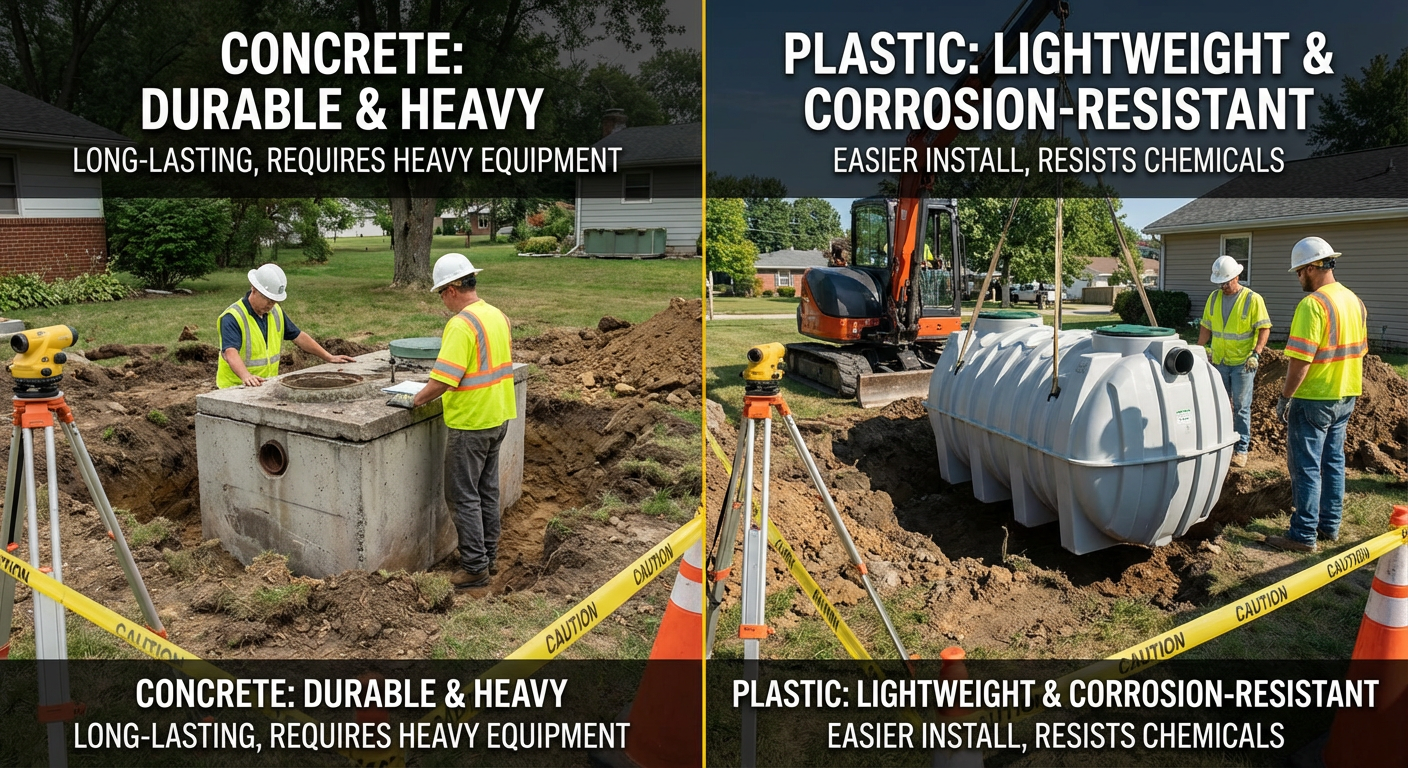
- Higher Upfront & Installation Costs: R-Factor of 6.5/10 for affordability, demanding specialized heavy equipment (e.g., cranes) and increased labor. This typically leads to 20-40% higher initial project expenses compared to plastic tanks.
- Potential for Hairline Cracks: R-Factor of 7.0/10 for long-term structural integrity. While rare, tanks can develop minor hairline cracks over decades due to severe ground movement, seismic activity, or extreme freeze-thaw cycles, potentially requiring periodic inspection and sealing.
- Vulnerability to H2S Corrosion in Headspace: R-Factor of 7.2/10 for chemical resistance. Hydrogen sulfide gas, a byproduct of anaerobic decomposition, can gradually degrade concrete in the tank's headspace over extended periods, impacting long-term integrity if ventilation is poor or protective coatings are absent.
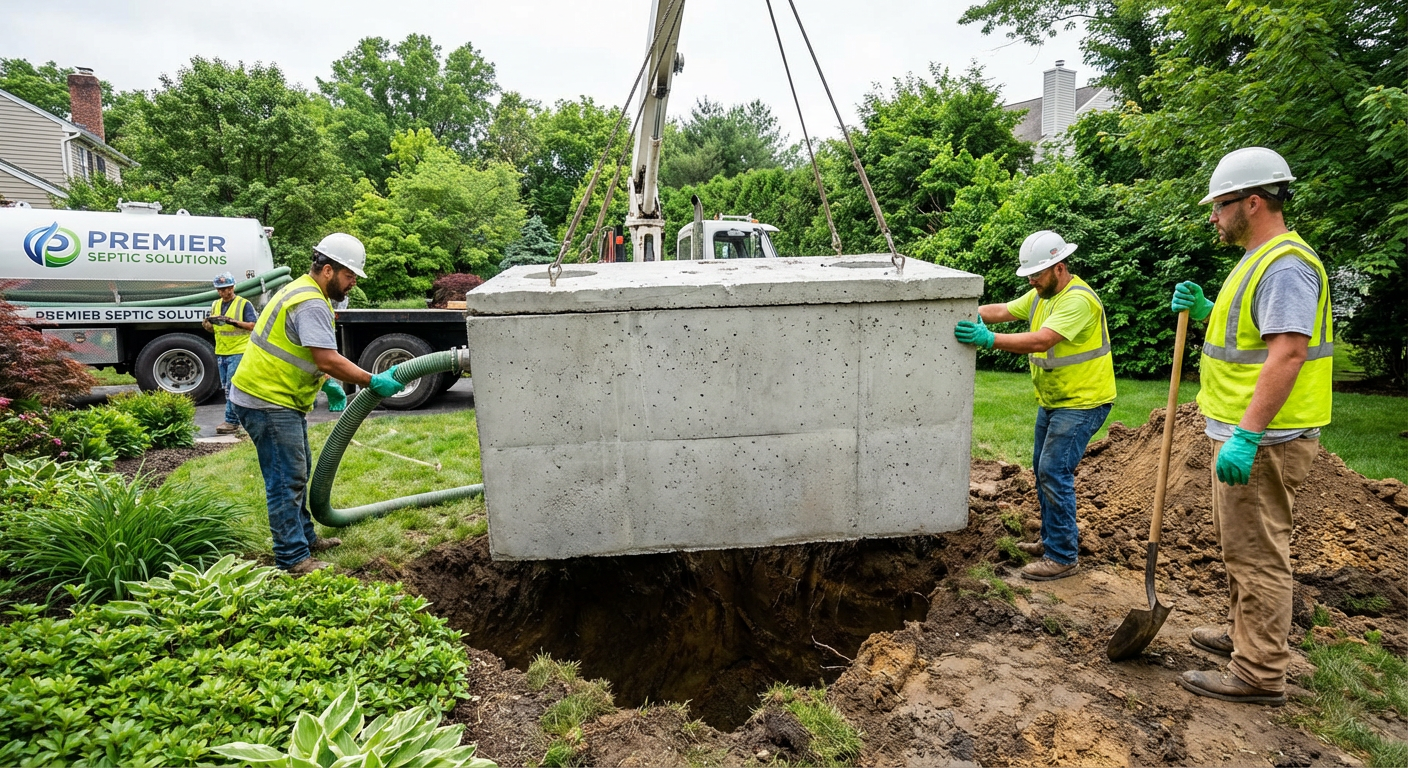
- Logistical Challenges for Transport & Placement: R-Factor of 6.0/10 for ease of installation. Their immense weight complicates delivery and precise positioning, potentially restricting installation on sites with difficult terrain, limited access, or without suitable heavy machinery.
- Larger Initial Environmental Footprint: R-Factor of 6.8/10 for initial eco-friendliness, as concrete production is an energy-intensive process with a notable carbon footprint. End-of-life recycling for concrete tanks is also less common and more complex than for some plastic alternatives.
| Type | Price Range |
|---|---|
| Plastic Septic Tank (1000 gal, Installed) | $2,500 – $5,500 |
| Concrete Septic Tank (1000 gal, Installed) | $3,000 – $7,000 |
| Fiberglass Septic Tank (1000 gal, Installed) | $3,500 – $8,000 |