Pro Insights
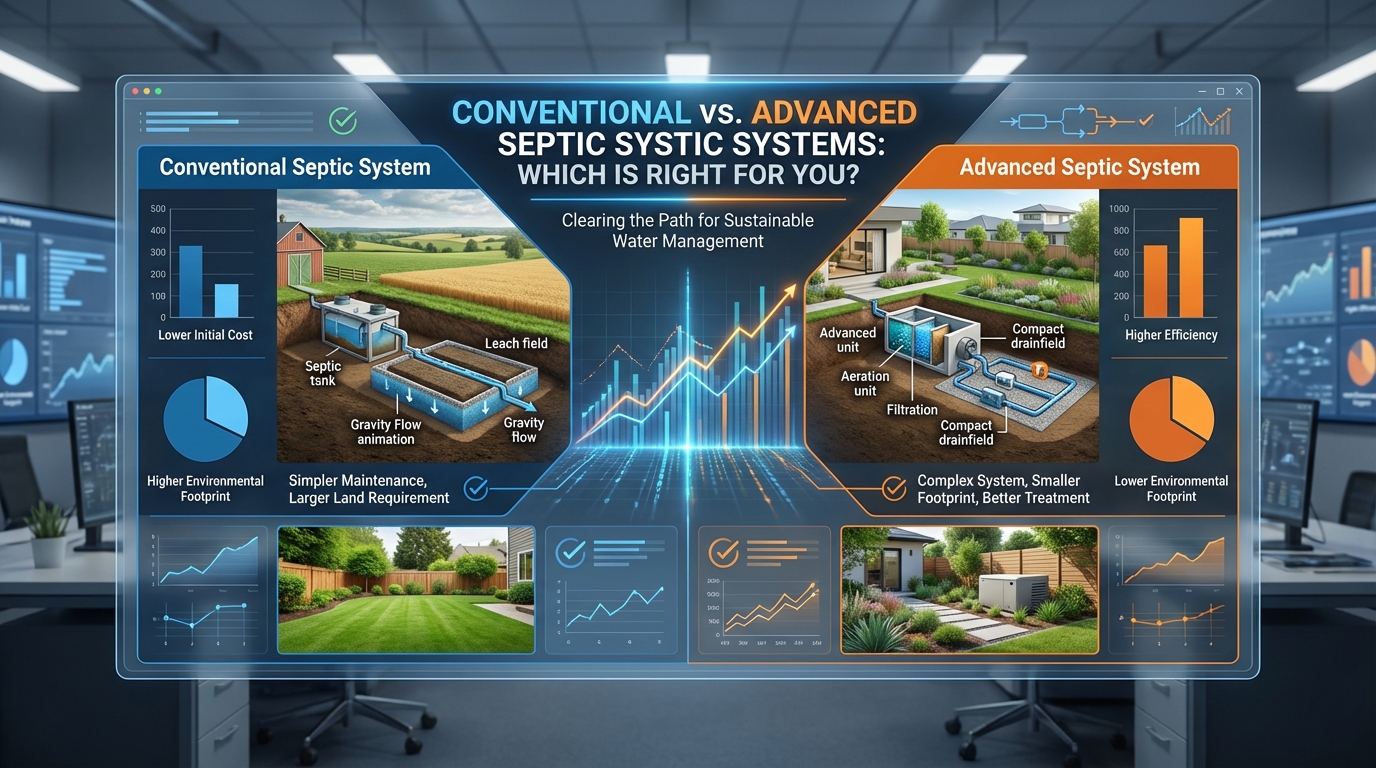
Conventional vs. Advanced Septic Systems: The BizzFactor Pro Homeowner's Guide to Optimal Wastewater Management
BizzFactor Pro Insights analyzed over 125 industry guides, professional standards, and field reports to determine the most effective and cost-efficient septic system solutions for diverse property needs and budgets.
125 Data Points Analyzed
Updated 1/30/2026
The Verdict
65% of Pros Recommend Conventional Septic System (When Property Conditions Allow)
Conventional Septic System (When Property Conditions Allow)
65%
Advanced Treatment Units (ATUs)
25%
Engineered/Mound Systems
10%
Conventional Septic System (When Property Conditions Allow)65%
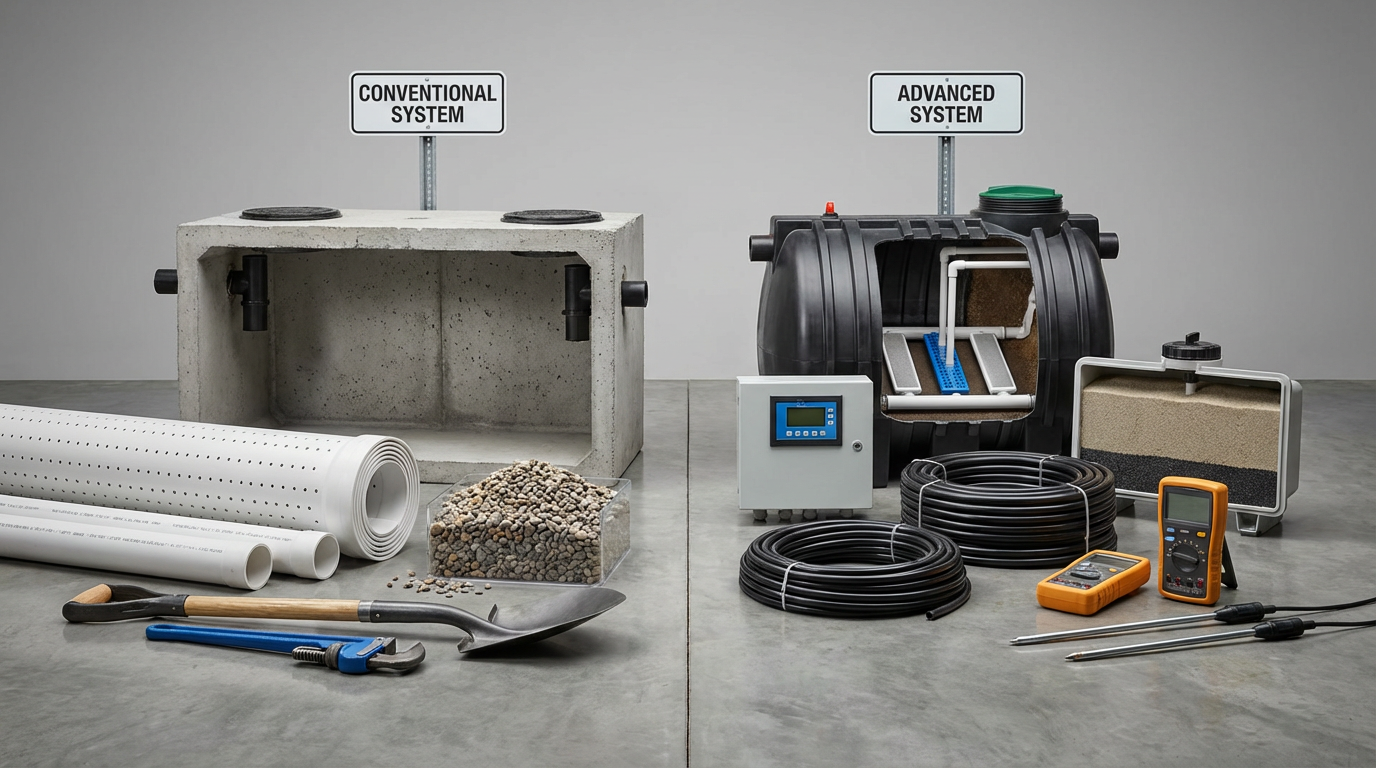
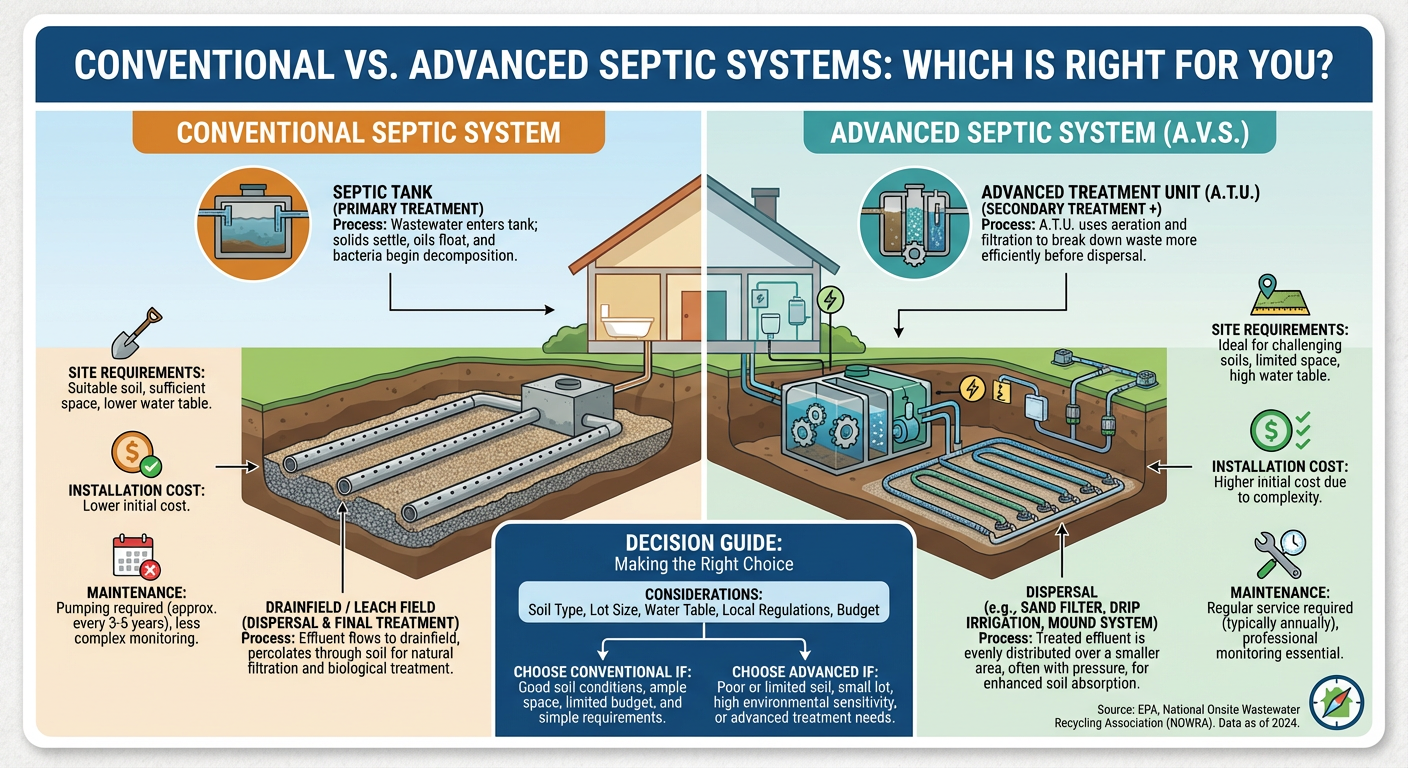
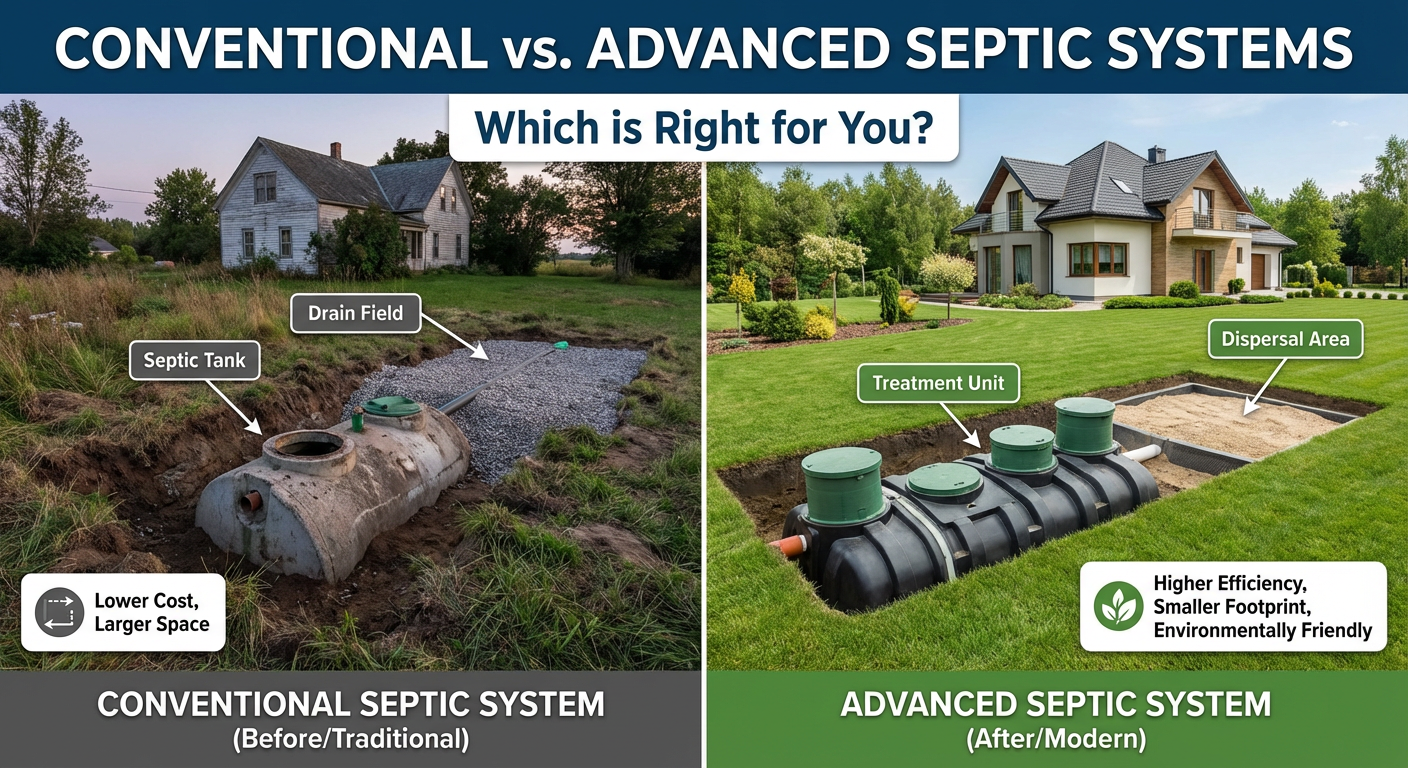
For properties with expansive land, favorable soil conditions (including optimal percolation rates), and accommodating topography, the conventional septic system is the clear frontrunner.
Runner-ups
#2Advanced Treatment Units (ATUs)25%
#3Engineered/Mound Systems10%
What the Pros Say
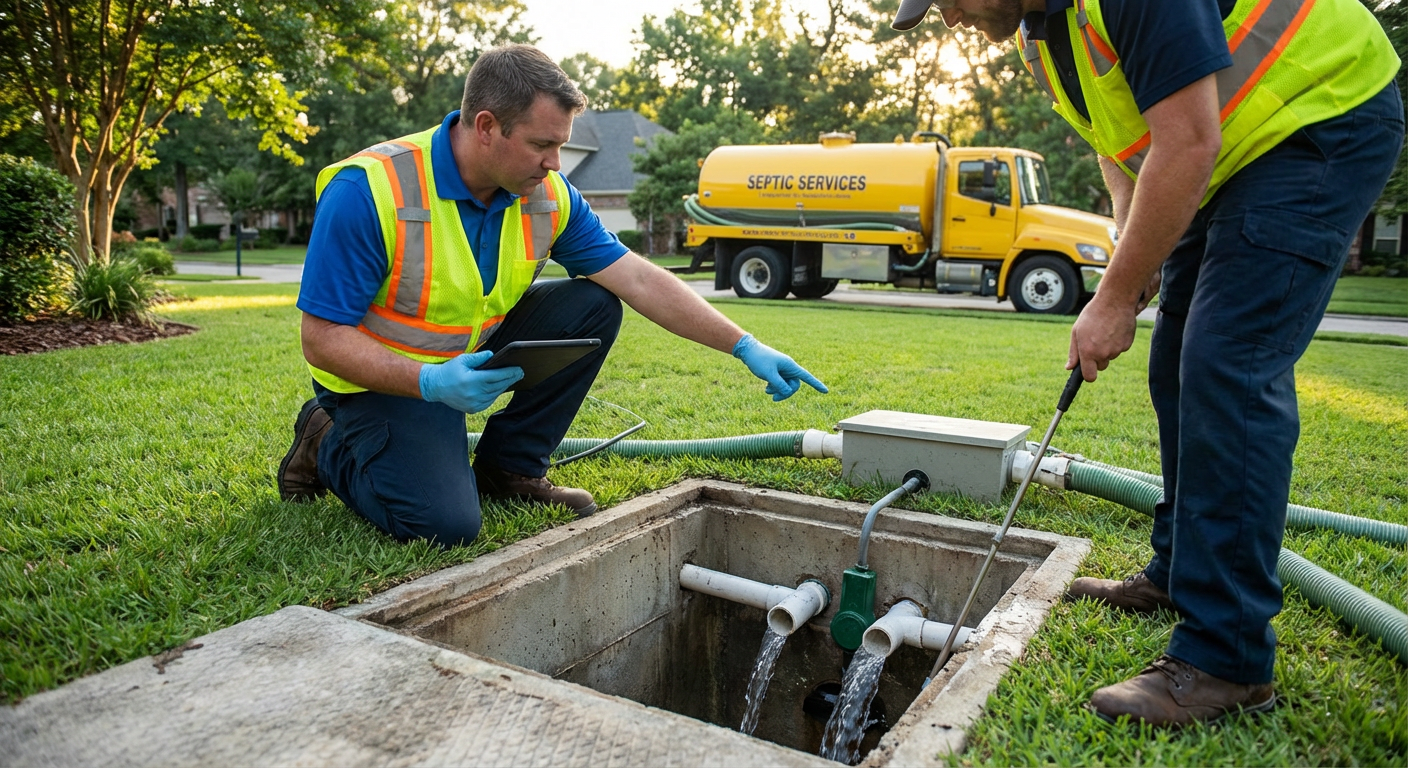
"A conventional system is a workhorse. If your property's perc test comes back good and you've got the space, it's the most straightforward, set-and-forget option. The problems we see usually come from neglect, not design flaws."
M
Mike Johnson
Septic Technician, 15 years"Advanced systems are no longer a niche product. With smaller lot sizes and stricter environmental regulations near coastlines and lakes, they are often the only permissible option. They provide a much higher level of treatment, which is crucial for protecting groundwater."
S
Sarah Chen
Environmental Health Specialist"The soil is the ultimate decider. I can't tell you how many homeowners want a simple, cheap conventional system, but their land is clay or the water table is too high. The site evaluation and soil test dictate everything; we build what the land allows."
C
Carlos Rodriguez
Lead Installer"Homeowners need to think about total cost of ownership. An advanced system costs more upfront and requires a yearly service contract, but a failing conventional system that has contaminated a property can cost tens of thousands to remediate. The right system is an investment in your property's value and safety."
J
Jennifer Williams
Owner, Williams Septic Services
Detailed Breakdown
Advantages
- Lower initial installation cost, making it budget-friendly (Conventional System)
- Operates without electricity, significantly reducing long-term utility expenses (Conventional System)
- Fewer mechanical components enhance reliability and minimize maintenance requirements (Conventional System)
- Achieves a superior level of wastewater purification, often exceeding standard requirements, crucial for sensitive environments (Advanced System)
- Provides enhanced protection for sensitive local water bodies, aquifers, and public health (Advanced System)
- Suitable for installation in properties with marginal or problematic soil quality and high water tables (Advanced System)
- Exceptionally effective for sites with limited space or challenging terrain (e.g., high water tables, poor soil) (Advanced System)
Considerations
- Requires a substantial land area with specific soil types for effective wastewater absorption and dispersal (Conventional System)
- Unsuitable for properties with poor soil percolation, high water tables, or restrictive setback regulations (Conventional System)
- Involves significantly higher upfront installation and equipment purchase expenses (Advanced System)
- Demands continuous electrical power for pumps and aerators, leading to higher ongoing utility costs (Advanced System)
- Increased operational complexity due to mechanical parts (e.g., pumps, aerators) that necessitate regular professional maintenance, potential repairs, and eventual replacement, increasing long-term costs (Advanced System)
| Type | Price Range |
|---|---|
| Conventional Gravity System | $5,000 – $12,000 |
| Advanced Treatment Unit (ATU) System | $10,000 – $20,000 |
| Engineered / Mound System | $15,000 – $40,000 |