Pro Insights
DIY Septic Maintenance vs. Professional Service: The Ultimate Homeowner's Guide to Optimal Septic System Care
An in-depth, data-driven analysis for homeowners on safety, costs, long-term benefits, and environmental impact of septic system maintenance strategies.
15 Data Points Analyzed
Updated 1/30/2026
The Verdict
80% of Pros Recommend Professional Septic Service
Professional Septic Service
80%
Hybrid Approach (DIY + Pro)
15%
Pure DIY Approach
5%
Professional Septic Service80%
For any septic system activity extending beyond fundamental, low-risk homeowner tasks, professional service unequivocally stands as the superior and safer choice.
Runner-ups
#2Hybrid Approach (DIY + Pro)15%
#3Pure DIY Approach5%
What the Pros Say
"I've seen too many homeowners turn a $400 pumping job into a $10,000 drain field replacement. You can't see what's happening in the tank or the lines without the right equipment. It's just not worth the risk."
M
Mike Johnson
Septic Technician, 15 years"A failing septic system is a serious environmental hazard. Professional services are licensed and know the local codes to ensure waste is handled properly, protecting groundwater and the surrounding ecosystem."
S
Sarah Chen
Environmental Compliance Officer"Homeowners can inspect lids and watch what goes down the drain, but that's about it. We check scum and sludge layers, inspect baffles for integrity, and look for signs of drain field saturation. These are critical checks you can't do yourself."
C
Carlos Rodriguez
Master Technician"Think of it as preventative medicine for your property. Regular professional maintenance is an investment that protects your home's value and prevents emergency situations that are always more stressful and expensive."
J
Jennifer Williams
Owner, Williams Septic Services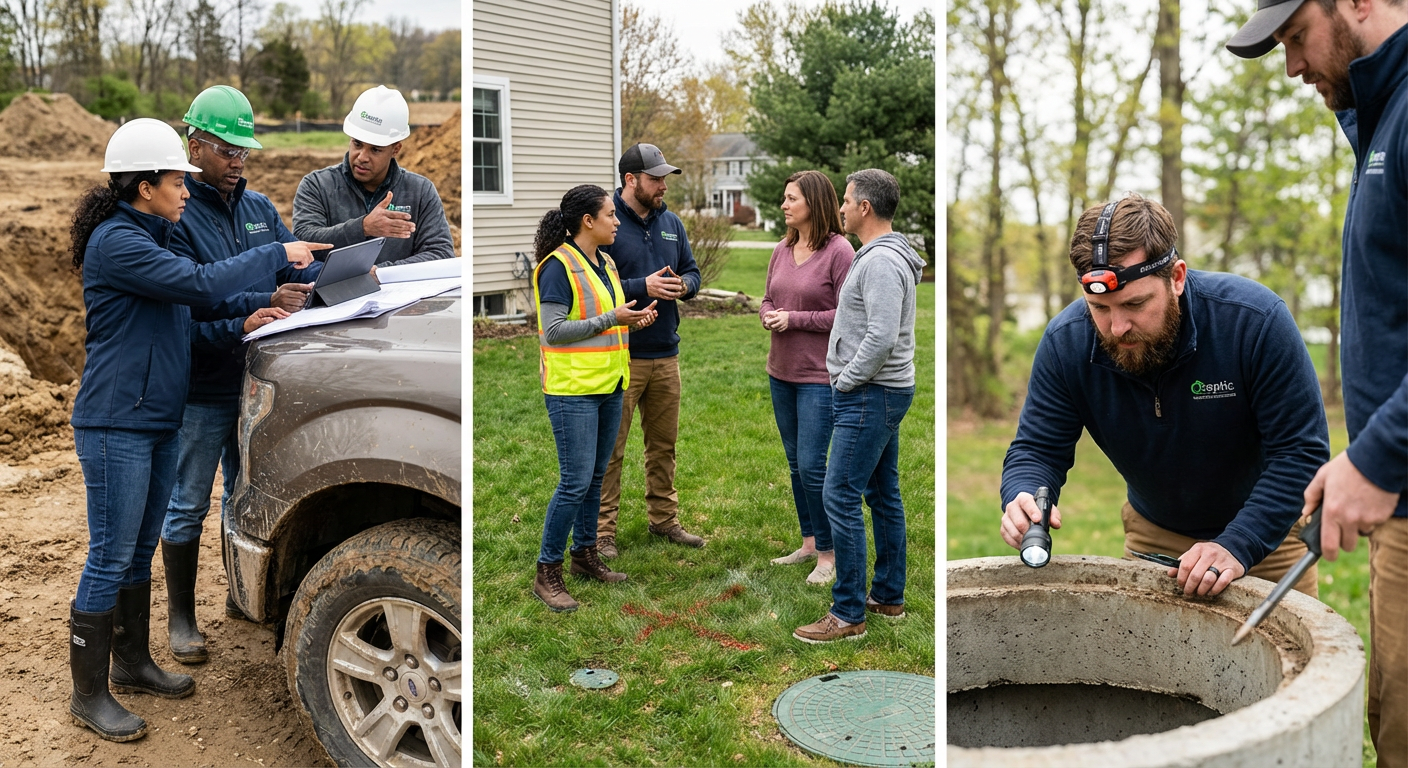
Detailed Breakdown
Advantages
- Precise diagnosis of complex issues using advanced equipment and expert knowledge, minimizing guesswork and preventing costly missteps.
- Guaranteed safety through proper handling, treatment, and legal disposal of hazardous wastewater, safeguarding household occupants, pets, and the environment.
- Assured compliance with all stringent local, state, and federal health, environmental, and wastewater regulations, avoiding punitive fines and legal complications.
- Proactive prevention of catastrophic and expensive damage to both the septic tank and the vital drain field component, extending system lifespan.
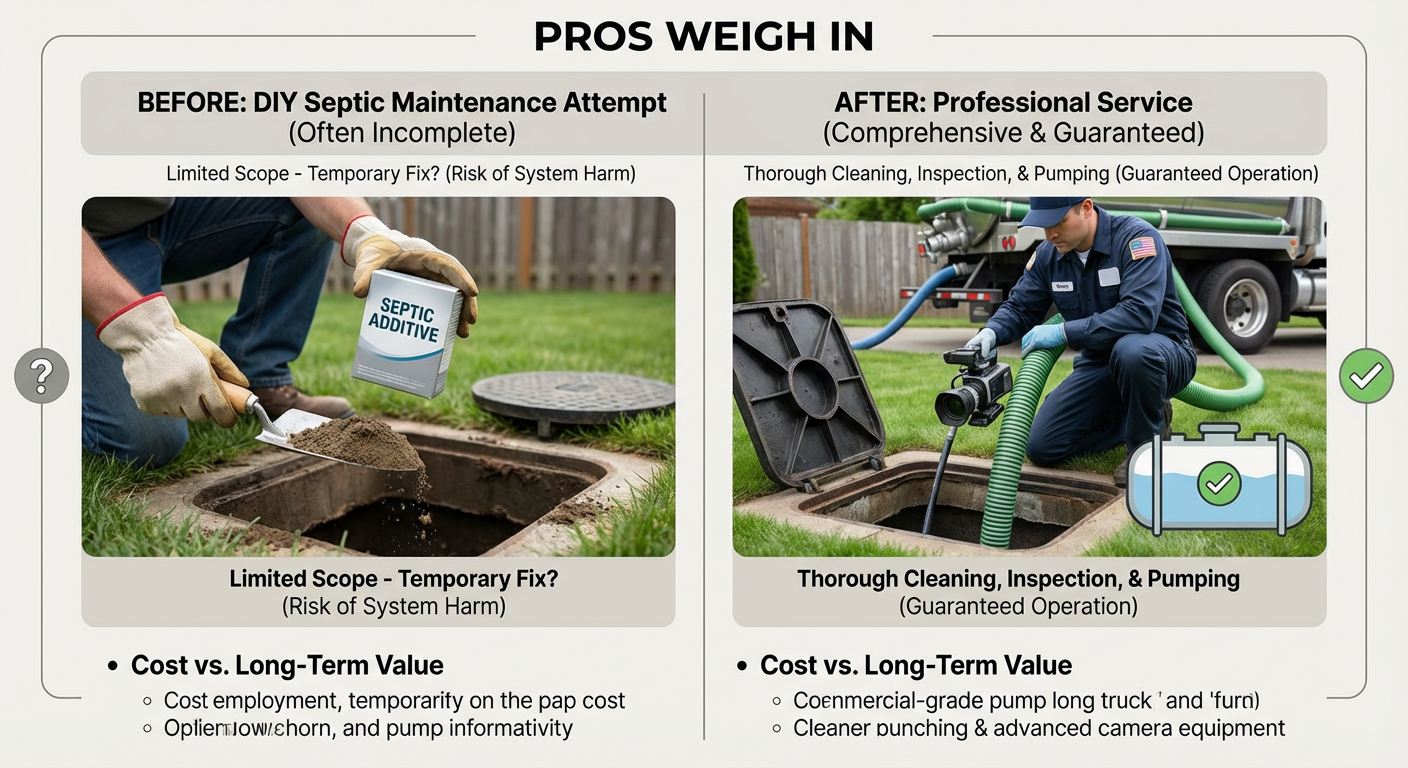
- Thorough and complete removal of accumulated solids and scum via professional, high-pressure pumping techniques, optimizing system efficiency.
- Provision of essential documentation for property transactions, refinancing, insurance claims, or municipal inspections, enhancing property value and transparency.
- Access to preventative maintenance advice, system optimization strategies, and emergency services for unparalleled peace of mind and operational security.
Considerations
- Higher initial financial outlay compared to attempting high-risk, often inadequate DIY solutions that frequently lead to more expensive long-term problems.
- Requires advanced scheduling and coordination with a certified, licensed service provider, which may entail waiting periods, particularly during peak seasons.
- Potential for uncovering pre-existing, significant system deficiencies or damages during inspection, leading to unexpected, yet necessary, repair expenses.
- Limited personal control over the technical maintenance and repair processes once professionals are engaged, necessitating trust in their established expertise and credentials.
| Type | Price Range |
|---|---|
| Routine Septic Inspection | $250 – $450 |
| Standard Septic Tank Pumping | $300 – $600 |
| Comprehensive Service (Pumping + Camera Inspection) | $500 – $900 |