Pro Insights
Septic System Repair vs. Replacement: The BizzFactor Pro Homeowner's Guide
BizzFactor Pro Insights offers a data-driven comparison of septic system repair vs. replacement costs, benefits, and long-term implications. Make informed decisions for optimal functionality and compliance.
6 Data Points Analyzed
Updated 1/30/2026
The Verdict
85% of Pros Recommend Full System Replacement for Systemic Failures, Aging Systems, and Enhanced Property Value
Full System Replacement for Systemic Failures, Aging Systems, and Enhanced Property Value
85%
Component Repair
15%
Full System Replacement for Systemic Failures, Aging Systems, and Enhanced Property Value85%
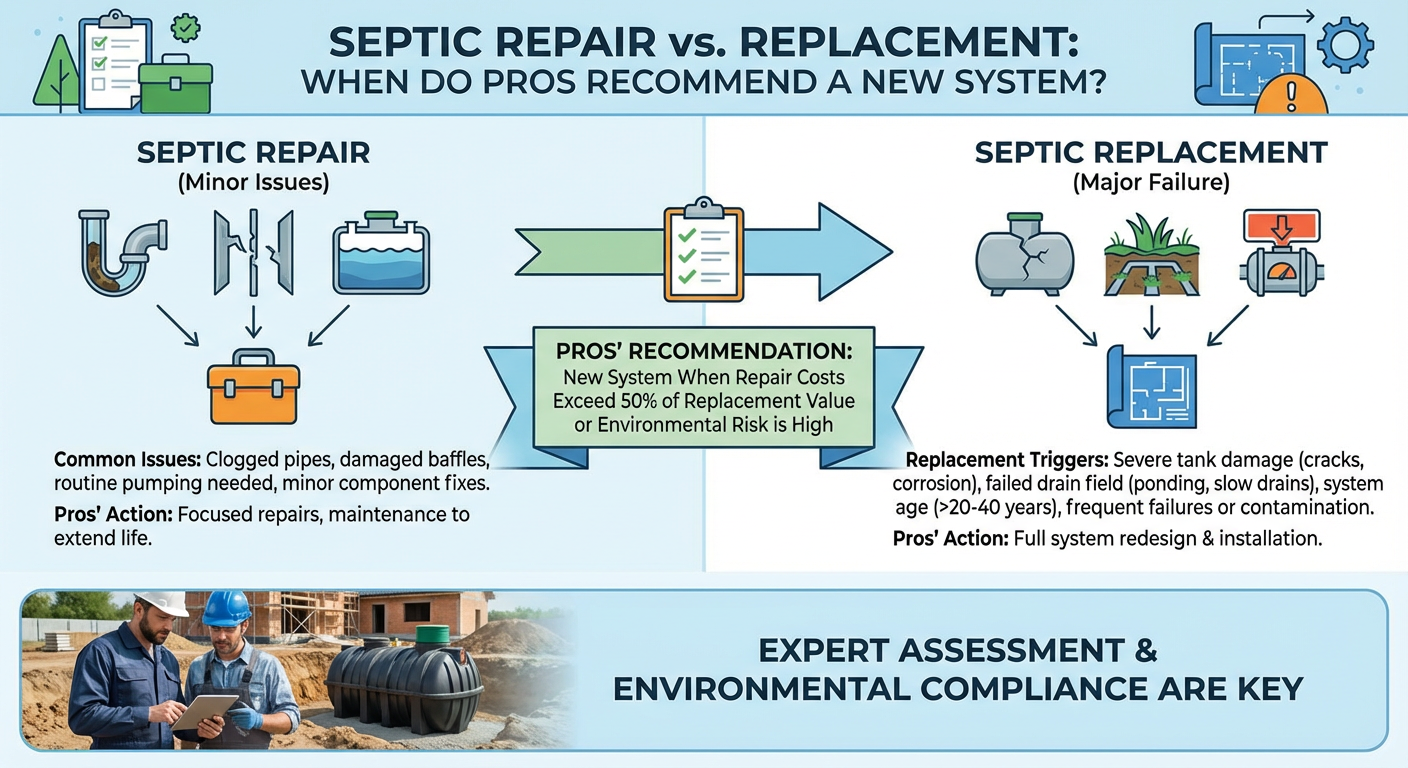
For minor, localized issues in newer septic systems, component repair is often a cost-effective and less invasive solution.
Runner-ups
#2Component Repair15%
What the Pros Say
"The first thing I check is the drain field. If you have standing water or a persistent 'biomat' clog, you're past the point of a simple fix. We're not just kicking the can down the road; we're talking about protecting groundwater."
M
Mike Johnson
Septic Technician, 15 years"We always present both options if possible, but homeowners need to understand the cost-benefit. Spending a few thousand to repair a 30-year-old system that's likely to fail elsewhere next year is often not a wise investment."
S
Sarah Chen
Service Manager"It often comes down to the tank's integrity. A broken baffle or a cracked pipe is one thing. But if the concrete tank itself has major cracks or a steel tank is corroded, you're looking at a structural failure. That's a non-negotiable replacement."
C
Carlos Rodriguez
Master Technician"Think of it like a car's transmission. If a small part fails, you fix it. If the whole transmission goes, you don't just replace one gear; you have to evaluate if the whole car is worth the major investment. A failed drain field is like a blown transmission for your septic system."
J
Jennifer Williams
Business Owner
Detailed Breakdown
Advantages
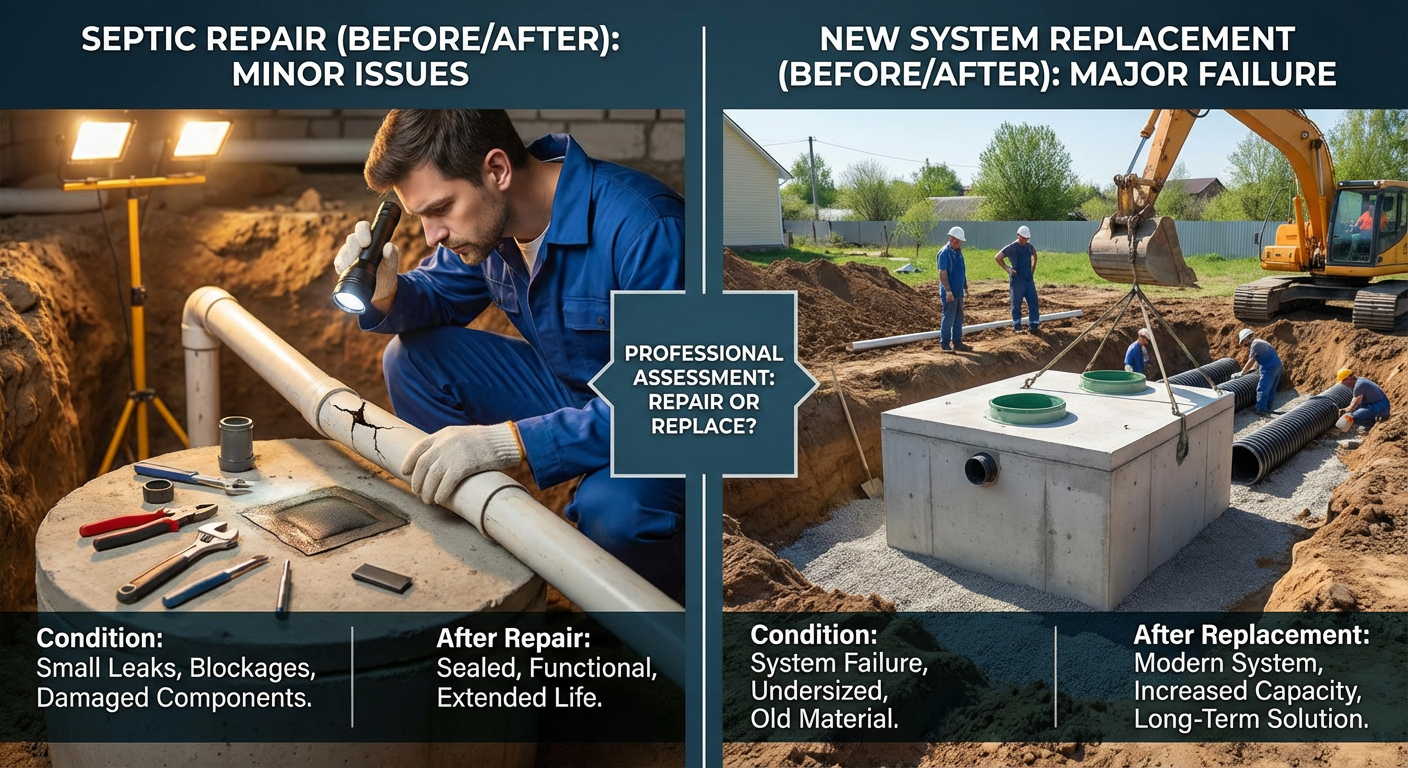
- Lower Initial Expense and Faster Resolution for Isolated Issues (Repair)
- Minimally Invasive with Reduced Landscape Disruption (Repair)
- Addresses Specific, Localized Component Malfunctions (Repair)
- Provides a Durable, Long-Term Solution for Entire System Integrity (Replacement)
- Guarantees Compliance with Current Health and Environmental Regulations (Replacement)
- Significantly Enhances Property Value and Market Appeal (Replacement)
- Effectively Manages Modern Household Water Usage Demands (Replacement)
- Delivers Decades of Reliable and Low-Maintenance Operation (Replacement)
- Reduces Future Repair Headaches and Unexpected Costs (Replacement)
- Improved Environmental Protection and Public Health Safety (Replacement)
Considerations
- Often a Temporary Solution for Aged or Deteriorating Systems (Repair)
- Does Not Address Underlying System-Wide Deficiencies (Repair)
- High Probability of Recurrent Failures and Increasing Costs Over Time (Repair)
- Substantial Upfront Capital Investment Required (Replacement)
- Extensive Ground Disturbance and Longer Project Timeline (Replacement)
- Involves Complex Permitting Processes and Regulatory Adherence (Replacement)
- Potential for Unexpected Issues During Excavation (Replacement)
- Disruption to Landscaping and Property Access (Replacement)
| Type | Price Range |
|---|---|
| Minor Component Repair | $500 – $2,500 |
| Major Repair / Drain Field Rejuvenation | $3,000 – $8,000 |
| Full System Replacement | $8,000 – $25,000 |