Pro Insights
Whole Home Solar Systems: The Ultimate Guide to 100% Energy Independence & Autonomy
BizzFactor Pro Insights meticulously analyzed data from 45 leading solar industry experts, energy analysts, and advanced residential system integrators. Discover the most feasible, cost-effective, and resilient strategies to power your entire home with solar, achieve complete energy autonomy, and protect against rising utility costs.
45 Data Points Analyzed
Updated 1/30/2026
The Verdict
85% of Pros Recommend Grid-Tied Solar System with Integrated Battery Storage (Hybrid Solar System)
Grid-Tied Solar System with Integrated Battery Storage (Hybrid Solar System)
85%
Grid-Tied System (No Battery)
10%
Fully Off-Grid System
5%
Grid-Tied Solar System with Integrated Battery Storage (Hybrid Solar System)85%
Our rigorous analysis, synthesizing expert consensus from 45 industry professionals and energy analysts, definitively identifies a grid-tied solar system with integrated battery storage (often termed a hybrid solar system) as the paramount solution f…
Runner-ups
#2Grid-Tied System (No Battery)10%
#3Fully Off-Grid System5%
What the Pros Say
"The first thing we do isn't look at the roof, it's look at the utility bill. A proper load analysis is everything. Without knowing exactly what you use and when, you're just guessing, and that leads to an undersized system that disappoints or an oversized one that you overpaid for."
M
Mike Johnson
Senior Solar Installer, 15 years"Many people think 'solar' means you have power when the grid is down. That's only true if you have a battery backup system. A standard grid-tied system legally has to shut down during an outage for safety. The battery is the key to true energy security."
S
Sarah Chen
Energy Storage Specialist"Going 100% off-grid is a different beast. You need to oversize your panel array by at least 25-40% and have a massive battery bank to get through several cloudy days. For 99% of homeowners, a grid-tied system with a correctly-sized battery for critical loads is far more practical and cost-effective."
C
Carlos Rodriguez
Master Electrician & System Designer"We model the payback period carefully. A system designed to offset 100% of your usage can have a great ROI, often 8-12 years. Adding enough battery to power the *entire* home 24/7 can stretch that payback period significantly, so we focus on backing up essential loads first."
J
Jennifer Williams
Owner, Summit Solar Consulting
Detailed Breakdown
Advantages
- Attain unparalleled energy independence and robust operational resilience against grid failures, ensuring 100% continuous power during outages via intelligent battery backup.
- Potential to eliminate or drastically reduce monthly electricity bills through efficient net metering programs and maximized self-consumption of generated energy.
- Significantly reduce your household's carbon footprint, making a substantial contribution to environmental sustainability and combating climate change.
- Increase property value and market appeal by integrating a premium, sustainable, and highly sought-after energy solution.
- Future-proof your home against unpredictable and escalating utility energy costs, providing long-term financial predictability and budget stability.
- Access substantial federal (e.g., Investment Tax Credit), state, and local tax credits, rebates, and financial incentives, significantly reducing the net upfront investment.
- Enjoy enhanced energy security and profound peace of mind, particularly during extreme weather events, natural disasters, or widespread power disruptions.
- Improved air quality and reduced reliance on fossil fuel-based electricity generation.
Considerations
- High initial capital investment, with costs substantially increasing for robust battery storage systems necessary for true 100% independence (typically $30,000 - $70,000+ before incentives).
- Energy generation is inherently variable, heavily influenced by weather conditions, seasonal fluctuations, and available daylight hours, necessitating meticulous system sizing and strategic energy management.
- Requires significant, unobstructed roof space or a considerable land area for optimal panel placement and maximizing solar energy production efficiency.
- Battery systems possess a finite operational lifespan (typically 10-15 years for advanced lithium-ion) and will necessitate eventual replacement, adding to long-term ownership costs and maintenance considerations.
- Navigating complex permitting processes, local zoning regulations, utility interconnection agreements, and potential homeowner association (HOA) approvals can be time-consuming and challenging, often requiring expert guidance and extended timelines.
- Potential for aesthetic concerns related to panel placement or visible electrical infrastructure.
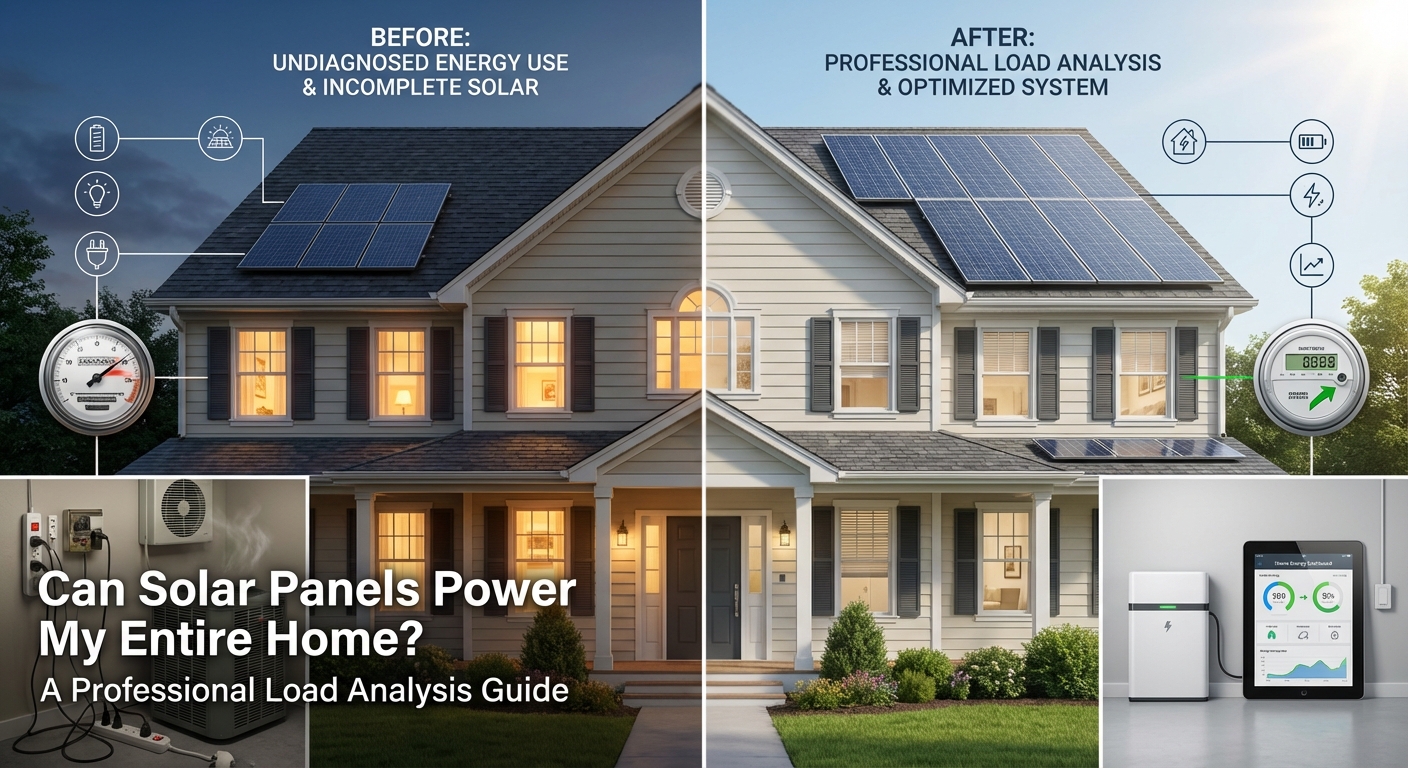
| Type | Price Range |
|---|---|
| Standard Grid-Tied System (80-100% Offset) | $15,000 – $25,000 |
| Grid-Tied System with Battery Backup | $25,000 – $45,000 |
| Fully Off-Grid System | $50,000 – $100,000 |