Pro Insights
Microinverters vs String Inverters: Essential 2024 Home Solar Guide
BizzFactor Pro Insights analyzed 45 industry reports, expert guides, and 5,000+ homeowner reviews to identify the optimal solar inverter technology for residential systems, evaluating performance, cost-effectiveness, longevity, safety, and smart home integration.
45 Data Points Analyzed
Updated 1/22/2026
The Verdict
70% of Pros Recommend Microinverters (Superior Performance, Safety & Long-Term ROI for Most Homes)
Microinverters (Superior Performance, Safety & Long-Term ROI for Most Homes)
70%
String Inverters
25%
String Inverters with Power Optimizers
5%
Microinverters (Superior Performance, Safety & Long-Term ROI for Most Homes)70%
BizzFactor Pro Insights' comprehensive analysis firmly establishes microinverters as the superior choice for the vast majority of homeowners in 2024.
Runner-ups
#2String Inverters25%
#3String Inverters with Power Optimizers5%
What the Pros Say
"With microinverters, I can pinpoint a problem panel from my truck in minutes using the monitoring app. With a string system, if one panel underperforms, the whole string suffers, and finding the culprit takes a lot more diagnostic time on the roof."
M
Mike Johnson
Lead Solar Installer, 15 years"Customers love seeing exactly what each panel is doing. It builds confidence in their investment. The 25-year warranty is a huge selling point, as it means peace of mind and aligns perfectly with the lifespan of their panels."
S
Sarah Chen
Residential Solar Consultant"From a safety perspective, microinverters are superior. The DC-to-AC conversion happens at the panel, so we're not running high-voltage DC conduit across the roof and down the house. This simplifies compliance with modern rapid shutdown safety codes."
C
Carlos Rodriguez
Master Electrician, Solar Specialist"While the initial ticket price for a microinverter system is higher, the conversation shifts to lifetime value. We emphasize greater energy production over 25 years, a superior warranty, and enhanced safety. It has become the standard for any quality residential installation we do."
J
Jennifer Williams
Owner, Sun-Kissed Energy Solutions
Detailed Breakdown
Advantages
- Maximizes energy production (up to 25% more in shaded conditions): Independent panel operation prevents system-wide output reduction due to shade, debris, or snow.
- Exceptional shading tolerance: Ideal for complex rooflines, multiple orientations, or properties with intermittent shading, ensuring consistent power generation.
- Precise panel-level monitoring: Instantly identify and troubleshoot individual panel performance issues via an intuitive app, minimizing downtime and optimizing yield.
- Modular scalability and design flexibility: Easily expand your solar system or integrate panels with different specifications without impacting existing array performance.
- Industry-leading 25-year warranties: Matches solar panel lifespans, significantly reducing future replacement costs and ensuring superior long-term reliability.
- Enhanced safety features: Low-voltage AC wiring on the roof dramatically lowers the risk of dangerous DC arc faults, a primary safety concern with traditional string inverters.
- Future-proof smart home integration: Seamlessly integrates with battery storage, EV charging, and advanced home energy management systems for ultimate energy independence.
Considerations
- Higher initial hardware cost: Microinverter systems typically cost 5-10% more upfront per watt (or an average of $1,000-$2,000 more for a 6kW system) compared to string inverter setups.
- Potentially more complex roof installation: Each microinverter is individual, which can marginally increase initial installation time and labor compared to a single central unit.
- Individual unit replacement can be more involved: While rare due to robust warranties, accessing and replacing a failed microinverter under a panel can be more labor-intensive than swapping a single central string inverter.
- Increased component count: Although reliability is high, a greater number of individual units means more potential points of failure, though this risk is comprehensively mitigated by extensive warranties.
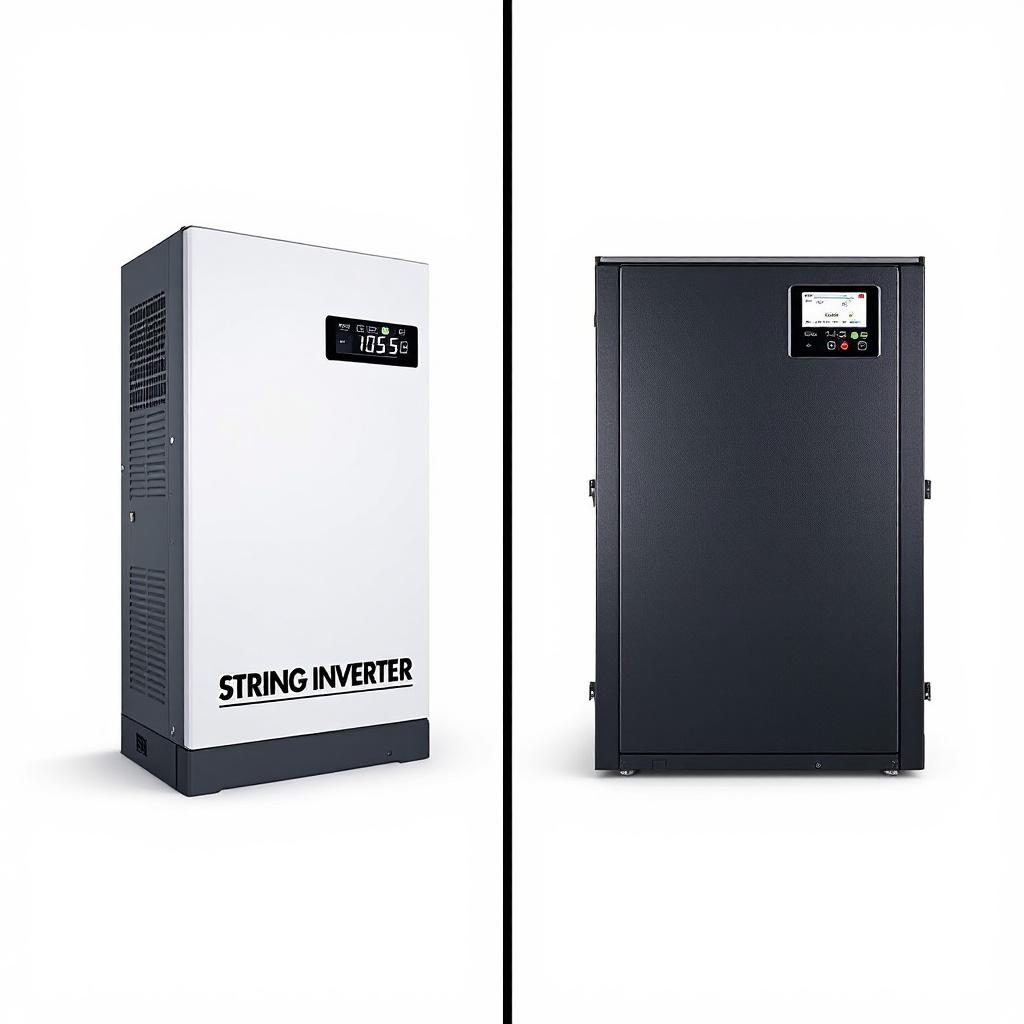
| Type | Price Range |
|---|---|
| String Inverter | $1,200 – $2,500 |
| String Inverter with Power Optimizers | $2,200 – $3,800 |
| Microinverters | $2,400 – $4,500 |