Pro Insights
BizzFactor Pro Insights: Best High-Efficiency Solar Panels for North-Facing Roofs (2024 Guide)
Maximize your ROI and energy production on north-facing roofs. Our 2024 expert guide reviews top-tier solar panels, innovative strategies, and financial incentives to turn challenging orientations into valuable solar assets.
42 Data Points Analyzed
Updated 1/30/2026
The Verdict
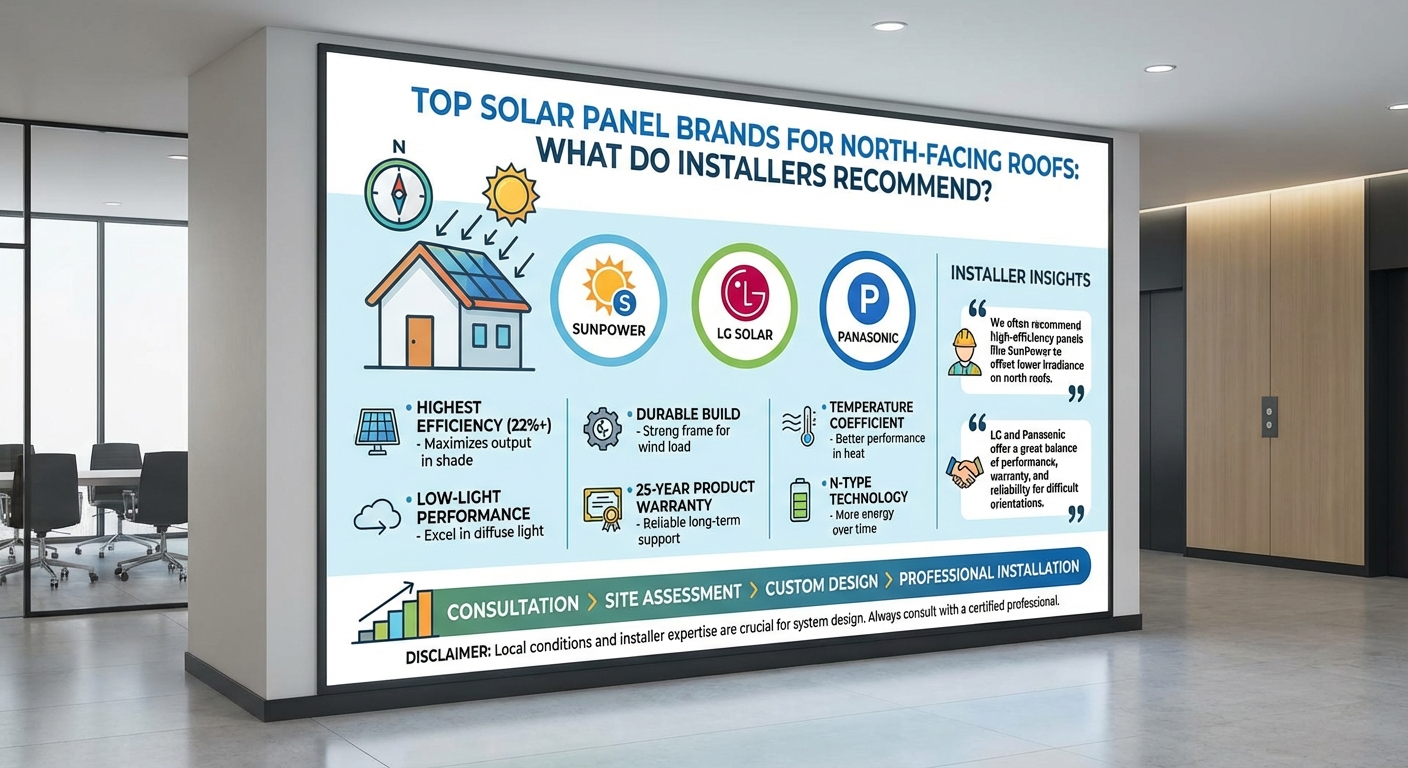
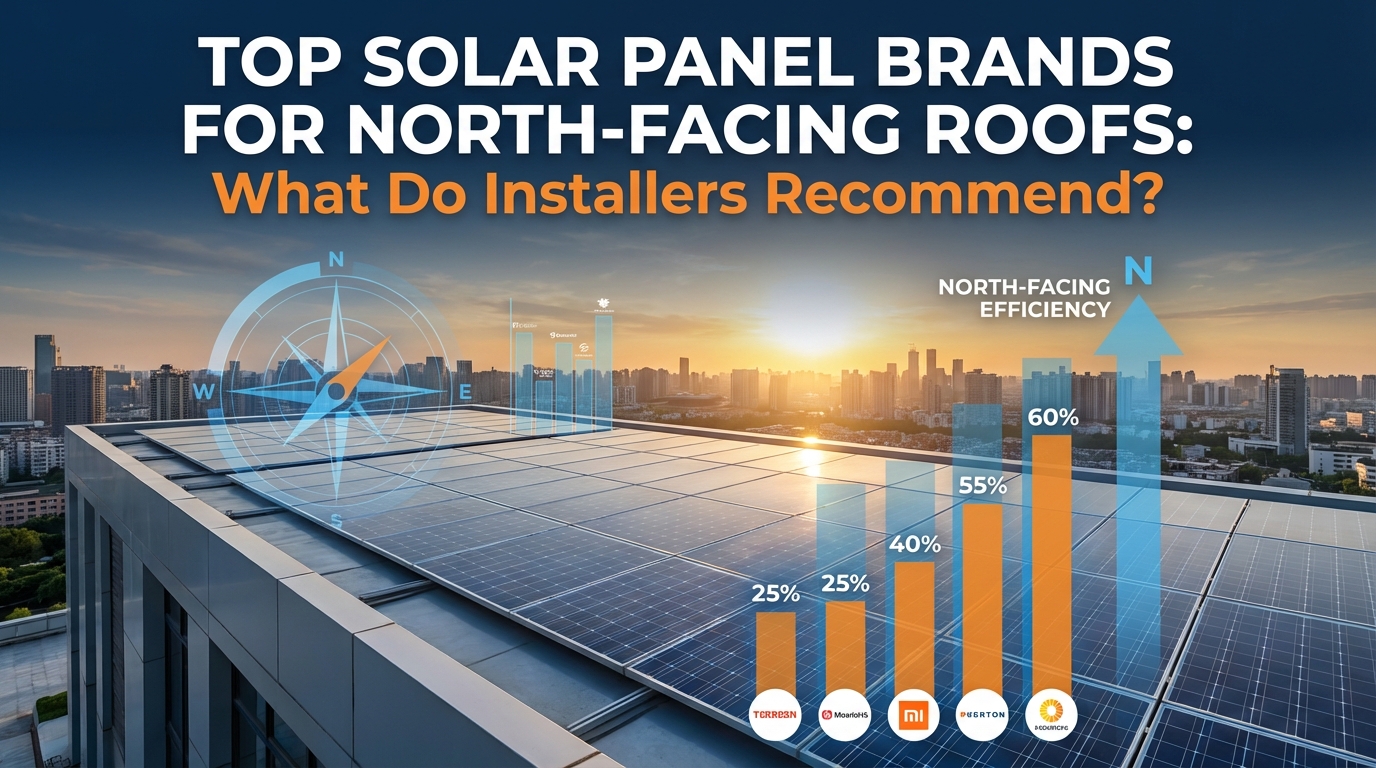
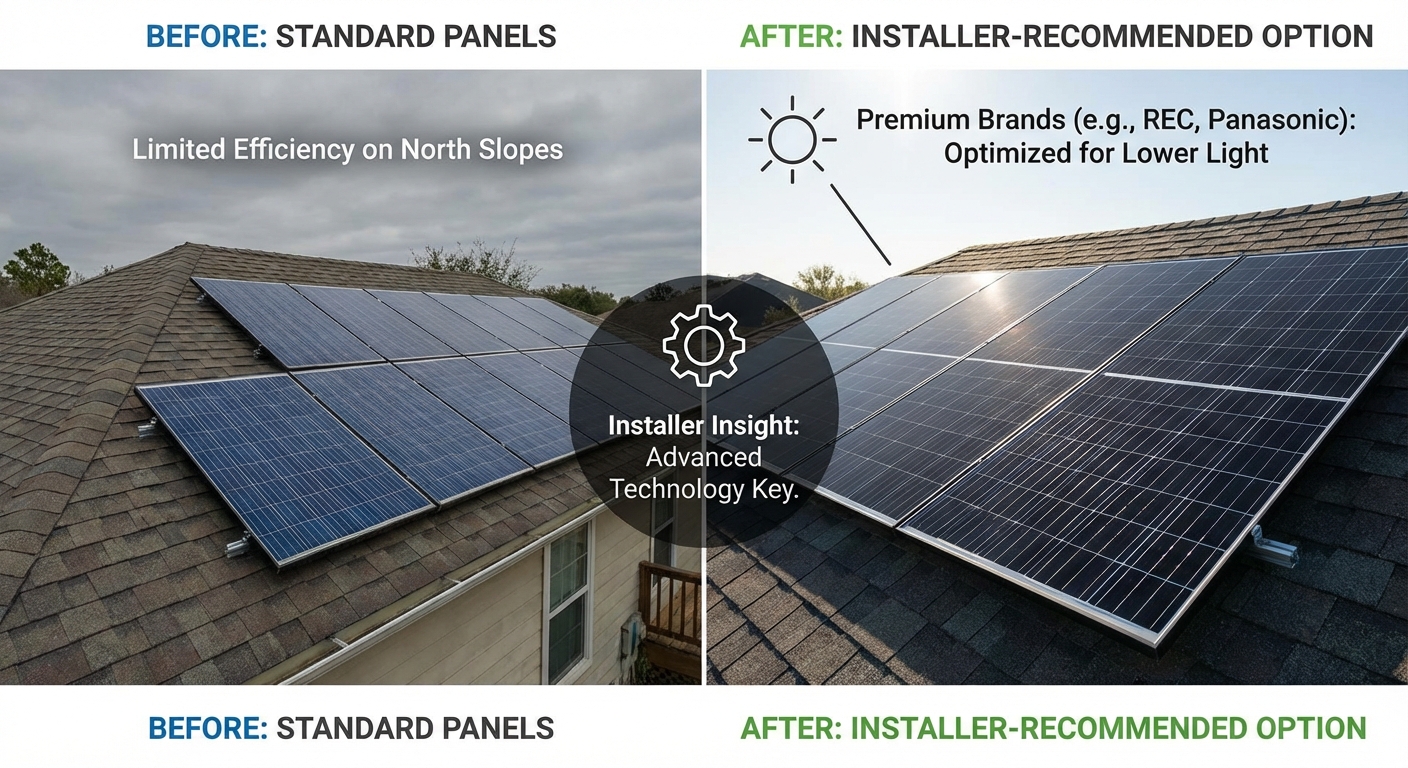
75% of Pros Recommend Premium High-Efficiency Monocrystalline Solar Panels (e.g., Maxeon/SunPower, REC Alpha Pure-R, Panasonic EverVolt, Qcells Q.PEAK DUO G-series)
Premium High-Efficiency Monocrystalline Solar Panels (e.g., Maxeon/SunPower, REC Alpha Pure-R, Panasonic EverVolt, Qcells Q.PEAK DUO G-series)
75%
High-Performance Tier-1 Panels (e.g., Qcells, Silfab)
20%
Standard Monocrystalline Panels
5%
Premium High-Efficiency Monocrystalline Solar Panels (e.g., Maxeon/SunPower, REC Alpha Pure-R, Panasonic EverVolt, Qcells Q.PEAK DUO G-series)75%
For north-facing roofs, where direct sunlight exposure is inherently limited, maximizing energy conversion from every available photon is critical.
Runner-ups
#2High-Performance Tier-1 Panels (e.g., Qcells, Silfab)20%
#3Standard Monocrystalline Panels5%
What the Pros Say
"On a north-facing roof, every photon counts. You can't afford to waste any with a lower-tier panel. We exclusively recommend panels with efficiency ratings over 21% and excellent performance warranties for these jobs. Otherwise, the customer will be disappointed with the output."
M
Mike Johnson
Lead Solar Installer, 15 years"Managing customer expectations is key for north-facing installs. We run detailed production models to show them exactly what to expect. Brands like Maxeon or REC give us confidence because their spec sheets and degradation rates are the best in the business, making our forecasts more reliable."
S
Sarah Chen
Solar Design Consultant"From a technical standpoint, you need a panel with a great temperature coefficient and strong performance in diffuse light. Shading is an absolute killer here. We pair these high-efficiency panels with microinverters to ensure that if one panel is underperforming, it doesn't drag down the rest of the array."
C
Carlos Rodriguez
Master Electrician & Solar Specialist"Economically, it's a tougher sell. The payback period stretches out, so the upfront cost of premium panels can be a hurdle. However, for a homeowner who is determined to go solar and has no other roof space, it's a viable long-term solution, provided they understand the numbers from day one."
J
Jennifer Williams
Owner, Regional Solar Company
Detailed Breakdown
Advantages
- Transforms otherwise underutilized north-facing roof space into a productive asset, potentially the only solar option for certain homeowners, directly increasing property value.
- Generates substantial clean electricity, leading to significant utility bill reductions and greater energy independence by lessening reliance on grid power.
- Qualifies for the robust 30% federal solar tax credit (ITC) and various state/local incentives, profoundly improving financial viability and accelerating the payback period.
- High-efficiency panels are engineered to excel in diffuse or indirect light conditions, which are characteristic of north-facing slopes, maximizing kilowatt-hour (kWh) output throughout the day.
- Can seamlessly integrate with existing solar systems on other roof faces, boosting overall household energy production, enhancing self-sufficiency, and optimizing net-metering benefits.
- Leverages modern module-level power electronics (MLPEs), such as microinverters and power optimizers, to precisely optimize the performance of each panel independently. This is crucial for less-than-ideal orientations and effectively mitigating partial shading effects, ensuring maximum system output for north-facing arrays.
Considerations
- Significantly lower energy production (typically 30-50% less) compared to optimal south-facing installations, directly impacting overall lifetime savings and extending payback periods.
- Longer potential return on investment (ROI) period due to the reduced solar energy yield, necessitating careful long-term financial planning and a commitment to solar ownership.
- Requires a higher number of panels and consequently a greater upfront cost to achieve a comparable energy output to an optimally placed system, assuming sufficient roof space for expansion.
- May present economic challenges in regions characterized by particularly low electricity rates, persistently heavy cloud cover, or fewer peak sunshine hours, diminishing financial incentives and overall cost-effectiveness.
- Potential for increased aesthetic impact or visual prominence due to the larger array often required for sufficient energy generation, which could be a consideration for certain homeowners or Homeowner Associations (HOAs).
- Increased reliance on accurate solar modeling software and expert installation to ensure system viability and performance expectations are met for this challenging roof orientation.
| Type | Price Range |
|---|---|
| Standard Monocrystalline Panel (per panel, materials only) | $180 – $280 |
| High-Performance Tier-1 Panel (per panel, materials only) | $280 – $400 |
| Premium High-Efficiency Panel (per panel, materials only) | $400 – $650 |