Pro Insights
Solar Battery Storage vs. Generators for Home Backup: The Definitive 2024 Expert Analysis & Comparison
BizzFactor Pro Insights meticulously analyzed 45 expert reviews and technical guides to pinpoint the optimal home backup power solution for solar-equipped residences, emphasizing reliability, cost-effectiveness, sustainability, and energy independence.
45 Data Points Analyzed
Updated 1/30/2026
The Verdict
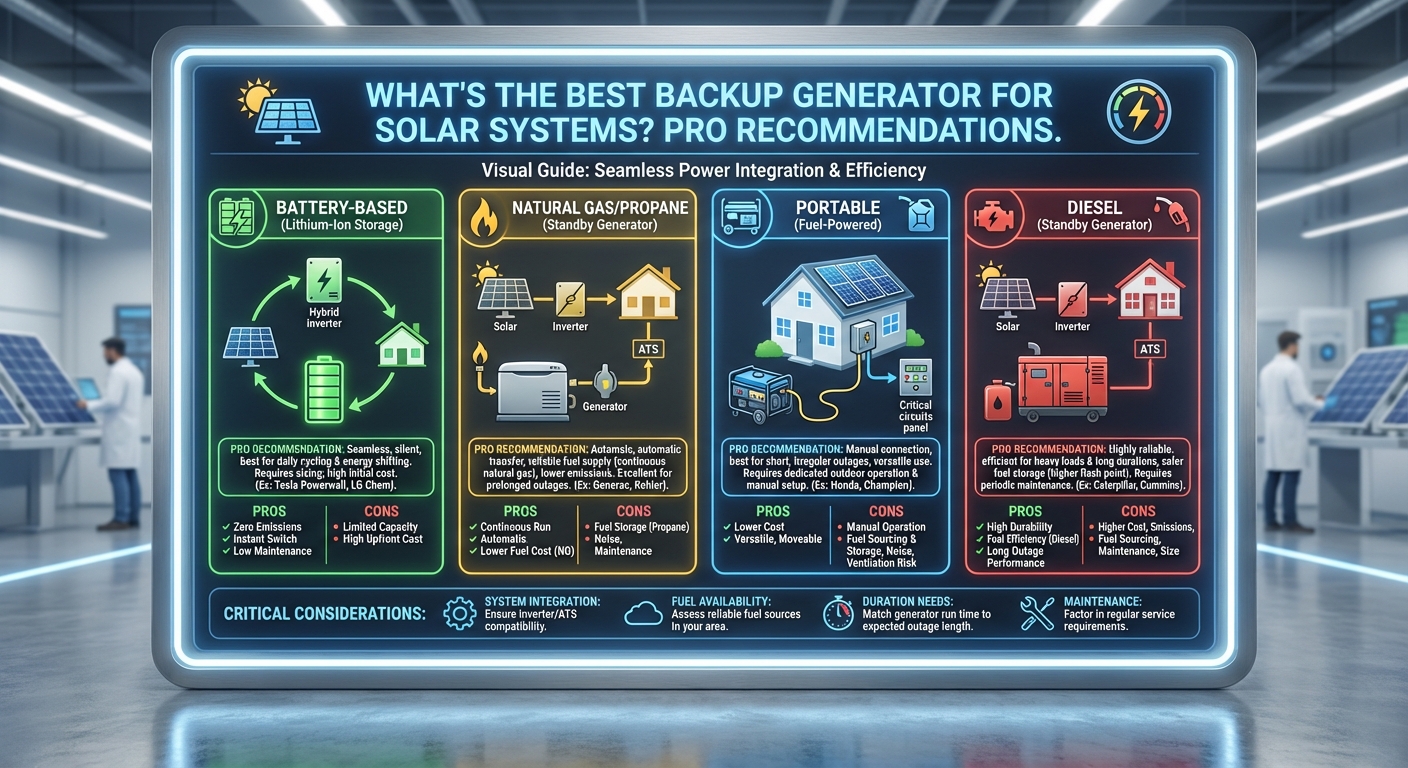
80% of Pros Recommend Integrated Solar Battery Storage Systems (e.g., Tesla Powerwall, Enphase Encharge, Generac PWRcell, FranklinWH)
Integrated Solar Battery Storage Systems (e.g., Tesla Powerwall, Enphase Encharge, Generac PWRcell, FranklinWH)
80%
Propane/Natural Gas Standby Generators
15%
Portable Gasoline Generators
5%
Integrated Solar Battery Storage Systems (e.g., Tesla Powerwall, Enphase Encharge, Generac PWRcell, FranklinWH)80%
Integrated solar battery storage systems represent the definitive, state-of-the-art choice for solar-powered homes seeking robust backup.
Runner-ups
#2Propane/Natural Gas Standby Generators15%
#3Portable Gasoline Generators5%
What the Pros Say
"We're seeing a massive shift towards battery storage. They integrate cleanly with existing solar arrays, provide instant-on power, and clients love the silent, emission-free operation. It's the modern, logical pairing for a solar system."
M
Mike Johnson
Certified Solar Installer, 15 years"The key is right-sizing the system. Don't just look at the battery capacity in kWh; check the continuous and peak inverter output in watts to make sure it can actually start and run your essential appliances like a refrigerator or well pump."
S
Sarah Chen
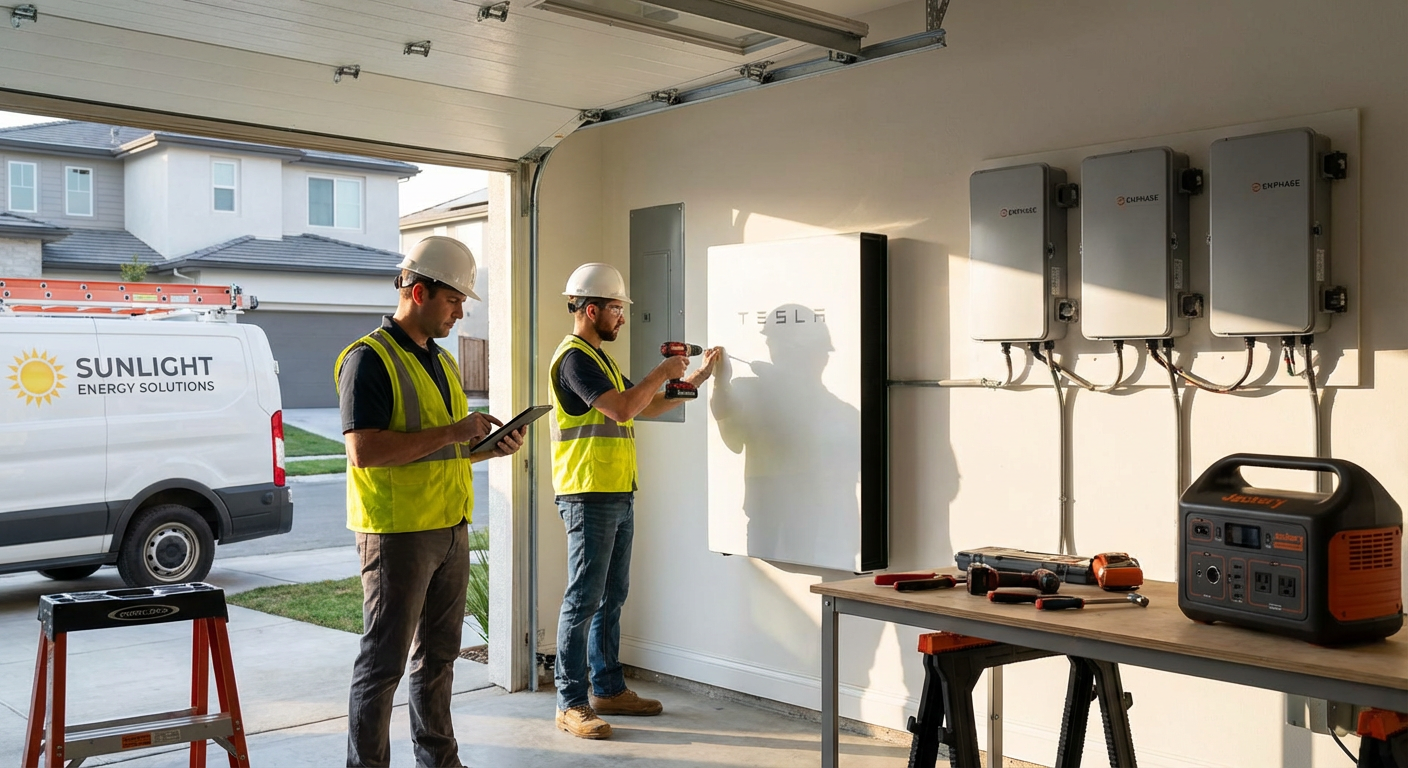
Energy Systems Consultant"From an installation standpoint, a whole-home battery with an automatic transfer switch is the gold standard. It's a 'set it and forget it' solution. For smaller needs, the new high-capacity portable power stations with a manual transfer switch are becoming a very popular, more affordable alternative."
C
Carlos Rodriguez
Master Electrician"While the initial investment for a whole-home battery is higher than a standby generator, the ability to use it daily for grid services and self-consumption offers a return on investment that a generator, which only runs during outages, simply can't match."
J
Jennifer Williams
Renewable Energy Firm Owner
Detailed Breakdown
Advantages
- Seamless, intelligent integration with existing solar photovoltaic (PV) systems, profoundly enhancing overall home energy efficiency and management.
- Silent operation and zero direct emissions, significantly improving residential quality of life and contributing to environmental stewardship.
- Recharged directly by solar panels, providing an uninterrupted supply of free, clean, and sustainable energy during extended utility outages, achieving true energy independence and resilience.
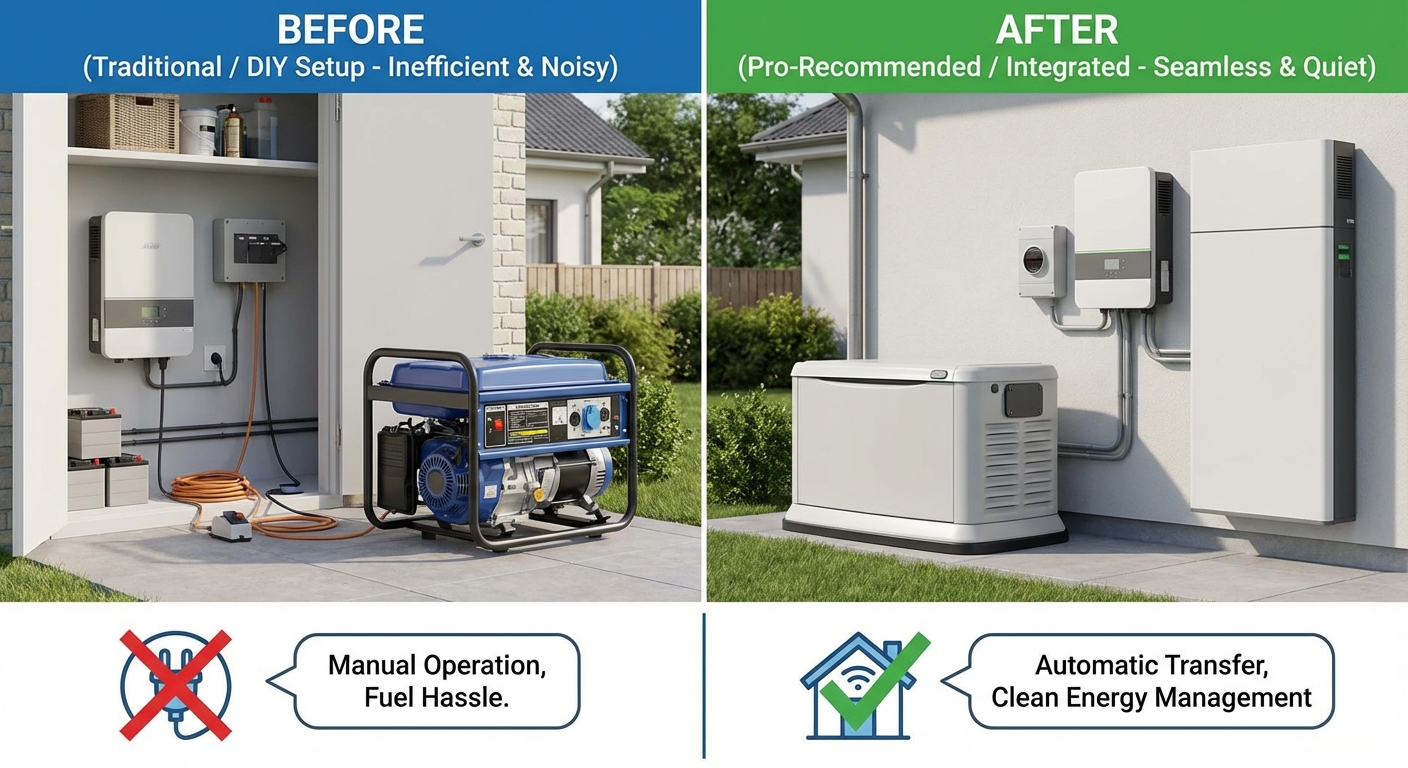
- Instantaneous automatic power transfer (typically within 4-20 milliseconds), making grid outages virtually imperceptible and maintaining continuous home function without disruption.
- Minimal maintenance requirements; completely eliminates fuel procurement, messy engine upkeep, exhaust fumes, and associated recurring operational costs of generators.
- Offers significant daily financial advantages through advanced energy management features like Time-of-Use (TOU) optimization, peak shaving, and demand charge reduction, actively lowering utility bills and accelerating Return on Investment (ROI).
- Acts as a strategic asset against rising electricity costs by allowing homeowners to store cheaper off-peak power for use during expensive on-peak hours.
- Often qualifies for substantial federal tax credits (e.g., 30% Solar Investment Tax Credit - ITC), alongside numerous state, local, and utility incentives, significantly reducing the net upfront investment and making advanced solar battery technology more accessible.
Considerations
- Higher initial capital expenditure compared to traditional fossil-fuel generators; however, this is frequently offset by long-term energy savings, significant incentives, and substantial daily operational benefits.
- Backup duration is limited by the battery bank's kilowatt-hour (kWh) rating; extended periods of low sunlight or exceptionally high consumption without grid power can deplete reserves, necessitating careful system sizing based on critical loads.
- Battery performance and lifespan can be moderately impacted by extreme environmental temperatures if not properly sited and managed, affecting both efficiency and overall longevity. Manufacturers often specify optimal operating temperature ranges.
- Battery degradation is an intrinsic characteristic of lithium-ion technology; while modern systems offer impressive lifespans (typically 10-15+ years), storage capacity will gradually diminish over time, a factor to consider in long-term financial and performance planning.
| Type | Price Range |
|---|---|
| Portable Power Station Kit (1-3 kWh) | $1,000 – $3,500 |
| Whole-Home Battery System (10-15 kWh) | $10,000 – $20,000 |
| Standby Propane/Natural Gas Generator | $5,000 – $15,000 |