Pro Insights
Power Vent vs. Atmospheric Vent Gas Water Heaters: The Ultimate 2024 Comparison Guide by BizzFactor Pro Insights
BizzFactor Pro Insights delivers a comprehensive, data-driven comparison of gas water heater technologies. We scrutinize technical specifications, energy efficiency ratings, installation requirements, safety protocols, and long-term costs to empower your decision-making for the most reliable and cost-effective hot water solution for your home in 2024.
45 Data Points Analyzed
Updated 1/12/2026
The Verdict
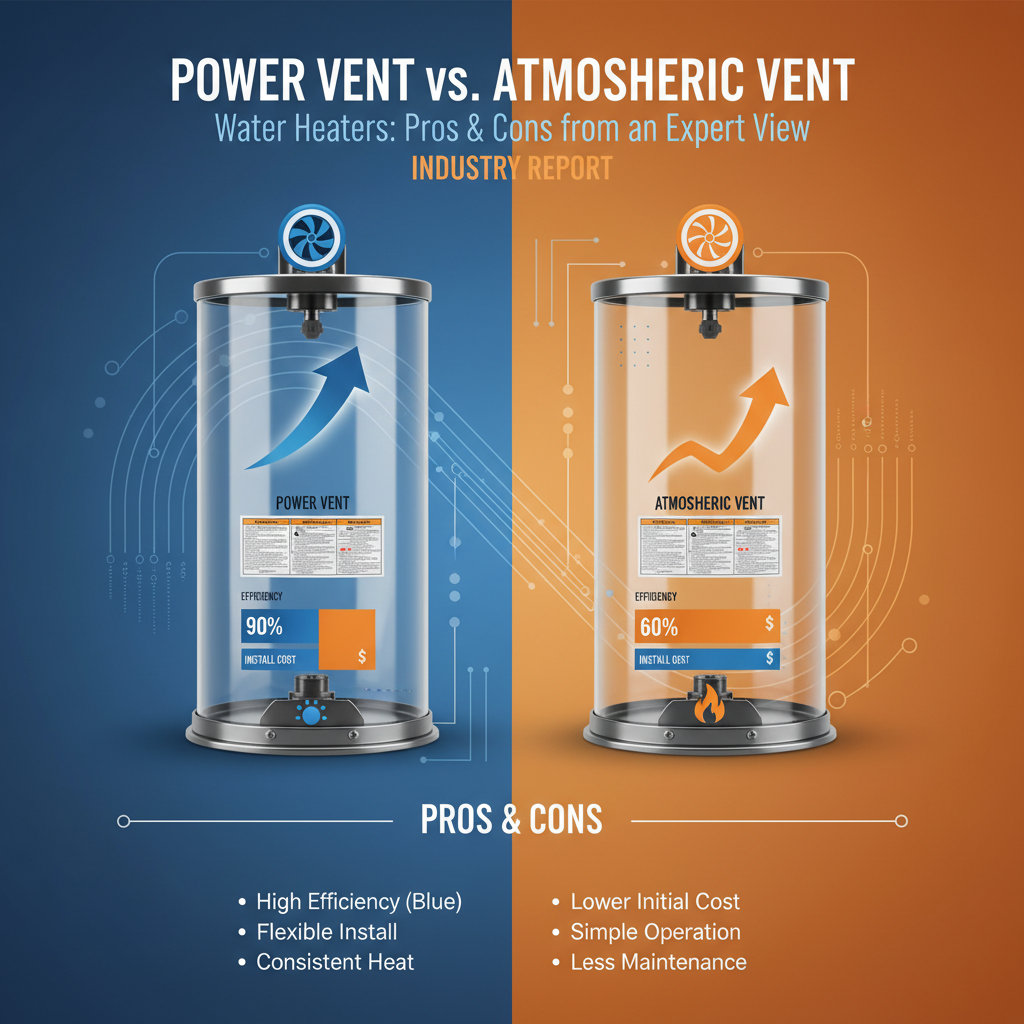
70% of Pros Recommend Power Vent Water Heater
Power Vent Water Heater
70%
Atmospheric Vent Water Heater
30%
Power Vent Water Heater70%
For the majority of modern households, the Power Vent Water Heater unequivocally emerges as the superior choice.
Runner-ups
#2Atmospheric Vent Water Heater30%
What the Pros Say
"For new installs, I almost always recommend a power vent. The ability to run a PVC pipe out the side of the house saves a ton of hassle and cost compared to dealing with an old chimney. It's just a more modern and flexible solution."
M
Mike Johnson
HVAC & Plumbing Technician, 15 years"We explain it to customers as an investment. Yes, the power vent costs more today, but its higher efficiency translates to lower gas bills every month. Over the life of the unit, the safety and savings make it a smarter financial decision for most families."
S
Sarah Chen
Service Manager, Apex Home Services"The biggest issue with atmospheric vents is the potential for backdrafting, especially in newer homes sealed for energy efficiency. A power vent mechanically forces exhaust outside, eliminating that carbon monoxide risk. For me, safety is non-negotiable."
C
Carlos Rodriguez
Master Plumber"Building codes are getting stricter. Many jurisdictions now require power vent or direct vent units in new constructions or major renovations. The industry is moving away from atmospheric vents for safety and efficiency reasons, and we have to install what's safe and up to code."
J
Jennifer Williams
Owner, Reliable Heating & Water
Detailed Breakdown
Advantages
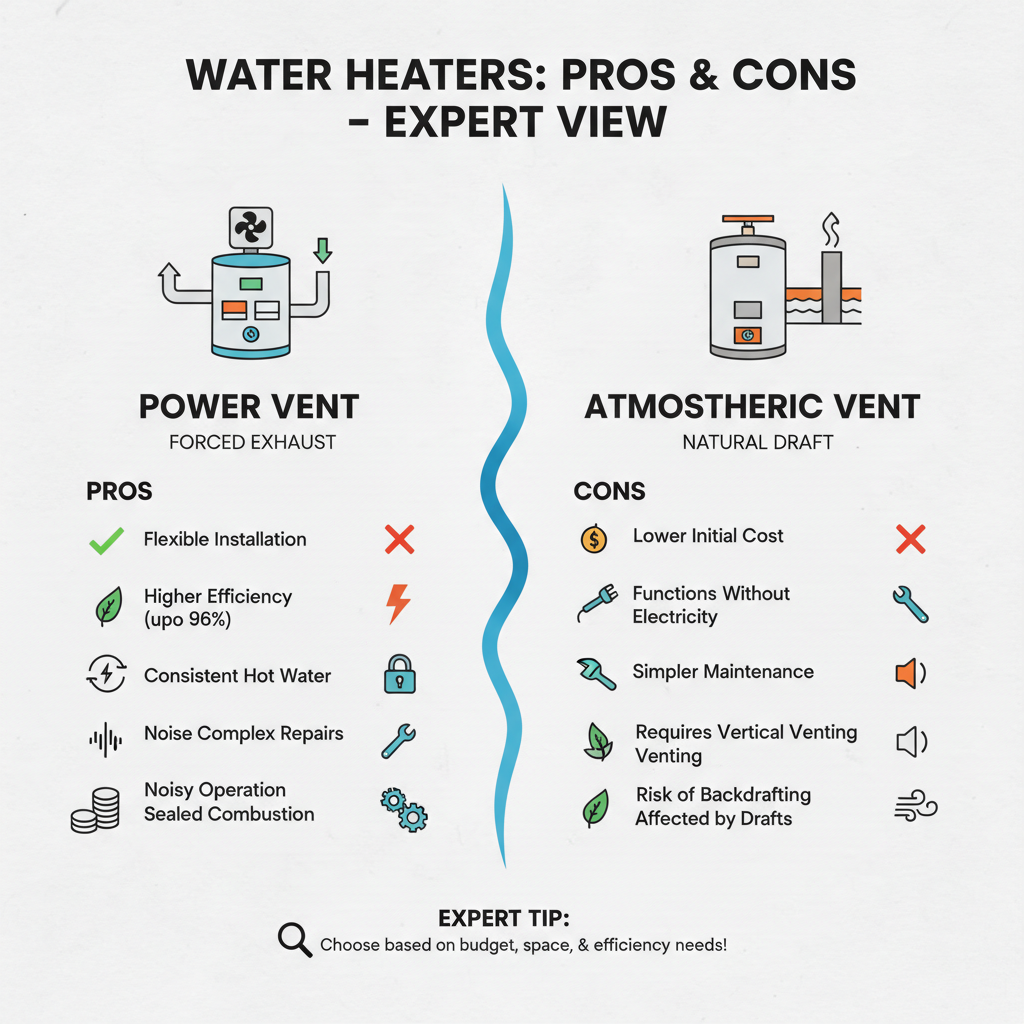
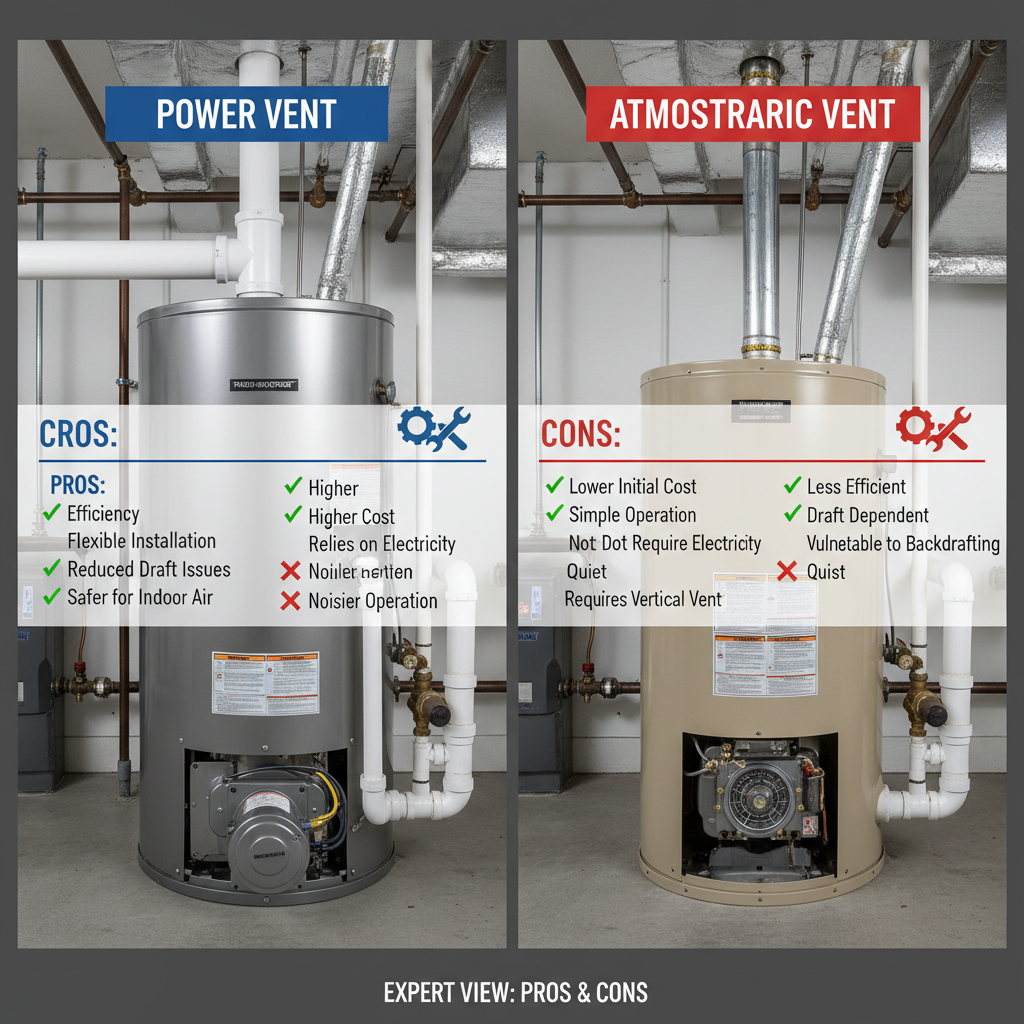
- Superior energy efficiency (UEF ratings typically 0.65-0.70+): Leads to measurable reductions in monthly utility expenditures due to minimized standby heat loss, often saving 20-30% on water heating costs compared to atmospheric models.
- Unparalleled installation flexibility: Vents horizontally up to 40 feet or more through a sidewall via inexpensive PVC, CPVC, or ABS piping, eliminating the need for a traditional chimney or vertical flue, significantly broadening placement possibilities within the home.
- Enhanced safety features: Utilizes a forced-draft exhaust system to actively expel combustion gases, drastically reducing the risk of hazardous backdrafting and carbon monoxide exposure, a critical factor for modern energy-efficient homes.
- Independent of natural draft: Functions efficiently and safely in airtight residential constructions, unlike atmospheric models that require consistent, unhindered air intake for proper operation.
- Often qualifies for energy rebates: Higher efficiency ratings frequently make these units eligible for local, state, or federal energy incentives and tax credits, offsetting initial investment.
Considerations
- Higher upfront capital investment: Expect purchase and professional installation costs to be 30-50% higher than comparable atmospheric models, averaging an additional $500-$1000.
- Electricity dependent: Becomes non-functional during power outages due to the electric blower motor, cutting off hot water supply until power is restored.
- Increased mechanical complexity: The electric blower motor and associated control board add components susceptible to wear and potential electronic failure, possibly requiring repairs within 7-10 years.
- Noticeably louder operation: The fan's noise (typically 50-60 dB) during venting cycles can be a minor acoustic disturbance compared to the near-silent operation of atmospheric units.
- Potential for more expensive repairs: Sophisticated electronics, motors, and pressure switches can lead to higher specialized repair bills, often costing 2-3 times more than repairs on simpler atmospheric units.
| Type | Price Range |
|---|---|
| Atmospheric Vent Water Heater (Installed) | $1,200 – $2,000 |
| Power Vent Water Heater (Installed) | $1,800 – $3,000 |