Quick Answer
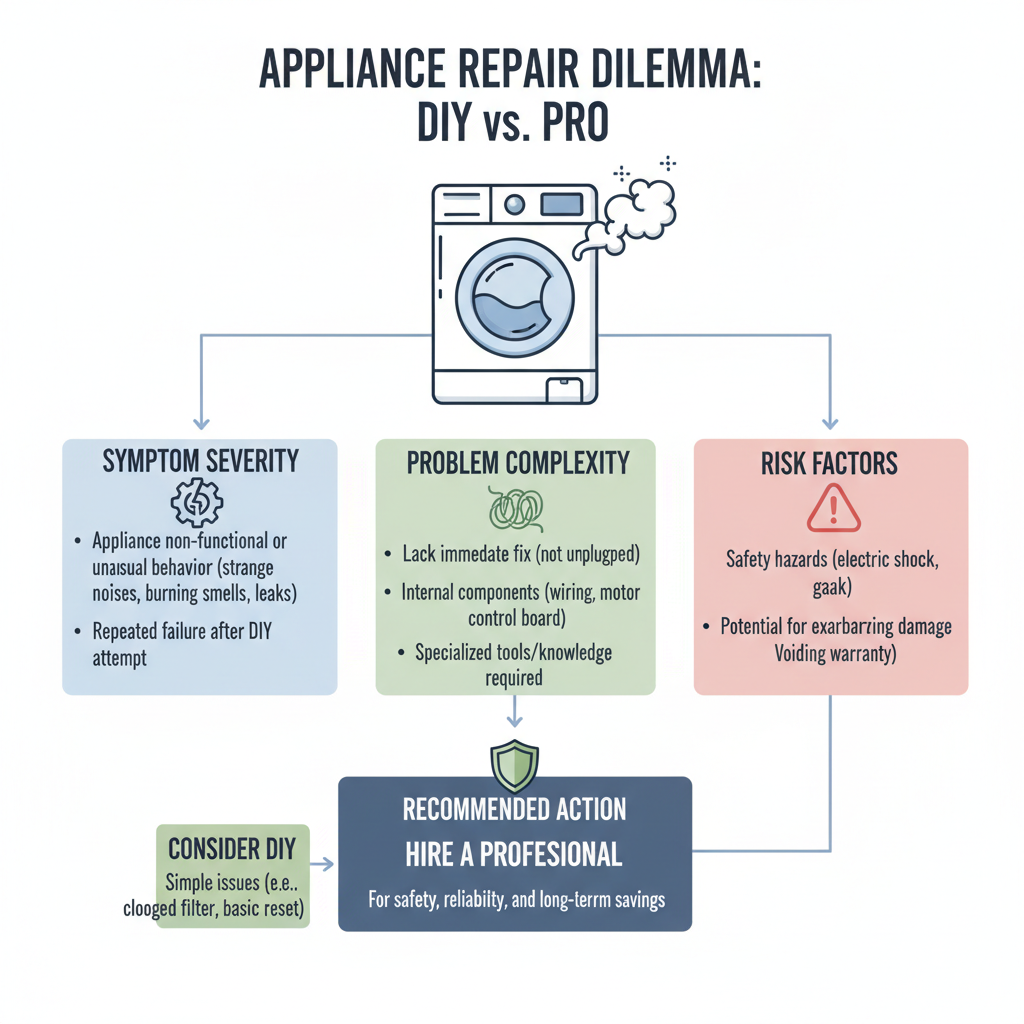
Okay, so here's the quick version. Is your appliance acting up? If it's something simple—a clogged filter, a tripped breaker, a loose hose—go for it. You can probably fix it for free or for the cost of a screwdriver. But the second you're talking about taking apart panels, dealing with 240-volt electricity, gas lines, or anything involving a computer board, you need to STOP. Seriously. A simple mistake can turn a $200 repair into a $1,200 disaster or, worse, a fire. My service call is way cheaper than a new kitchen.
Common Symptoms
Possible Causes
Step-by-Step Diagnosis
Step 1
Identify the exact appliance and model number.
Step 2
Consult the appliance's owner's manual for troubleshooting tips and common error codes.
Step 3
Perform basic safety checks (e.g., ensure it's plugged in, circuit breaker isn't tripped, gas valve is open for gas appliances).
Step 4
Search online for known issues with the specific make and model, looking for simple, common solutions (e.g., clogged lint trap for dryer, blocked spray arms for dishwasher).
Step 5
Document observed symptoms thoroughly (e.g., sounds, smells, lights, specific function failures).
Step 6
Assess personal skill level and comfort with electrical, gas, or plumbing work relevant to the appliance.
DIY vs Professional Costs
| Repair Type | DIY Cost | Professional Cost | Time Required |
|---|---|---|---|
The 'No-Brainer' Stuff (Filters, Breakers) | $0 - $25 | $100-$200 | 15 minutes |
Simple Part Swap (Fuse, Knob, Door Gasket) | $20 - $75 | $175 - $300 | 1-2 hours |
Slightly Tricky (Dryer Pulley, Washer Pump) | $50 - $150 | $250 - $450 | 2-4 hours |
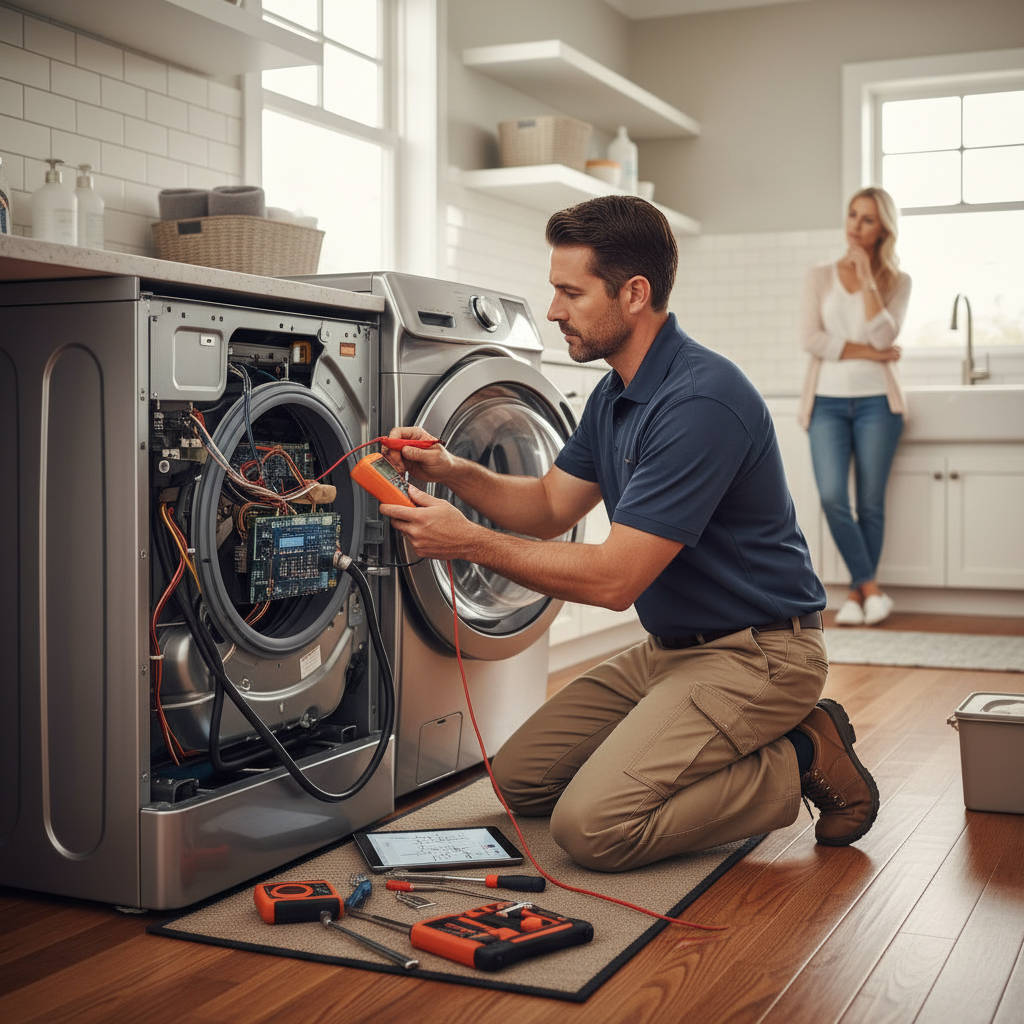
Complex & Dangerous (Control Board, Motor) | $150 - $600+ | $450 - $900+ | 3-5 hours |
Sealed System (Fridge Compressor, Coolant) | N/A | $900 - $1800+ | 4-6 hours |
When to Call a Professional Appliance
- When the appliance involves high-voltage electricity (240V), natural gas, or complex plumbing beyond basic connections.
- If the appliance is still under warranty (DIY can void warranties).
- When the issue involves advanced technology, printed circuit boards (PCBs), or digital sensors you can't test.
- If multiple components need to be disassembled and reassembled, or the repair requires specialized tools like a multimeter or gear puller.
- When facing safety hazards such as gas leaks (smell of rotten eggs), live electrical components you're not trained to handle, or potential for major water damage.
- After attempting basic troubleshooting with no success, or if a DIY repair made the problem worse.
- If diagnostic complexity makes misdiagnosis a high risk, such as with vague symptoms or intermittent issues.
- When parts are difficult to source or require specific knowledge to install correctly, like a refrigerator compressor or washer transmission.
Prevention Tips
- Regularly clean and maintain appliances according to manufacturer guidelines (e.g., clean refrigerator coils, washing machine filter, range hood filters).
- Read and understand the owner's manual for proper usage and basic troubleshooting.
- Avoid overloading appliances (e.g., washing machine, dishwasher).
- Ensure appliances are properly installed and vented.
- Address small issues promptly to prevent them from escalating into major problems.
Frequently Asked Questions
Related Guides
DIY Appliance Repair vs. Hiring a Pro: A Technician's Honest Take (Troubleshooting & Fixes)
A veteran tech's guide on when to DIY appliance repair and when to call a pro. Learn the real risks, costs, and what YouTube won't tell you about fixing your stuff.
Oven Not Heating Evenly? Troubleshooting & Fixes from a 25-Year Tech
Is your oven not heating evenly or accurately? A veteran tech shares the most common causes and fixes, from bad heating elements to faulty sensors. Learn to troubleshoot it yourself.
Child-Proofing Kitchen & Laundry Room Appliances: A Comprehensive Safety Guide
Comprehensive guide to child-proofing kitchen and laundry appliances. Learn types of locks, anti-tip bracket installation, electrical safety, and hazardous storage to prevent burns, electrocution, and injuries for curious kids.
Dishwasher Not Draining? (A 25-Year Vet's Troubleshooting Guide)
Dishwasher not draining, leaving standing water? Learn how to fix common causes like clogged filters, drain hoses, and garbage disposal issues. A veteran technician's expert guide helps you troubleshoot and prevent a swampy dishwasher.
Preventing Appliance-Related Fires and Electrical Hazards in the Home: A Comprehensive Troubleshooting Guide
Don't let appliances become a fire hazard! Learn to identify warning signs like burning smells, sparks, or tripping breakers. This expert guide details causes, diagnosis, and prevention tips for common appliance and electrical fire risks, and advises when to call a professional.
Eco-Friendly Appliance Disposal: What to Do with Your Old Appliances (Beyond Just Trashing Them)
Don't just trash it! Learn how to responsibly dispose of old appliances like refrigerators, washers, and dryers. Explore eco-friendly recycling options, utility rebates, retailer haul-away programs, and safe removal tips.
Need Professional Help?
Find top-rated appliance experts in your area