Quick Answer
Okay so here's the quick version. If you smell burning, see sparks, or an appliance keeps tripping the breaker, unplug it. Yesterday. Most of the time, it's something simple like a clogged dryer vent or a cheap, overloaded power strip. You can clean that stuff yourself for next to nothing. But if you're seeing scorch marks or dealing with internal wiring, don't be a hero. A pro inspection will run you $75-$150, but that's a heck of a lot cheaper than a house fire. Don't mess with electricity if you're not 100% sure.
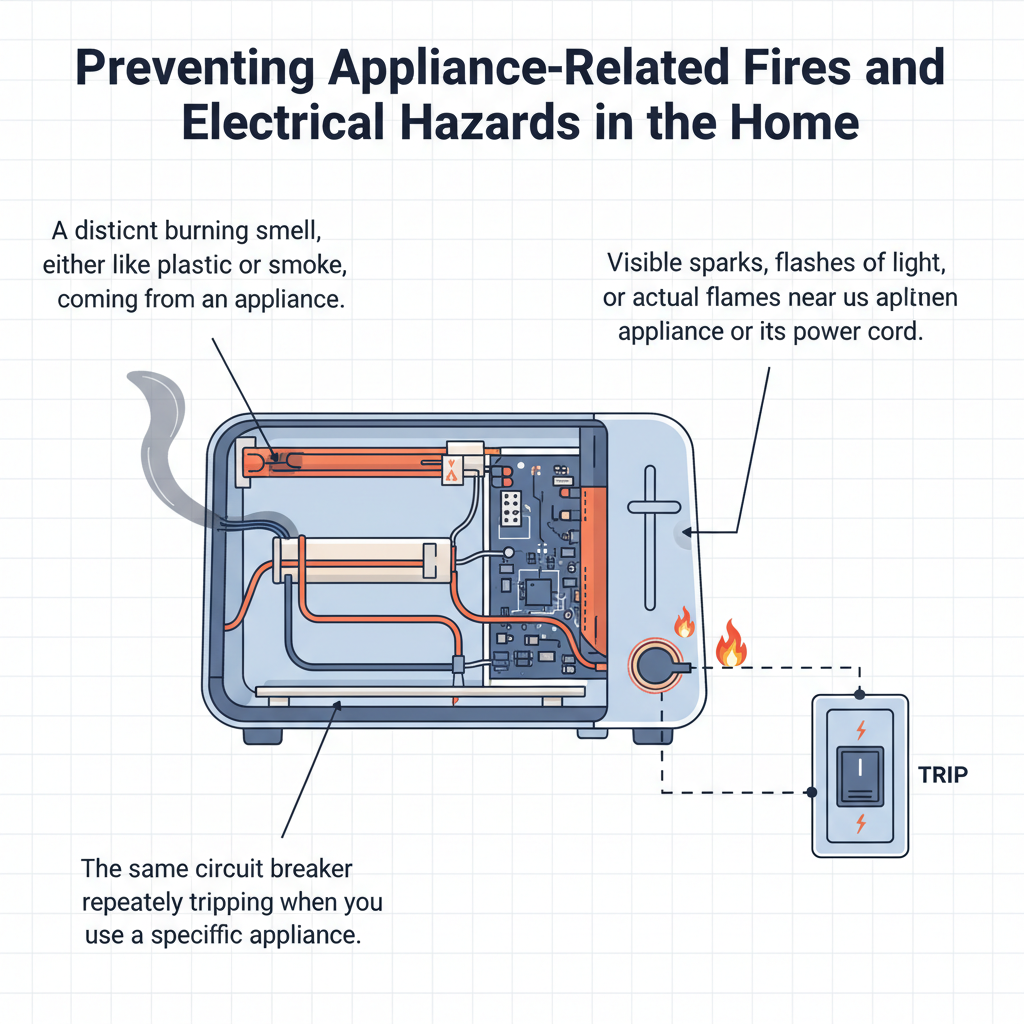
Common Symptoms
Possible Causes
Step-by-Step Diagnosis
Step 1
Immediately unplug the appliance. If you can't reach the plug or it looks damaged, go to your electrical panel and turn off the corresponding breaker.
Step 2
Visually inspect the entire power cord and plug for any signs of fraying, cuts, melting, or burn marks.
Step 3
Examine the wall outlet for any discoloration, charring, or a loose fit with the plug. A loose connection generates dangerous heat.
Step 4
If safe to do so and the appliance is completely unplugged, check for obvious internal issues like massive dust/lint buildup (in dryers or refrigerators) or clear signs of burnt components.
Step 5
Check if the circuit breaker is warm to the touch or has been tripping repeatedly. This indicates a persistent problem with the appliance or circuit, not a fluke.
Step 6
Don't ignore the obvious. Is the appliance being used improperly, like a space heater covered by a blanket or a toaster oven pushed against a flammable surface?
DIY vs Professional Costs
| Repair Type | DIY Cost | Professional Cost | Time Required |
|---|---|---|---|
Basic cleaning (dryer lint trap/vent, fridge coils) | $0–$25 | $100–$200 | 1-2 hours |
Replacing a damaged, detachable appliance cord | $15–$40 | $100–$150 | 15 minutes |
Outlet Replacement (for a scorched outlet) | $10–$30 | $150–$300 | 1-2 hours |
Replacing a major internal component (heating element, control board) | $50–$250 | $200–$600+ | 2-4 hours |
When to Call a Professional Appliance
- You see any visible sparks, smoke, or flames coming from an appliance or outlet.
- An appliance repeatedly trips a circuit breaker, indicating a persistent and dangerous fault.
- You smell gas (rotten egg smell). Get out of the house first, then call your gas company's emergency line, then an appliance technician.
- You discover a scorched, melted, or blackened power outlet or plug.
- The repair involves internal components of a modern 'smart' appliance with circuit boards and sensors.
- Anytime you're dealing with a gas line or high-voltage wiring and you are not 100% confident in your ability to perform the repair safely.
Prevention Tips
- Clean your clothes dryer's lint screen after every single use and clean the entire vent hose/duct system at least once a year.
- Never use an extension cord or power strip for a major appliance like a refrigerator, microwave, space heater, or air conditioner.
- Regularly inspect power cords for damage and check that plugs fit snugly into outlets. A loose plug is a fire hazard.
- Give appliances proper ventilation. Pull fridges away from the wall and ensure nothing is blocking the vents on microwaves or toaster ovens.
- Don't leave heat-producing appliances like stoves, ovens, or space heaters unattended while they are operating.
- Install and regularly test smoke and carbon monoxide detectors. They are your first alert if something goes wrong.
- If you have gas appliances, have them periodically inspected by a professional to check for leaks and ensure proper combustion.
Frequently Asked Questions
Related Guides
DIY Appliance Repair vs. Hiring a Pro: A Technician's Honest Take (Troubleshooting & Fixes)
A veteran tech's guide on when to DIY appliance repair and when to call a pro. Learn the real risks, costs, and what YouTube won't tell you about fixing your stuff.
Oven Not Heating Evenly? Troubleshooting & Fixes from a 25-Year Tech
Is your oven not heating evenly or accurately? A veteran tech shares the most common causes and fixes, from bad heating elements to faulty sensors. Learn to troubleshoot it yourself.
Child-Proofing Kitchen & Laundry Room Appliances: A Comprehensive Safety Guide
Comprehensive guide to child-proofing kitchen and laundry appliances. Learn types of locks, anti-tip bracket installation, electrical safety, and hazardous storage to prevent burns, electrocution, and injuries for curious kids.
Dishwasher Not Draining? (A 25-Year Vet's Troubleshooting Guide)
Dishwasher not draining, leaving standing water? Learn how to fix common causes like clogged filters, drain hoses, and garbage disposal issues. A veteran technician's expert guide helps you troubleshoot and prevent a swampy dishwasher.
Preventing Appliance-Related Fires and Electrical Hazards in the Home: A Comprehensive Troubleshooting Guide
Don't let appliances become a fire hazard! Learn to identify warning signs like burning smells, sparks, or tripping breakers. This expert guide details causes, diagnosis, and prevention tips for common appliance and electrical fire risks, and advises when to call a professional.
Eco-Friendly Appliance Disposal: What to Do with Your Old Appliances (Beyond Just Trashing Them)
Don't just trash it! Learn how to responsibly dispose of old appliances like refrigerators, washers, and dryers. Explore eco-friendly recycling options, utility rebates, retailer haul-away programs, and safe removal tips.
Need Professional Help?
Find top-rated appliance experts in your area