Quick Answer
null
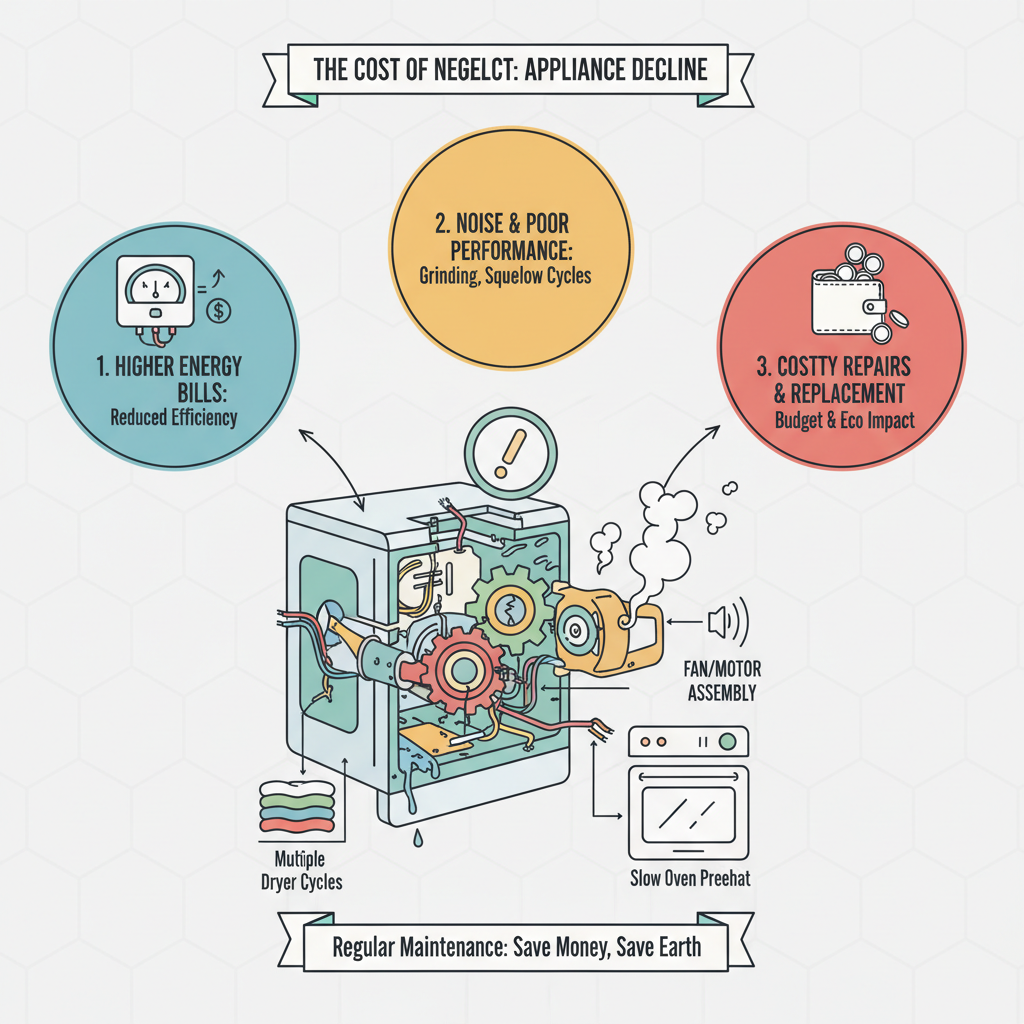
Common Symptoms
Possible Causes
Step-by-Step Diagnosis
Step 1
First, just use your eyes and ears. Watch the appliance run and listen for specific noises. Look for visible dirt, damage, or leaks.
Step 2
Unplug the unit. Then, check the common clog points: the dryer vent hose, the refrigerator coils, and the dishwasher filter at the bottom of the tub.
Step 3
Consult the user manual for the recommended maintenance schedule and location of key components.
Step 4
Perform a simple performance test, like checking the temperature of your oven or fridge with a separate thermometer.
Step 5
Examine all power cords and water hoses for signs of fraying, cracking, or bulging.
Step 6
If you know how, use a multimeter to check for continuity on components like fuses or heating elements, but only if you're 100% confident in what you're doing.

DIY vs Professional Costs
| Repair Type | DIY Cost | Professional Cost | Time Required |
|---|---|---|---|
Cleaning Refrigerator Coils | $0-$15 | $100-$175 | 30 minutes |
Cleaning Dryer Vent (Full system) | $20-$30 | $125-$250 | 1-1.5 hours |
Replacing a Refrigerator Door Gasket | $30-$150 | $250-$450 | 1 hour |
Replacing a Simple Dryer Belt or Roller | $20-$80 | $250-$450 | 2-3 hours |
When to Call a Professional Appliance
- If you smell gas or are dealing with a gas appliance repair. Don't take chances.
- When you suspect a major electronic component like a control board has failed.
- If the repair involves the sealed refrigeration system (compressor/refrigerant) or a major mechanical part like a washer transmission.
- When dealing with high-voltage components (240V) in ovens or dryers and you're not an expert.
- If the appliance is still under warranty; attempting a DIY repair will likely void it.
Prevention Tips
- Clean your dryer's lint screen after every single load, and clean the entire vent pipe once a year.
- Vacuum your refrigerator's condenser coils at least once a year, or twice if you have pets.
- Rinse out your dishwasher's filter once a month to prevent clogs and odors.
- Avoid overloading your washer and dryer to reduce strain on the motor and belts.
- Inspect your washing machine's water hoses annually and replace them every 3-5 years, preferably with braided steel lines.
Frequently Asked Questions
Related Guides
DIY Appliance Repair vs. Hiring a Pro: A Technician's Honest Take (Troubleshooting & Fixes)
A veteran tech's guide on when to DIY appliance repair and when to call a pro. Learn the real risks, costs, and what YouTube won't tell you about fixing your stuff.
High utility bills due to inefficient appliance use and lack of energy-saving practices. Troubleshooting & Fixes
Preventing Appliance-Related Fires and Electrical Hazards in the Home Troubleshooting & Fixes (2024 Guide)
A veteran tech's guide to preventing appliance fires. Learn the warning signs, what causes them, and when to call a pro before it's a disaster.
Moving Appliances Without Breaking Them (Or Your Back)
A veteran tech's guide to moving appliances. Learn to disconnect, prep, and move your fridge, washer, or stove safely to avoid costly damage and leaks.
Eco-Friendly Appliance Disposal: What to Do with Your Old Appliances (Beyond Just Trashing Them)
A veteran tech's guide on how to get rid of old appliances. Learn about eco-friendly recycling, junk removal, and free disposal options for your old stuff.
Microwave Runs But Won't Heat (Troubleshooting & Fixes)
Microwave running but not heating your food? A veteran tech explains the common causes, from bad door switches to a failed magnetron, and how to fix it.
Need Professional Help?
Find top-rated appliance experts in your area