Quick Answer
Okay, so here's the quick version. Your microwave seems to be working—lights on, plate spinning—but the food's cold. Often, it’s a bad door interlock switch, a common failure point and safety feature. This is a cheap part, maybe $10-$30 DIY, or $100-$180 with professional installation. It could also stem from issues with high-voltage components like a diode, a capacitor, or the magnetron itself. A simple professional fix might cost around $100-$200, but major component replacements, particularly the magnetron, can push costs to $250-$450, often making a new microwave a more economical choice. As a critical safety warning: Never touch anything inside the microwave's high-voltage components, even when unplugged, as the capacitor can store a lethal charge. Always discharge the capacitor safely or consult a professional.
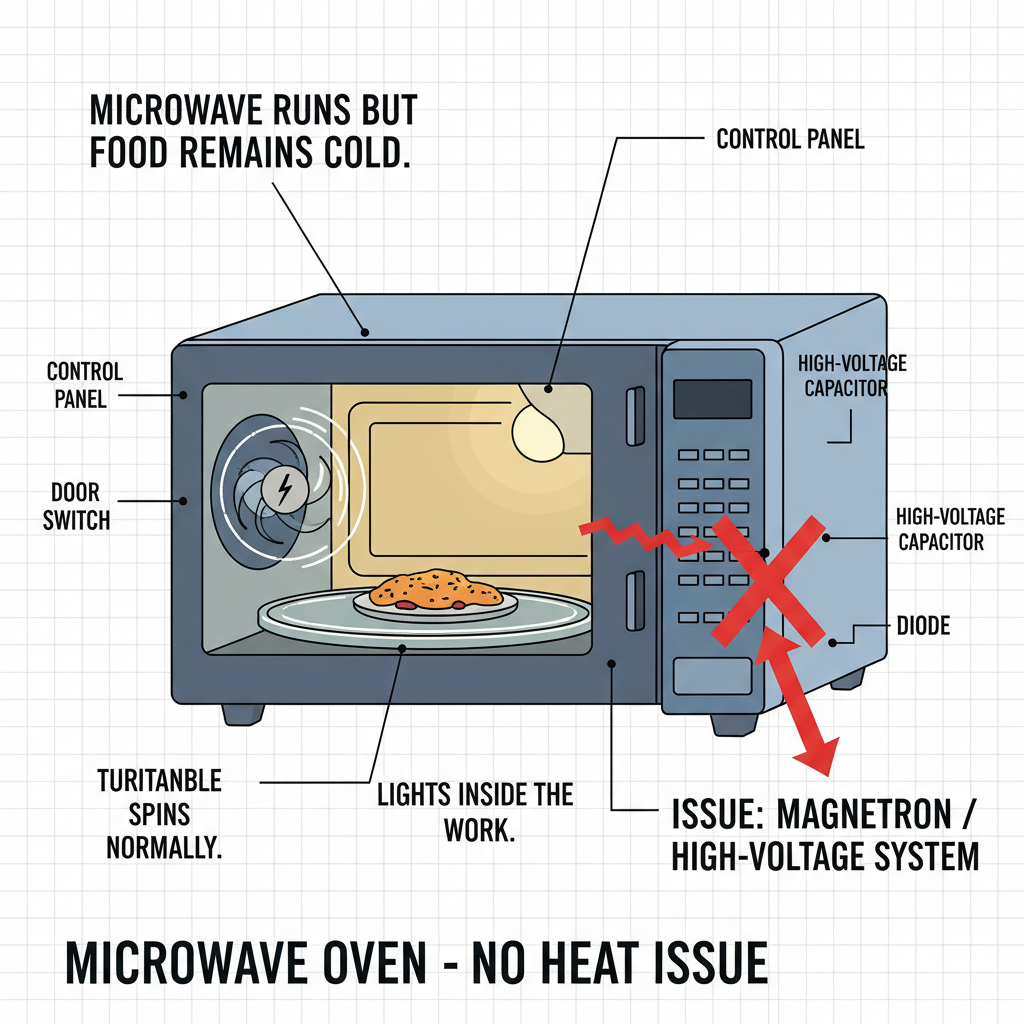
Common Symptoms
Possible Causes
Step-by-Step Diagnosis
Step 1
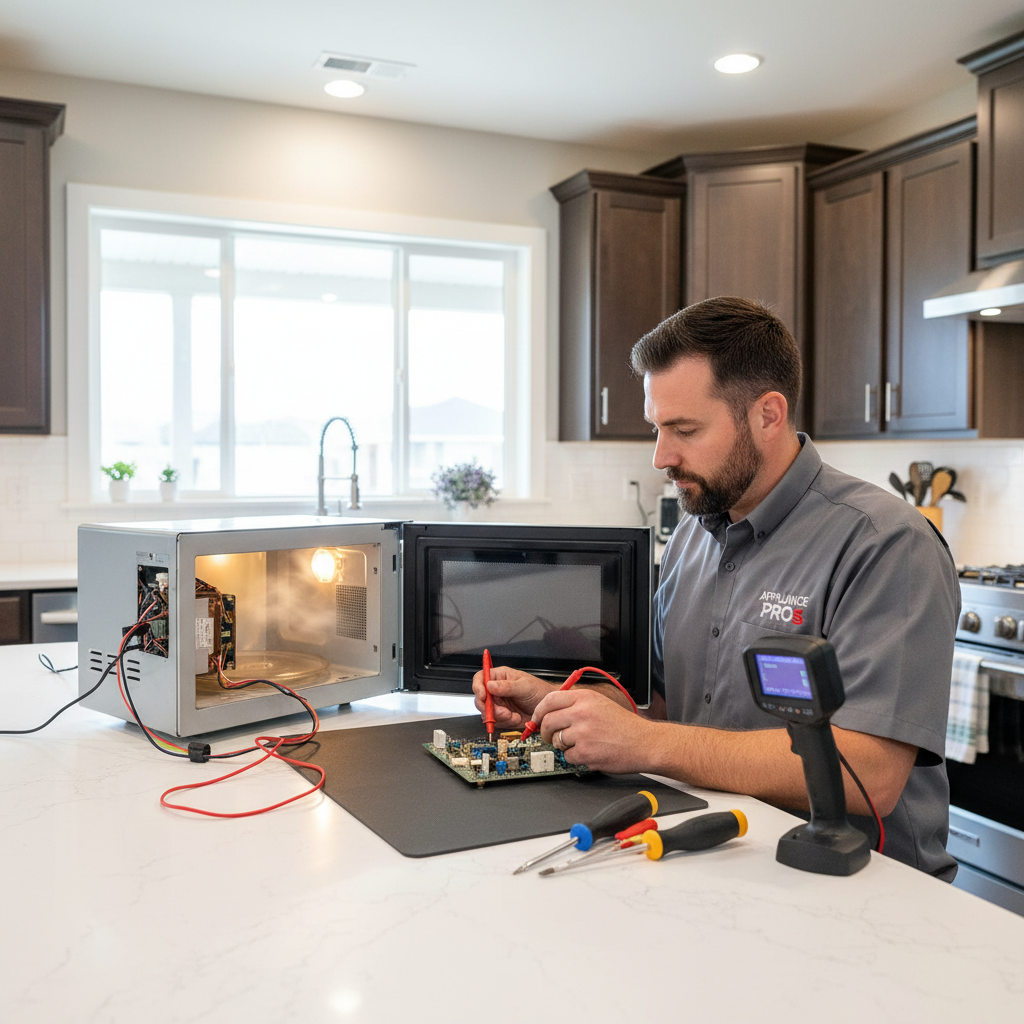
Unplug the microwave and check the door interlock switches with a multimeter for continuity.
Step 2
CAREFULLY discharge the high-voltage capacitor using an insulated screwdriver before touching any internal components.
Step 3
Visually inspect for burn marks on the capacitor, diode, and magnetron.
Step 4
Test the high-voltage diode for continuity in one direction only.
Step 5
Test the magnetron for low continuity between its terminals and NO continuity from the terminals to its metal case.
Step 6
Test any accessible thermal fuses for continuity; a lack of continuity means it's blown.
DIY vs Professional Costs
| Repair Type | DIY Cost | Professional Cost | Time Required |
|---|---|---|---|
Door Interlock Switch Replacement | $10-30 | $100 - $180 | 30-60 minutes |
High-Voltage Diode Replacement | $5-25 | $120 - $200 | 45-75 minutes |
Magnetron Replacement | $70-180 | $250 - $450 | 1-1.5 hours |
When to Call a Professional Appliance
- If you are uncomfortable or unfamiliar with discharging high-voltage capacitors, which can be lethal.
- If the diagnosis points to a bad magnetron or transformer, as the cost of repair may be close to the price of a new unit.
- If you have a built-in or over-the-range model that is difficult to remove.
- If you've performed basic checks and still can't identify the cause of the problem.
Prevention Tips
- Avoid slamming the microwave door to protect the interlock switches.
- Never operate the microwave when it's empty.
- Keep the interior clean to prevent food splatter from causing arcing.
- Ensure the ventilation slots on the appliance are not blocked to prevent overheating.
Frequently Asked Questions
Related Guides
DIY Appliance Repair vs. Hiring a Pro: A Technician's Honest Take (Troubleshooting & Fixes)
A veteran tech's guide on when to DIY appliance repair and when to call a pro. Learn the real risks, costs, and what YouTube won't tell you about fixing your stuff.
High utility bills due to inefficient appliance use and lack of energy-saving practices. Troubleshooting & Fixes
Preventing Appliance-Related Fires and Electrical Hazards in the Home Troubleshooting & Fixes (2024 Guide)
A veteran tech's guide to preventing appliance fires. Learn the warning signs, what causes them, and when to call a pro before it's a disaster.
Moving Appliances Without Breaking Them (Or Your Back)
A veteran tech's guide to moving appliances. Learn to disconnect, prep, and move your fridge, washer, or stove safely to avoid costly damage and leaks.
Eco-Friendly Appliance Disposal: What to Do with Your Old Appliances (Beyond Just Trashing Them)
A veteran tech's guide on how to get rid of old appliances. Learn about eco-friendly recycling, junk removal, and free disposal options for your old stuff.
Microwave Runs But Won't Heat (Troubleshooting & Fixes)
Microwave running but not heating your food? A veteran tech explains the common causes, from bad door switches to a failed magnetron, and how to fix it.
Need Professional Help?
Find top-rated appliance experts in your area