Quick Answer
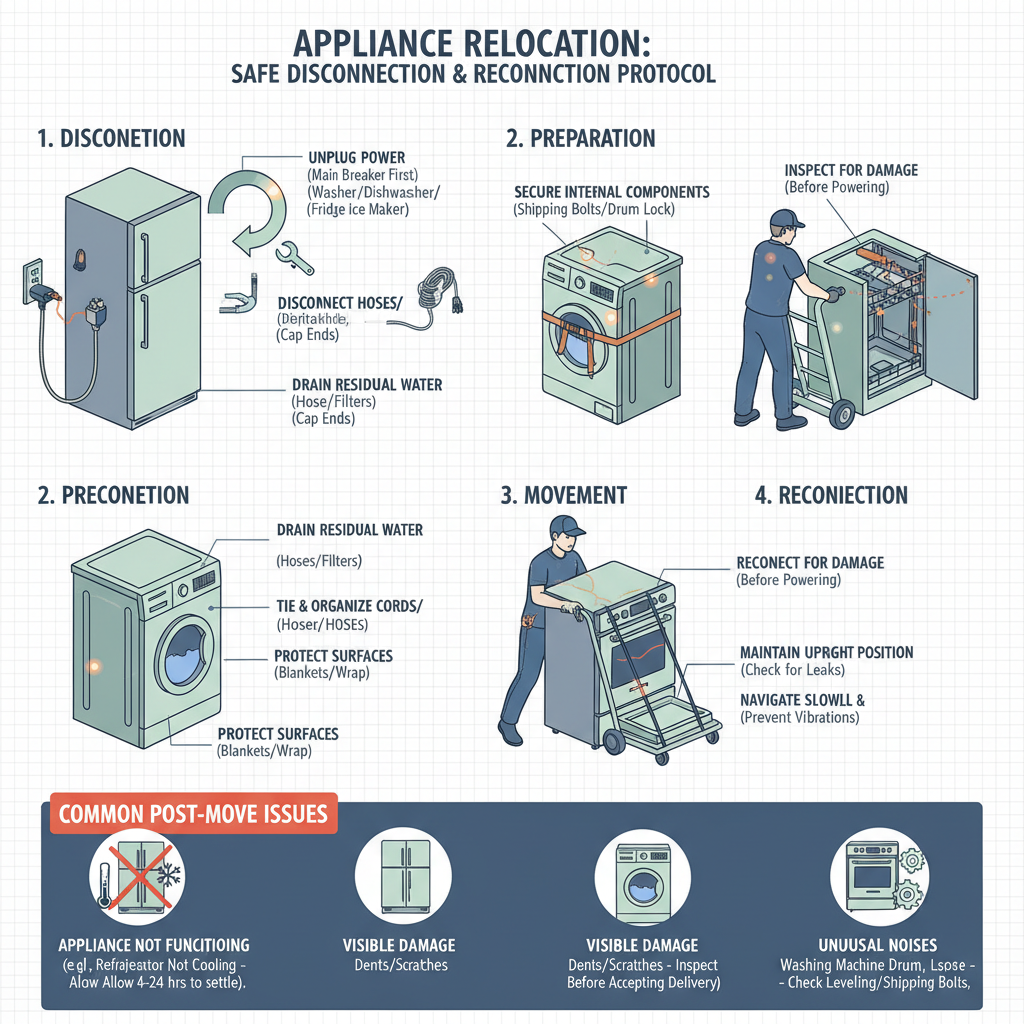
Okay, so here's the quick and dirty on moving appliances. First, shut everything off. Power, water, gas—everything. Don't be a hero. For fridges and washers, drain 'em completely. Nobody wants a soggy moving truck. Secure everything that moves, inside and out; doors, drawers, the washing machine drum... use straps, tape, whatever it takes. For refrigerators, avoid laying them flat if possible; if necessary, consult the manufacturer's guidelines for proper orientation and allow adequate time for oil to settle before plugging in. Get a real appliance dolly. And for the love of god, if it's a gas stove, call a licensed plumber or gas technician. Seriously. Doing it yourself can save you a couple hundred bucks per appliance, but screw it up and you're buying a new one. Or worse, risking a serious safety hazard.
Common Symptoms
Possible Causes
Step-by-Step Diagnosis
Step 1
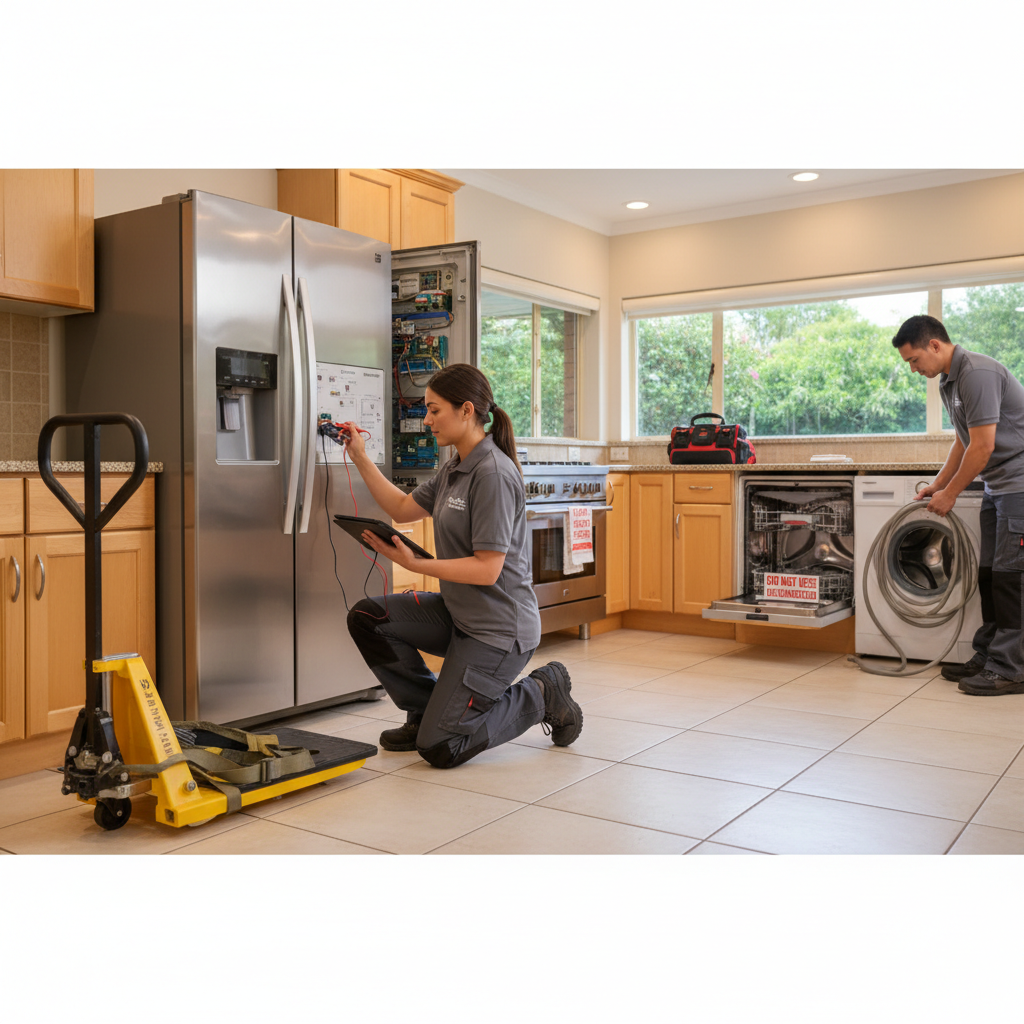
Stop and perform a visual inspection of the appliance exterior, power cord, and connection points for any obvious damage before plugging anything in.
Step 2
Check your home's breaker box to see if the appliance's circuit breaker has tripped. Verify the wall outlet has power by testing it with a working lamp.
Step 3
For refrigerators that were laid down, let them stand upright for at least 4-24 hours before plugging them in to allow compressor oil to settle.
Step 4
For washers and dishwashers, run a short, empty test cycle (e.g., 'Rinse & Spin') and watch all water connections for any signs of leaks.
Step 5
For gas stoves, perform a smell test first. If no gas is detected, apply soapy water to the gas connection and look for new bubbles forming, which indicates a leak.
DIY vs Professional Costs
| Repair Type | DIY Cost | Professional Cost | Time Required |
|---|---|---|---|
Disconnect & Prep (per appliance) | $20-50 | $100 - $300 | 1-2 hours |
Reconnect & Test (per appliance) | $10-60 | $100 - $300 | 1-2 hours |
Gas Stove Reconnection | Don't Do It | $150 - $500 | 1 hour |
Full-Service Move (per appliance) | $100+ | $250 - $700+ | 2-4 hours |
When to Call a Professional Appliance
- If you are dealing with ANY gas appliance (stove, dryer). Disconnection and reconnection of gas lines must be done by a licensed professional.
- When moving expensive built-in appliances like a Sub-Zero fridge or a wall oven, as they require special techniques to avoid damaging custom cabinetry.
- If you are uncomfortable or unsure about any part of the process, especially anything involving plumbing or electrical connections.
- If you don't own or want to rent the proper moving equipment, like an appliance dolly with straps and moving blankets.
- If the appliance malfunctions, leaks, or makes strange noises after you have reconnected it and your basic troubleshooting hasn't worked.
Prevention Tips
- Plan ahead: Start prepping the appliance 24-48 hours before the move, especially for defrosting refrigerators.
- Drain all water from washers, dishwashers, and icemaker lines completely before moving.
- Use shipping bolts to secure the drum on front-load washing machines to prevent suspension damage.
- Tape all doors and drawers shut with painter's tape and remove loose internal items like glass shelves.
- Use proper moving equipment, including a real appliance dolly with straps, and get a helper.
- Protect your floors with cardboard, blankets, or furniture sliders to prevent scratches and gouges.
- For refrigerators, keep them upright during transport. If you must lay it down, let it stand upright for 24 hours before plugging it in.
Frequently Asked Questions
Related Guides
DIY Appliance Repair vs. Hiring a Pro: A Technician's Honest Take (Troubleshooting & Fixes)
A veteran tech's guide on when to DIY appliance repair and when to call a pro. Learn the real risks, costs, and what YouTube won't tell you about fixing your stuff.
High utility bills due to inefficient appliance use and lack of energy-saving practices. Troubleshooting & Fixes
Preventing Appliance-Related Fires and Electrical Hazards in the Home Troubleshooting & Fixes (2024 Guide)
A veteran tech's guide to preventing appliance fires. Learn the warning signs, what causes them, and when to call a pro before it's a disaster.
Moving Appliances Without Breaking Them (Or Your Back)
A veteran tech's guide to moving appliances. Learn to disconnect, prep, and move your fridge, washer, or stove safely to avoid costly damage and leaks.
Eco-Friendly Appliance Disposal: What to Do with Your Old Appliances (Beyond Just Trashing Them)
A veteran tech's guide on how to get rid of old appliances. Learn about eco-friendly recycling, junk removal, and free disposal options for your old stuff.
Microwave Runs But Won't Heat (Troubleshooting & Fixes)
Microwave running but not heating your food? A veteran tech explains the common causes, from bad door switches to a failed magnetron, and how to fix it.
Need Professional Help?
Find top-rated appliance experts in your area