Quick Answer
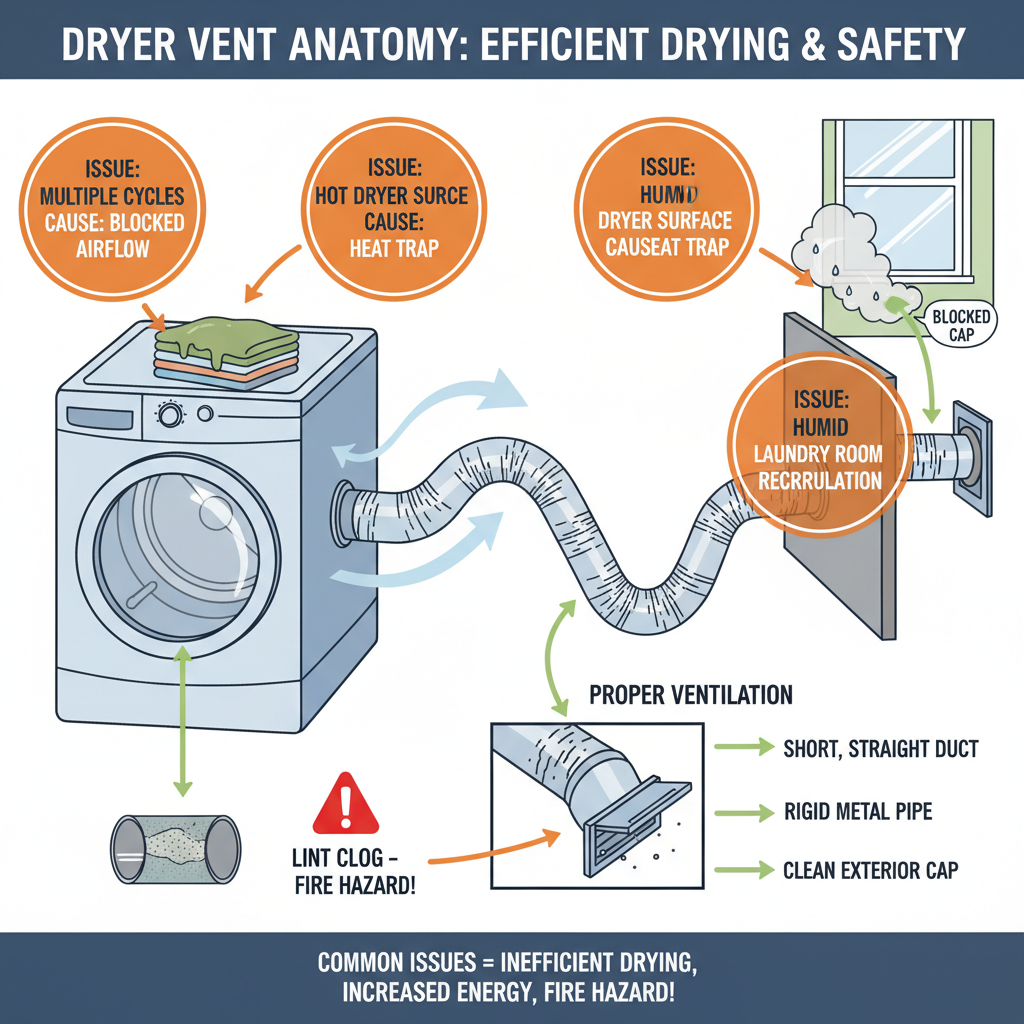
Okay, so here's the quick version. If your dryer's getting super hot but your clothes are still damp, you've got an airflow problem, period. Nine times out of ten your vent is clogged with lint. First, check the hose behind the dryer for kinks. If that's not it, go outside and see if the vent flap opens when it's running and air is being expelled. If you see a ton of lint or nothing's coming out, it's clogged. A basic cleaning you can do yourself for about $20-$70 for a brush kit, but a professional cleaning will generally cost $150-$300.
Common Symptoms
Possible Causes
Step-by-Step Diagnosis
Step 1
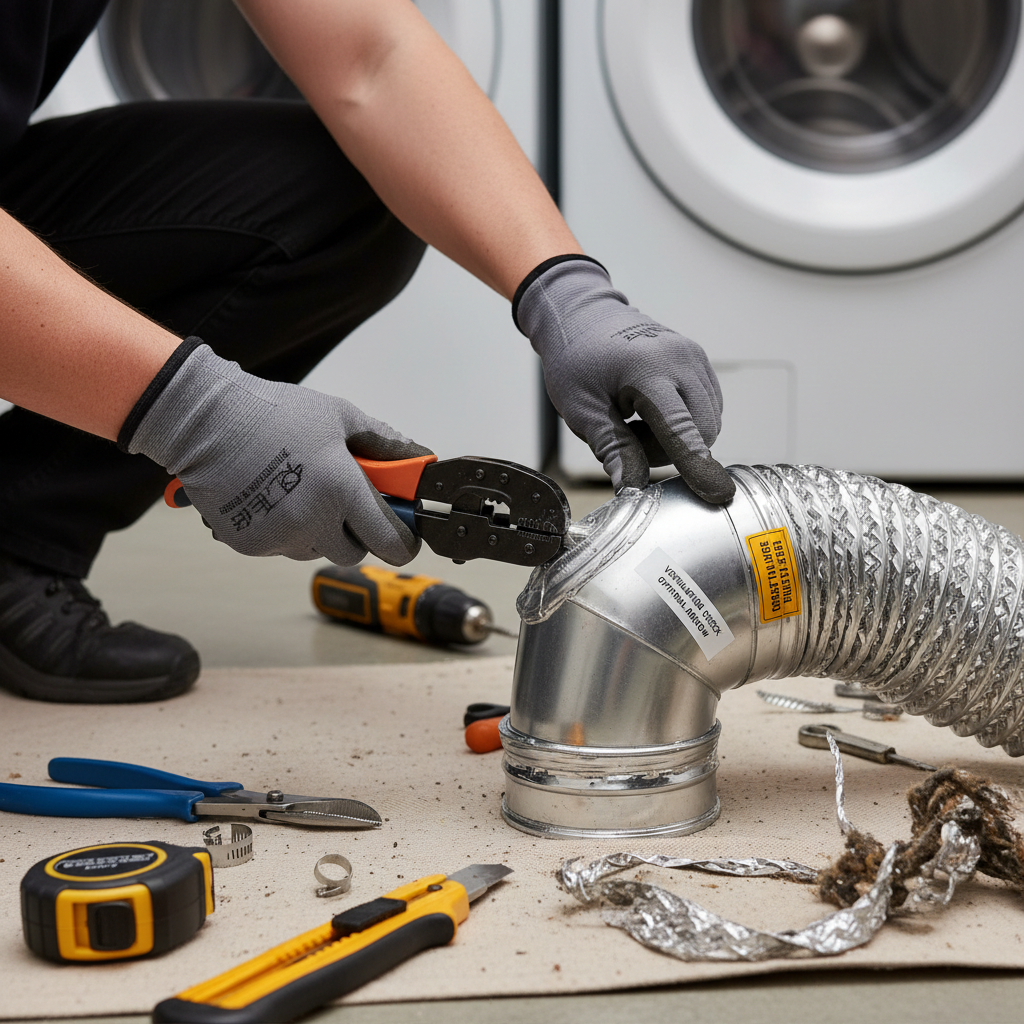
Pull the dryer away from the wall and inspect the transition duct for any visible kinks, crushing, or poor connections.
Step 2
Go outside and observe the exterior vent hood while the dryer is running. Check if the flap opens and if there is a strong, steady flow of warm air.
Step 3
Unplug the dryer and disconnect the transition duct. Use a flashlight to look for significant lint buildup inside the duct opening in the wall.
Step 4
As a pro test, briefly run the dryer while it's disconnected from the wall vent to confirm the dryer's internal fan is blowing forcefully.
Step 5
After cleaning and reassembly, run a test load of wet towels to confirm they dry in a single, normal cycle.
DIY vs Professional Costs
| Repair Type | DIY Cost | Professional Cost | Time Required |
|---|---|---|---|
Replace Transition Duct (DIY) | $20-40 | $150-250 | 30 minutes |
Basic Vent Cleaning (DIY Brush Kit) | $20-70 | N/A | 1-2 hours |
Professional Vent Cleaning | N/A | $150-300 | 1-2 hours |
Minor Vent Repair/Rerouting | $100-300 | $300-600 | 2-4 hours |
When to Call a Professional Dryer Vent
- If the vent terminates on the roof, which requires different tools and safety precautions.
- If the vent run is very long (over 15-20 feet) or has multiple inaccessible turns, making DIY cleaning risky and ineffective.
- If you've attempted to clean it with a DIY kit and the problem persists or gets worse.
- If you discover damage, such as a disconnected or punctured duct inside a wall or ceiling.
- If you simply lack the tools or comfort level to safely perform the cleaning and repairs yourself.
Prevention Tips
- Clean the lint screen inside the dryer before or after every single load. No exceptions.
- Perform a full vent system cleaning from the dryer to the exterior wall at least once a year.
- Replace any flexible white plastic or foil transition duct with a superior semi-rigid or rigid metal duct.
- Regularly inspect the exterior vent hood to ensure it is free from obstructions like bushes, snow, or animal nests.
- Avoid consistently overloading the dryer, which creates excess lint and strain.
Frequently Asked Questions
Related Guides
Dryer vent blockages and restricted airflow leading to inefficient drying, increased energy consumption, and heightened fire risk. Troubleshooting & Fixes (2024 Guide)
Dryer vent blocked? Learn why your clothes are still wet and how to fix it. A vet tech's guide to troubleshooting and cleaning a clogged dryer vent to prevent fires.
Dryer Not Starting (No Power or Not Tumbling) Troubleshooting & Fixes (2024 Guide)
Dryer not starting? A veteran tech shares fixes for no power or tumbling. Learn to check the plug, door switch, and thermal fuse before you call for a pricey repair.
Dryer vent discharge not working effectively, leading to inefficient drying, increased energy consumption, and potential fire hazards. Troubleshooting & Fixes
Dryer Vent Cleaning Tips for Pet Owners, focusing on increased lint and pet hair accumulation in dryer vents, leading to reduced efficiency and fire hazards. Troubleshooting & Fixes
Dryer Vent Nightmares (Troubleshooting & Fixes)
A veteran tech's guide to fixing dryer vent problems. Learn to diagnose clogged vents, fix slow drying times, and prevent fires. DIY and pro tips inside.
Dryer vent fitting issues, including improper connections, blockages (lint, debris), and physical damage (cracks, kinks, disconnections) leading to reduced drying efficiency, increased energy consumption, and potential fire hazards. Troubleshooting & Fixes
Experiencing long dry times or a hot laundry room? Troubleshoot and fix common dryer vent fitting issues, blockages, and damage. Learn DIY costs vs. pro fees.
Need Professional Help?
Find top-rated dryer vent experts in your area