Quick Answer
To find a good contractor and avoid scams, thoroughly define your project, gather personal referrals, research contractors online via state licensing boards and the BBB, interview multiple candidates, compare detailed, itemized bids, rigorously check references, verify insurance directly with providers, and sign a comprehensive contract that outlines all project details, payment terms, and warranty information.
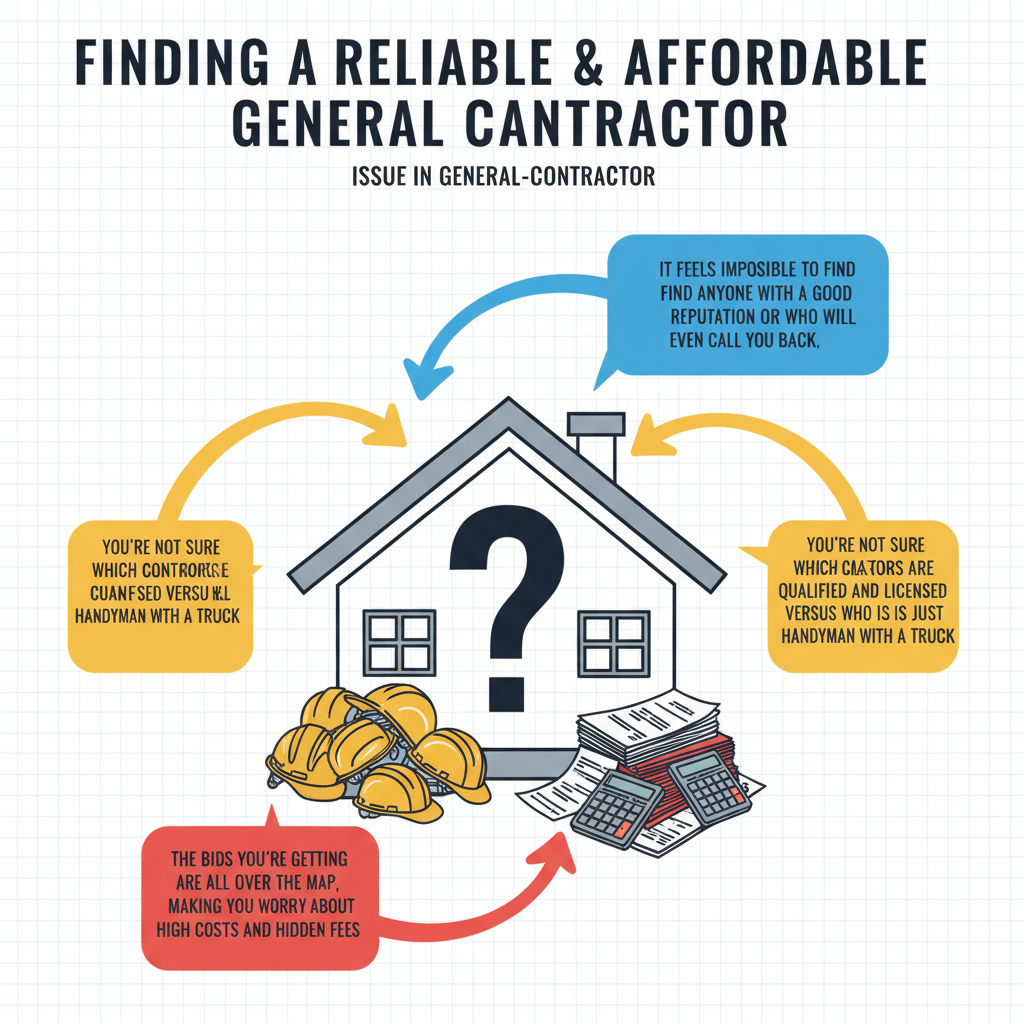
Common Symptoms
Possible Causes
Step-by-Step Diagnosis
Step 1
Clearly define your project scope, budget, and timeline in writing before you contact anyone.
Step 2
Gather personal recommendations by asking friends, family, neighbors, and coworkers who they have used and trusted.
Step 3
Use reputable online platforms like Houzz or the Better Business Bureau (BBB) to find local contractors and look at their work and history.
Step 4
Contact at least 3-5 different contractors to come out and provide an estimate and feel them out in person.
Step 5
Request detailed, itemized bids from your top candidates that break down all costs for labor, materials, and permits.
Step 6
Verify the contractor's state license is active on your state's licensing board website, and call their insurance agent to confirm their liability and worker's comp policies are current.
Step 7
Call at least three of their recent references and ask detailed questions about budget, timeline, and problem-solving.
Step 8
Before signing, make sure you have a detailed contract that includes payment schedules, lien waivers, and change order procedures.
DIY vs Professional Costs
| Repair Type | DIY Cost | Professional Cost | Time Required |
|---|---|---|---|
Initial Project Planning & Research | $0 (Your time) | N/A | 5-15 hours |
Obtaining Bids & Reference Checks | $0 (Your time) | N/A | 10-20 hours |
General Contractor's Fee | N/A | 10-20% of total project cost | Project Duration |
When to Call a Professional General Contractor
- Always hire a professional General Contractor when your project requires permits from your city or county.
- If the project involves multiple trades (plumbing, electrical, drywall, etc.), you need a GC to manage the scheduling and coordination.
- For any work involving structural changes—like moving a wall—or work on your home's foundation or roof.
- When you want the peace of mind that comes with accountability, insurance, and warranty on the workmanship.
Prevention Tips
- Start your contractor search well in advance of your project start date to avoid being rushed into a bad decision.
- Clearly define your project's scope and budget in a written document before you start talking to contractors.
- Always get at least three detailed, itemized bids and compare them thoroughly, not just on the final price.
- Personally verify every contractor's license with your state board and their insurance by calling the insurance agent.
- Get everything in writing with a detailed contract that specifies payment schedules, materials, timelines, and lien waivers before any work begins or any significant money changes hands.
- Avoid paying large upfront deposits; a 10% deposit to start is standard, with subsequent payments tied to project milestones.

Frequently Asked Questions
Related Guides
Finding a Good Contractor That Won't Rip You Off (Troubleshooting & Fixes)
Learn how to find, vet, and hire a reliable general contractor for your home renovation project. Avoid scams and ensure quality work with our step-by-step guide.
Resolving Disputes with a General Contractor: A Homeowner's Troubleshooting Guide
Resolve disputes with your general contractor effectively. Learn how to address poor work quality, project delays, cost overruns, and communication breakdowns with our practical guide for homeowners. Protect your investment.
Deck Permit Requirements: Avoid Fines & Build Confidently (Troubleshooting & Fixes)
Wondering if you need a permit to build a deck? A veteran contractor explains the messy world of deck permits, how to figure out what you need, and how to avoid fines.
Basement Waterproofing During a Remodel (Troubleshooting & Fixes)
A veteran contractor's guide to fixing a wet basement during a remodel. Learn how to stop water intrusion, fix damage, and waterproof for good.
Top Questions to Ask a General Contractor: Your Essential Hiring Guide
Comprehensive guide to choosing a general contractor. Learn essential questions to ask about licensing, insurance, experience, communication, project management, and contracts to ensure a successful home renovation and avoid common pitfalls and scams. Hire with confidence.
Hiring a General Contractor: A Vet's No-Nonsense Checklist (Troubleshooting & Fixes)
A veteran tech's guide to hiring a general contractor. Skip the nightmares by using this checklist to vet licenses, insurance, references, and contracts.
Need Professional Help?
Find top-rated general contractor experts in your area