Quick Answer
Okay, so here's the quick version on busted door knobs and deadbolts. Nine times out of ten, it's something simple. A loose screw, a mechanism that's drier than a popcorn fart, or a strike plate that's been knocked out of whack. You can probably fix it yourself with a screwdriver and some graphite lube for under twenty bucks. But if the whole thing's shot, you're looking at a replacement. That can run you anywhere from $30 for a cheapo interior knob to a few hundred for a fancy-pants electronic deadbolt. Here's how I figure it out.
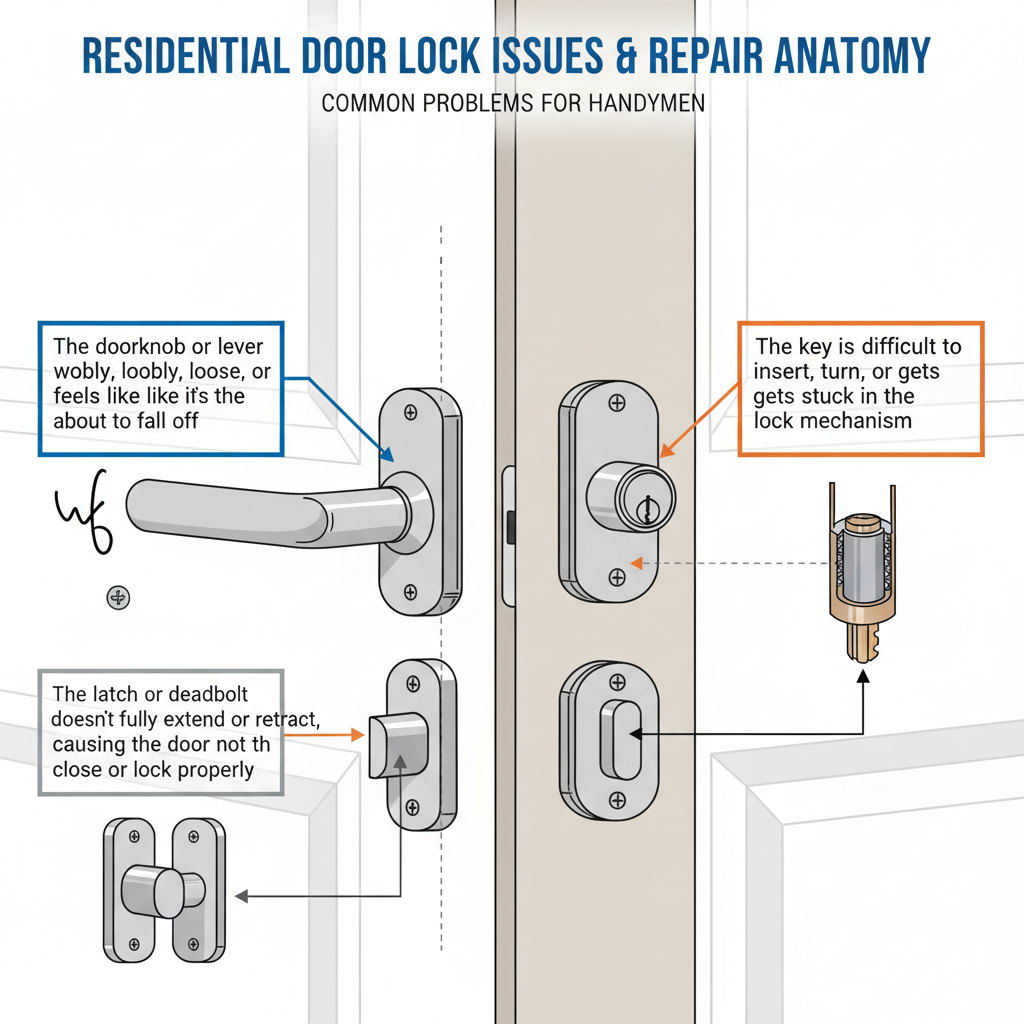
Common Symptoms
Possible Causes
Step-by-Step Diagnosis
Step 1
Visually inspect the knob, lock, and strike plate for obvious damage or looseness.
Step 2
With the door open, operate the knob and lock to see if the latch and deadbolt move smoothly on their own.
Step 3
Check and tighten the visible screws on the interior side of the doorknob assembly.
Step 4
Close the door slowly to check if the latch and deadbolt align properly with the holes in the strike plate.
Step 5
Apply a dry graphite lubricant to the keyway and moving parts to see if it frees up a sticky mechanism.
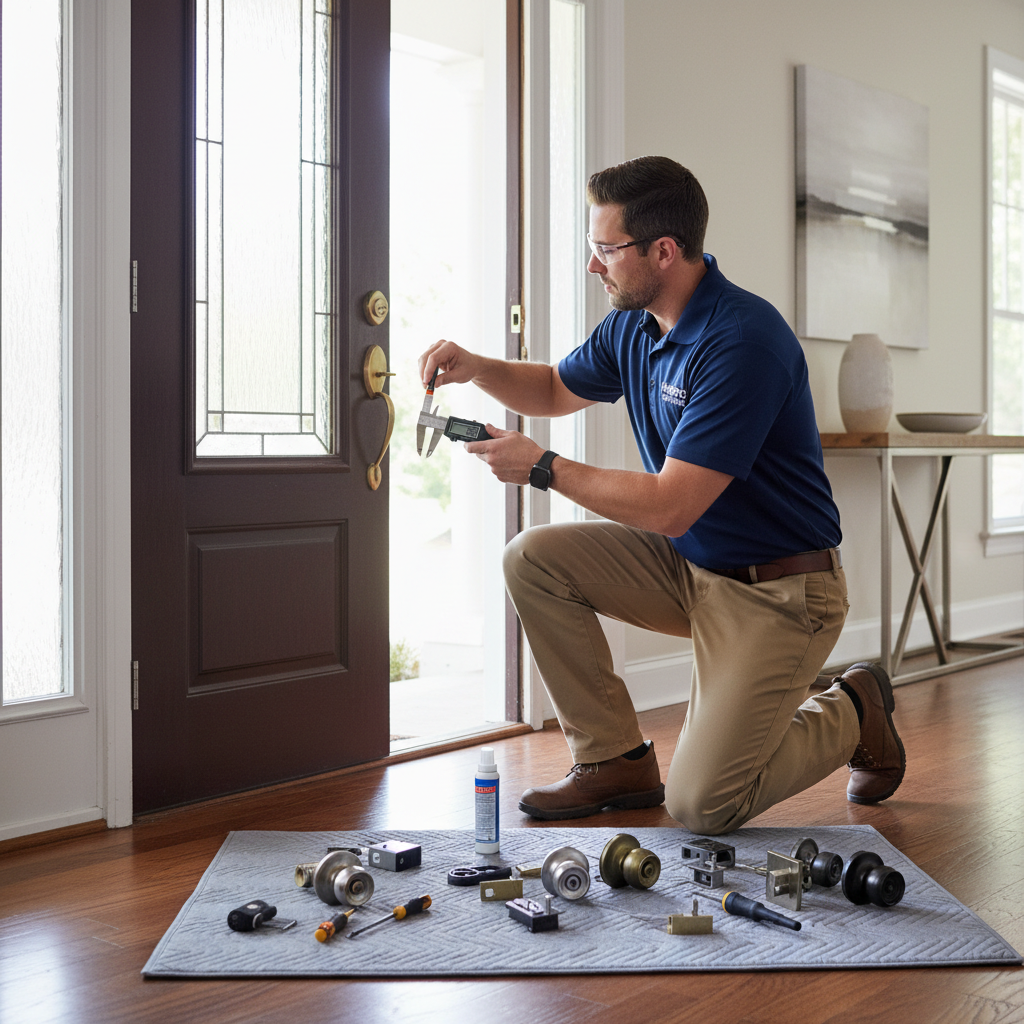
DIY vs Professional Costs
| Repair Type | DIY Cost | Professional Cost | Time Required |
|---|---|---|---|
Tightening Screws / Minor Adjustments | $0 | $75-$150 | 10 minutes |
Replacing a Basic Interior Knob | $20-$50 | $150-$250 | 30 minutes |
Replacing a Standard Deadbolt | $30-$150 | $175-$300 | 45 minutes |
Installing a New Deadbolt (Fresh Drill) | $75-$200+ | $250-$450+ | 2+ hours |
When to Call a Professional Handyman
- If you just moved into a new home, call a locksmith to rekey all exterior doors for security.
- If you are locked out of your house or a room.
- If the door frame or the door itself is split, warped, or damaged around the lock area.
- When installing a complex smart lock that requires both mechanical and electrical setup.
- If the lock is an old-style mortise lock (a large box inside the door), as these require specialized knowledge.
- If your DIY attempts have failed or made the problem worse.
Prevention Tips
- Lightly lubricate your keyways and latches with a dry graphite spray every 6-12 months. Do not use WD-40.
- Periodically check the screws on all your door hardware and snug them up before they become excessively loose.
- Avoid slamming doors, which can knock the alignment out of whack and damage the latch mechanism.
- If a key starts to feel 'sticky,' address it immediately with lubricant rather than forcing it and potentially breaking the key or the lock.
- For exterior doors, invest in higher-quality hardware (like Schlage over basic Kwikset) that is better designed to withstand the elements.
Frequently Asked Questions
Related Guides
Comprehensive home winterization to protect property and prevent damage, with a focus on pipes. Troubleshooting & Fixes
Unclogging a Toilet Without a Plunger (Troubleshooting & Fixes from the Field)
Toilet clogged and you don't have a plunger? Don't panic. A 25-year vet shows you how to clear that stubborn clog using stuff you already have.
Repairing Minor Grout Issues: Cracks, Stains & Missing Chunks (Troubleshooting & Fixes)
A veteran handyman's guide to fixing cracked, stained, or missing grout. Learn when to DIY and when to call a pro to keep your tile looking good.
Comprehensive childproofing of a home to ensure safety for infants and young children, covering all potential hazards room-by-room. Troubleshooting & Fixes
Safe and effective pressure washing for home exterior cleaning, balancing DIY benefits against potential dangers and professional advantages. Troubleshooting & Fixes (2024 Guide)
Thinking about pressure washing your house? A 25-year veteran handyman explains the right way to do it, the real costs, and when you should just call a pro.
Installing New Light Fixtures: Safety Tips & Step-by-Step Guide Troubleshooting & Fixes (2024 Guide)
A veteran handyman's no-nonsense guide to safely installing a new light fixture. Get real-world tips, costs, and learn when you need to call a pro.
Need Professional Help?
Find top-rated handyman experts in your area