Quick Answer
Okay so here's the quick version. If your house was built before 1980, just assume you've got asbestos somewhere. Don't panic, but absolutely do not touch it, disturb it, or try to remove it yourself. The fibers are the dangerous part, and you can't see 'em. The only real move is to call a certified asbestos inspector to take a sample and test it. That'll run you somewhere between $200 and $800, but it's the only way to know for sure and be safe. Seriously. Don't mess with this stuff.
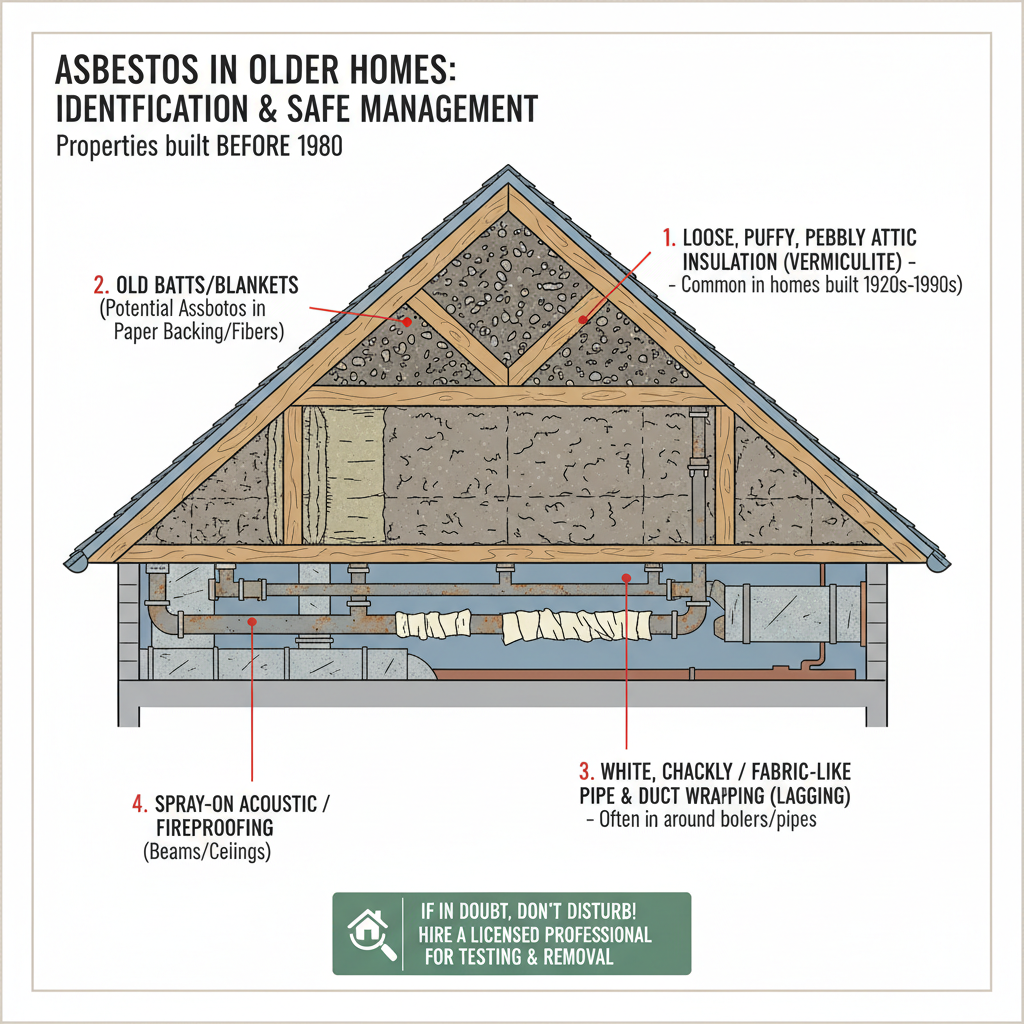
Common Symptoms
Possible Causes
Step-by-Step Diagnosis
Step 1
STOP. Do not touch, poke, scrape, or disturb the suspected material in any way.
Step 2
Visually inspect the material from a safe distance using a flashlight to note its appearance and condition (e.g., crumbly, intact).
Step 3
Limit access to the area if possible by closing doors or marking it off to prevent accidental disturbance.
Step 4
Do NOT use a DIY testing kit, as taking the sample yourself is dangerous and can lead to contamination.
Step 5
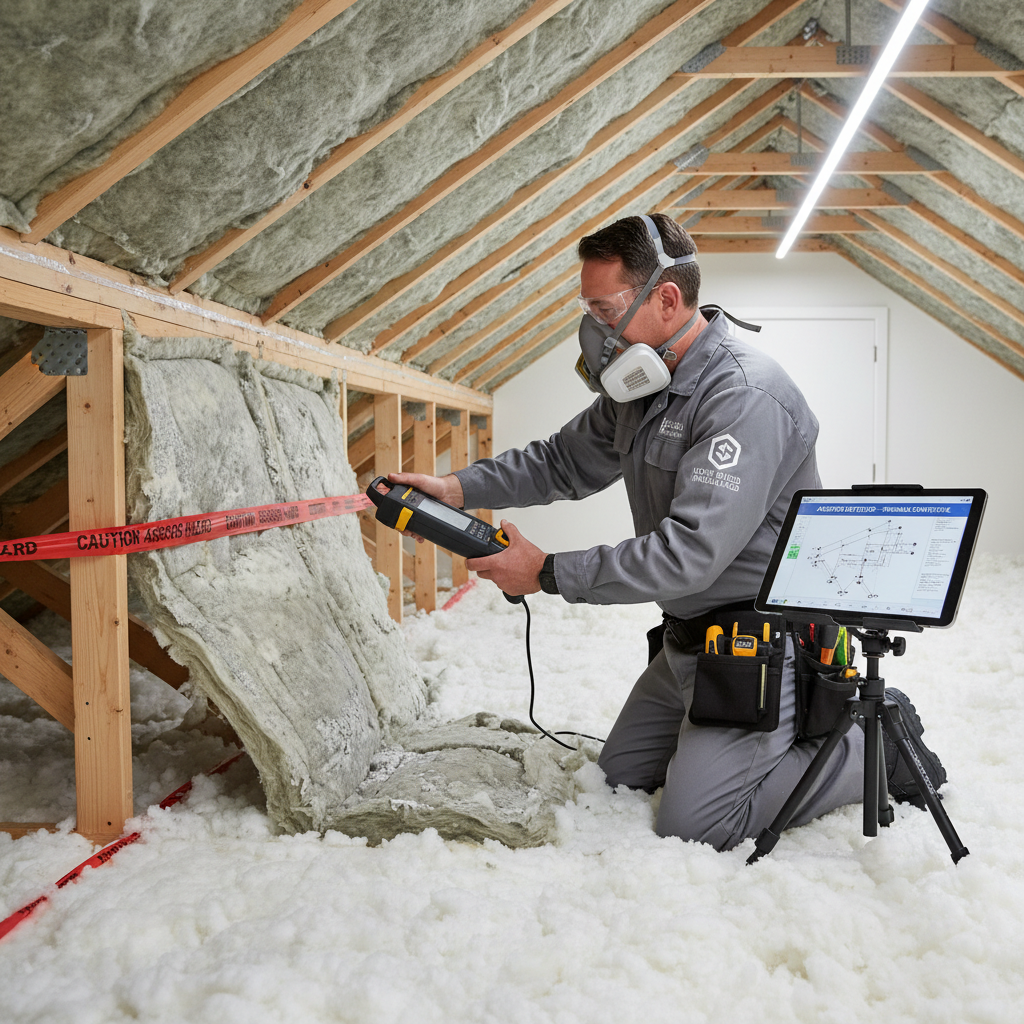
Hire a state-certified or AHERA-certified asbestos inspector to safely take a professional sample and have it analyzed by an accredited lab.
DIY vs Professional Costs
| Repair Type | DIY Cost | Professional Cost | Time Required |
|---|---|---|---|
Asbestos Inspection & Testing | Not Recommended | $200 - $800 | 1-2 hours for sampling |
Asbestos Encapsulation (Sealing) | Not Recommended | $1,000 - $10,000+ | 1-3 days |
Asbestos Abatement (Removal) | Not Recommended | $5,000 - $30,000+ | 3 days - 2 weeks |
When to Call a Professional Insulation
- The moment you suspect you have asbestos-containing material in your home.
- Before any renovation, remodeling, or demolition project that could disturb walls, ceilings, or insulation in a pre-1980s home.
- If you find that known or suspected asbestos material has become damaged, wet, or is crumbling.
- When you are buying or selling a home and need to a definitive answer on its presence.
- Anytime you want to confirm its presence with 100% certainty through professional sampling and lab analysis.
Prevention Tips
- Operate under the assumption that any suspect material in a pre-1980s house contains asbestos until proven otherwise.
- Never disturb, drill into, saw, or scrape materials you suspect may contain asbestos.
- If the material is intact and undisturbed, the safest and most recommended action is to leave it alone.
- Regularly (e.g., annually) check the condition of known asbestos-containing materials from a distance to ensure they are not deteriorating.
- Educate family members and any contractors about the location of suspected materials to prevent accidental disturbance.
Frequently Asked Questions
Related Guides
House Remains Cold After Insulation? Troubleshooting Drafts & Hidden Leaks (A Pro's Guide)
Still freezing after adding more insulation? Your problem isn't the insulation, it's hidden air leaks. A 25-year vet explains how to find and fix them.
Ineffective Insulation Troubleshooting & Fixes (2024 Guide)
Feeling cold drafts or seeing huge energy bills? Your home's insulation is probably failing. Here’s a vet tech's guide to finding and fixing the problem.
Ensuring proper attic ventilation after adding insulation to maintain indoor air quality, energy efficiency, and prevent moisture issues. Troubleshooting & Fixes (2024 Guide)
Just added insulation and now have issues? I'll show you how to fix attic ventilation problems, prevent mold, and lower your energy bills. A veteran tech's guide.
Crawl Space Issues Troubleshooting & Fixes (2024 Guide from a Pro)
A veteran tech explains crawl space moisture, mold, and damage. Learn the real causes of musty smells and high energy bills, and how to fix them for good.
Ineffective or insufficient home insulation leading to high energy bills, drafts, and uncomfortable indoor temperatures, often due to aging, improper installation, or inadequate R-value for the climate. Troubleshooting & Fixes
Feeling high energy bills & uncomfortable rooms? Your home insulation might be failing. A veteran tech's guide to diagnosing and fixing it for good.
Identifying insulation gaps and air leaks through a home energy audit to improve energy efficiency, leading to higher utility bills and reduced comfort. Troubleshooting & Fixes
Feeling drafts or seeing high energy bills? Learn to identify and fix insulation gaps and air leaks with our comprehensive home energy audit troubleshooting guide.
Need Professional Help?
Find top-rated insulation experts in your area