Quick Answer
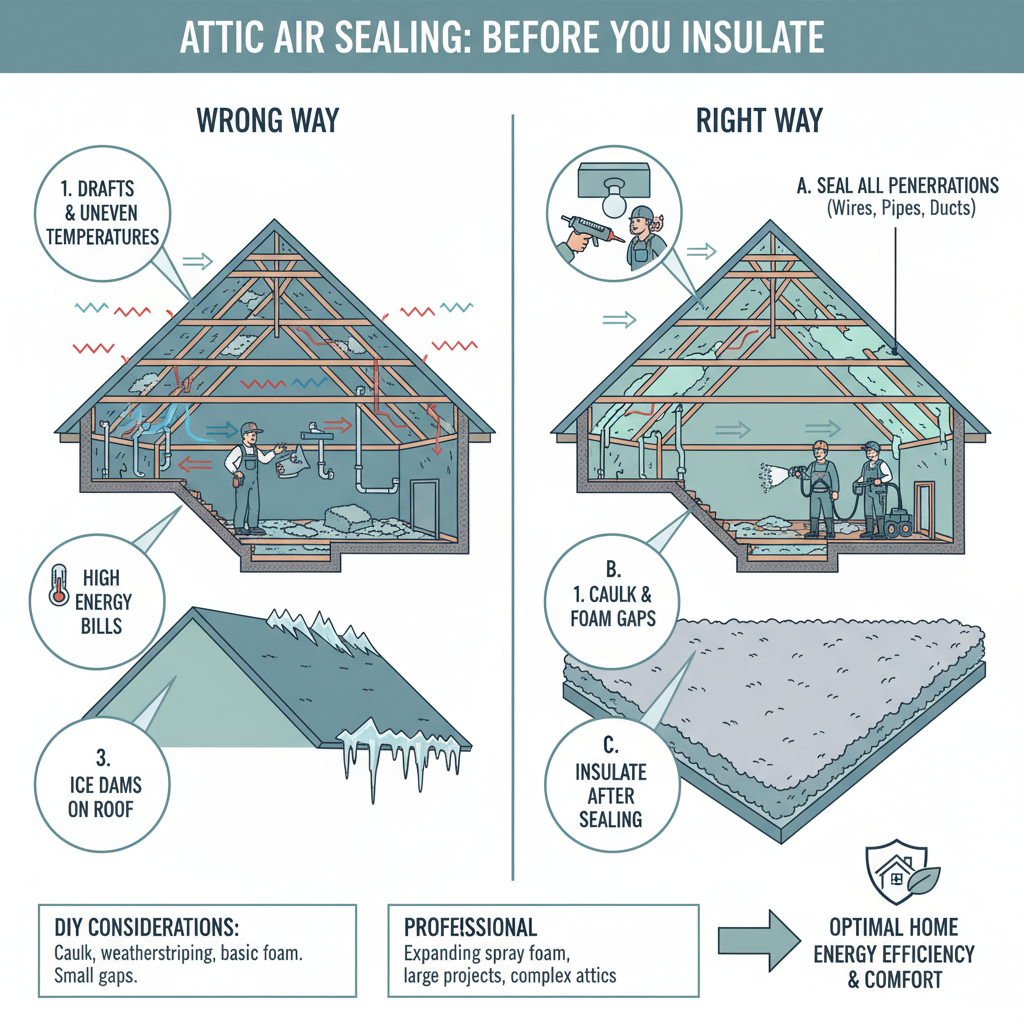
Look, here’s the most important thing you need to know: You MUST air seal your attic *before* you add a single piece of insulation. It's the biggest mistake I see homeowners make. Think of it like trying to stay warm in a windbreaker with a broken zipper. The insulation is the jacket, but if air blows right through the unsealed gaps (the zipper), you're still going to freeze. A dedicated DIY air sealing job can run you $50-$150 in materials. For a professional to come in, seal everything, and then insulate, you're usually looking at $1,800 to $6,000+ depending on the house size.
Common Symptoms
Possible Causes
Step-by-Step Diagnosis
Step 1
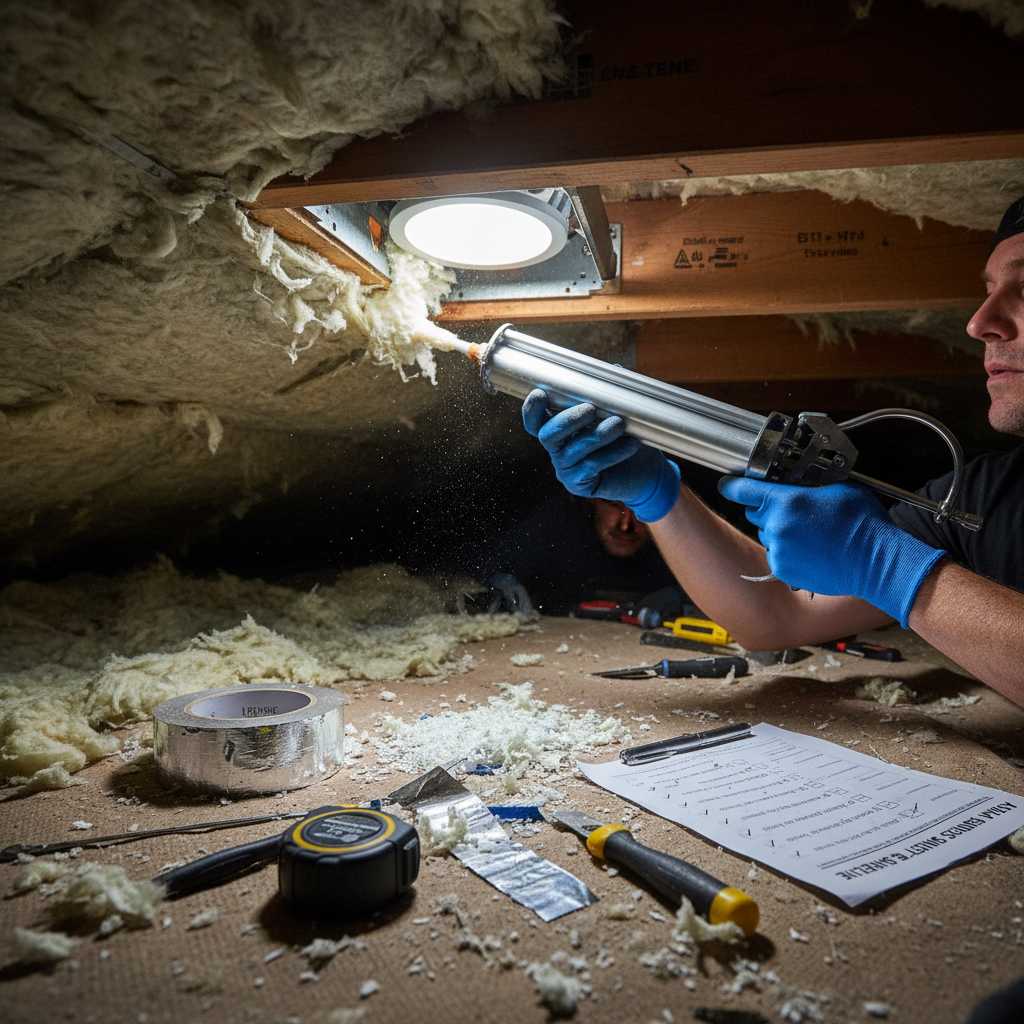
Visual Inspection. Get into the attic with a good headlamp and look for gaps around plumbing, wiring, light fixtures, and the attic hatch. Look for dirty insulation, which is a sign of air filtration.
Step 2
Insulation Assessment. Use a ruler to measure the depth of your existing insulation. Compare this depth to the recommended R-value for your climate zone.
Step 3
Draft Detection. On a calm day with the HVAC off, use a smoke pencil or incense stick near potential leak points. If the smoke wavers or gets sucked away, you've found a leak.
Step 4
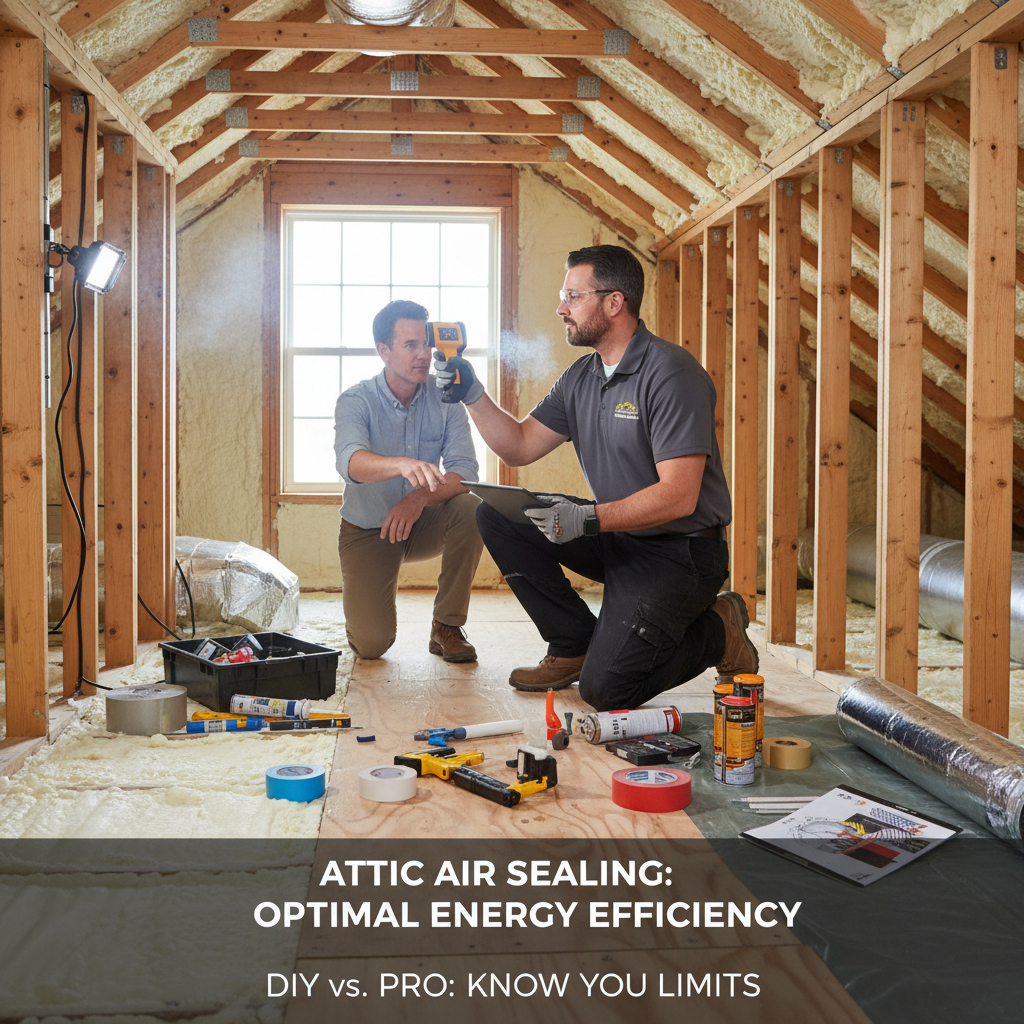
Professional Blower Door Test. This is the most accurate method. A pro depressurizes your house with a large fan and uses an infrared camera or smoke generator to find every single leak with precision.
DIY vs Professional Costs
| Repair Type | DIY Cost | Professional Cost | Time Required |
|---|---|---|---|
DIY Air Sealing (Small/Medium Gaps) | $50 - $120 | N/A (Included in full service) | 5-9 hours |
Attic Insulation Installation (Blown-in) | $500 - $1,000 | $1,500 - $4,000+ | 1 Day |
Professional Energy Audit (w/ Blower Door) | N/A | $300 - $600 | 2-3 hours |
Combined Pro Air Sealing & Insulation | N/A | $1,800 - $6,000+ | 1-2 Days |
When to Call a Professional Insulation
- If you find what you suspect is vermiculite insulation, which could contain asbestos. Do not disturb it.
- If your home has old knob-and-tube wiring, as it can be a fire hazard if covered with insulation.
- If you discover significant moisture, active leaks, or widespread mold in the attic.
- If your attic has very limited access, a complex roofline, or you're uncomfortable working in hot, confined spaces.
- If you want the job done with the precision of a blower door test and infrared camera diagnostics for guaranteed results.
Prevention Tips
- Always air seal before insulating. This is the most critical sequence for maximizing energy efficiency.
- Regularly inspect your attic, especially after other tradesmen have worked there, to check for new unsealed penetrations.
- Ensure your attic hatch or access panel is fully sealed with weatherstripping and insulated on the back.
- Verify that bathroom and kitchen exhaust fans vent all the way to the outside, not into the attic.
- Keep your attic ventilation pathways (like soffit vents) clear of insulation to allow for proper airflow.
Frequently Asked Questions
Related Guides
House Remains Cold After Insulation? Troubleshooting Drafts & Hidden Leaks (A Pro's Guide)
Still freezing after adding more insulation? Your problem isn't the insulation, it's hidden air leaks. A 25-year vet explains how to find and fix them.
Ineffective Insulation Troubleshooting & Fixes (2024 Guide)
Feeling cold drafts or seeing huge energy bills? Your home's insulation is probably failing. Here’s a vet tech's guide to finding and fixing the problem.
Ensuring proper attic ventilation after adding insulation to maintain indoor air quality, energy efficiency, and prevent moisture issues. Troubleshooting & Fixes (2024 Guide)
Just added insulation and now have issues? I'll show you how to fix attic ventilation problems, prevent mold, and lower your energy bills. A veteran tech's guide.
Crawl Space Issues Troubleshooting & Fixes (2024 Guide from a Pro)
A veteran tech explains crawl space moisture, mold, and damage. Learn the real causes of musty smells and high energy bills, and how to fix them for good.
Ineffective or insufficient home insulation leading to high energy bills, drafts, and uncomfortable indoor temperatures, often due to aging, improper installation, or inadequate R-value for the climate. Troubleshooting & Fixes
Feeling high energy bills & uncomfortable rooms? Your home insulation might be failing. A veteran tech's guide to diagnosing and fixing it for good.
Identifying insulation gaps and air leaks through a home energy audit to improve energy efficiency, leading to higher utility bills and reduced comfort. Troubleshooting & Fixes
Feeling drafts or seeing high energy bills? Learn to identify and fix insulation gaps and air leaks with our comprehensive home energy audit troubleshooting guide.
Need Professional Help?
Find top-rated insulation experts in your area