Quick Answer
Okay so here's the quick version. You hear scratching, smell something foul, and your energy bills are creeping up. That means critters—rats, squirrels, you name it—have turned your attic insulation into their personal bathroom and nursery. It's a health hazard and it's costing you money. The fix is a three-part nightmare: get 'em out, seal up every last hole they're using, and then the really nasty part—professionally removing all that contaminated insulation and blowing in new stuff. A full pro job can run you anywhere from $3,000 to over $10,000. Don't take this one lightly.
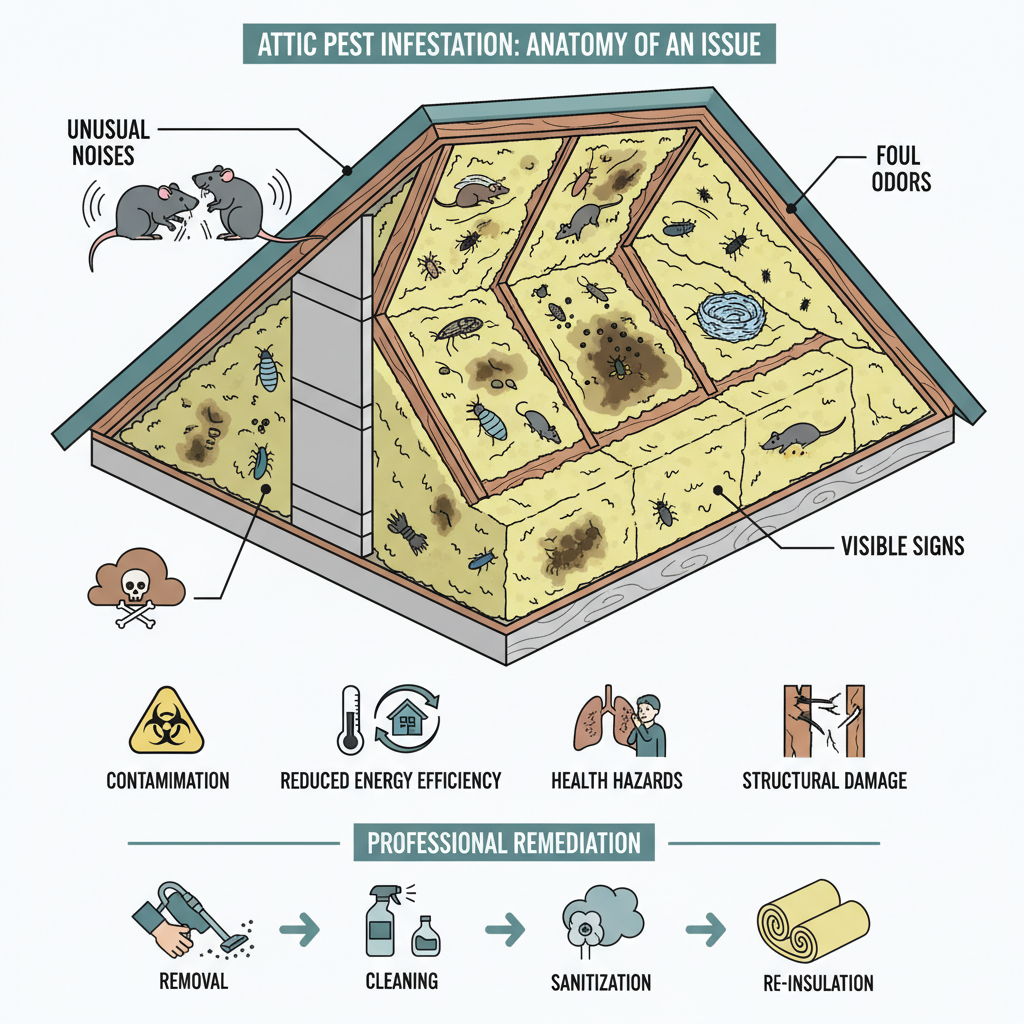
Common Symptoms
Possible Causes
Step-by-Step Diagnosis
Step 1
Suit up with proper PPE, including a P100 respirator, to safely perform a visual inspection of the attic.
Step 2
Use a powerful flashlight to look for droppings, urine stains, gnaw marks, shredded insulation, and pathways or tunnels.
Step 3
Listen for sounds at night, when rodents are most active, to confirm activity.
Step 4
Conduct a thorough 'perimeter walk' of your home's exterior, looking for any gap or hole larger than a dime, especially around vents, pipes, and the roofline.
Step 5
Use non-lethal monitoring tools like sticky traps (away from non-target animals) to confirm the type of pest.
Step 6
Assess the extent of the insulation damage to determine if it's a spot-job or if a full removal is needed. Check for chewed wires as a potential fire hazard.
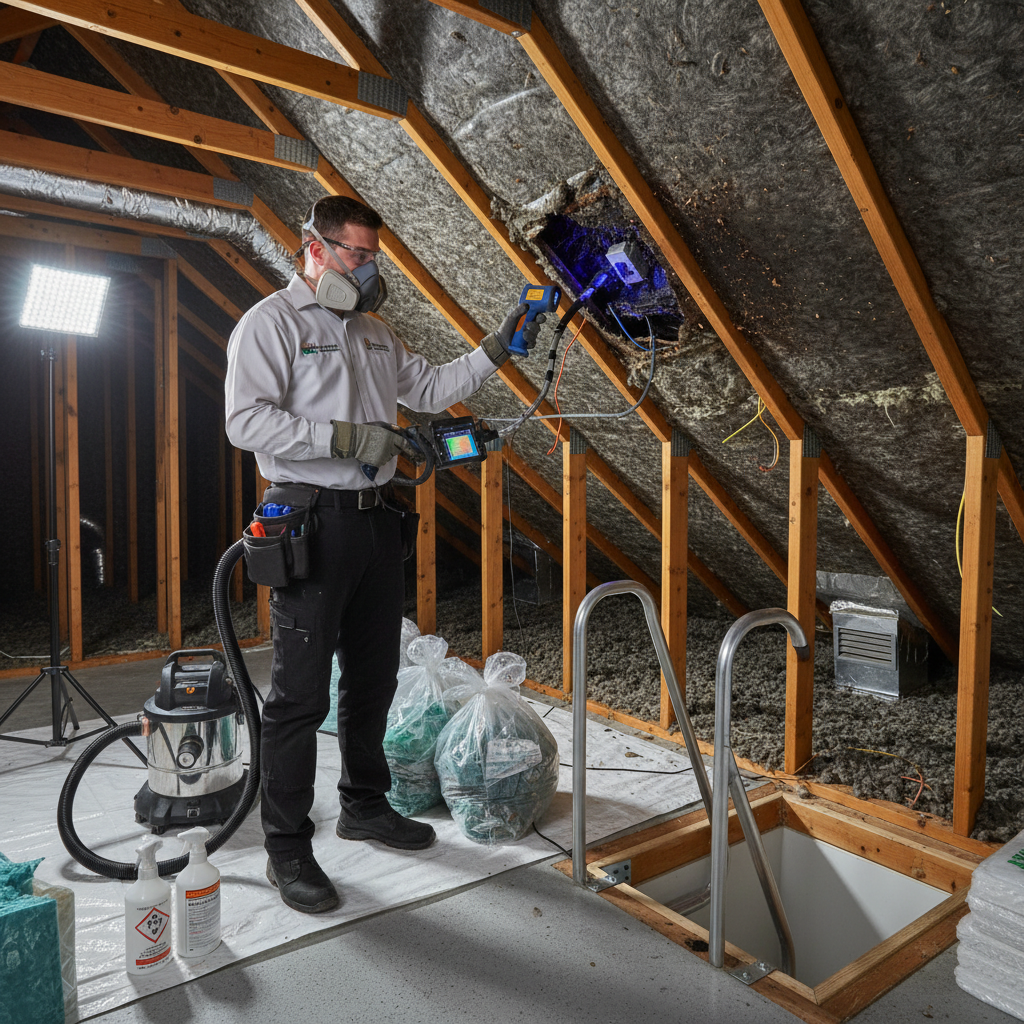
DIY vs Professional Costs
| Repair Type | DIY Cost | Professional Cost | Time Required |
|---|---|---|---|
Minor Pest Exclusion (seal a few small holes) | $30 - $75 | $300 - $800 | 1-3 hours |
Full Attic Insulation Removal | $300+ (rental/bags) | $1,500 - $5,000+ | 1 day+ |
Full Attic Decontamination & Sanitization | N/A | $500 - $2,500 | 4-8 hours |
New Insulation Installation (Blown-in) | $800 - $1,500 | $2,000 - $6,000+ | 1 day |
Full Attic Restoration (All-inclusive) | N/A | $4,000 - $15,000+ | 2-4 days |
When to Call a Professional Insulation
- The moment you see widespread droppings or multiple tunnels, indicating a significant infestation.
- If you can smell a strong odor of urine or decay in your living space, meaning the contamination is severe.
- If you discover any chewed electrical wires, which pose a serious fire hazard.
- If you suspect the pests are larger animals like raccoons, opossums, or squirrels, which can be aggressive.
- If anyone in your household is elderly, very young, or has a compromised immune system, as the health risks are too great for DIY cleanup.
- If the problem comes back after you've already tried to fix it yourself, which means you likely missed the real entry point.
- When faced with the need for full-scale removal and replacement of insulation; the job is too hazardous and messy for a homeowner.
Prevention Tips
- Seal all exterior entry points larger than a quarter-inch using steel wool, hardware cloth, or robust sealants.
- Trim tree branches and shrubs at least six feet away from your roofline and walls.
- Store all food, including pet food and birdseed, in sealed, chew-proof containers and use garbage cans with tight-fitting lids.
- Install 1/4-inch hardware cloth (metal mesh) over all attic vents from the inside to block access.
- Keep your attic clean and tidy, avoiding the storage of cardboard and clutter that pests use for nesting.
- Perform an annual inspection of your attic and home exterior to catch potential entry points early.
- When replacing insulation, use borate-treated cellulose insulation, which acts as a natural pest deterrent.
Frequently Asked Questions
Related Guides
House Remains Cold After Insulation? Troubleshooting Drafts & Hidden Leaks (A Pro's Guide)
Still freezing after adding more insulation? Your problem isn't the insulation, it's hidden air leaks. A 25-year vet explains how to find and fix them.
Ineffective Insulation Troubleshooting & Fixes (2024 Guide)
Feeling cold drafts or seeing huge energy bills? Your home's insulation is probably failing. Here’s a vet tech's guide to finding and fixing the problem.
Ensuring proper attic ventilation after adding insulation to maintain indoor air quality, energy efficiency, and prevent moisture issues. Troubleshooting & Fixes (2024 Guide)
Just added insulation and now have issues? I'll show you how to fix attic ventilation problems, prevent mold, and lower your energy bills. A veteran tech's guide.
Crawl Space Issues Troubleshooting & Fixes (2024 Guide from a Pro)
A veteran tech explains crawl space moisture, mold, and damage. Learn the real causes of musty smells and high energy bills, and how to fix them for good.
Ineffective or insufficient home insulation leading to high energy bills, drafts, and uncomfortable indoor temperatures, often due to aging, improper installation, or inadequate R-value for the climate. Troubleshooting & Fixes
Feeling high energy bills & uncomfortable rooms? Your home insulation might be failing. A veteran tech's guide to diagnosing and fixing it for good.
Identifying insulation gaps and air leaks through a home energy audit to improve energy efficiency, leading to higher utility bills and reduced comfort. Troubleshooting & Fixes
Feeling drafts or seeing high energy bills? Learn to identify and fix insulation gaps and air leaks with our comprehensive home energy audit troubleshooting guide.
Need Professional Help?
Find top-rated insulation experts in your area