Quick Answer
Okay, so here's the quick version. If your energy bills are skyrocketing and your house is never the right temperature, your attic insulation is likely ineffective. Common culprits include: insulation settling over time, moisture damage from leaks, or pest infestations. You can often 'spot-fix' minor insulation issues yourself for a few hundred dollars. However, for a complete solution, like blowing in new cellulose insulation, a professional job typically ranges from $1,500 to $4,000. While a significant investment, proper insulation significantly improves comfort and energy efficiency, often paying for itself over time through reduced utility bills.
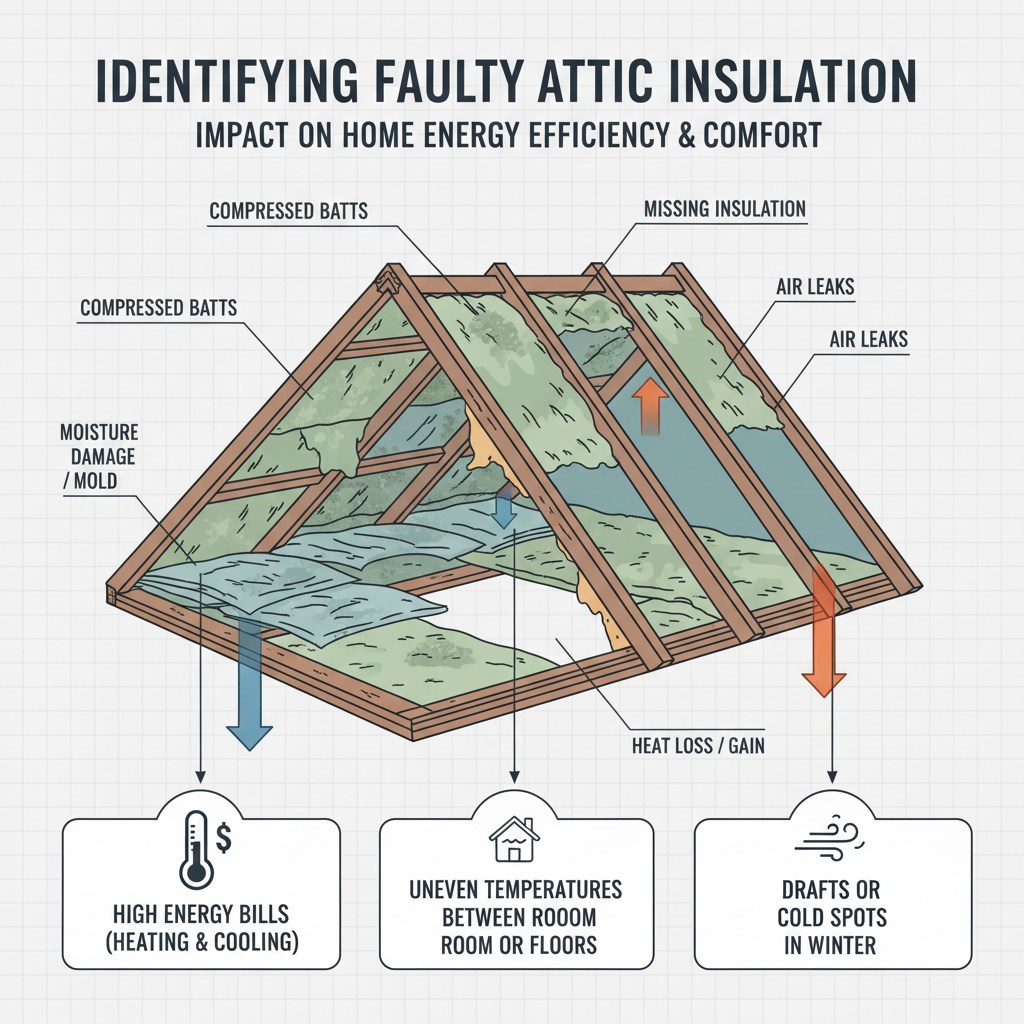
Common Symptoms
Possible Causes
Step-by-Step Diagnosis
Step 1
Conduct a visual inspection of the attic insulation. Look for uneven coverage, compressed areas, gaps, or signs of damage.
Step 2
Check the depth of the insulation. Compare it to recommended R-values for your region (e.g., Energy Star guidelines).
Step 3
Look for signs of moisture (water stains, mold, mildew) on the insulation, wood, or underside of the roof deck.
Step 4
Examine insulation for pest droppings, nests, or tunnels.
Step 5
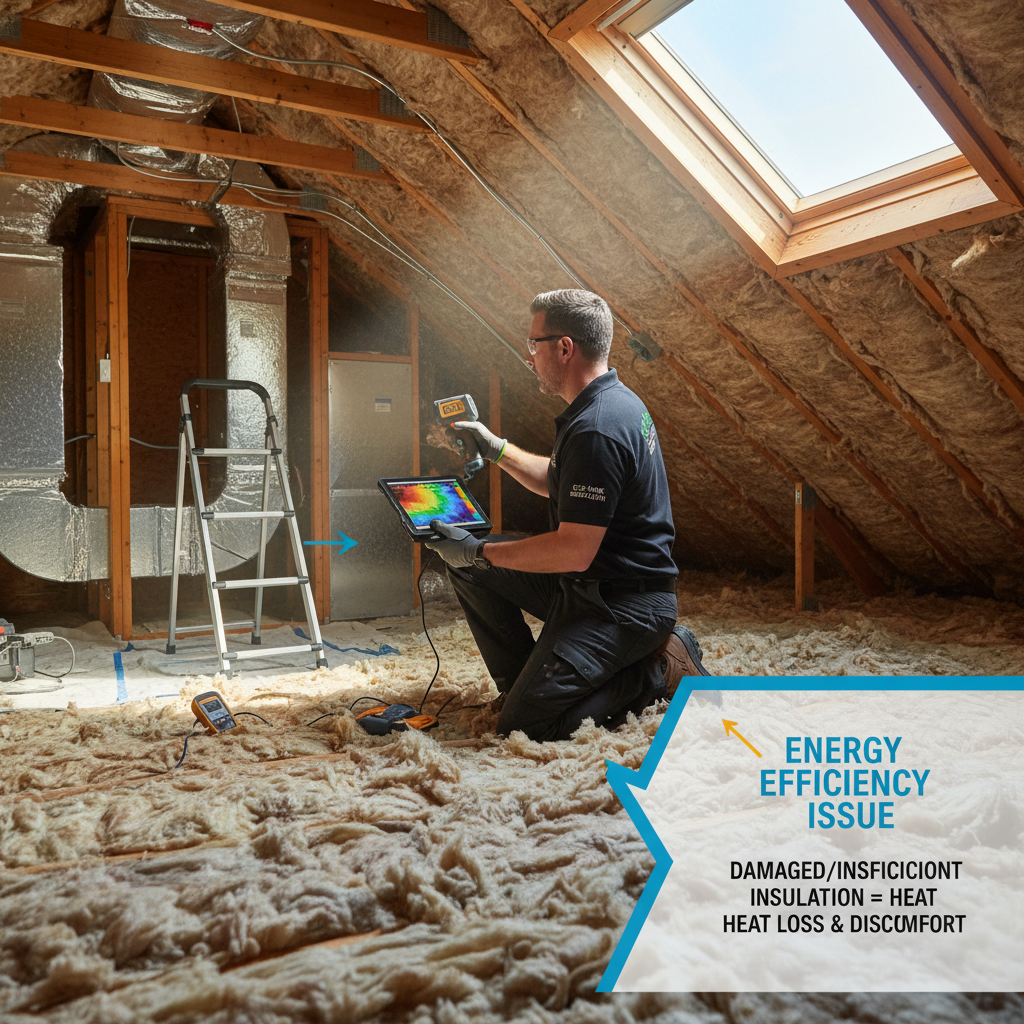
Identify potential air leaks into the attic (e.g., around light fixtures, plumbing stacks, electrical wiring) by feeling for drafts or using an infrared camera.
Step 6
Observe roof for ice dam formation during winter, which indicates excessive heat loss into the attic.
Step 7
During extreme weather, compare attic temperature to outside temperature or other interior spaces to identify significant differences.
DIY vs Professional Costs
| Repair Type | DIY Cost | Professional Cost | Time Required |
|---|---|---|---|
Sealing Air Leaks | $50 - $250 | $500 - $2,500 | 4-8 hours |
Topping Up with More Blown-In Insulation | $800 - $2,500 | $1,500 - $4,000 | 1 day |
Adding Some Batts (Spot Repair) | $50 - $300 | Varies (often DIY or part of a larger, pro job) | 2-4 hours |
Removing Gross, Old Insulation | Not Recommended | $2,500 - $8,000+ | 1-3 days |
When to Call a Professional Insulation
- Widespread pest infestation requiring professional remediation and likely full insulation removal/replacement.
- Extensive water damage or mold growth throughout the attic.
- Need for significant insulation depth increase or removal of existing insulation.
- Difficulty accessing certain areas of the attic safely.
- Lack of confidence in safely working in an attic environment.
- Unexplained persistent drafts or temperature inconsistencies despite DIY efforts.
- If a comprehensive energy audit is desired to identify all energy loss points.
Prevention Tips
- Ensure proper attic ventilation to prevent moisture buildup and reduce heat in summer.
- Seal all air leaks in the attic floor (around light fixtures, plumbing, electrical wires) to stop conditioned air from escaping.
- Regularly inspect the roof for leaks and make timely repairs to prevent water damage to insulation.
- Seal potential entry points for pests (e.g., gaps in fascia, soffits, and around vents) to prevent infestations.
- Maintain adequate insulation levels according to local building codes and climate zone recommendations.
- Avoid storing heavy items directly on insulation, which can compress it and reduce its R-value.
- Ensure attic access points are properly insulated and sealed.
Frequently Asked Questions
Related Guides
House Remains Cold After Insulation? Troubleshooting Drafts & Hidden Leaks (A Pro's Guide)
Still freezing after adding more insulation? Your problem isn't the insulation, it's hidden air leaks. A 25-year vet explains how to find and fix them.
Ineffective Insulation Troubleshooting & Fixes (2024 Guide)
Feeling cold drafts or seeing huge energy bills? Your home's insulation is probably failing. Here’s a vet tech's guide to finding and fixing the problem.
Ensuring proper attic ventilation after adding insulation to maintain indoor air quality, energy efficiency, and prevent moisture issues. Troubleshooting & Fixes (2024 Guide)
Just added insulation and now have issues? I'll show you how to fix attic ventilation problems, prevent mold, and lower your energy bills. A veteran tech's guide.
Crawl Space Issues Troubleshooting & Fixes (2024 Guide from a Pro)
A veteran tech explains crawl space moisture, mold, and damage. Learn the real causes of musty smells and high energy bills, and how to fix them for good.
Ineffective or insufficient home insulation leading to high energy bills, drafts, and uncomfortable indoor temperatures, often due to aging, improper installation, or inadequate R-value for the climate. Troubleshooting & Fixes
Feeling high energy bills & uncomfortable rooms? Your home insulation might be failing. A veteran tech's guide to diagnosing and fixing it for good.
Identifying insulation gaps and air leaks through a home energy audit to improve energy efficiency, leading to higher utility bills and reduced comfort. Troubleshooting & Fixes
Feeling drafts or seeing high energy bills? Learn to identify and fix insulation gaps and air leaks with our comprehensive home energy audit troubleshooting guide.
Need Professional Help?
Find top-rated insulation experts in your area